
Reviewed · TEMPLE & PALACE TOURS
Chiang Mai: Temple And City Walking Tour Part I
Chiang Mai’s most famous temples are far more interesting when someone explains what you’re seeing. This four-hour walk links Wat Chedi Luang, Wat Phan Tao, and Wat Phra Singh, with guides such as Son, Katoon, Eddie, and Big bringing in Buddhist practice, local history, and personal experience as former monks. The Buddhist explanations are the real draw.
I like the early 8:20 am start, which helps you avoid the worst heat, and I like the price: $15 before the modest temple fees is a strong deal for four hours with a live guide. The main consideration is stamina. You will walk, stand, remove your shoes, and remain attentive for a long stretch, so this is not a quick photo stop at three shrines.
Key points at a glance
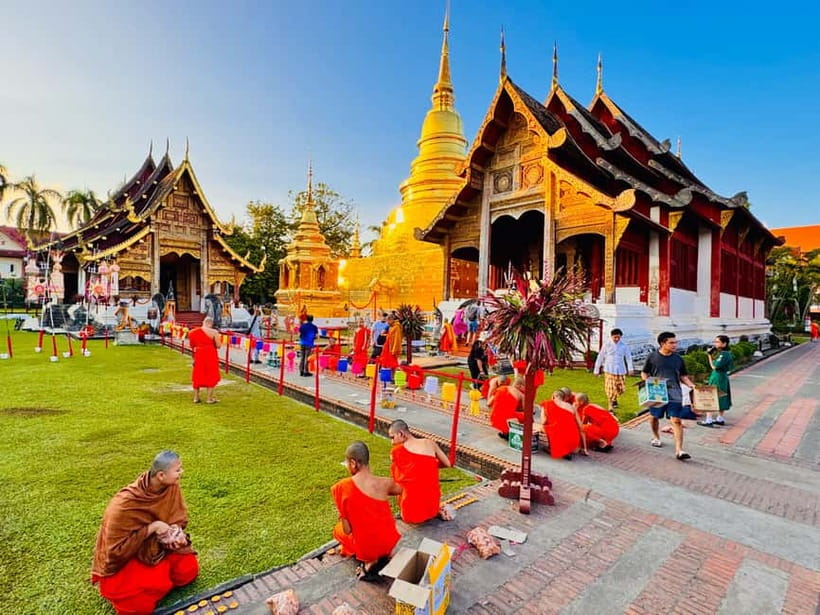
- Former monk guides: Some guides, including Son and Katoon, explain Buddhist life from personal experience.
- Three major temples: Visit Wat Chedi Luang, Wat Phan Tao, and Wat Phra Singh in Chiang Mai’s old city.
- Early morning timing: The 8:20 am start is useful in a hot climate and leaves much of the day free.
- Strong value: The $15 tour includes the walking route and guide, while temple entry costs 90 THB extra in total.
- Question-friendly format: Guides are praised for patiently explaining rituals, Buddha poses, meditation, and local customs.
- Dress matters: Shorts, short skirts, sleeveless shirts, and other unsuitable clothing are not allowed.
Why this morning walk works so well
I would choose this tour if you want more than a list of temple names and a few photographs. Chiang Mai’s old city is easy to explore on foot, but the buildings can be hard to read without context. A guide can explain why a stupa has its shape, why certain Buddha images sit in particular poses, and how temple buildings relate to Buddhist practice.
The route lasts about four hours and begins at 8:20 am. That timing is one of its practical strengths. Chiang Mai can become uncomfortably hot, and the early start makes the walking easier than a late-morning outing. You still need water, sun protection, and shoes you can remove without a struggle.
The advertised route includes three temples. Some small groups have also visited an extra temple or nearby site, but you should regard that as a bonus rather than part of the guaranteed plan. The pace is generally described as relaxed, with time for questions, photographs, and short breaks, though you will still spend plenty of time standing.
There is no hotel pickup or drop-off. You need to make your own way to the starting point, and the supplied details do not specify that meeting point. Check it carefully before booking, especially if your hotel is outside the old city.
More Temple Tours in Chiang Mai
- Chiang Mai: Chiang Rai Temples, Karen Tribe and Hot Springs
★ 4.7 · 5,401 reviews - Chiang Rai White Temple and Blue Temple Day Tour
★ 4.6 · 3,366 reviews - Chiang Mai: White, Red/Black & Blue Temples Tour with Lunch
★ 4.2 · 2,017 reviews
Wat Chedi Luang and the earthquake-damaged stupa
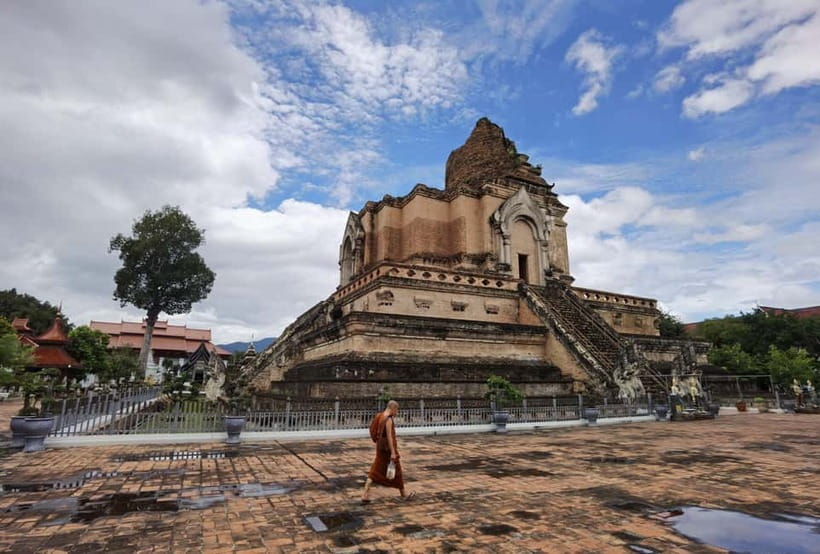
The first major stop is Wat Chedi Luang, home to one of Chiang Mai’s most striking temple ruins. Its great chedi was built in the 14th century and badly damaged by an earthquake in 1545. Even in ruined form, it gives you a strong sense of the scale and importance these religious buildings once held.
I like starting here because the site gives your guide plenty to explain. You can look at the broad brick structure while hearing about Chiang Mai’s past and the role of temples in the city. Rather than rushing straight to a perfect photograph, pay attention to the surviving details and the way the damaged structure still dominates the grounds.
The entry fee is 50 THB, paid separately. That extra cost is small, but it is worth knowing before you arrive because the advertised $15 does not cover it. The tour price includes the guide and walking tour, not temple admission.
Expect a mix of walking and standing around the complex. You may also need to remove your shoes before entering certain buildings. One participant specifically appreciated a guide who patiently waited while boots were taken off and put back on, a useful reminder that temple visits reward practical footwear.
Wat Chedi Luang can be visually impressive even if you know little about Buddhism. With a good guide, though, the visit becomes more than a look at old brickwork. You begin to see the relationship between the stupa, the surrounding buildings, and the living religious setting.
Wat Phan Tao and Lanna woodwork
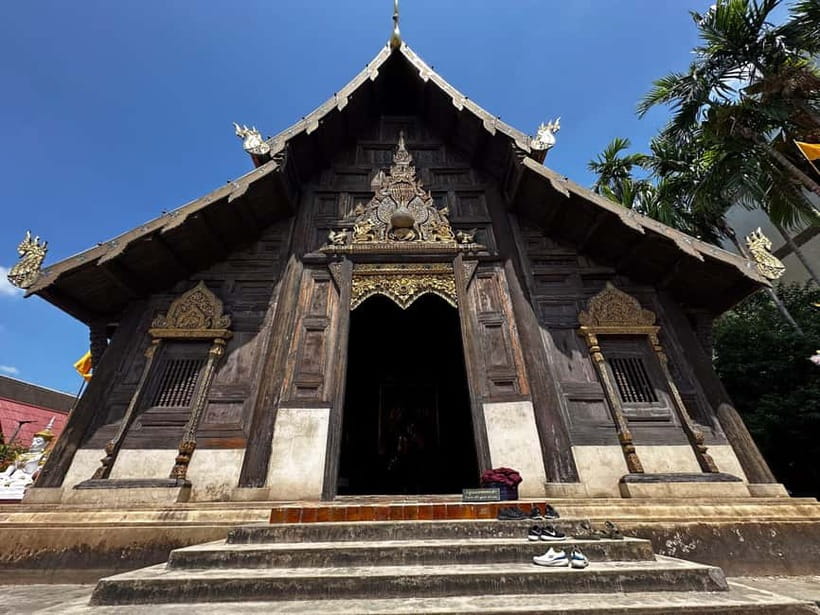
A short walk brings you to Wat Phan Tao, a smaller temple with a different feel from the massive chedi at Wat Chedi Luang. It is known for its Lanna-style ordination hall and murals depicting scenes from the life of the Buddha.
This change of scale is welcome. After the large ruins, the wooden hall gives you a closer look at northern Thai design. Your guide can point out details you might otherwise pass without noticing, including the way decoration, stories, and religious use come together inside the building.
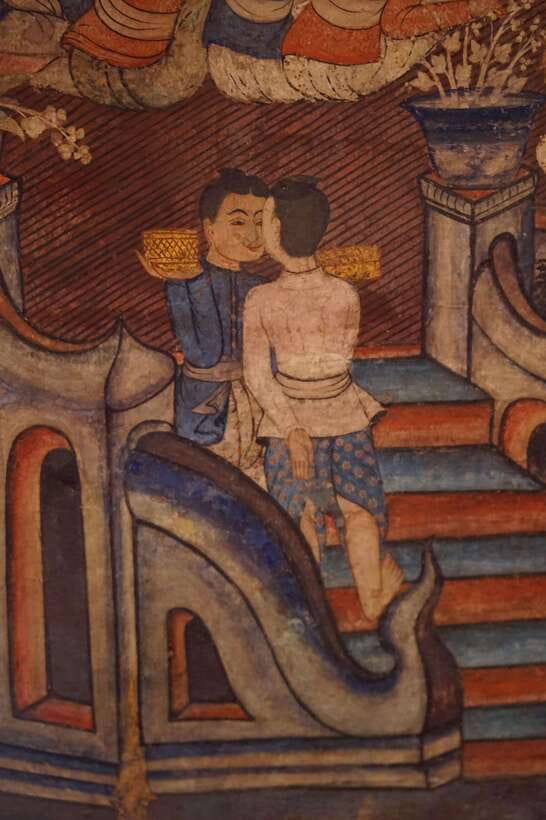
The murals are especially useful for understanding how Buddhist stories are presented visually. I find this kind of explanation more valuable than trying to memorize dates. You can ask what a scene means, how it connects to Buddhist teaching, and why the hall matters to local worship.
The stop is close to Wat Chedi Luang, so you are not facing a long transfer between sights. That keeps the tour focused and makes the morning manageable for most people who are comfortable walking. Still, the total time adds up. You should expect a substantial amount of standing inside and around the temple rather than a short guided look.
Wat Phra Singh, the Lion Buddha monastery
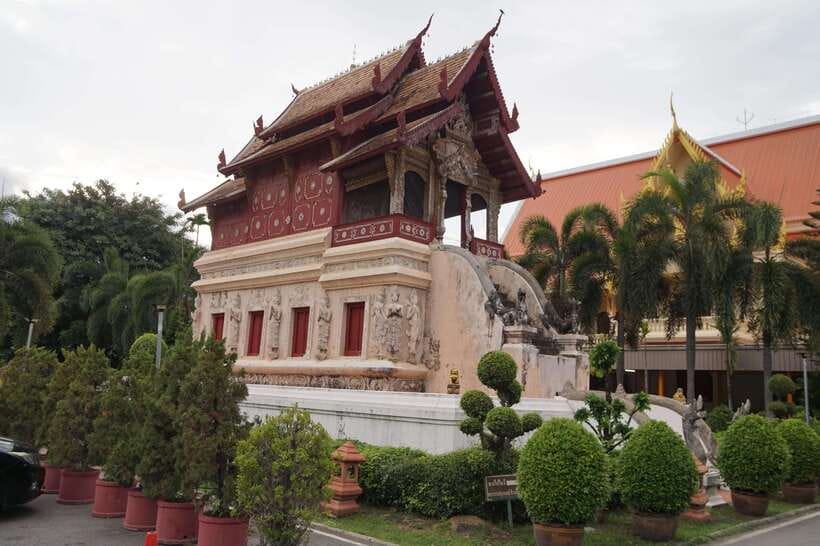
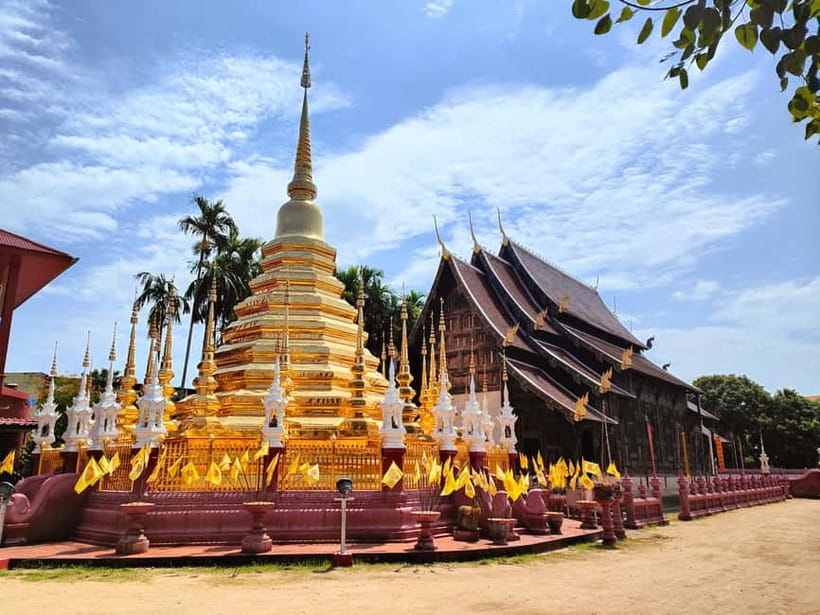
The final principal temple is Wat Phra Singh, one of Chiang Mai’s most important religious sites. It is associated with the Phra Singh Buddha image, a highly revered statue, and is also known for its architecture and grounds.
This is a good point in the walk to bring your questions together. By now, you have seen a major ruined stupa, a Lanna-style wooden hall, and a larger working temple complex. A guide can help you compare their purposes and styles instead of treating them as three unrelated stops.
Admission to Wat Phra Singh costs 40 THB and is not included. Combined with Wat Chedi Luang, the required listed entrance fees total 90 THB. That is still a modest addition, but include it when working out your real budget.
Take your time with the buildings and grounds, but remember that this is an active religious place, not just an outdoor museum. Dress respectfully, keep your voice low where appropriate, and follow instructions about shoes and access. The rules prohibit shorts, short skirts, sleeveless shirts, smoking, alcohol, drugs, drones, climbing, and nudity.
More temples worth an hour in Chiang Mai:
- Chiang Mai: Doi Suthep and Wat Umong Enchanting Evening Tour
★ 4.6 · 1,811 reviews - Chiang Mai: 3 Hour Old City and Temples Guided Walking Tour
★ 4.6 · 1,568 reviews - Chiang Mai: Doi Suthep, Wat Umong, and Pha Lat Sunrise Tour
★ 4.7 · 1,425 reviews - Chiang Rai Temples: Private Tour from Chiang Mai
★ 5.0 · 1,267 reviews
The guide can change the whole experience
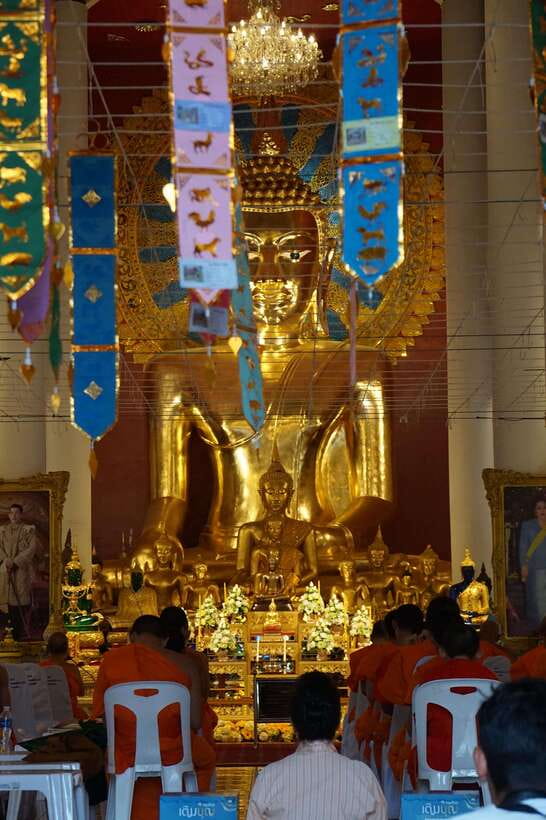
The strongest part of this tour is the guide-led explanation. Several guides have hosted it, including Son, Katoon, Eddie, Big, Earth, and Weerayut Toon. Your assigned guide will depend on the date, but the experience is clearly designed around live conversation rather than a fixed audio script.
Son has been described as a former monk who willingly answers detailed questions about Buddhism and Chiang Mai. Katoon has also led the walk as a former monk, explaining monastic life, prayer, meditation, Buddha images, and temple customs. Eddie has been praised for connecting temple history with religious practice and for taking photographs along the route.
You should not assume that every guide will offer exactly the same extras. Some groups have practiced a short meditation, learned how to pray, received a monk’s blessing, or seen a small ritual. These experiences appear to depend on the guide, group, and conditions, so treat them as possible additions rather than promises.
The best approach is to arrive with questions. You can ask about becoming a monk, the meaning of different Buddha positions, why elephants appear on some stupas, or how temple objects are used. The tour seems particularly useful for curious people who want to understand the symbols instead of simply collecting temple photographs.
There are a few practical communication points to keep in mind. One participant found a guide’s quiet voice difficult to hear, while others praised the English and patient explanations. If the group is larger or the temple is noisy, stand near the guide and ask for repetition when needed. That small habit can make a major difference.
Pace, heat, and the physical side
The walking itself is generally easy because the three principal temples are in the old city and close enough to connect on foot. The challenge is less about distance than about heat, hard surfaces, and long periods on your feet.
The early start helps, but Chiang Mai mornings can still become warm. One person specifically wanted more pauses for refreshment during intense heat. Bring water and wear light, respectful clothing that covers your shoulders and knees. The rules are clear about sleeveless shirts, shorts, and short skirts, so do not leave temple clothing until the last minute.
You will remove and replace your shoes at temple buildings. Sandals are convenient, though you should choose a pair that stays secure while walking. If you wear boots, allow extra time at each entrance.
The tour is not suitable for pregnant women, babies under one year, or people over 95 years old. The supplied information does not describe wheelchair access or a detailed accessibility plan, so anyone with mobility concerns should check directly before booking.
What the $15 price really includes
At $15 per person, this is inexpensive for a four-hour guided cultural walk. You are paying for a live Thai or English-speaking guide and the route itself. You are not paying for transportation, hotel pickup, hotel drop-off, or the 90 THB in listed temple entry fees.
I think the value is strongest if you would otherwise walk through the temples without understanding them. A self-guided visit costs less, but it also leaves you to research the history, religious symbols, and customs yourself. The guide adds the most value through answers and interpretation, not through transportation.
The price also works well for solo visitors. On one date, a single participant received what was effectively a private tour, while small groups have allowed more questions and a relaxed pace. Larger groups may feel less personal, and the quiet-voice issue becomes more important, so group size is worth checking if that information is available when you book.
Free cancellation up to 24 hours before the activity and a reserve-now, pay-later option make the booking fairly flexible. These features matter in Chiang Mai, where heat, illness, and changing plans can affect a walking morning.
Who should book this Chiang Mai temple tour
I would recommend it most strongly to first-time visitors, culture-focused couples, solo visitors, and anyone who wants a patient introduction to Buddhism. You do not need prior knowledge. In fact, the route works best when you are willing to ask basic questions.
It is also a good choice if you have only a morning in the old city. You see three major temples, learn how to read their differences, and still have much of the afternoon available.
You may prefer to explore independently if you dislike scheduled walking, long explanations, or standing inside religious buildings. This is not a quick hop-on, hop-off sightseeing loop. It asks you to listen and take part.
Families with older children may find the stories and Buddha images engaging, but the stated restrictions make it unsuitable for babies under one year. Anyone sensitive to heat should plan carefully and bring water.
Simple preparation before you go
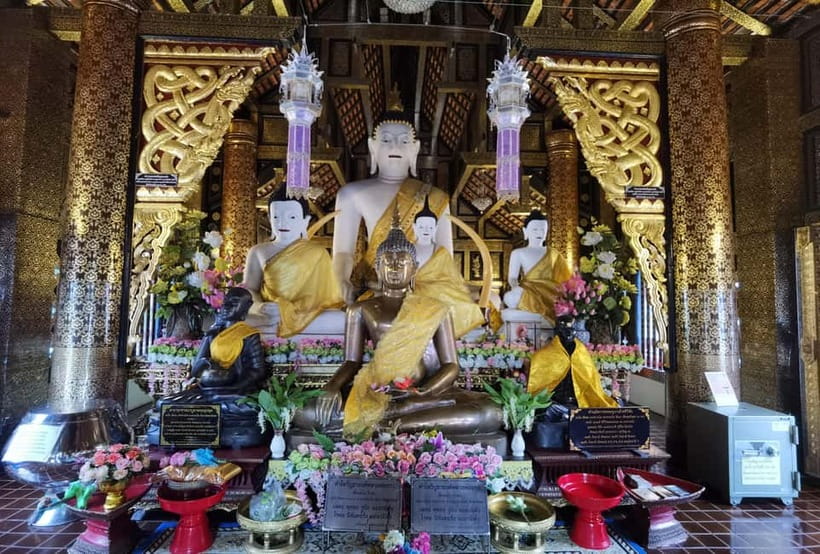
Wear clothing that covers your shoulders and knees, and avoid shorts, short skirts, and sleeveless tops. Bring water, sun protection, and shoes that are easy to remove.
Arrive ready to walk for four hours, with regular standing and temple entry routines. Keep your phone available for photographs, but do not use it in a way that disrupts worship or the group.
The tour is offered in Thai and English. If you have hearing concerns, stay close to the guide and ask for clear explanations. Also remember that drones, smoking, alcohol, drugs, climbing, and nudity are prohibited.
Should you book it?
Book this tour if you want the meaning behind Chiang Mai’s temples, not just their appearance. The combination of Wat Chedi Luang’s earthquake-damaged chedi, Wat Phan Tao’s Lanna woodwork, and Wat Phra Singh’s revered Buddha image gives you a useful introduction to the old city.
The strongest reason to book is the chance to learn from a guide with direct experience of Buddhist life. The main tradeoffs are the extra temple fees, the lack of hotel transport, and the need to cope with heat and several hours of standing.
At $15, I consider it a very good buy for a curious visitor who values explanation, questions, and cultural context. If you want a fast photo tour, choose something shorter. If you want to understand what you are looking at, this is the better use of a morning.
FAQ
How long does the Chiang Mai temple walking tour last?
The tour lasts four hours.
What time does the tour start?
The supplied schedule states that the tour starts at 8:20 am. Starting times should be checked when booking.
Which temples are included?
The main route includes Wat Chedi Luang, Wat Phan Tao, and Wat Phra Singh.
Is transportation included?
No. Hotel pickup and drop-off are not included, and the activity is a walking tour.
Are temple entrance fees included in the price?
No. Wat Chedi Luang costs 50 THB and Wat Phra Singh costs 40 THB. Wat Phan Tao has no listed entrance fee in the supplied details.
What languages does the guide speak?
The tour is offered with a live guide in Thai or English.
What clothing is required?
Shorts, short skirts, and sleeveless shirts are not allowed. Wear respectful clothing that covers your shoulders and knees.
Can I cancel the booking?
You can cancel up to 24 hours in advance for a full refund. A reserve-now, pay-later option is also available.
Is the tour suitable for everyone?
It is not suitable for pregnant women, babies under one year, or people over 95 years old. The activity also requires walking, standing, and removing shoes at temple buildings.
More Walking Tours in Chiang Mai
- Chiang Mai: Historic Temples and City Guided Walking Tour
★ 4.7 · 650 reviews - Bangkok: City Highlights Temple and Market Walking Tour
★ 4.5 · 3,990 reviews - Bangkok: Grand Palace and Wat Phra Kaew Guided Walking Tour
★ 4.4 · 2,417 reviews - Bangkok: Wat Pho and Wat Arun Guided Walking Tour
★ 4.6 · 1,720 reviews
Just added in Chiang Mai
- Meditation Retreat and Self-Care in Nature★ 5.0 · 46 reviews
- 1 Hour Deep Tissue Thai Massage with Balm – Free Transportation★ 5.0 · 64 reviews
- Whitewater Rafting Adventure★ 5.0 · 205 reviews
- Chiang Mai: Evening Chanting & Meditation★ 4.5 · 69 reviews
- 8 hour Sticky waterfall, ATV and White water rafting Adventures★ 5.0 · 308 reviews
- Chiang Mai: Art in Paradise Illusion Museum Entry Ticket★ 4.4 · 82 reviews
- Top Pick – Full or Half Day @Elephant in Wild Sanctuary ChiangMai★ 4.5 · 229 reviews
- The 10 Tastings of Chiang Mai With Locals: Private Street Food Tour★ 5.0 · 216 reviews
Temple & Palace Tours, compared.
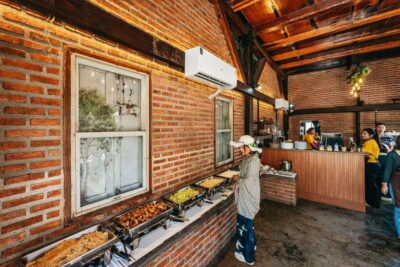
From Bangkok: Ayutthaya Temples Guided Tour with Lunch
Read our review →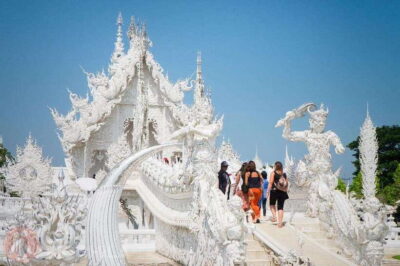
Chiang Mai: Chiang Rai Temples, Karen Tribe and Hot Springs
Read our review →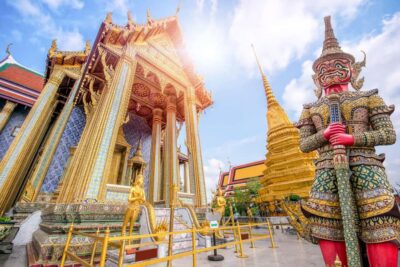
Bangkok: City Highlights Temple and Market Walking Tour
Read our review →
Bangkok by Night: Temples, Markets and Food Tuk-Tuk Tour
Read our review →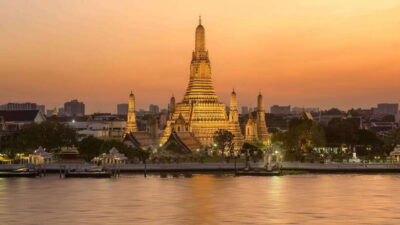
Bangkok: Grand Palace, Wat Pho, and Wat Arun Guided Tour
Read our review →
Krabi: Tiger Cave Temple, Emerald Pool and Hot Springs Tour
Read our review →
Bangkok: Temples, Canals & Local Life Bike Tour
Read our review →
Chiang Rai White Temple and Blue Temple Day Tour
Read our review →Browse the lists this tour appears in