Reviewed · TOURS IN CHIANG MAI
Chiang Mai: Nighttime City Highlights by EV Tram
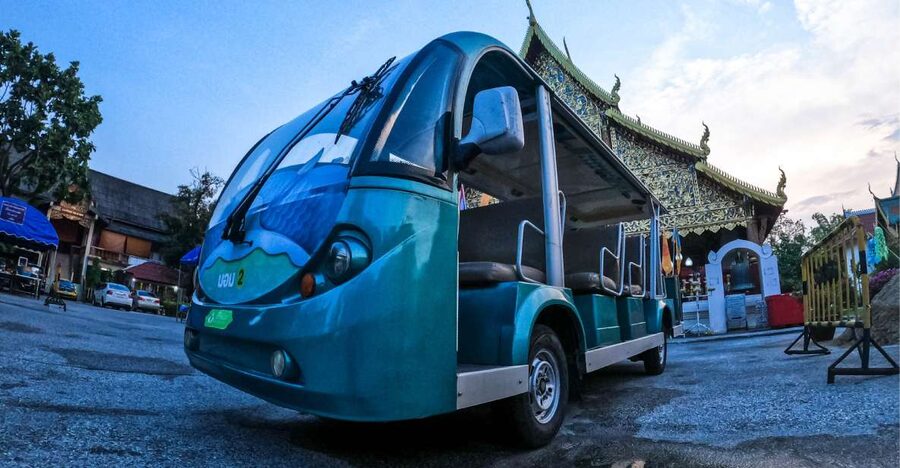
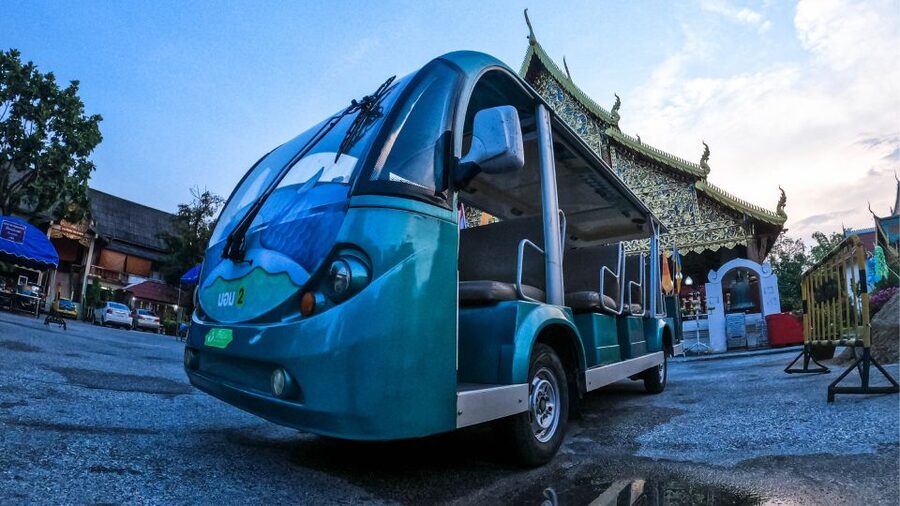
Chiang Mai’s old city takes on a calmer feel after sunset, and this quiet electric tram ride gives you a useful first look without asking you to walk temple to temple. You’ll pass moats, gates, shrines, and markets, then stop for local snacks at Chiang Mai Gate.
I like two things here: the mix of temples and street food, and the way a good guide, including guides such as John, Mr. Tui, B, or B, can explain small details you might miss alone. The main consideration is time. Two hours goes quickly, so most stops are short, with several temples viewed from the tram rather than explored at length.
Key points to know before booking
- A gentle first-night introduction: The 6 to 8 p.m. schedule helps you get your bearings before spending later days on foot.
- An open-air EV tram: You ride quietly around the old city, with an evening breeze and less walking than a standard temple tour.
- Four main stops: Wat Lok Moli, Wat Pa Pao, Chiang Mai Gate Market, and Wat Chedi Luang receive the most attention.
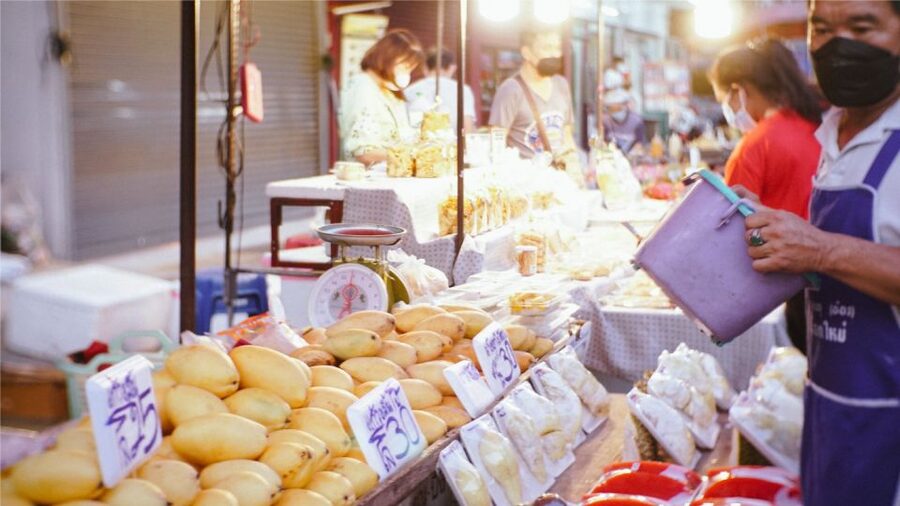
- Food is part of the tour: A local market stop includes Thai snacks, with mango sticky rice singled out as a favorite.
- Guide quality matters: John is noted for humor, clear English, and careful answers, while Mr. Tui, B, and Lot have also led tours.
- Good value at $27: The price includes the tram, English-speaking guide, listed admission fees, water, snacks, and travel accident insurance.
Why the EV tram works well in Chiang Mai after dark
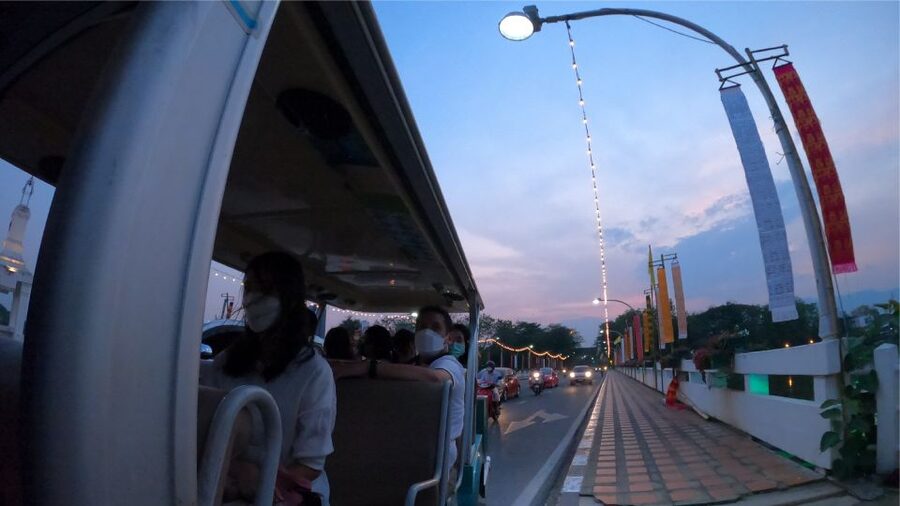
The clever part of this tour is not speed. It is the view you get between the stops. From an open-air tram, you can watch the old city slide past without dealing with traffic, route planning, or tired feet.
The electric motor runs quietly. That matters around temples, where a noisy vehicle would spoil the mood. You can hear the guide, look up at gateways and roofs, and catch the evening air as the tram moves around Chiang Mai’s moat and old gates.
This is not a full temple study tour. It is a broad introduction. You will see several important sites, but only Wat Lok Moli and Wat Pa Pao receive substantial guided stops. Wat Chedi Luang gets a brief stop, while several others are photo stops or pass-bys.
That makes the tour especially useful during your first evening. You get a map in your head, a bit of cultural context, and a short list of places to revisit later. I would not choose it as my only temple experience in Chiang Mai, but I would consider it a smart way to begin.
Other trips people book in Chiang Mai:
- Half-Day Thai Cooking Class at Organic Farm in Chiang Mai
★ 5.0 · 19,087 reviews - Chiang Mai: Elephant Sanctuary, Waterfall & Bamboo Rafting
★ 4.9 · 9,160 reviews - Chiang Mai: Doi Inthanon National Park Eco-Friendly Tour
★ 4.6 · 6,667 reviews
Starting at the Three Kings Monument
Meet your guide at the Three Kings Monument at 6 p.m. Look for a white shirt with the Touring Center logo. The meeting point is central to the old city, and the short opening talk gives you basic context about Chiang Mai before you board.
The monument is a sensible place to start because the tour uses it as both meeting point and final drop-off. You do not need to arrange hotel pickup, and you return to the same area at about 8 p.m.
The first guided section lasts around 10 minutes. That is enough for an introduction, not a full history lecture. A strong guide can use this moment to explain how the old city fits together and prepare you for the temples ahead.
The guides make a real difference. John is praised for his humor, clear English, and ability to answer questions. Mr. Tui is described as patient and well informed, while B and Lot have also been praised for friendly guiding. Your guide is not guaranteed to be John, so book this for the route and format rather than one specific person.
Wat Chiang Man and the first tram ride
After boarding, you pass Wat Chiang Man. The planned time here is only about five minutes, and it is listed as a photo stop and pass-by.
That short visit tells you what to expect. This is a moving overview rather than a series of long temple visits. If you want time to study every mural, shrine, and architectural detail, you will need to return on your own.
Still, seeing Wat Chiang Man from the tram helps place the old city’s temples within the wider route. The guide can point out details as you pass, and you avoid using the first part of your evening on navigation.
Wat Lok Moli, one of the main stops
Wat Lok Moli receives about 25 minutes, making it one of the more substantial temple visits. You get a photo stop, guided sightseeing, and time to look around.
The temple is described as one of Chiang Mai’s oldest. Its position along the route makes it a good contrast to the market later in the evening. Here, the focus is on temple form, age, and religious use rather than shopping or food.
Twenty-five minutes is enough for an introduction and photos. It is not enough for a slow, detailed examination of every feature. I like this balance for a first evening, since the guide keeps the visit moving and you still get a clear sense of the place.
The stop can also feel calmer than the market section. Several reviews describe the evening temple visits as peaceful, and the quiet EV makes that part of the experience fit the setting.
Same base, a different sort of day:
- Chiang Mai: Elephant Sanctuary & Waterfall Group Tour
★ 4.9 · 5,780 reviews - Chiang Mai: Chiang Rai Temples, Karen Tribe and Hot Springs
★ 4.7 · 5,401 reviews - Chiang Mai: Cooking Class, Market & Thai Herbs Garden Tour
★ 4.9 · 4,824 reviews - Chiang Mai: Authentic Cooking Class with Market & Farm Visit
★ 4.9 · 4,546 reviews
Wat Pa Pao and Burmese-Shan design
The next main temple visit is Wat Pa Pao, with about 15 minutes for a guided look. The route also passes Wat Nong Kham, noted for its Burmese-Shan style, as well as other local temples.
This is one of the more useful cultural parts of the tour because Chiang Mai’s religious buildings are not all designed in exactly the same way. A good guide can point out differences in style and explain how local Buddhist traditions connect with the wider region.
Again, keep your expectations practical. Wat Nong Kham is listed as a photo stop and pass-by, not a long visit. You will get an introduction from the tram, but you may not have time to explore its grounds.
Wat Pa Pao gets more attention, though 15 minutes remains brief. For you, the value comes from seeing another temple type and hearing an explanation without needing to research the details before arriving.
From Warorot Market to Tha Phae Gate
The tram passes Warorot Market and Tha Phae Gate on the way to Chiang Mai Gate Market. These are not extended stops, but they help connect the old city with its commercial life.
Warorot Market is included as a pass-by, so do not book this expecting time to shop there. The same applies to Tha Phae Gate. You will see these important city landmarks from the tram, with the guide pointing out what matters as you go.
This moving section is one reason the tram is more useful than a simple list of temple visits. Chiang Mai is not only about old religious buildings. Markets, gates, roads, and daily trade are part of the city’s character too.
The route also gives you a break from getting in and out of a vehicle. After the short temple stops, you can sit back and watch the city at street level.
Chiang Mai Gate Market and local snacks
The longest food-focused stop is Chiang Mai Gate Market, where you spend about 25 minutes. This is the most social part of the tour, with street food, local snacks, and time to look around with your guide.
You should expect a brief taste of the market, not a full evening meal. Drinking water and some snacks are included, while other meals and personal purchases are not. The food is a clear highlight for many people, and mango sticky rice is specifically worth seeking out.
The guide can make this stop much more useful. Instead of guessing at unfamiliar food, you can ask what you are looking at and get help choosing something suitable. The food experience is also a nice counterpoint to the formal temple visits.
At $27, the included snack and market guidance add real value. You are not paying only for a ride. You are getting a short guided introduction to local food, plus the convenience of reaching several sites in one compact route.
Still, bring modest expectations about quantity. This is not a dedicated food tour, and the included snack should not replace dinner plans if you are hungry.
Wat Chedi Luang and the return route
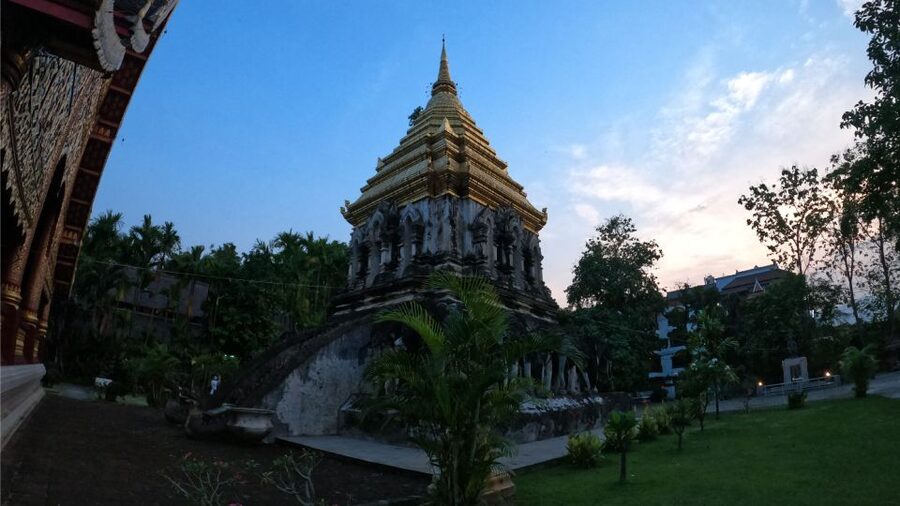
Wat Chedi Luang receives around 10 minutes and is listed as a photo stop and pass-by. It is one of Chiang Mai’s most important religious and civic sites, known for its enormous chedi and ceremonies.
The short timing is the main limitation here. The tour gives you a look and some explanation, but not the sort of extended visit you would want if Wat Chedi Luang is high on your list.
You also pass Wat Phra Singh Woramahawihan before returning to the Three Kings Monument. Like Wat Chiang Man, Wat Nong Kham, Warorot Market, and Tha Phae Gate, it is part of the visual overview rather than a full stop.
By the end, you will have seen a good spread of the old city. You will also know which places deserve a longer return visit during daylight.
What the $27 price includes
At $27 per person, the tour offers solid value if you want transport, guiding, and a compact introduction in one booking. The price includes the EV tram, professional English-speaking guide, listed admission fees and activities, drinking water, some snacks, and travel accident insurance.
Several practical costs are bundled together. You do not need to pay separately for the tram ride, and the listed temple admissions are included. Some guides have also paid for temple entry or food during individual tours, but I would not treat that as a guaranteed part of every booking.
The tour is available for private or small groups. That matters because a smaller group gives you a better chance to ask questions and hear the guide while the tram is moving.
There are no hotel transfers, optional meals, or personal purchases included. If you are staying outside the meeting area, plan your own way to the Three Kings Monument and back.
The booking terms are flexible. You can cancel up to 24 hours ahead for a full refund, and you can reserve now and pay later. Check the available start time when booking, though the stated schedule is 6 to 8 p.m.
Who will get the most from this evening ride
I would recommend this tour to first-time visitors who want an easy orientation. The route covers enough temples, gates, and markets to help you understand how the old city is laid out.
It also suits families. One review describes young children being accommodated well, and the tram avoids the strain of walking between every stop. The open-air design gives you some air and a clear view, though you should still be ready to get out for the guided visits.
It is a good choice if you have already spent the afternoon walking. The tram lets you continue sightseeing without turning the evening into another long march.
The format is less suited to you if you want long temple visits, serious photography time, or a full dinner at the market. You may find the 5 to 25 minute stops too short for close study.
I also suggest taking it early in your Chiang Mai stay. The route helps you identify places to revisit, and the guide can make the city feel less confusing during the rest of your trip.
Should you book the Chiang Mai EV tram?
Book it if you want a relaxed, affordable introduction to Chiang Mai after dark, especially on your first night or after a day of walking. The strongest features are the quiet open-air vehicle, the mix of temples and market food, and the chance to learn from an engaging English-speaking guide.
Skip it if you want a slow, detailed tour of each temple or a full food crawl. For $27, you are buying range and convenience, not long visits at every site.
My practical verdict: this is a strong choice for families, first-time visitors, and anyone who wants to see the old city with less effort. The market snack, quiet tram, and lively guiding give the two-hour route more character than a simple sightseeing transfer.
FAQ
How long does the Chiang Mai EV tram tour last?
The tour lasts two hours, from about 6 p.m. until 8 p.m.
Where does the tour begin and end?
The tour begins and ends at the Three Kings Monument in Chiang Mai’s old city.
How do I identify the guide?
Look for a guide wearing a white shirt with the Touring Center logo.
What language is the tour conducted in?
The live tour guide speaks English.
Is food included?
Drinking water and some snacks are included. Other meals and personal food purchases are not included, though the tour visits Chiang Mai Gate Market for local snacks.
Are temple admission fees included?
The listed admission fees and activities are included in the tour price.
Can I cancel the booking?
You can cancel up to 24 hours in advance for a full refund. You can also reserve now and pay later.
Just added in Chiang Mai
- No.1 Chiang Mai: Historical City Bike Tour★ 5.0 · 10 reviews
- Inthanon Day Trip from Chiang Mai with Lunch – Group or Private★ 5.0 · 182 reviews
- Jewellery Making Class with Silversmithing in Chiang Mai★ 4.5 · 11 reviews
- 10KM Inflatable Kayaking Adventure★ 5.0 · 23 reviews
- Chiang Mai: Historic Old City Bike Tour – Morning or Night★ 5.0 · 202 reviews
- Inthanon Heaven Trail(Living Green Elephant Sanctuary)★ 5.0 · 52 reviews
- Half Day Car Hire with an English Speaking Driver in Chiang Mai★ 5.0 · 16 reviews
- Half-day E-bike Nam Phrae (hilly, fully paved roads, GUIDED)★ 5.0 · 122 reviews
Tours in Chiang Mai, compared.
Half-Day Thai Cooking Class at Organic Farm in Chiang Mai
Read our review →
Chiang Mai: Elephant Sanctuary, Waterfall & Bamboo Rafting
Read our review →
Chiang Mai: Doi Inthanon National Park Eco-Friendly Tour
Read our review →
Chiang Mai: Elephant Sanctuary & Waterfall Group Tour
Read our review →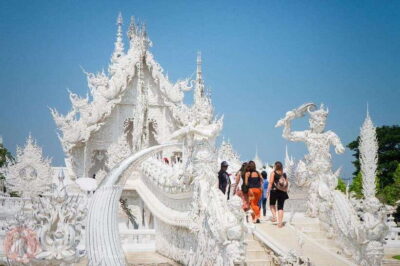
Chiang Mai: Chiang Rai Temples, Karen Tribe and Hot Springs
Read our review →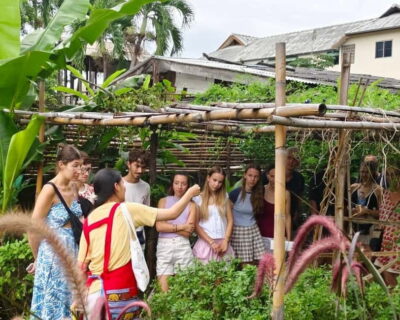
Chiang Mai: Cooking Class, Market & Thai Herbs Garden Tour
Read our review →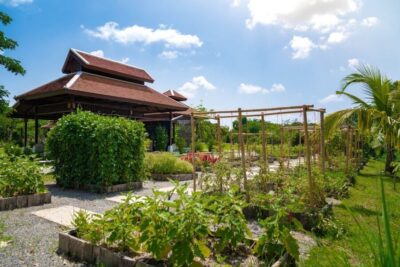
Chiang Mai: Authentic Cooking Class with Market & Farm Visit
Read our review →