
Reviewed · THAI COOKING CLASSES
Chiang Mai: Cooking Class, Market & Thai Herbs Garden Tour
Thai curry paste is not a jar of red or green sauce here. You pound chilies, herbs, and spices yourself with a mortar and pestle, then use the paste in a curry you cook and eat. I like the local market visit, which gives names and purpose to ingredients you may otherwise pass in a Thai shop. I also like the choice of dishes, since you can build a meal around your own tastes.
The main thing to consider is time. Three and a half hours sounds generous, but the market stop is fairly short and the class moves at a tidy pace. Hotel pickup is included within 3 km of Chiang Mai Old Town, but traffic can cause delays, and hotels farther out require you to meet the group elsewhere.
Key points at a glance
- Pound your own curry paste: Choose red, green, Phanaeng, Massaman, or Khao Soi paste and make it from scratch.
- Start at a real local market: Learn how herbs, spices, vegetables, and other Thai ingredients are used before cooking.
- Choose your menu: Pick from several starters, main dishes, curry styles, and mango sticky rice.
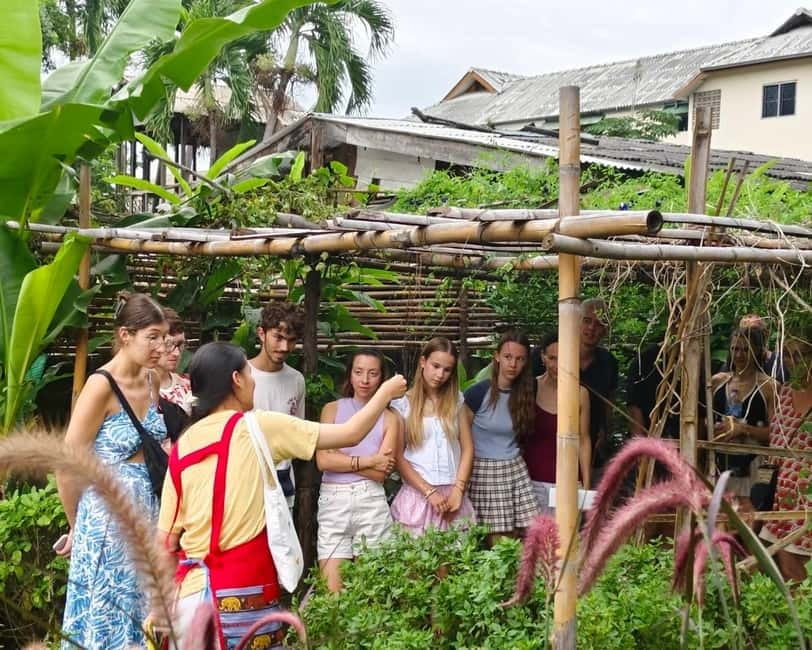
- Cook in an organic kitchen garden: Your meal is prepared and eaten in a relaxed garden setting with a Thai family.
- Expect warm, lively instruction: Wave, Tu, Flook, Kat, Balloon, Toey, Mew, and other English-speaking instructors lead the class.
- Good flexibility for diets: Vegetarian, vegan, gluten-free, halal, and allergy-friendly alternatives are available.
A market visit that gives Thai cooking some context
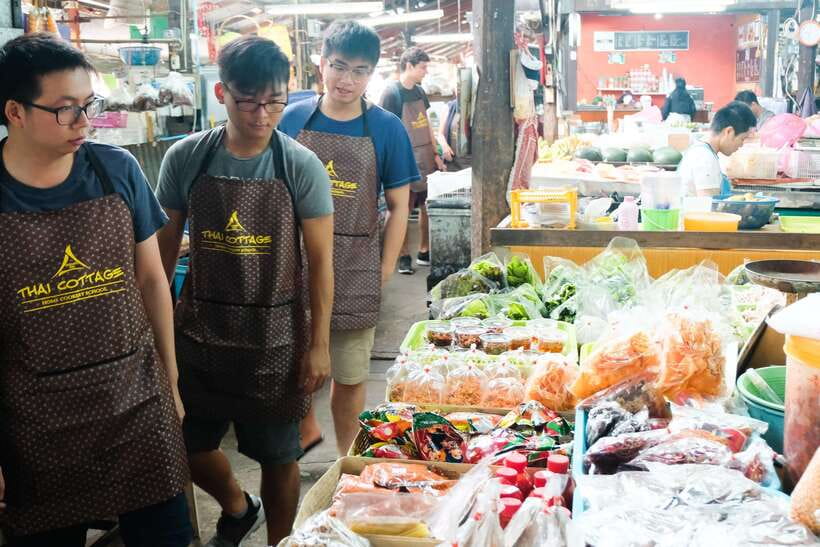
The experience begins with pickup from your hotel, then a short trip to a local market. The transfer area covers hotels within 3 km of Chiang Mai Old Town. You are asked to wait in your hotel lobby 15 to 30 minutes before class, though Chiang Mai traffic can shift the timing.
The market stop is not designed as a long food tour. Think of it as a useful introduction before the cooking begins. You walk among local produce and learn about the herbs, spices, vegetables, and other ingredients that will appear in your dishes. That connection matters. Thai cooking can seem like a blur of unfamiliar leaves, roots, chilies, and sauces when you first encounter it. Seeing the ingredients whole makes the later cooking steps easier to follow.
The market also adds a local touch that a classroom-only course cannot provide. You get a look at everyday shopping rather than a staged display made just for visitors. The stop may feel brief if you enjoy markets and want more time to browse, but it gives you enough information to understand the food you are about to prepare.
One practical tip: wear comfortable clothes and expect to walk around the market before handling food. There is no need to dress formally. Keep personal shopping separate from the class plan, since personal expenses are not included.
More Cooking Classes in Chiang Mai
- Half-Day Thai Cooking Class at Organic Farm in Chiang Mai
★ 5.0 · 19,087 reviews - Chiang Mai: Authentic Cooking Class with Market & Farm Visit
★ 4.9 · 4,546 reviews - Thai and Akha Cooking Class in Chiang Mai
★ 5.0 · 4,358 reviews
Choosing dishes that fit your appetite
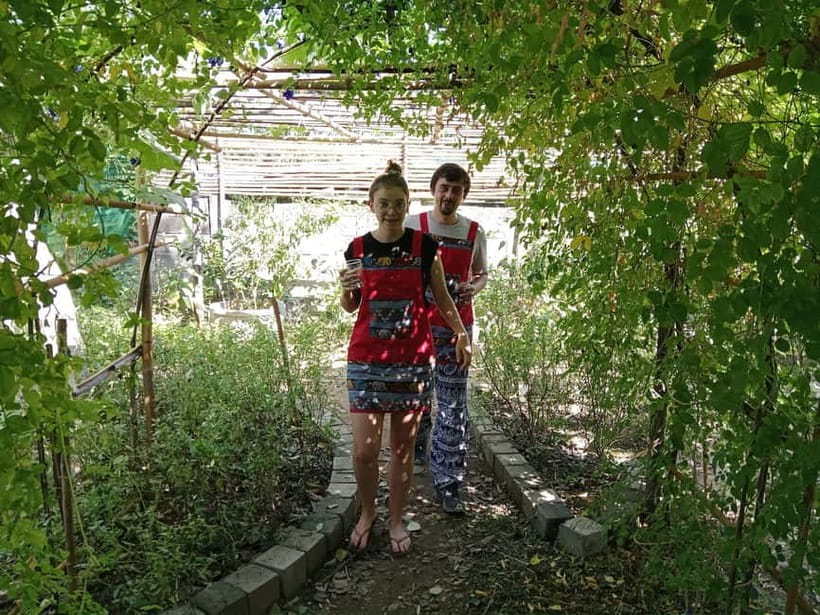
After the market, you travel to the organic kitchen garden connected with Thai Cottage Home Cookery School. The menu offers several choices in each category, so you are not locked into one fixed meal.
For a starter, you can choose among:
- Hot and sour prawn
- Local chicken soup
- Chicken in coconut milk
- Turmeric chicken soup
The selection lets you decide how spicy, creamy, or light you want the first course to be. A hot and sour prawn dish points toward the sharp, spicy side of Thai cooking, while chicken in coconut milk gives you a softer, rounder flavor. If you prefer to avoid strong heat, tell the instructor early. You can make your food spicy or non-spicy.
For the main course, options include Pad Thai, chicken fried rice, fried chicken with cashew nuts, and Pad Kra Pao. This is one of the class’s best features. You get familiar Thai favorites, but you can also try something beyond the standard restaurant order.
The cooking is hands-on. You prepare ingredients yourself, then cook under the instructor’s direction. Some prep work is organized in advance, which helps the class keep moving during its 210-minute schedule. That means you spend less time waiting and more time learning how the ingredients come together.
The choice system works especially well for groups. If you are visiting with family or friends, each person can select a different dish and share the results. That gives you a wider tasting menu without ordering several restaurant meals.
The mortar and pestle are the heart of the class
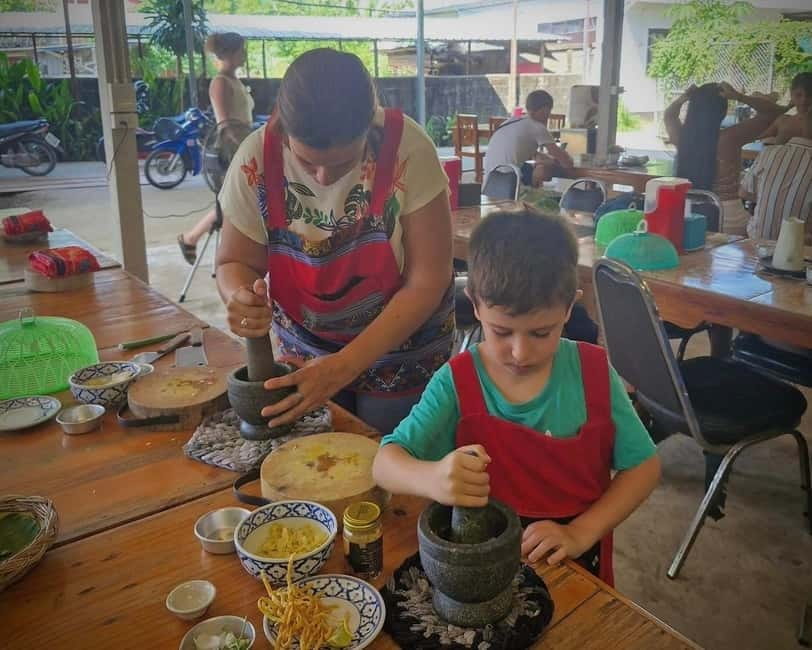
The most memorable task is making curry paste from scratch. You choose red, green, Phanaeng, Massaman, or Khao Soi curry paste, then pound the ingredients with a mortar and pestle.
This is more work than opening a packet, but that is the point. You feel the texture change as the ingredients break down, and you learn that curry paste is built from layers of herbs, spices, chilies, and aromatics. The process also shows why Thai curries taste different from one another even when they share a few basic ingredients.
The choice of curry style gives you room to match your preferences. Green and red curry are familiar starting points, while Massaman, Phanaeng, and Khao Soi offer different routes through northern and central Thai flavors. Your instructor can help you decide if you are unsure.
Once the paste is ready, you use it to prepare chicken and coconut milk curry. This makes the lesson practical. You do not pound paste as a side demonstration and then move on to another dish. You see the direct result in the food you eat.
Expect the mortar and pestle to require some effort. The task is simple, but not entirely effortless, especially if you are making a large quantity. That physical work is part of the fun, and it gives the class more substance than a demonstration where everything arrives already finished.
Cooking with Wave, Tu, Flook, and the rest of the team
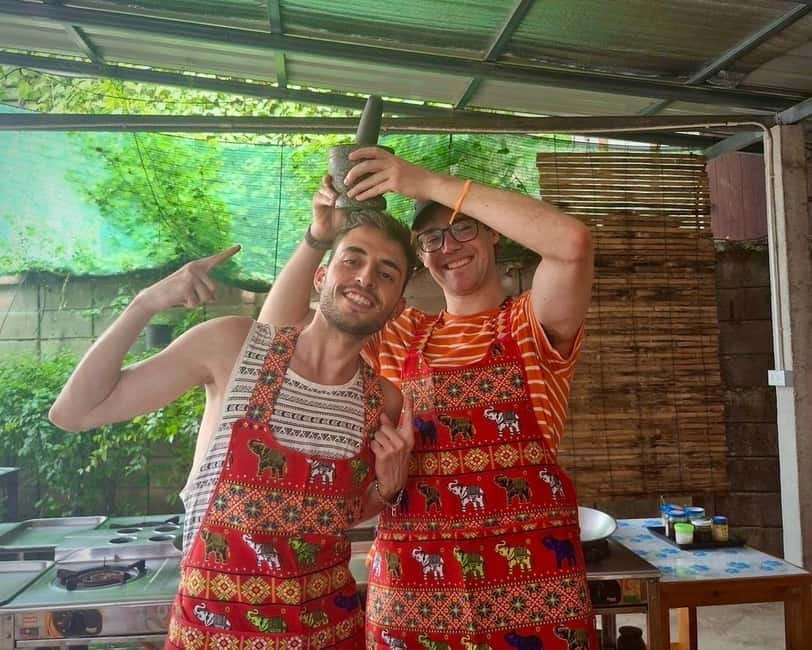
The English-speaking instructors are central to the experience. Named instructors include Wave, Tu, Flook, Kat, Balloon, Toey, and Mew. The exact instructor depends on the class date, but the teaching style described across the experience is friendly, active, and easy to follow.
Wave is noted for clear English, humor, and lively explanations. Tu is patient and good at adapting recipes, including showing what you can use when you dislike a particular ingredient. Flook brings plenty of energy and helps keep the class relaxed. Kat is especially good at explaining how market ingredients fit into traditional dishes, while Balloon is known for keeping the group engaged and making the process fun.
These details matter because cooking classes can vary greatly depending on the instructor. Here, the guide is not simply standing at the front and reciting instructions. You can ask questions, adjust the spice level, and get help as you prepare your own food.
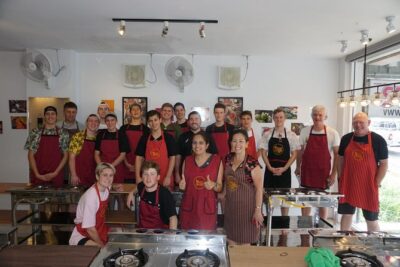
The class setup is organized, but you should not expect a quiet private lesson. You cook alongside other people, and the social side is part of the experience. Groups have included families and mixed-age parties, with children as young as eight taking part in one family booking. The official minimum age is five, so this can work for families, although younger children may need help with chopping, hot pans, and the mortar and pestle.
Other kitchens to cook in around Chiang Mai:
- Chiang Mai: Cooking Class with Market and Pickup
★ 4.9 · 1,365 reviews - Chiang Mai: Cooking Class with Organic Farm at Mama Noi
★ 4.9 · 1,151 reviews - Full Day Thai Cooking at Farm (Chiang Mai)
★ 5.0 · 1,127 reviews - Chiang Mai: HALF-DAY COOKING COURSE at a Thai Cooking Farm
★ 4.9 · 705 reviews
Eating in the organic kitchen garden
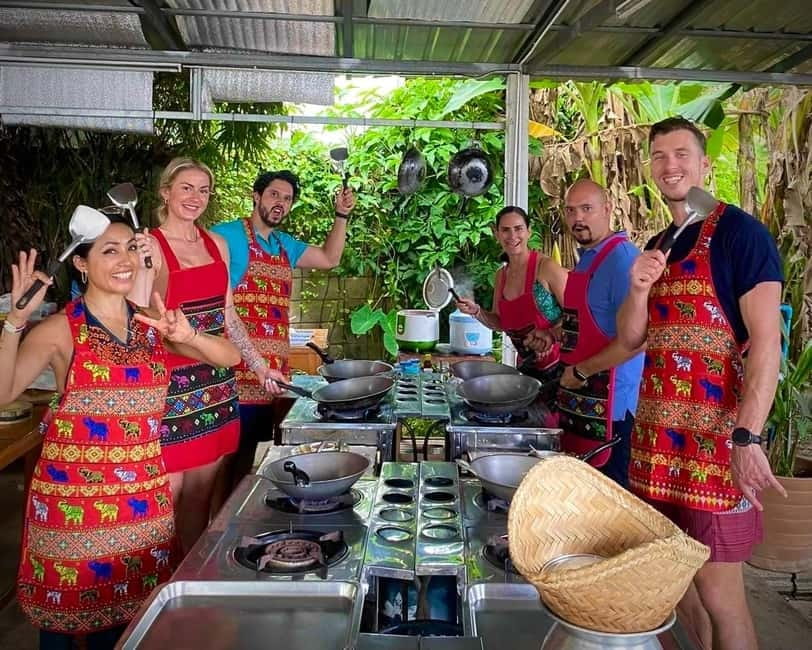
After cooking, you sit down to eat in the organic kitchen garden. This is a pleasant change from a standard indoor cooking classroom. The garden setting links the meal to the herbs and plants you have just been discussing.
You eat in traditional Thai style, with the dishes prepared by your own group. The meal is not just a tasting spoonful. You make several dishes, including your selected starter, main course, curry, and dessert, then sit down to enjoy the results.
Dessert is sweet sticky rice with mango. It is a smart finish to a spicy meal, with a soft, sweet texture that balances the chilies and herbs. If you have eaten Thai food in restaurants, making this dessert yourself gives you a useful final recipe to take home.
The garden setting also helps the class slow down at the end. Cooking can feel busy, especially when several burners and dishes are in motion. Sitting down together gives you time to taste what you made and compare different menu choices.
Dietary needs and spice levels
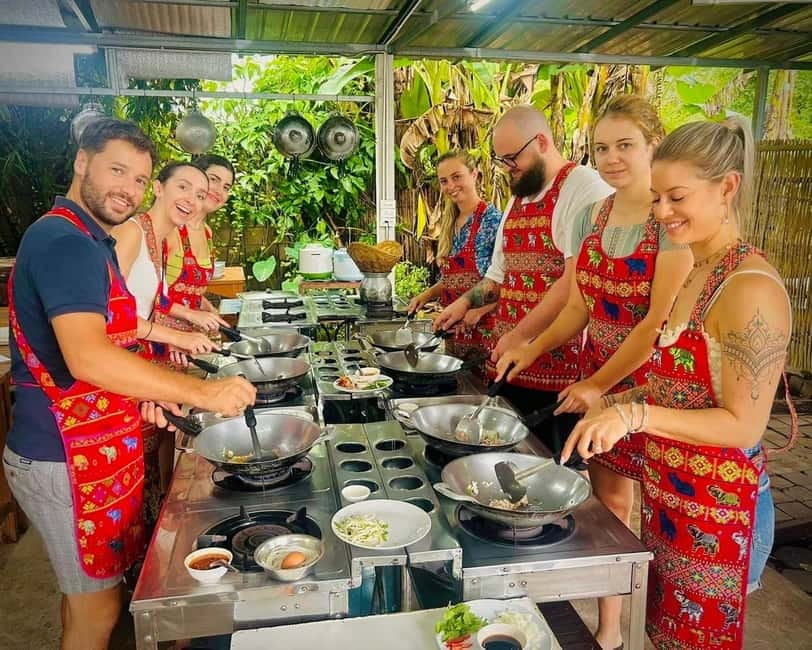
This class is unusually flexible for a set-menu cooking activity. Vegetarian, vegan, gluten-free, halal, and allergy-friendly food can be arranged, with alternative ingredients available.
Tell the provider about your needs when booking and remind the instructor at the start. The same advice applies to spice. You can request spicy or non-spicy food, so you do not need to tolerate heat beyond your comfort level.
Still, dietary flexibility does not mean you should wait until the pan is hot to mention an allergy. Early notice gives the kitchen time to prepare suitable alternatives and helps the instructor explain which ingredients are being changed.
The menu includes meat, prawns, chicken, fish sauce or similar Thai cooking elements may be relevant to some diets, and the exact replacement depends on your needs. Ask direct questions before cooking if you are unsure about a sauce or paste.
Is $31 good value for 210 minutes?
At $31 per person, this is a strong value for a half-day activity. The price includes hotel pickup and drop-off within the stated area, the market visit, the herb garden, instruction, all cooking ingredients, and the digital recipe book.
The value is not only in the amount of food. You get a market orientation, ingredient instruction, hands-on preparation, several dishes, a garden meal, and recipes you can use after returning home. A restaurant meal would feed you once. This class gives you food plus a method for recreating it.
The digital recipe book is especially useful. Thai cooking often depends on ingredients that are difficult to identify later, so having the recipes online gives you a better chance of remembering what you learned. It also lets you adjust dishes at home for spice, vegetarian ingredients, or allergies.
The main limit is that the class is not a full market-shopping excursion or an advanced chef course. The market portion is short, and the cooking is designed to be approachable. If you already cook Thai food regularly, you may want more detail on regional technique. For most visitors, the balance of explanation, participation, and eating makes the price sensible.
Timing, transfers, and what to bring
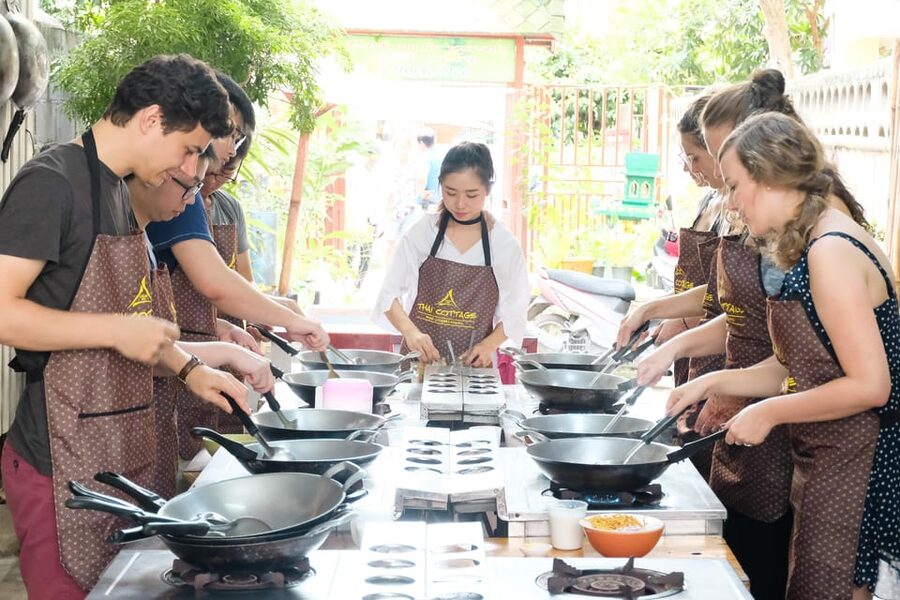
The full activity lasts 210 minutes. That includes transport elements, the market visit, the garden stop, cooking, and the meal, so do not expect three and a half hours of nonstop cooking.
Pickup is included within 3 km of Chiang Mai Old Town. Be ready in the hotel lobby 15 to 30 minutes before the stated start time. Traffic can delay the vehicle, and hotels outside the pickup area require you to meet at the designated meeting point.
The return transfer to your hotel is included. This is useful after a class involving food preparation, market walking, and a full meal. It also removes the need to arrange transport to a location outside the old city.
Wear comfortable clothes. Alcohol and drugs are not allowed, and alcoholic drinks are not included, though alcohol may be available for purchase. Children under five and people over 95 are not accepted for the activity.
Free cancellation is available up to 24 hours in advance for a full refund. You can also reserve now and pay later, which helps if you are arranging several Chiang Mai activities and want to keep your schedule flexible.
Who will enjoy this Chiang Mai cooking class?
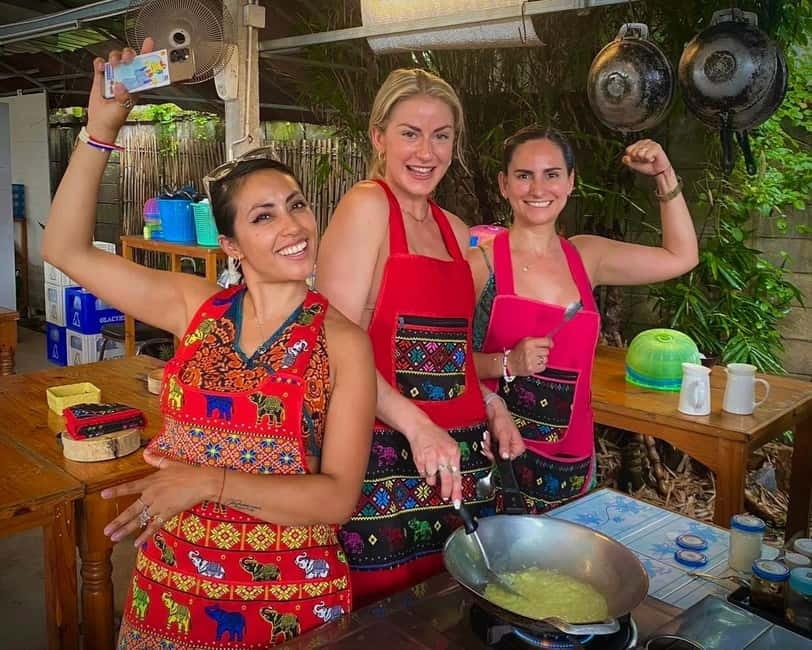
I would recommend it most strongly if you want to understand Thai food rather than simply eat it. The market visit gives you a starting point, the curry-paste session teaches a basic technique, and the menu choices let you focus on dishes you actually want to cook again.
It is also a good fit for families and small groups. Different people can choose different dishes, then share the meal. The friendly instructor style helps keep children and first-time cooks involved, though adults should expect to assist younger children around heat and sharp tools.
Vegetarians, vegans, people avoiding gluten, and those with certain allergies can also consider it, provided they give advance notice. The ability to adjust spice makes the class suitable for people who enjoy Thai flavors but do not want a fiery meal.
I would be less likely to choose it if you want a long, detailed market tour, a private class, or advanced culinary training. The experience is social and organized for a group. It favors practical fun over technical depth.
Should you book it?
Book this class if you have one free half-day in Chiang Mai and want an activity that combines food, local shopping, instruction, and a proper meal. The strongest reasons are the ingredient-focused market stop, the chance to make curry paste yourself, the flexible menu, and the garden setting.
Choose your dishes before you arrive if you already know your favorites, but keep an open mind about trying a curry style you have not ordered before. Give early notice about dietary needs, allow extra time around pickup, and expect a lively group class rather than a private lesson.
At $31, with transfers, ingredients, instruction, food, and recipes included, this is an easy recommendation for most first-time Thai cooks. It gives you something to eat in Chiang Mai and something useful to take home.
FAQ
How long does the Chiang Mai cooking class last?
The activity lasts 210 minutes, or three and a half hours. This includes the market visit, Thai herbs garden, cooking class, meal, and transfers connected with the activity.
What dishes can I cook?
Starter choices include hot and sour prawn, local chicken soup, chicken in coconut milk, and turmeric chicken soup. Main choices include Pad Thai, chicken fried rice, fried chicken with cashew nuts, and Pad Kra Pao. You can also make curry and sweet sticky rice with mango.
Which curry pastes can I make?
You can choose red, green, Phanaeng, Massaman, or Khao Soi curry paste. You make the paste from scratch with a mortar and pestle, then use it in a chicken and coconut milk curry.
Is hotel pickup included?
Yes. Free pickup and drop-off are included for hotels within 3 km of Chiang Mai Old Town. If your hotel is outside the pickup area, you need to meet the group at the stated meeting point.
What language is the class taught in?
The class is taught in English. Instructors include Wave, Tu, Flook, Kat, Balloon, Toey, and Mew, depending on the class date.
Can I request vegetarian or vegan food?
Yes. Vegetarian and vegan food are welcome, and alternative ingredients are available. Gluten-free, halal, and allergy-friendly options can also be arranged.
Can I choose how spicy my food is?
Yes. You can request spicy or non-spicy food according to your preference.
What should I bring?
Wear comfortable clothes. Alcohol and drugs are not allowed. Alcoholic beverages are not included, though they may be available for purchase.
Can I cancel the booking?
You can cancel up to 24 hours in advance for a full refund. Reserve-now-and-pay-later booking is also available.
Just added in Chiang Mai
- Meditation Retreat and Self-Care in Nature★ 5.0 · 46 reviews
- Chiang Mai: Evening Chanting & Meditation★ 4.5 · 69 reviews
- 1 Hour Deep Tissue Thai Massage with Balm – Free Transportation★ 5.0 · 64 reviews
- Whitewater Rafting Adventure★ 5.0 · 205 reviews
- 8 hour Sticky waterfall, ATV and White water rafting Adventures★ 5.0 · 308 reviews
- Chiang Mai: Art in Paradise Illusion Museum Entry Ticket★ 4.4 · 82 reviews
- Top Pick – Full or Half Day @Elephant in Wild Sanctuary ChiangMai★ 4.5 · 229 reviews
- The 10 Tastings of Chiang Mai With Locals: Private Street Food Tour★ 5.0 · 216 reviews
Thai Cooking Classes, compared.
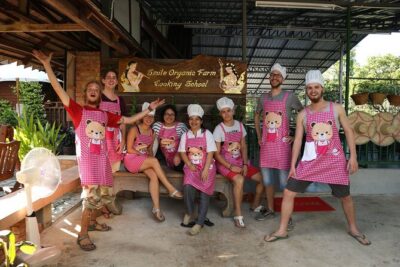
Half-Day Thai Cooking Class at Organic Farm in Chiang Mai
Read our review →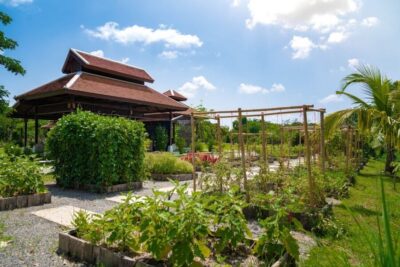
Chiang Mai: Authentic Cooking Class with Market & Farm Visit
Read our review →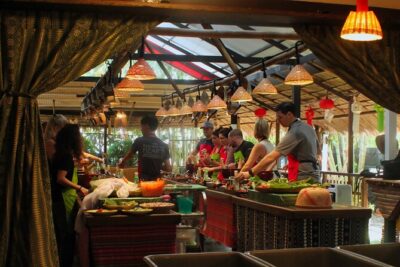
Phuket Thai Cooking Class with Market Tour Option
Read our review →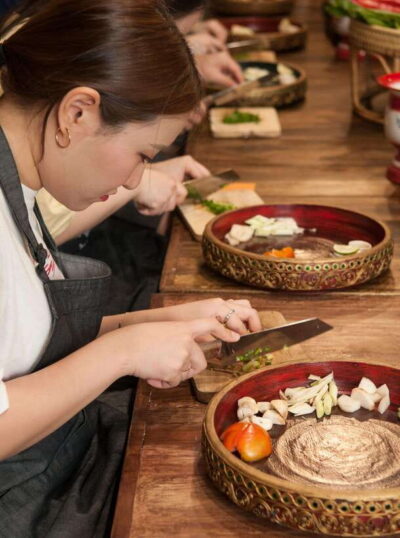
Bangkok: Hands-on Thai Cooking Class and Market Tour
Read our review →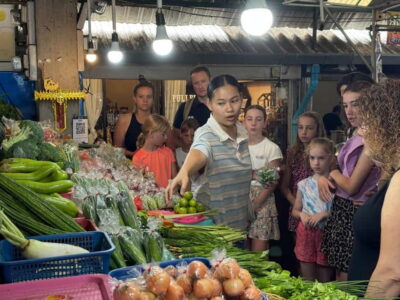
Chiang Mai: Cooking Class with Market and Pickup
Read our review →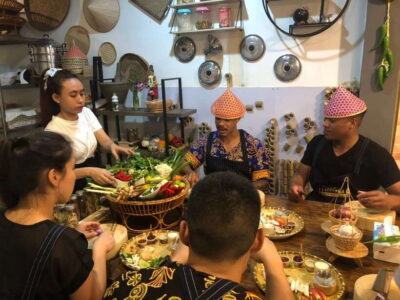
Bangkok: Tingly Thai Cooking School Half-Day Cooking Class
Read our review →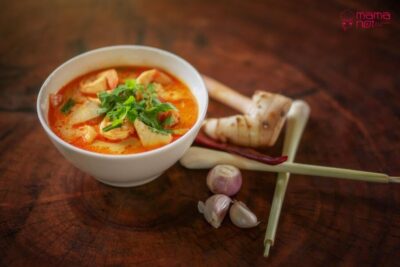
Chiang Mai: Cooking Class with Organic Farm at Mama Noi
Read our review →Browse the lists this tour appears in