
Reviewed · THAI COOKING CLASSES
Chiang Mai: Half Day Evening Cooking Class with Market Tour
Chiang Mai’s best cooking lessons begin before the stove is lit. Here, you visit Kad Kom Market, learn how to choose Thai herbs, chilies, sauces, and vegetables, then pound your own curry paste before cooking five dishes. I like the individual stations and the freedom to choose your menu, since you are not simply watching someone else cook. The small group, capped at 10, also gives Sky, Noodle, or another English-speaking instructor room to help.
I also like the practical touches: a PDF recipe book, drinking water, snacks, and hotel transport within 3 km of the market. The main consideration is the open-air kitchen. There is no air-conditioning, so Chiang Mai’s warm evening weather becomes part of the experience. The class is very hands-on and well organized, though one participant found it more structured than some cooking schools, with ingredients prepared so there is little room for mistakes.
Key points at a glance
- Start at Kad Kom Market: See and shop for the ingredients used in your class instead of meeting the food only after it reaches the cooking bench.
- Cook five dishes yourself: You work at an individual station and taste what you prepare.
- Pound traditional curry paste: This is the most useful skill to carry home, especially if you want Thai curry with more character.
- Choose your own menu: Your five dishes are selected individually, giving the meal a more personal feel.
- Small group of up to 10: The format allows for step-by-step help without turning into a private lesson.
- Open-air setting: Expect fans or natural air rather than air-conditioning, and dress for a warm kitchen.
A Chiang Mai cooking class that begins at the market
The half-day program starts with hotel pickup, if your accommodation is within 3 km of Kad Kom Market. The evening schedule runs from 3:30 p.m. to 8:00 p.m. The morning option runs from 9:00 a.m. to 1:30 p.m., though this review focuses on the evening class.
If you stay in the Nimman area or farther than the pickup limit, you meet the group at Kad Kom Market instead. This is worth checking before booking. The class is not designed around citywide hotel transfers, so the location works best if you are staying near the market or are happy to arrange your own way there.
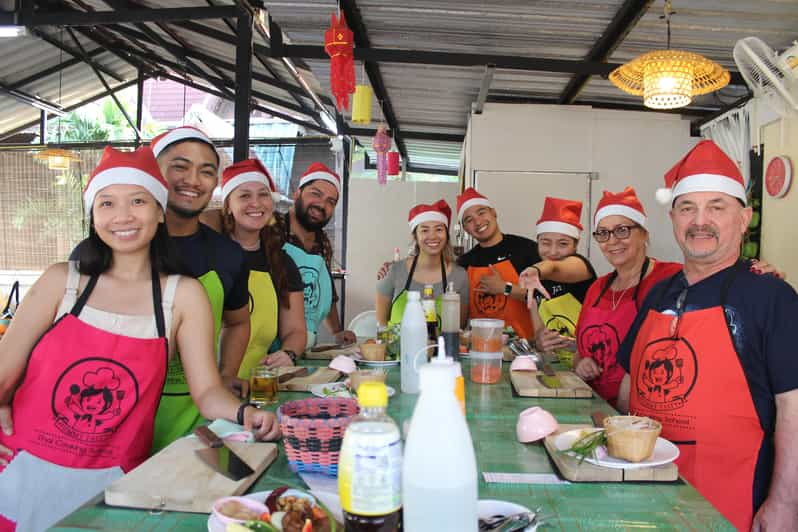
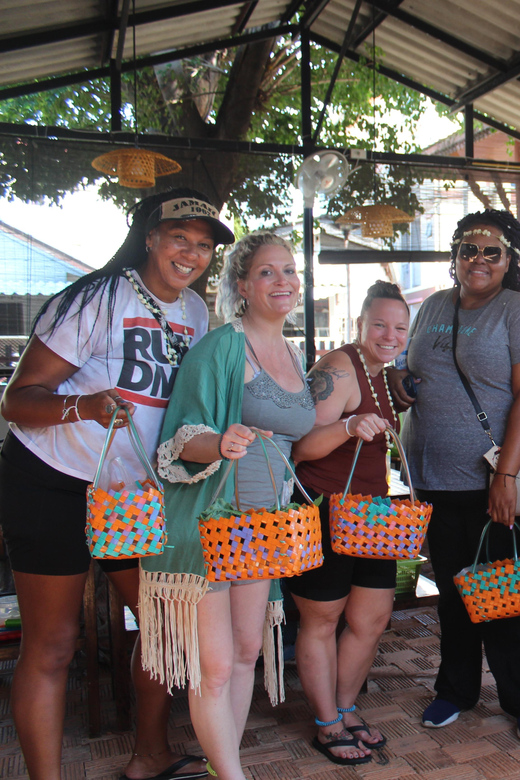
The market visit gives the cooking class a useful beginning. Rather than hearing a list of Thai ingredients in an abstract lesson, you see fresh vegetables, seasonings, herbs, sauces, and other items in their everyday setting. You then shop for what will be used later in the kitchen.
That matters because Thai cooking depends on balance and freshness. You learn about the differences between chilies, how seasonings work, and what ingredients can be substituted when you cook at home. The market portion is not just a quick photo stop. It helps explain why the dish in your bowl tastes the way it does.
One particularly useful detail is the chance to compare ingredients that can look confusing at first. You may learn how to select tofu or tell different types of chili apart. The exact market conversation depends on your instructor and menu, but the practical focus is clear: you are learning what to buy, not only how to stir it.
More Cooking Classes in Chiang Mai
- Half-Day Thai Cooking Class at Organic Farm in Chiang Mai
★ 5.0 · 19,087 reviews - Chiang Mai: Cooking Class, Market & Thai Herbs Garden Tour
★ 4.9 · 4,824 reviews - Chiang Mai: Authentic Cooking Class with Market & Farm Visit
★ 4.9 · 4,546 reviews
From market bags to the Yummy Tasty kitchen
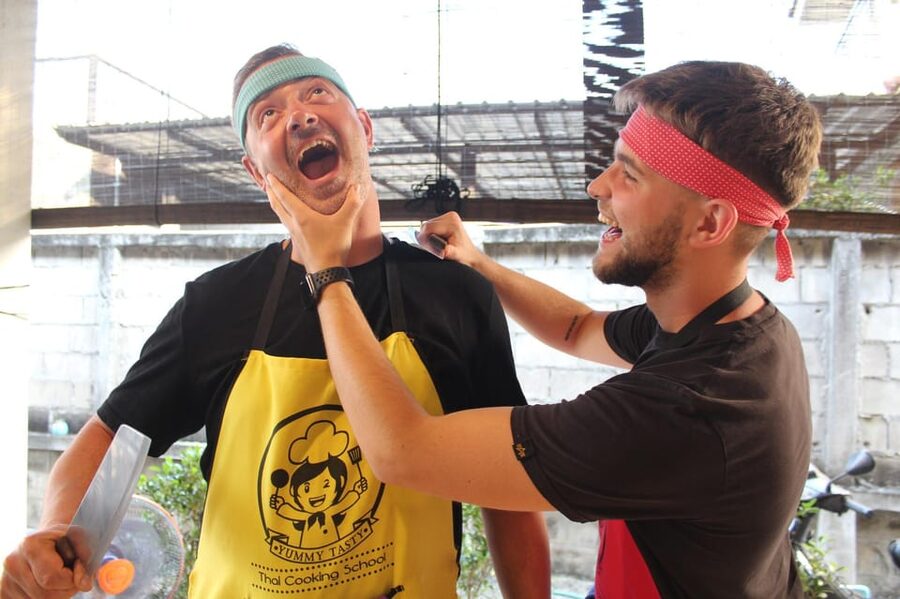
After shopping, you continue to Yummy Tasty Thai Cooking Class. The kitchen is open-air, with no air-conditioning. That setting suits the informal nature of the lesson, but it is not the place for heavy clothing or a polished outfit you need to keep spotless.
You receive welcome snacks, fruit, and drinking water before cooking begins. Those small provisions are helpful because you are about to prepare and eat several dishes, and the evening can stretch across a number of separate cooking steps.
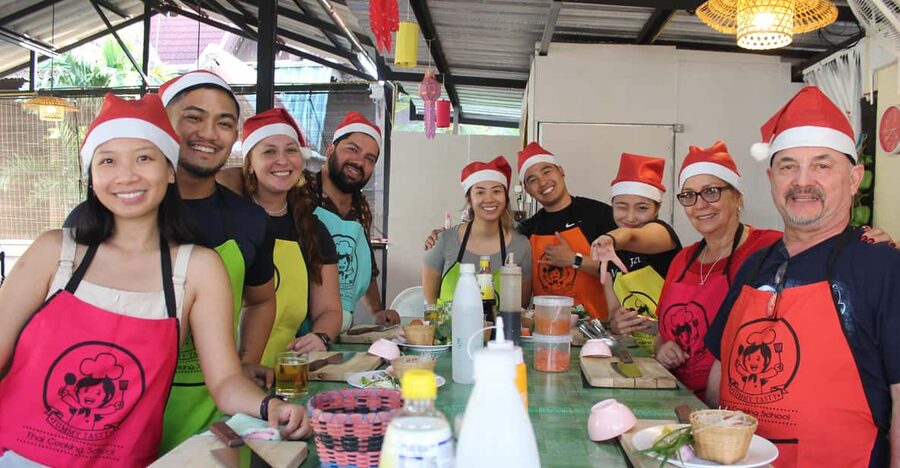
The class is limited to 10 people. That is large enough to keep the session social, but small enough for an instructor to move around and check your work. The individual station is a major advantage. You are not assigned to watch one shared wok while another person does the actual cooking.
Your menu is selected individually, so you can focus on dishes that interest you. The available examples include Pad Thai, red curry, mango sticky rice, and spring rolls, but the precise choices depend on the class menu and your selection. The important point is that you cook five dishes yourself.
Making curry paste the traditional way
The curry paste lesson is the heart of the experience. You pound your own paste in the traditional Thai manner rather than relying only on a prepared jar. This takes more effort, but it also shows how aromatics and spices become the base of a curry.
The instructor explains the herbs and seasonings as you work. You learn not just what goes into the paste, but how the flavors fit together. Thai cooking is often about managing sweet, salty, sour, and spicy notes, and this lesson gives you a direct way to understand that balance.
I would pay close attention here and take mental notes about substitutions. Some ingredients may be easy to find in an Asian grocery store but harder to locate elsewhere. The class explains what you can replace when cooking at home, which makes the recipe book more useful once you leave Thailand.
Pounding curry paste can also be tiring for your arms, especially if you are not used to the motion. That is a minor drawback, but it is part of the value. You are learning a process, not simply copying a finished sauce.
Five dishes, one station, and plenty of tasting
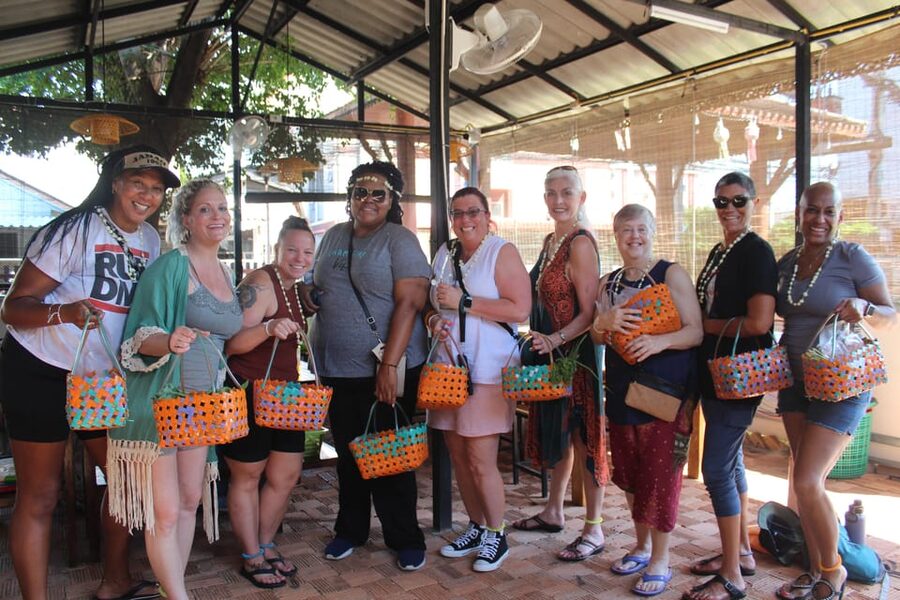
Once the ingredients are ready, the instructor leads you through each recipe step by step. The method is designed for beginners, and the clear instruction means you do not need to arrive with much cooking experience.
You prepare five dishes, then taste the food you made. You can also try dishes prepared by other people in the group, which gives you a wider sense of how different menu choices work. If you cannot finish everything, you can take the remaining food with you.
This is a generous amount of cooking for a four-hour experience. The evening schedule actually runs from 3:30 p.m. to 8:00 p.m., so allow roughly four to four and a half hours depending on how the class is described at booking. You are not paying for a short demonstration followed by one small plate.
The cooking is organized to keep the session moving. One participant described the class as very efficiently arranged, with everything ready so the group could begin without much delay. That makes the class easier for a first-time cook, though it also means you may get less practice with ingredient preparation than at a slower school.
If you want to learn knife skills, market prep, and every step from raw ingredient to final plate, ask about the format before booking. This class focuses more on producing five complete dishes successfully. For many people, that is the better trade-off during a busy Chiang Mai visit.
Other kitchens to cook in around Chiang Mai:
- Thai and Akha Cooking Class in Chiang Mai
★ 5.0 · 4,358 reviews - Chiang Mai: Cooking Class with Market and Pickup
★ 4.9 · 1,365 reviews - Chiang Mai: Cooking Class with Organic Farm at Mama Noi
★ 4.9 · 1,151 reviews - Full Day Thai Cooking at Farm (Chiang Mai)
★ 5.0 · 1,127 reviews
The instructors make the difference
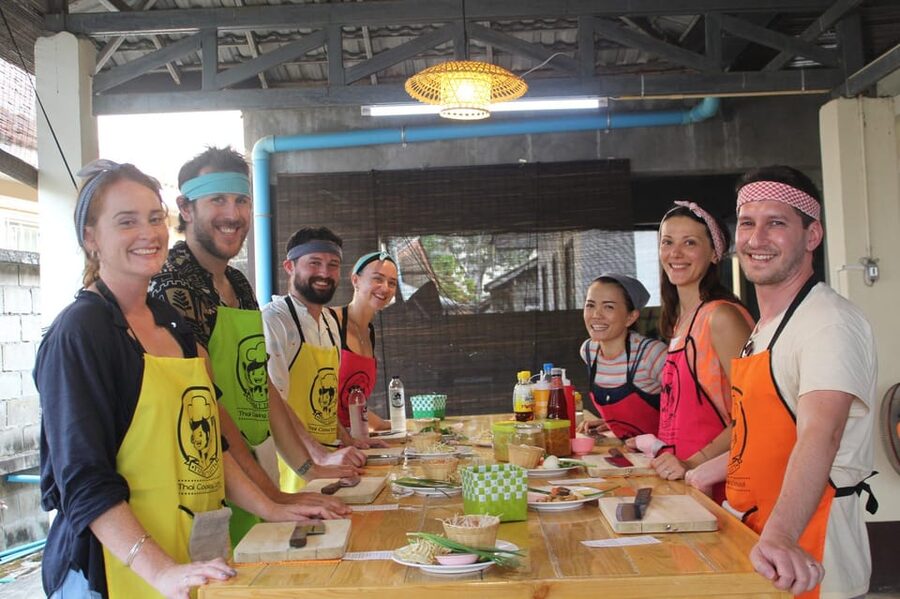
The class is taught in English. Sky is named as an engaging and funny guide, while Noodle is praised for her clear explanations, warmth, and ability to make the market visit interesting. The exact instructor for your session may vary, but the teaching style described is friendly and active rather than formal.
Good cooking instruction is not only about handing over a recipe. You need someone to explain why a seasoning is used, what to do when a sauce tastes too sharp, and how to adjust a dish without losing its balance. The strongest part of this class is the combination of clear directions and cultural context.
The lesson can also be entertaining. Humor helps when your curry paste is taking longer than expected or your spring-roll wrapping looks less tidy than the instructor’s. You are learning, eating, and working alongside other people, so the mood matters.
The one caution is that the class may feel tightly controlled to experienced cooks. One participant preferred classes with more discussion about ingredients and more practice with actual cooking techniques. If you already cook Thai food often, you might want a more advanced course. If you are new to Thai cooking, the clear structure is likely a benefit.
What the $35 price includes
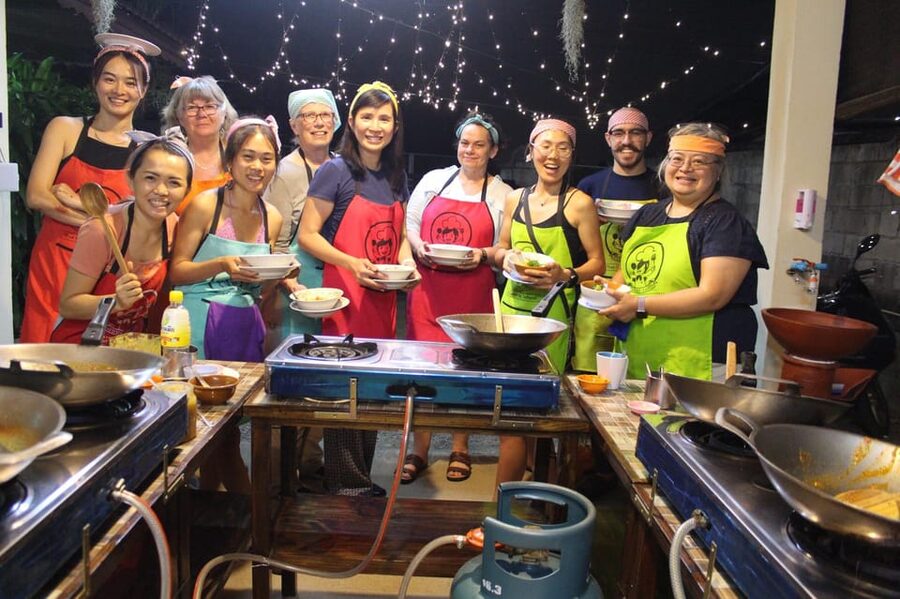
At $35 per person, the class offers good value for a four-hour food experience. The price covers hotel pickup and drop-off within the stated 3 km range, the market visit, ingredients, snacks, drinking water, your station, the cooking instruction, five dishes, curry-paste preparation, and a PDF recipe book.
The value is strongest if you plan to cook at home later. A restaurant meal gives you food for one evening. This class gives you a guided market lesson, several complete recipes, and an understanding of Thai seasonings that can help you repeat the dishes.
The transport also matters. A short hotel transfer can save you the trouble of arranging a taxi at the start and end of the night, though the benefit applies only within the pickup area. If you are staying in Nimman or beyond the 3 km limit, include the cost and time of reaching Kad Kom Market in your plans.
The class is also flexible from a booking point of view. You can reserve and pay later, and cancellation is allowed up to 24 hours before the activity for a full refund. Those policies are useful if your Chiang Mai schedule is still shifting.
Who will enjoy this class most
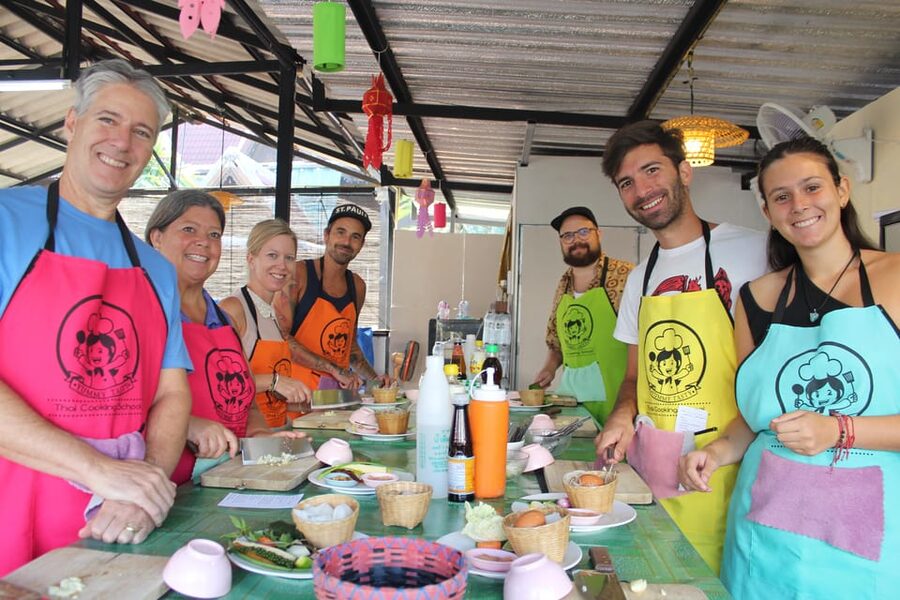
I would recommend this experience to you if food is one of your main reasons for visiting Thailand, especially if you want to understand the ingredients behind familiar dishes. It suits beginners, couples, solo visitors, and small groups who like a practical activity rather than another sightseeing stop.
It also works well for teenagers. The lesson has enough movement, tasting, and hands-on work to keep older children involved, though the age restrictions exclude young children. Children under 6 are not suitable for this activity, and babies are not accepted.
You should also be comfortable standing and working in an open-air kitchen. The class is not suitable for wheelchair users or people with back problems, and the provided restrictions exclude people with a cold, altitude sickness, or a body weight over 130 kg. The information also lists a maximum age of 95 years and a minimum height of 90 cm.
Wear something suitable for cooking and expect food smells, heat, and a little mess. The kitchen is cleaned as each dish is prepared, but this is still an active cooking class, not a restaurant meal where you remain seated.
A practical evening in Chiang Mai
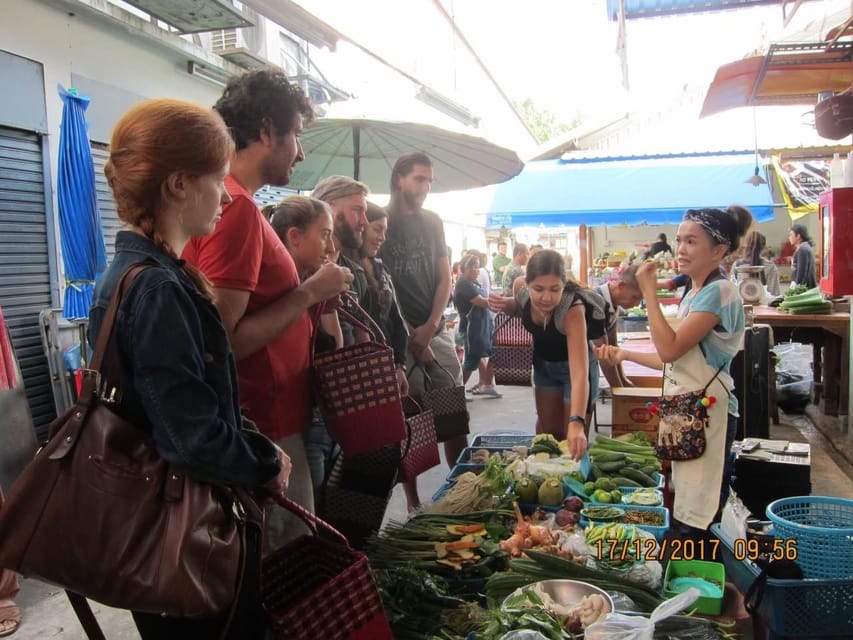
The evening schedule has a nice rhythm. You begin with the market while there is still daylight, move to the kitchen as the day cools, and finish after eating several dishes. It gives you a focused half-day without taking away the morning for temples, museums, or a slow breakfast.
The market visit is especially useful early in a Chiang Mai stay. It helps you recognize Thai herbs, chilies, sauces, and vegetables during the rest of your trip. You may also find yourself paying closer attention to restaurant menus after learning how the ingredients are combined.
The class is not a substitute for a full food tour or a professional culinary course. You do not spend the whole evening walking through different neighborhoods, and the structured format leaves limited room for experimenting. What you get instead is a concentrated lesson with a reliable result: five dishes, a curry paste, and recipes you can try at home.
The strongest praise is aimed at the food, the instructors, and the market teaching. Dishes are described as aromatic, flavorful, and fresh, while the guides bring humor and cultural explanation to the cooking. That combination makes the experience feel more personal than a standard demonstration.
Should you book the Yummy Tasty evening class?
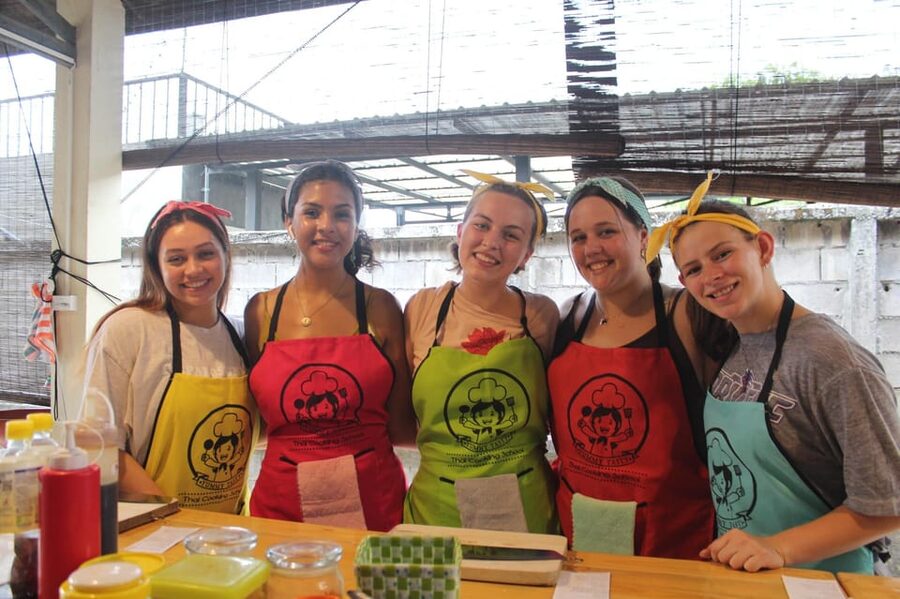
Book it if you want to cook a full Thai meal, learn how curry paste is made, and leave with recipes you can use. The $35 price is fair for the amount of food and instruction, especially with market shopping, snacks, hotel transport in the service area, and five individual dishes included.
Think twice if you need air-conditioning, have limited mobility, or want an advanced lesson with extensive knife work and ingredient preparation. The class is structured, warm, and designed to help you succeed.
For most visitors who want a friendly, practical taste of Chiang Mai food culture, this is a strong choice. The market makes the ingredients understandable, the curry-paste work gives the class a memorable center, and the PDF recipe book helps the evening continue after you fly home.
FAQ
How long does the cooking class last?
The activity is described as a four-hour experience. The evening class runs from 3:30 p.m. to 8:00 p.m., while the morning class runs from 9:00 a.m. to 1:30 p.m.
What time does the evening class start?
The evening class starts at 3:30 p.m. and finishes at 8:00 p.m.
Is hotel pickup included?
Yes. Pickup and drop-off are included for hotels within 3 km of Kad Kom Market.
What if my hotel is in Nimman or farther away?
If your hotel is outside the 3 km pickup range, including the Nimman area, you should meet the group at Kad Kom Market.
How many dishes will I cook?
You will cook five dishes. The instructor guides you through each recipe step by step.
Can I choose my menu?
Yes. The class allows you to choose your individual menu, and you cook at your own station.
Will I make curry paste?
Yes. You will make your own curry paste using the traditional Thai method.
Is the cooking class taught in English?
Yes. The instructor teaches in English.
Is the class suitable for children or wheelchair users?
The activity is not suitable for wheelchair users or children under 6. The provided restrictions also exclude people with back problems, people with a cold, babies, and people over 130 kg.
Just added in Chiang Mai
- No.1 Chiang Mai: Historical City Bike Tour★ 5.0 · 10 reviews
- Inthanon Day Trip from Chiang Mai with Lunch – Group or Private★ 5.0 · 182 reviews
- Jewellery Making Class with Silversmithing in Chiang Mai★ 4.5 · 11 reviews
- Chiang Mai: Historic Old City Bike Tour – Morning or Night★ 5.0 · 202 reviews
- 10KM Inflatable Kayaking Adventure★ 5.0 · 23 reviews
- Half-day E-bike Nam Phrae (hilly, fully paved roads, GUIDED)★ 5.0 · 122 reviews
- Inthanon Heaven Trail(Living Green Elephant Sanctuary)★ 5.0 · 52 reviews
- Half Day Car Hire with an English Speaking Driver in Chiang Mai★ 5.0 · 16 reviews
Thai Cooking Classes, compared.
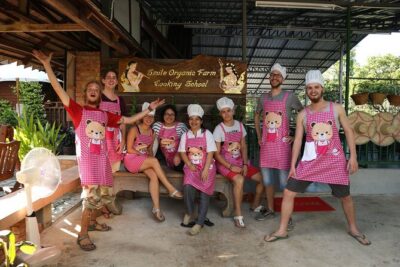
Half-Day Thai Cooking Class at Organic Farm in Chiang Mai
Read our review →
Chiang Mai: Cooking Class, Market & Thai Herbs Garden Tour
Read our review →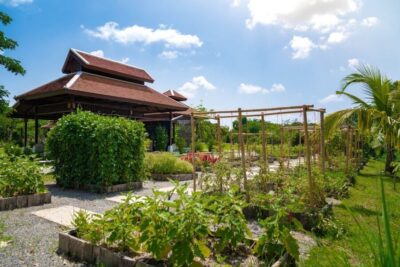
Chiang Mai: Authentic Cooking Class with Market & Farm Visit
Read our review →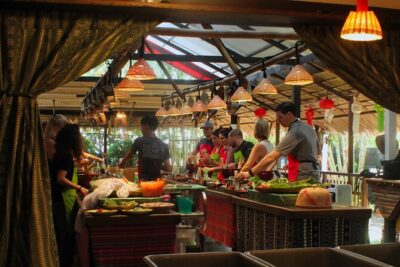
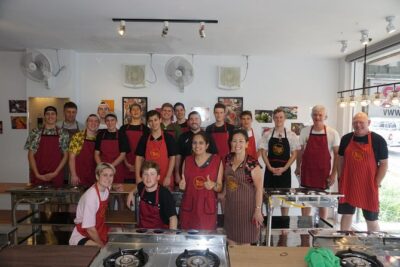
Phuket Thai Cooking Class with Market Tour Option
Read our review →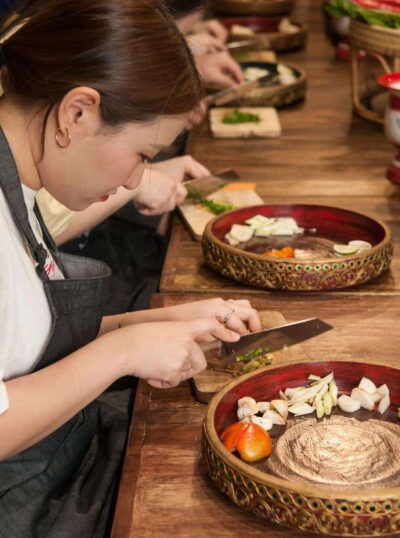
Bangkok: Hands-on Thai Cooking Class and Market Tour
Read our review →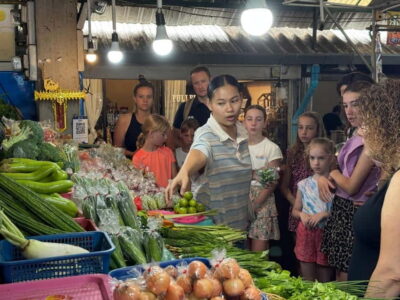
Chiang Mai: Cooking Class with Market and Pickup
Read our review →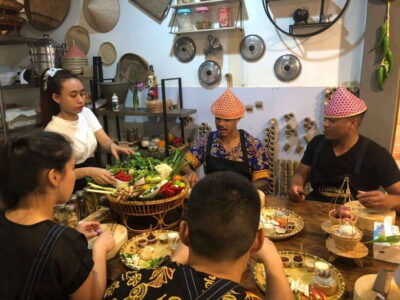
Bangkok: Tingly Thai Cooking School Half-Day Cooking Class
Read our review →Browse the lists this tour appears in