
Reviewed · THAI COOKING CLASSES
Bangkok: Hands-on Thai Cooking Class and Market Tour
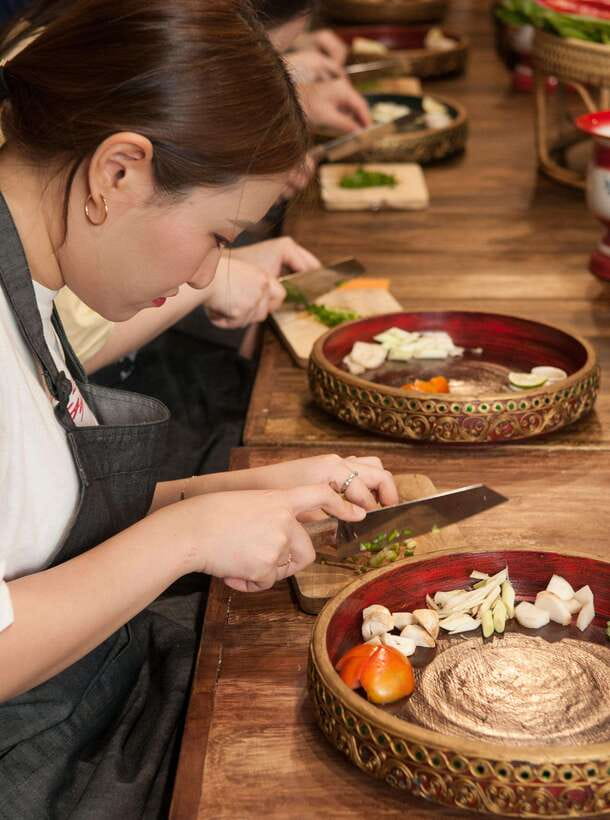
Bangkok: Hands-on Thai Cooking Class and Market Tour turns a meal into a practical lesson. You shop for ingredients in the morning, grind curry paste by hand, cook four dishes, and eat each one while it is hot. Jay, Pitch, April, and Jen are among the instructors praised for clear teaching and easy humor.
I like the small-class attention and the fact that you cook every dish yourself rather than watch a chef do the work. I also like the recipe collection sent by email, which includes dishes beyond the day’s menu. The main drawback is that the morning market visit can be brief, with some participants finding it closer to a few ingredient stalls than a large wet market.
Key points to know before booking
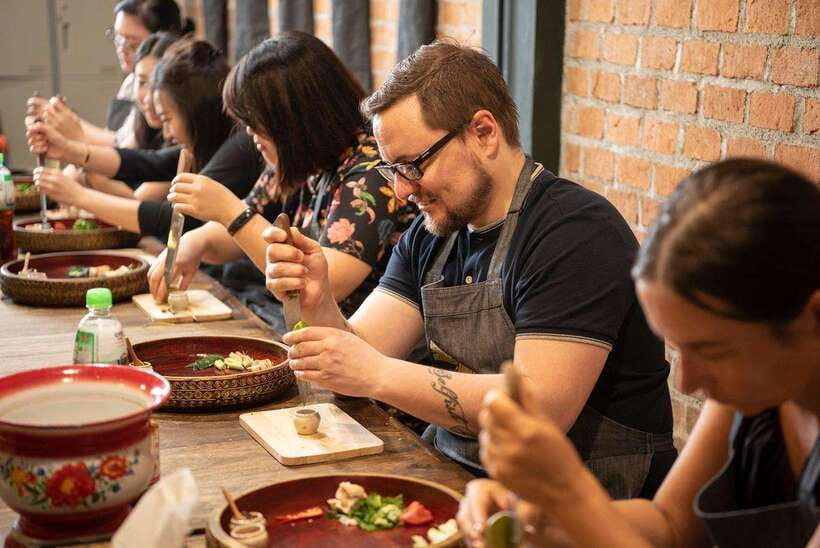
- Four dishes in 210 minutes: You cook a soup or salad, a stir-fry, a curry, and mango sticky rice, with the exact menu changing by day.
- Morning market option: The 8:30 AM class includes a guided ingredient visit near Asoke and Sukhumvit.
- Mango carving later in the day: Afternoon and evening classes replace the market tour with a hands-on fruit-carving session.
- Curry paste from scratch: You work with herbs and spices instead of relying only on prepared paste.
- Strong help for beginners: Instructors explain each step in English and Thai, and small groups allow individual help.
- Dietary changes are possible: Vegetarian, halal, kosher, and allergy-friendly substitutions can be arranged with advance notice.
Four Thai dishes, cooked one at a time
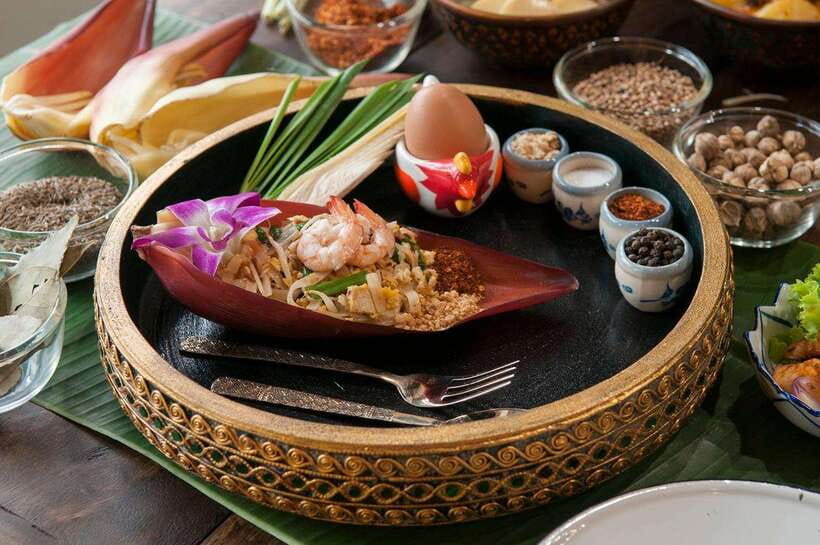
The heart of this experience is simple: you make your own food, then eat it fresh. That sounds obvious, but it changes the pace and feel of a cooking class. You are not watching a demonstration and receiving a plate at the end. You chop, pound, stir, season, and taste as you go.
The class lasts 210 minutes, with about two hours focused on cooking. The instructors keep the dishes moving so you can eat each course while it is still hot. That matters in Thai cooking, where the balance of chili, lime, herbs, coconut milk, and fish sauce is clearest straight from the pan or pot.
The menu follows a weekly rotation:
- Monday offers som tum, pad Thai with shrimp, green curry with chicken, and mango sticky rice.
- Tuesday brings tom kha gai, pad krapow gai, red curry with chicken, and mango sticky rice.
- Wednesday includes tom yum goong, pad see ew with chicken, green curry, and mango sticky rice.
- Thursday features larb gai, pad Thai, panang curry, and mango sticky rice.
- Friday includes som tum, stir-fried Thai basil chicken, red curry, and mango sticky rice.
- Saturday offers tom kha gai, pad Thai, green curry, and mango sticky rice.
- Sunday includes tom yum goong, pad see ew, panang curry, and mango sticky rice.
Check the day before you book if you have a favorite. A pad Thai fan may want Monday, Thursday, or Saturday. If you prefer soup, Wednesday or Sunday gives you tom yum, while Tuesday and Saturday feature the gentler coconut-based tom kha gai.
The menu is filling. You are not making four tiny samples for decoration. You eat the food as the class progresses, and the final mango sticky rice adds a sweet finish after several savory dishes. Bring an empty stomach, as the school itself advises.
More Cooking Classes in Bangkok
- Bangkok: Tingly Thai Cooking School Half-Day Cooking Class
★ 4.9 · 1,191 reviews - Bangkok: Maliwan Thai Cooking Class with Market Tour
★ 4.9 · 1,133 reviews - Hands on Thai Cooking Class and Market Tour
★ 5.0 · 660 reviews
The morning market near Asoke
Only the 8:30 AM class includes the market visit. You meet at street level by BTS Asoke Exit 3 and MRT Sukhumvit Exit 3, or use Hey! Coffee MRT Sukhumvit as the meeting point. This is useful for first-time visitors because Asoke is easy to reach by Bangkok’s train systems, though the station area can be busy at morning rush hour.
The market portion introduces vegetables, rice, herbs, spices, and other ingredients used in Thai kitchens. You learn what the ingredients look like before they are cleaned, chopped, or mixed into a curry paste. That small bit of context helps later, when a pile of leaves or a handful of roots appears on the worktable.
Keep your expectations in check. This is not presented as a long food-market expedition through a huge covered market. The visit is focused on the ingredients needed for the class, and some people may find it closer to a few nearby stalls and a dry-goods shop than a full wet-market tour.
That limitation does not make it useless. If you have never cooked Thai food, even a short introduction can help you connect the finished dish with its raw materials. Still, if a major market visit is your main goal, choose the morning class for the best chance of that experience, and think of the market as an orientation rather than the headline attraction.
Wear comfortable walking shoes. You will walk between the meeting point and the ingredient stops, and Bangkok’s heat can make a short walk feel longer than it looks on a map.
Curry paste, coconut milk, and the work that makes the flavor
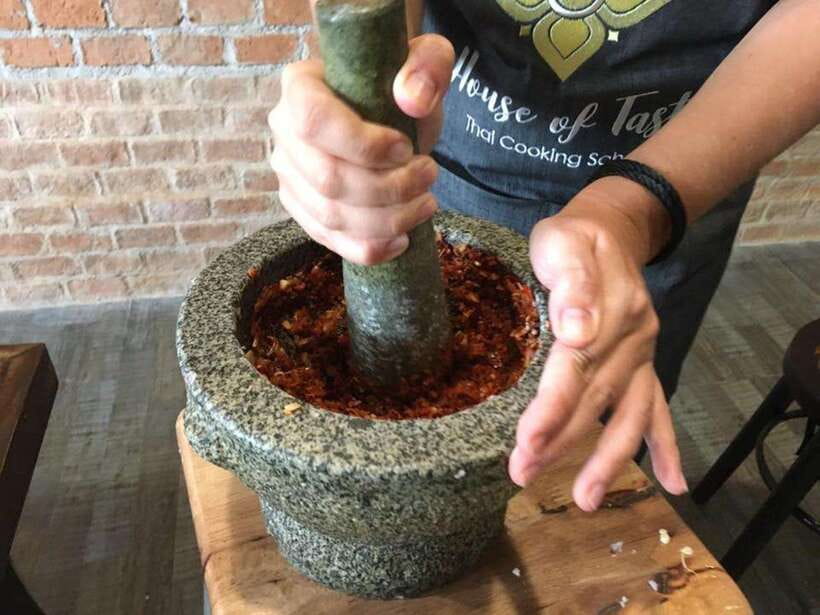
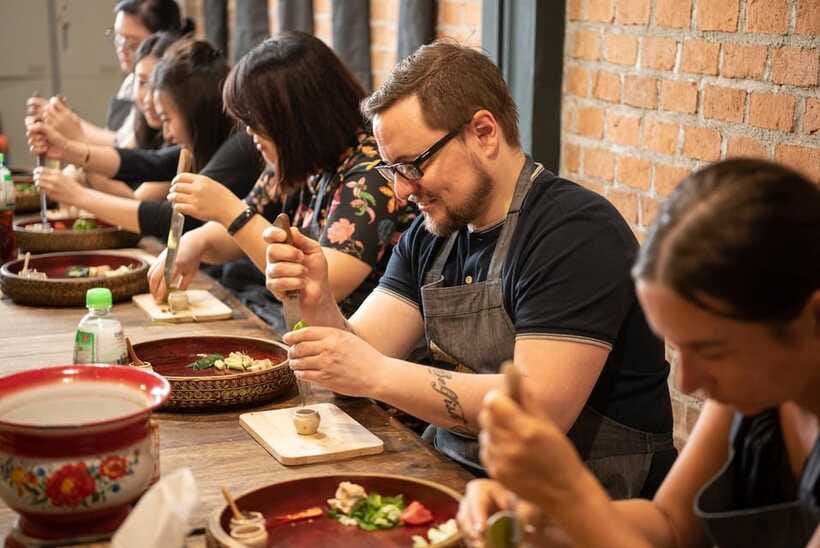
The most useful part of the class is learning what gives Thai food its depth. You do not simply spoon a prepared curry sauce into a pot. You get your hands dirty making curry paste from scratch, working with herbs and spices until the mixture becomes a base for the curry.
This is where the class offers more than a recipe card. You start to see how Thai dishes are built: fresh aromatics for fragrance, chili for heat, coconut milk for body, and seasoning added gradually. The instructor also explains the preparation of coconut milk and the role of the ingredients used in the day’s recipes.
For a beginner, the structure is reassuring. The instructors demonstrate the steps, then let you repeat them. Names such as Pitch, Jay, April, and Jen appear often in the teaching team, and the most consistently praised quality is patience. That matters if you rarely cook or are unsure about handling a mortar, balancing seasoning, or timing several ingredients in one pan.
The class is conducted in English and Thai. The English instruction is designed for an international audience, and participants have described the directions as easy to follow. You can ask questions as you work, rather than waiting until a final demonstration.
There is some time pressure. Four dishes in two hours means the session must stay organized, and one participant found parts of the activity slightly rushed. That is the tradeoff for leaving with a full meal and several recipes in a single morning or afternoon. If you want a slow, chef-school lesson on one complicated dish, this is not that. If you want a lively introduction with plenty of hands-on work, the pace should suit you.
What the afternoon and evening classes change
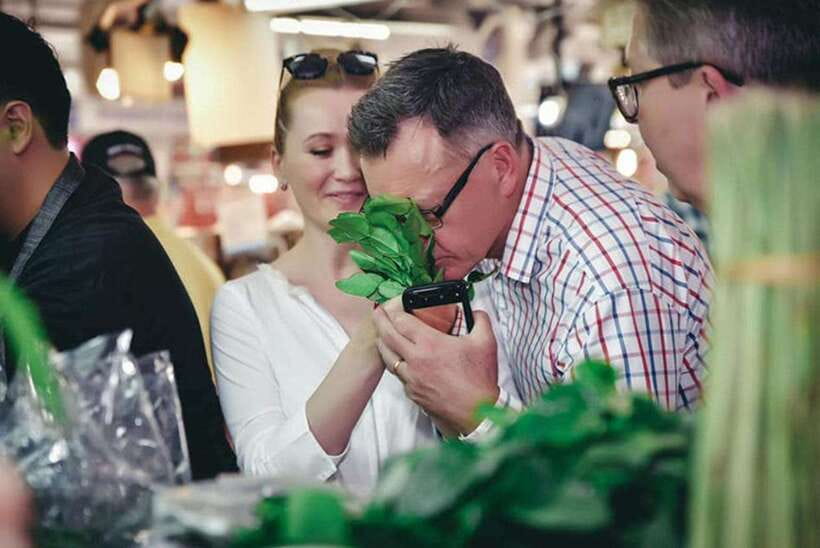
The afternoon and evening classes meet at House of Taste Thai Cooking School in Sukhumvit 4. They do not include the market tour. Instead, you receive an introduction to the ingredients at the school and finish with mango carving.
Mango carving gives the later sessions a different character. Rather than walking through local food stalls, you learn to shape and present mango as part of the dessert course. It is a lighter, more decorative activity, and it adds a small creative challenge after the cooking is finished.
Choose the time based on what you value. The morning class is the better choice if you want to see ingredients in a local shopping setting. The afternoon or evening class is more convenient if you prefer to avoid an early start, and mango carving may appeal to families or anyone who likes a hands-on craft alongside the cooking.
The core meal and cooking work remain the focus at all times. You still prepare four dishes, receive help from an instructor, use the provided equipment, and get recipes by email.
Other kitchens to cook in around Bangkok:
- Tingly Thai Cooking Class with Morning Market Tour
★ 5.0 · 589 reviews - Hands-on Thai Cooking Class & Market Tour in Sukhumvit
★ 5.0 · 571 reviews - Pink Chili – Thai Cooking Class and Market Tour in Bangkok
★ 5.0 · 416 reviews - Authentic Thai Cooking with the Largest market visit &TukTuk ride
★ 5.0 · 350 reviews
How much personal help can you expect?
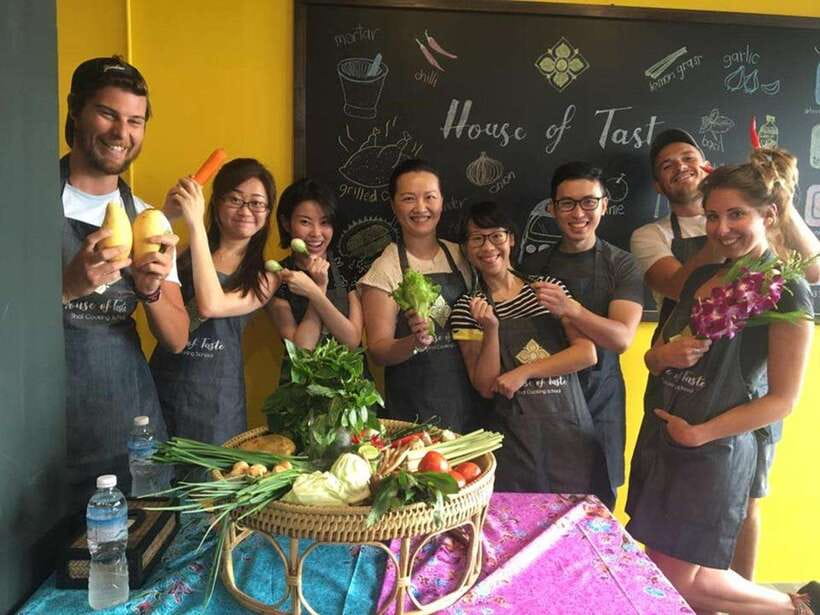
The class is designed to provide individual attention, and small groups are one of its best features. A participant traveling with a partner who cooks less often found that both people could take part without feeling left behind. Another group of four enjoyed enough help to keep the process comfortable for different skill levels.
That does not mean an instructor will stand beside you for every second. The class has several dishes moving through different stages, so you will sometimes work alongside the rest of the group. Still, the format gives you a better chance to ask for help than a large demonstration class.
The teaching style is friendly and informal. Instructors explain the cultural side of the dishes as well as the cooking method, and their humor helps keep the room relaxed. April, Jay, Pitch, and Jen have each been singled out for clear explanations, patience, or a fun manner, though the instructor on your date may be someone else.
This is also a good choice if you do not cook often. The recipes are presented as achievable home dishes rather than restaurant tricks that require specialist equipment. You use the school’s ingredients and tools during class, then receive the recipes so you can try again later.
Dietary requests and ingredient substitutions
Vegetarian, halal, kosher, and allergy-related substitutions can be provided with advance notice. This is important because Thai cooking often uses fish sauce, shrimp, chicken stock, seafood, or oyster sauce, depending on the dish.
Tell the school about your needs before the class rather than waiting until you arrive. A participant with a low-FODMAP diet received ingredient changes, showing that the staff can work with specific restrictions when they know in advance.
You should still ask questions about each substitution at the beginning. A dish can be free of one ingredient but still contain another item that does not suit your diet. The cooking school provides the ingredients and equipment, but your clear communication helps the instructor prepare the right alternatives.
No MSG is used in the cooking. That may matter to you if you prefer to avoid it, though the dishes still rely on herbs, spices, sauces, and other seasoning for flavor.
Is $45 good value in Bangkok?
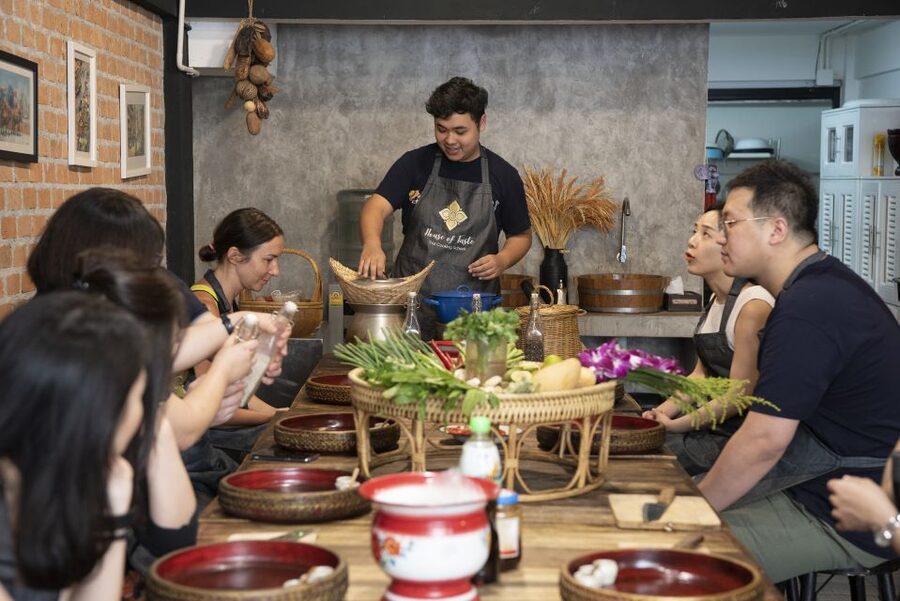
At $45 per person, this is not the cheapest way to eat four Thai dishes in Bangkok. Street food and local restaurants cost much less. The value comes from the instruction, ingredients, equipment, market or carving activity, full meal, and recipes you can use afterward.
I consider the price fair for a 3.5-hour experience with a professional instructor and four dishes made by you. You also avoid the hidden cost of buying small amounts of unfamiliar herbs, spices, curry ingredients, and sauces for a single attempt at home.
The value is strongest if you take part fully. If you only want to eat Thai food, spend less at a neighborhood restaurant. If you want to understand how pad Thai, curry, soup, and mango sticky rice come together, the class gives you more to take home than a meal alone.
The recipe email adds lasting value. It includes the recipes for the dishes made that day and additional recipes from the school’s wider menu, so you are not limited to repeating only your class selections.
Free cancellation is available up to 24 hours before the activity, and you can reserve now and pay later. Starting times vary, so check availability for your date.
Who should book this cooking class?
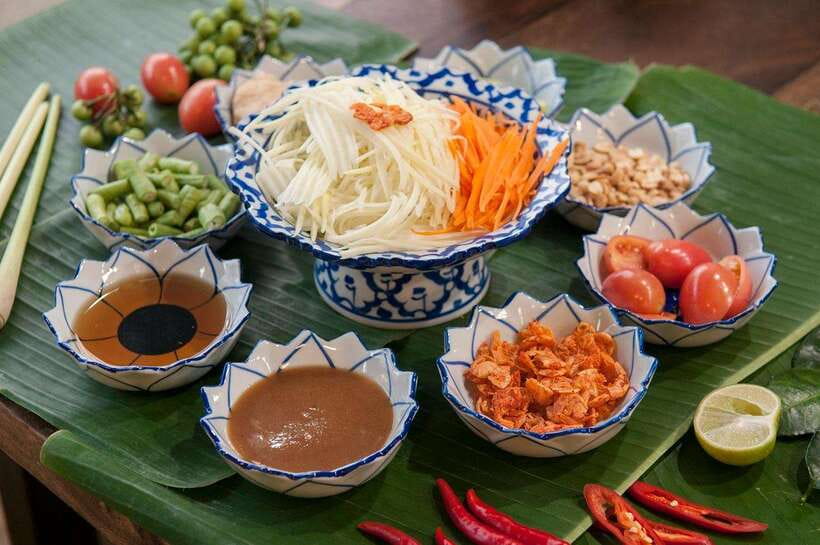
I would recommend it to first-time visitors who want a structured introduction to Thai food, couples looking for an activity beyond sightseeing, families with older children, and anyone who enjoys eating as much as cooking.
It also suits solo participants. The class brings together people from different countries, and the shared work gives you an easy way to talk without forcing a social format.
Beginners should feel comfortable here. The instructions are broken into manageable steps, and the food is prepared for your own group rather than only demonstrated at the front.
You may want to skip it if you dislike group activities, have no interest in cooking, or expect a long market tour through a major Bangkok food market. The morning market visit is useful but limited, and the class has a planned pace that leaves little room for wandering.
Should you book House of Taste Thai Cooking School?
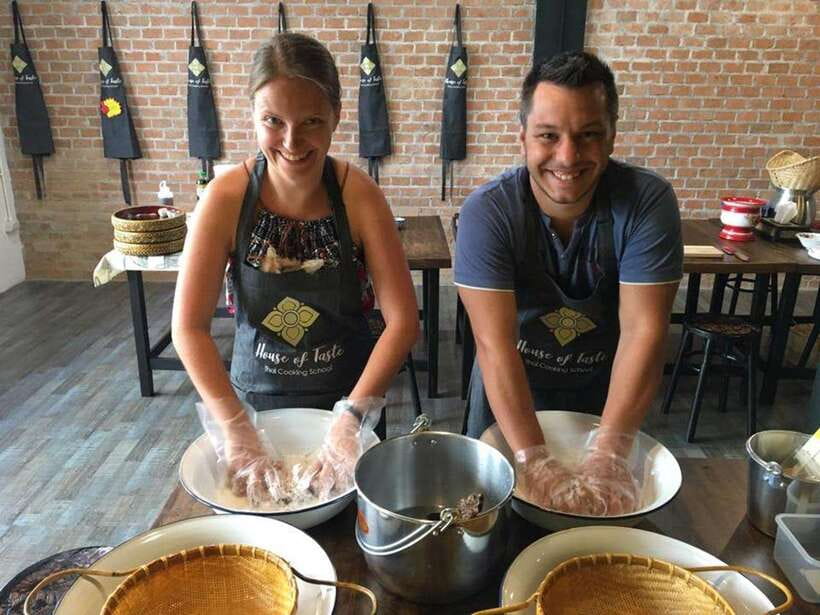
Book it if you want to cook four recognizable Thai dishes, eat a generous meal, and learn techniques you can repeat at home. The strongest reasons are the hands-on curry paste, the patient instruction, the small-class attention, and the useful recipe collection.
Choose the 8:30 AM option if the market matters to you. Choose afternoon or evening if mango carving sounds more appealing or an early start does not fit your schedule.
For $45, this is a solid value for a full cooking session rather than a quick demonstration. Just keep the market visit in proportion: it is an ingredient-focused stop, not a major market tour. With that expectation set, the class offers a practical and tasty way to spend part of a Bangkok day.
FAQ
How long does the Bangkok Thai cooking class last?
The activity lasts 210 minutes, or three and a half hours.
How many dishes will I cook?
You will prepare four dishes, including a savory starter or soup, a stir-fried dish, a curry, and mango sticky rice. The exact menu changes by day.
Does every class include a market tour?
No. Only the 8:30 AM morning class includes the market visit. Afternoon and evening classes include mango carving instead.
Where does the morning class meet?
Meet at street level by BTS Asoke Exit 3 and MRT Sukhumvit Exit 3. You can also use Hey! Coffee MRT Sukhumvit as the meeting-point reference.
Where do afternoon and evening classes meet?
They meet at House of Taste Thai Cooking School in Sukhumvit 4.
What languages are spoken?
The instructors teach in English and Thai.
Can the school accommodate dietary restrictions?
Yes. Vegetarian, halal, kosher, and allergy-related substitutions can be arranged with advance notice.
Are drinks included?
Drinking water is included. Alcoholic drinks are not included but are available to purchase.
What should I bring?
Bring comfortable walking shoes, especially for the morning class. An empty stomach is also recommended because the class includes four dishes to cook and eat.
Just added in Bangkok
- Bangkok: A 4 Hours Tuk Tuk Sightseeing Tour Iconic Landmarks★ 4.3 · 8 reviews
- Bangkok: City Culture half-day Bike Tour★ 5.0 · 19 reviews
- Bangkok: 2 Hours Grand Palace & Wat Pho Private Tour★ 4.9 · 15 reviews
- Bangkok: Muay Thai Boxing Class for Beginners★ 5.0 · 189 reviews
- Bangkok: 2 Temple Tour (Golden Buddha + Marble Temple)★ 3.6 · 88 reviews
- Bangkok: Baiyoke Observation Deck Ticket with Buffet Meal★ 4.2 · 188 reviews
- Ayutthaya: Private Boat Tour with Optional Temple Visits★ 4.6 · 102 reviews
- Bangkok: Chao Phraya Alangka Cruise at Icon Siam★ 3.8 · 36 reviews
Thai Cooking Classes, compared.
Half-Day Thai Cooking Class at Organic Farm in Chiang Mai
Read our review →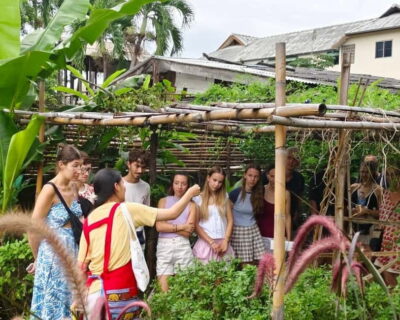
Chiang Mai: Cooking Class, Market & Thai Herbs Garden Tour
Read our review →
Chiang Mai: Authentic Cooking Class with Market & Farm Visit
Read our review →
Phuket Thai Cooking Class with Market Tour Option
Read our review →
Chiang Mai: Cooking Class with Market and Pickup
Read our review →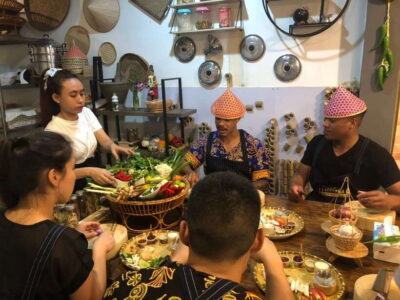
Bangkok: Tingly Thai Cooking School Half-Day Cooking Class
Read our review →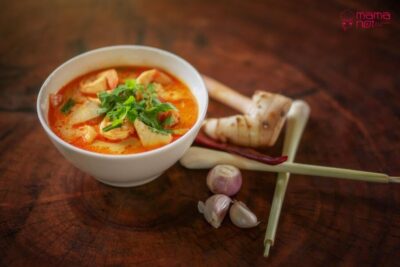
Chiang Mai: Cooking Class with Organic Farm at Mama Noi
Read our review →Browse the lists this tour appears in