Reviewed · TOURS IN CHIANG MAI
Colors of Chiang Mai Guided Bicycle Tour
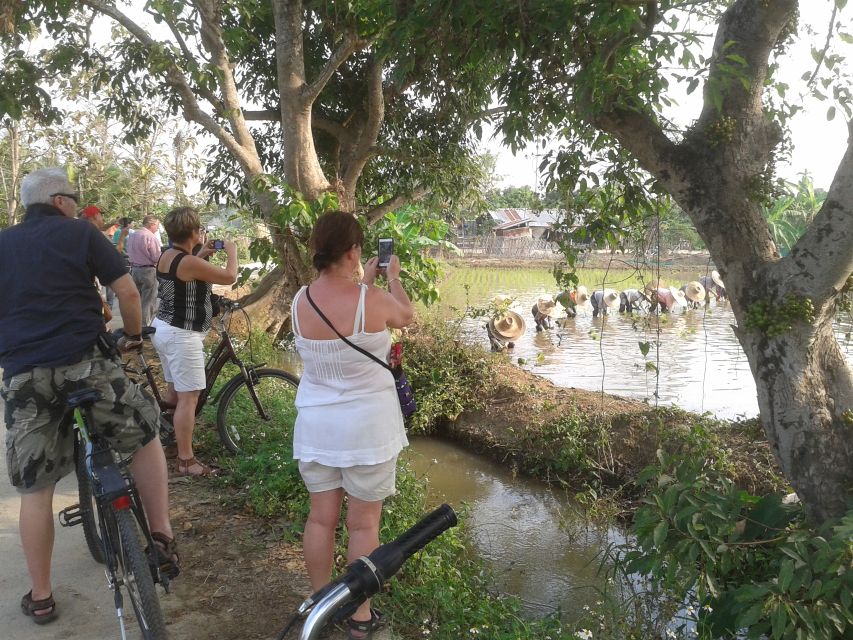
The best part of this tour is that it gets you away from Chiang Mai’s busy center and into the ordinary places around it: green farm lanes, village communities, rice fields, and the Ping River. You also reach Wiang Kum Kam, an early Lanna capital with old temple ruins and a 700-year-old chedi.
I like the calm pace and the care shown by guides such as Wee, Wit, Dong, and Koi. I also like the food stops, especially the local Khao Soi Kai meal and fresh snacks. The main thing to consider is the distance: 20 to 25 kilometers is easy for regular cyclists, but it may feel long if you rarely ride.
Key points to know before you book
- Quiet roads make the ride approachable: Most of the route uses leafy lanes and rural roads, with only a few busier crossings.
- Wiang Kum Kam adds real historical interest: See temple ruins from the old Lanna settlement founded in 1286.
- Guides make the temples more meaningful: Some guides, including Wit, have personal experience as former monks.
- Food is part of the experience: Expect a Thai meal or snack, with Khao Soi Kai often served at a small local restaurant.
- The route changes with local conditions: Rice fields, orchards, schools, and village shops may not be available every day or season.
- The price covers the basics: At $38 per person, you get the bike, helmet, guide, drinks, food, and insurance for a four-and-a-half-hour outing.
Why this ride shows you a quieter Chiang Mai
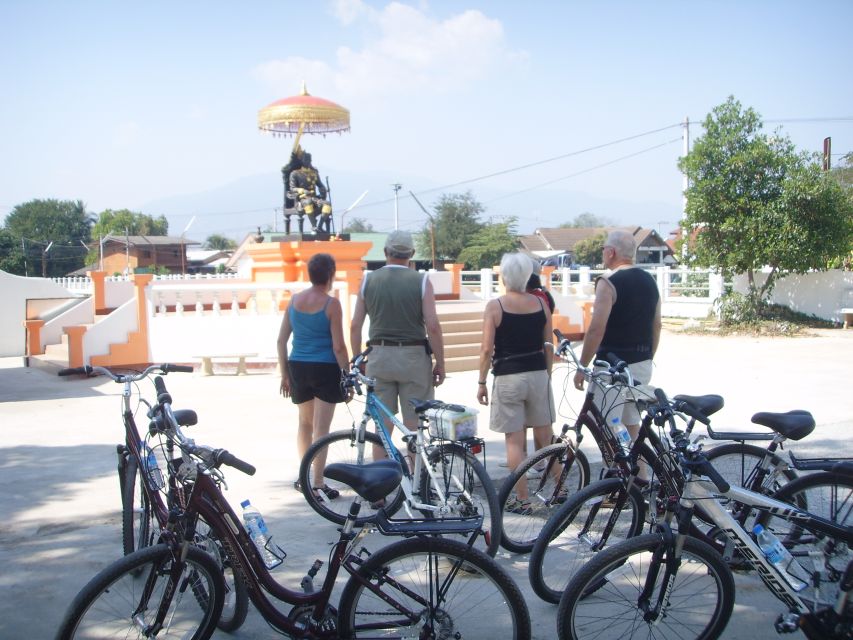
Chiang Mai is easy to love from its old city walls, night markets, and temple lanes. Yet the city’s character changes quickly once you pedal beyond the central streets. Houses thin out, trees shade the road, and small communities appear beside fields and waterways.
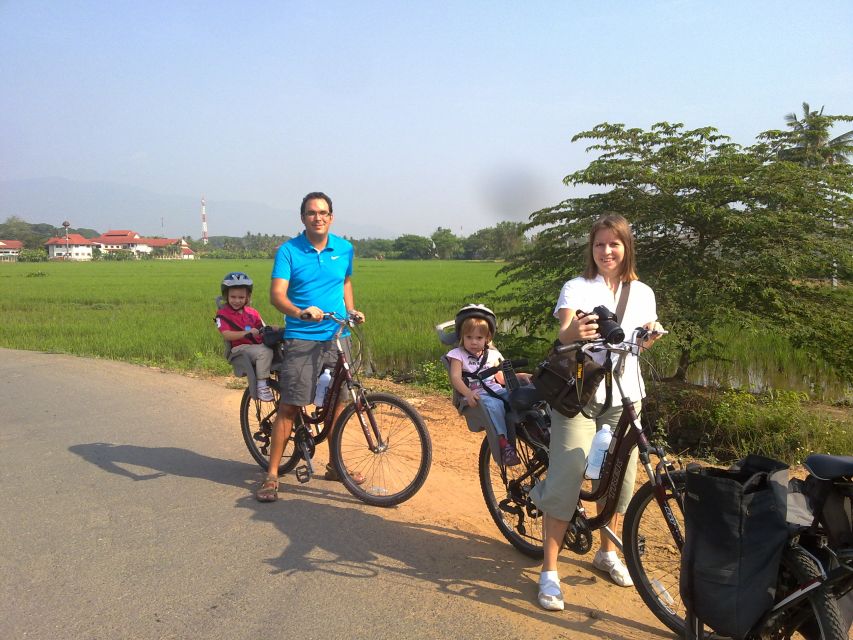
This route is designed for that change of scene. You ride on quiet land roads, through local neighborhoods, and beside farmland. It is not a sightseeing sprint. The guide sets a steady pace, points out daily life, and helps you cross the occasional busy road.
That matters if you are not fully confident in traffic. Several guides have been praised for giving clear hand signals and making crossings feel controlled. Most of the ride is on calmer roads, but you should still be comfortable handling a bicycle and riding for several hours.
The route covers about 20 to 25 kilometers over 270 minutes. That works out to a gentle average speed once stops, food, temple visits, and photo breaks are included. You are not pedaling nonstop, but you should not treat this as a short city spin either.
Other trips people book in Chiang Mai:
- Half-Day Thai Cooking Class at Organic Farm in Chiang Mai
★ 5.0 · 19,087 reviews - Chiang Mai: Elephant Sanctuary, Waterfall & Bamboo Rafting
★ 4.9 · 9,160 reviews - Chiang Mai: Doi Inthanon National Park Eco-Friendly Tour
★ 4.6 · 6,667 reviews
Starting on country lanes and village roads
After arriving at the meeting point 5 to 10 minutes before departure, you are fitted with a bicycle and helmet. The exact bike sizes and route details are not specified, so it is sensible to tell the operator if you need a particular frame size or have concerns about comfort.
The early part of the ride takes you along quiet, green roads. These lanes pass local communities rather than major tourist sights. You may see homes, small shops, gardens, and working areas where everyday life continues at its own pace.
One special stop is connected with women from a local village making traditional Thai products. This gives the tour a useful human focus. You are not simply looking at old buildings. You get a glimpse of skills and small-scale work that still support local communities.
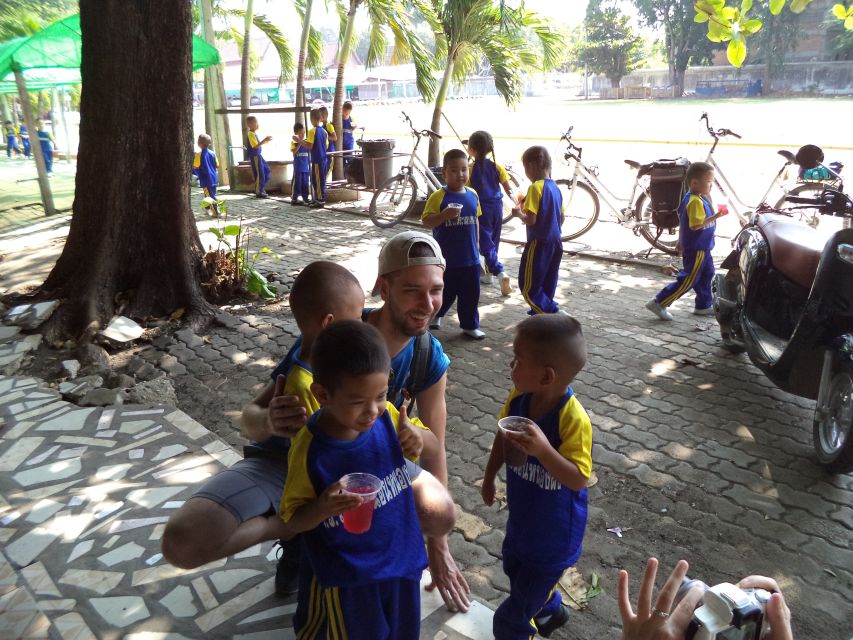
The route can also include a school, a pottery-making place, or a coffee-roasting stop, depending on the day and the operator’s current plan. These details are not guaranteed, since schools and local shops can close on weekends, school holidays, or national holidays.
That uncertainty is worth accepting. A fixed list of stops would be tidier, but a route shaped by local opening hours can feel more connected to real life. Just do not book this expecting every advertised stop to operate exactly as described.
Temples, Buddhism, and a former monk’s perspective
A temple stop gives the ride more depth. Your guide explains the building, Buddhist customs, and the role of the temple in local life. The quality of this part depends heavily on the guide, but several guides have experience that adds something beyond memorized facts.
Wit, also spelled Weet in some accounts, previously spent six years as a monk. That background allows him to explain Buddhist traditions through personal experience, especially when you are standing inside or near a temple. Other guides, including Wee and Mr We, are also praised for answering questions patiently and explaining local customs clearly.
You should dress and behave respectfully at temple stops. The supplied information does not set out a formal dress code, but modest clothing is the sensible choice for visiting religious sites in Thailand.
The temple visit is not a long academic lecture. It is a chance to pause, ask questions, and understand why these places matter. If you enjoy culture more than simply taking photographs, this part may become one of the strongest reasons to choose the tour.
Rice fields, orchards, and the limits of the season
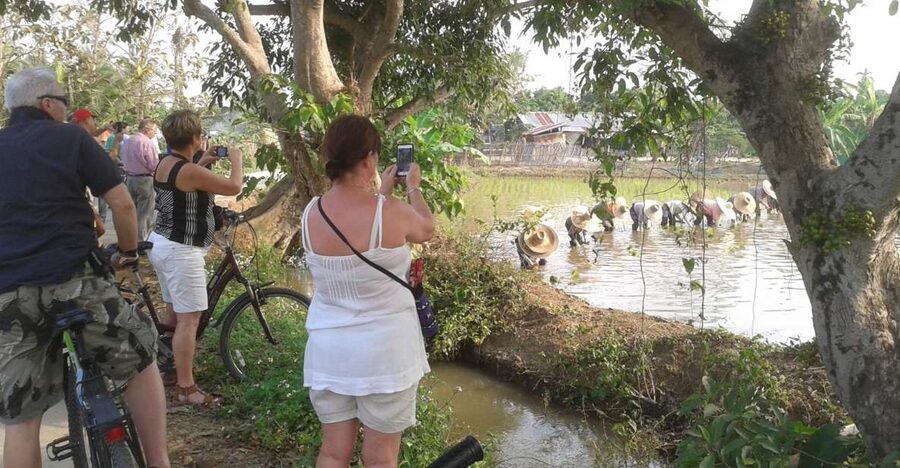
After the temple, the ride continues through rice fields and fruit orchards. These stretches provide the open rural views that are hard to find in central Chiang Mai. You get a clearer sense of how much farmland remains close to the city.
The timing of your visit matters. Fields and orchards do not look the same throughout the year, and some may not be in blossom. The operator can change the advertised route when crops are not in season, so you should regard these views as a possible part of the ride rather than a guaranteed display of flowers or fruit.
That is not a serious flaw, but it is an important expectation to set. The tour’s value does not depend on one perfect field. The rural roads, local homes, river views, temples, and food stops create the wider experience.
The guide may also stop for fresh fruit or a small snack at a local market. A Saturday market can be especially worthwhile, but markets do not operate every day. If your tour falls on another day, the food stop may take place elsewhere.
Same base, a different sort of day:
- Chiang Mai: Elephant Sanctuary & Waterfall Group Tour
★ 4.9 · 5,780 reviews - Chiang Mai: Chiang Rai Temples, Karen Tribe and Hot Springs
★ 4.7 · 5,401 reviews - Chiang Mai: Cooking Class, Market & Thai Herbs Garden Tour
★ 4.9 · 4,824 reviews - Chiang Mai: Authentic Cooking Class with Market & Farm Visit
★ 4.9 · 4,546 reviews
Following the Ping River
The route eventually reaches the Ping River, one of the waterways that shapes Chiang Mai’s identity. Cycling beside it gives you a slower view of the city and its surroundings than you get from a car or minibus.
The river section is less about a single landmark and more about atmosphere. You pass small settlements and trees, breathe in the local surroundings, and see how neighborhoods sit alongside the water. It is a good point in the ride to slow down and take photographs.
I like this section because it joins the countryside and the city. You are still close to Chiang Mai, but the pace feels far removed from central streets. The river also helps explain why farming, settlement, and trade developed in this area.
The route is not described as a dedicated riverside cycleway, so do not assume every meter beside the Ping is separated from traffic. Your guide manages the route and traffic crossings, but you still need normal road awareness.
Wiang Kum Kam and the old Lanna capital
The most substantial historical stop comes at Wiang Kum Kam. King Mengrai founded this settlement in 1286, and it served as the capital of the Lanna empire for about ten years before the center moved elsewhere.
Today, the area contains temple remains and ruins dating back hundreds of years. Cycling between them gives the visit a different rhythm from a standard temple tour. You arrive gradually, stop for photographs, and see the remains in relation to the surrounding communities rather than viewing one site in isolation.
The tour also highlights a 700-year-old chedi. Your guide can explain what you are seeing and place the ruins within the story of early Lanna power. The exact order of the temple stops can change, but Wiang Kum Kam is a major reason this ride offers more than countryside scenery.
Do not expect a vast archaeological park with grand structures at every turn. The appeal is in the scattered ruins, old brickwork, religious remains, and the sense of a former capital woven into modern life. You may find the sites quieter and more atmospheric than Chiang Mai’s best-known temples.
After the ruins, you cycle back to the starting point. By then, the ride has given you three different views of the area: rural Chiang Mai, the Ping River, and the early Lanna settlement.
Why the food stops matter
Food is included, and it is more than a quick packet of snacks. The tour can include a small Thai meal, fresh fruit, drinks, and in many cases Khao Soi Kai at a local restaurant.
Khao Soi Kai is a northern Thai dish made with chicken and noodles in a curry broth, usually associated with Chiang Mai. Having it at a small local eatery makes the meal feel connected to the place rather than added as a generic tourist extra.
Some outings also stop for coffee, ice cream, or a market snack. The exact menu can vary, so do not book solely for one promised dish. Still, the inclusion of food and drinks improves the value of the tour, especially during a four-and-a-half-hour ride.
Water or soft drinks are provided during the excursion. Bring your own extra water if you normally drink often while cycling, since the supplied information does not state how much is included.
Pace, traffic, and fitness
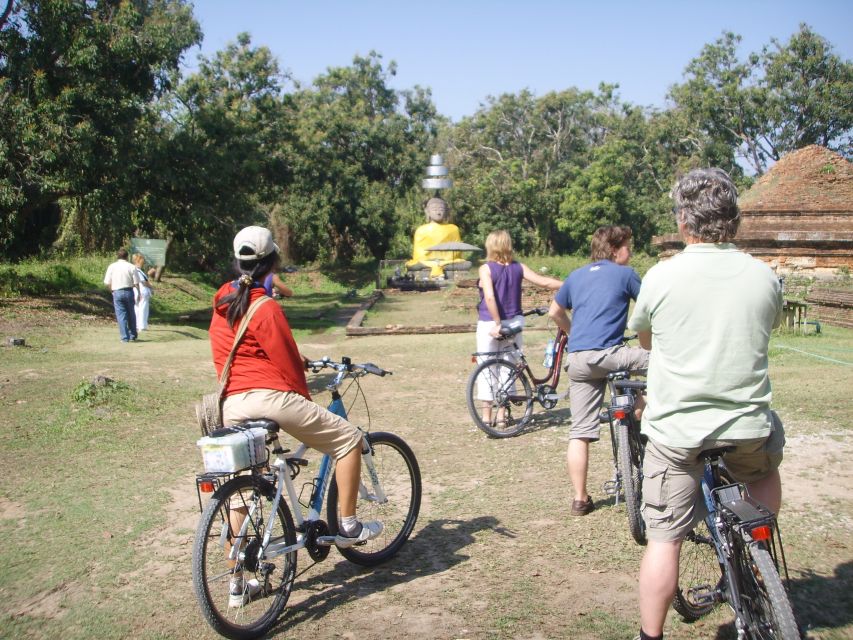
The ride is described as easy to moderate in pace, with most of the route on quiet roads. People who are not keen cyclists have completed the distance comfortably when the guide kept the group moving at a relaxed speed.
The main challenge is not steep climbing. No major hills are mentioned. The more realistic issue is the total distance and the time spent in the saddle. If you cycle now and then, 20 kilometers with regular breaks should be manageable. If you rarely ride, the distance may be tiring by the final stretch.
Busy roads appear only occasionally, but they cannot be ruled out. Guides such as Wee and Wit have been praised for using clear signals and taking care at crossings. That is particularly useful if you feel uneasy around traffic.
Private and small-group departures are available. A private ride gives you more control over the pace and questions, while a small group can be more sociable. The minimum operating requirement is two participants, so solo visitors are welcome to book, but the tour may be moved or canceled if that minimum is not reached.
Price, transport, and practical value
At $38 per person, this is a fair price for a 270-minute activity. The cost includes the bicycle, helmet, English or Thai-speaking guide, food or snacks, water or soft drinks, insurance, and access to free WiFi at the operator’s office.
The strongest value comes from the combination. A basic bicycle rental would not give you local explanations, temple access, food, route planning, or traffic support. A standard sightseeing trip may show you temples and ruins, but it is less likely to connect them with rice fields, village work, and the river.
One practical point concerns the journey back to Chiang Mai. The tour normally cycles back to its starting point, but on at least one occasion a guide arranged shared tuk tuk transport into the city when returning by bicycle or reaching the original location was difficult. Do not assume that transfer is included every time. Ask the operator if you need transport after the ride.
You can cancel up to 24 hours before departure for a full refund, and the reserve-now, pay-later option keeps your plans flexible. Starting times vary, so check availability before booking.
Who should choose this tour
I would choose this ride if you want to see Chiang Mai beyond the old city and prefer a gentle cultural outing to a long mountain ride. It suits:
- Cyclists who enjoy 20 to 25 kilometers at an easy pace
- Visitors who want quiet roads and rural views near the city
- People interested in Buddhist customs and Lanna history
- Food lovers who want to try Khao Soi Kai locally
- Solo visitors comfortable joining a small group
- Families or mixed-ability groups who can manage the distance and occasional traffic
It may not suit you if you want a short ride, a fully separated cycle path, or a fixed schedule with every stop guaranteed. It is also not the best choice if you dislike heat, road cycling, or changing plans around local opening hours.
Should you book the Colors of Chiang Mai ride?
Book it if you want an active half-day that mixes local life, food, temples, and old Lanna ruins without leaving Chiang Mai Province. The quiet roads and careful guides make it more approachable than the distance might suggest.
Before booking, check the starting time, group size, and whether the current route includes the market, village craft stop, and rice fields. If you are a solo cyclist, confirm that another participant is booked. For $38, the package is strong, but its best moments come from the guide and the day’s local conditions rather than from a rigid list of sights.
FAQ
How long is the Colors of Chiang Mai bicycle tour?
The tour lasts 270 minutes, or four and a half hours.
How far do you cycle?
The route covers approximately 20 to 25 kilometers.
What languages are available?
The tour offers live guiding in English and Thai.
Is food included?
Yes. A Thai meal or snack is included, along with water or soft drinks during the excursion. Khao Soi Kai may be served at a local restaurant.
Does the tour visit Wiang Kum Kam?
Yes. The route passes through the historic settlement of Wiang Kum Kam, founded in 1286 by King Mengrai, with temples and ruins dating back hundreds of years.
Can solo visitors join?
Solo visitors are welcome, but the tour operates only when at least two participants are booked. If the minimum is not reached, the operator may offer another time, day, or tour, or cancel the reservation.
Can I cancel for a full refund?
Yes. You can cancel up to 24 hours before the tour for a full refund.
Just added in Chiang Mai
- Inthanon Day Trip from Chiang Mai with Lunch – Group or Private★ 5.0 · 182 reviews
- Jewellery Making Class with Silversmithing in Chiang Mai★ 4.5 · 11 reviews
- No.1 Chiang Mai: Historical City Bike Tour★ 5.0 · 10 reviews
- 10KM Inflatable Kayaking Adventure★ 5.0 · 23 reviews
- Chiang Mai: Historic Old City Bike Tour – Morning or Night★ 5.0 · 202 reviews
- Half-day E-bike Nam Phrae (hilly, fully paved roads, GUIDED)★ 5.0 · 122 reviews
- Inthanon Heaven Trail(Living Green Elephant Sanctuary)★ 5.0 · 52 reviews
- Half Day Car Hire with an English Speaking Driver in Chiang Mai★ 5.0 · 16 reviews
Tours in Chiang Mai, compared.
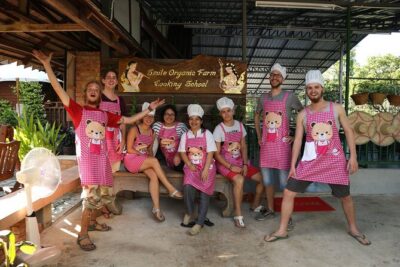
Half-Day Thai Cooking Class at Organic Farm in Chiang Mai
Read our review →
Chiang Mai: Elephant Sanctuary, Waterfall & Bamboo Rafting
Read our review →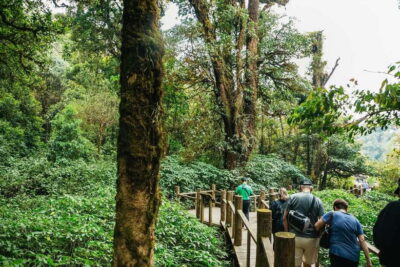
Chiang Mai: Doi Inthanon National Park Eco-Friendly Tour
Read our review →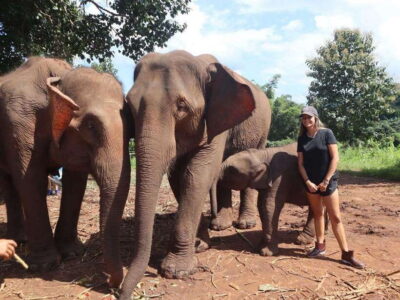
Chiang Mai: Elephant Sanctuary & Waterfall Group Tour
Read our review →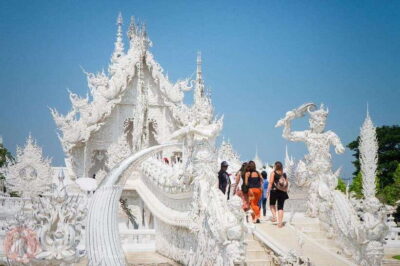
Chiang Mai: Chiang Rai Temples, Karen Tribe and Hot Springs
Read our review →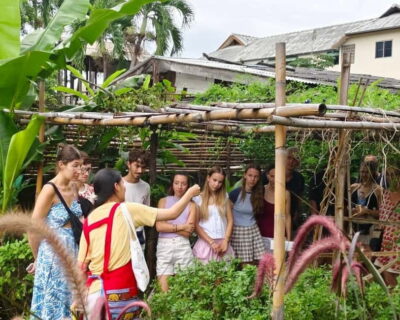
Chiang Mai: Cooking Class, Market & Thai Herbs Garden Tour
Read our review →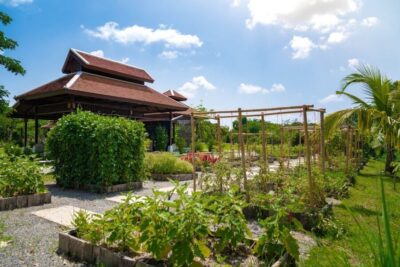
Chiang Mai: Authentic Cooking Class with Market & Farm Visit
Read our review →