
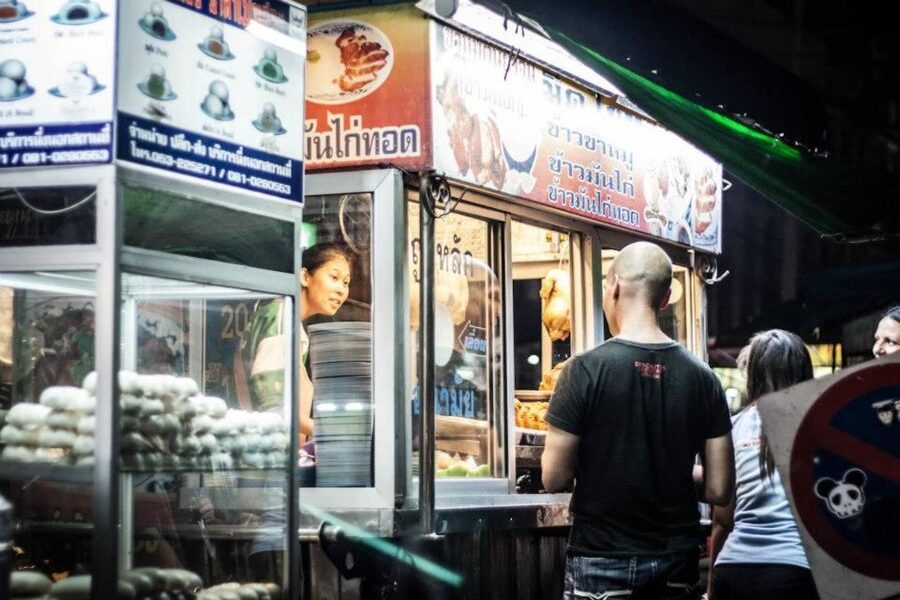
Reviewed · STREET FOOD & FOOD TOURS
Chiang Mai: Evening Local Street Food Market Tour
Chiang Mai’s best food lesson may happen beside a market stall, not at a restaurant table. This $40 evening tour takes you through at least two night markets, where a guide orders a wide spread of northern Thai dishes and explains how to eat them. Expect enough food for a serious dinner, and often enough for tomorrow’s regrets.
I like the small group, capped at 10 people, because you can ask what an unfamiliar paste or sausage contains without shouting over a busload of tourists. I also like the practical Thai language lesson and the little food leaflet, which help you keep ordering after the tour ends. The main drawback is important: this tour cannot accommodate vegetarians or pescatarians, and the exact dishes change from night to night.
Key points
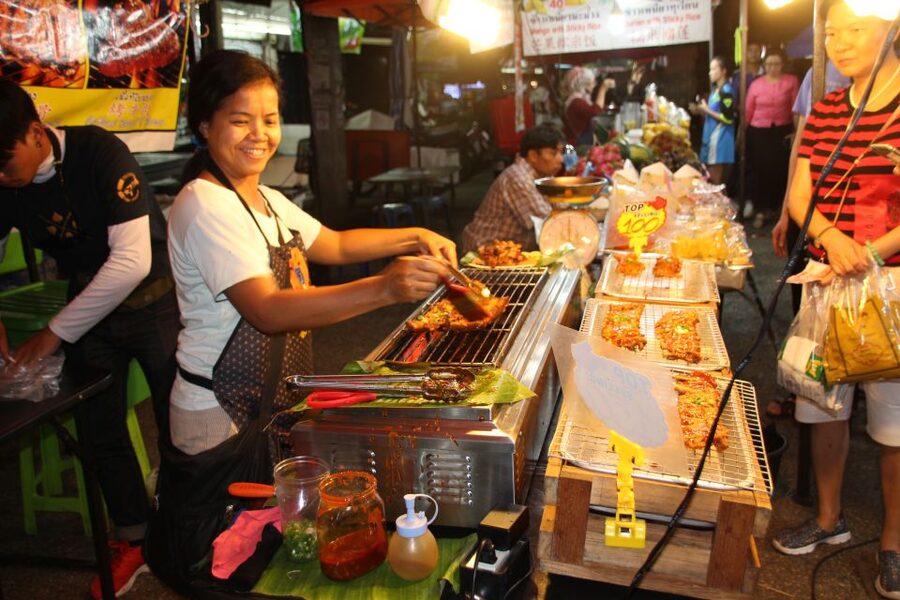
- A huge food spread: Try kanom jeen, northern Thai specialties, stewed pork leg, coconut dumplings, salads, curries, and desserts.
- Guides who teach as they feed: Guides including Goal, Jay, Chai, and Tienchai explain ingredients, customs, dish origins, and useful Thai phrases.
- More than two market stops: The advertised route covers at least two evening markets, though the evening can include three or four markets or food stations.
- Small-group format: With no more than 10 people, you get time to ask questions and practice ordering.
- Hotel transfers included: Pickup and return transport work for accommodations in central Chiang Mai.
- Come hungry: Several people needed to stop eating before the final dishes, so a light lunch is wise.
Why this Chiang Mai food tour works so well
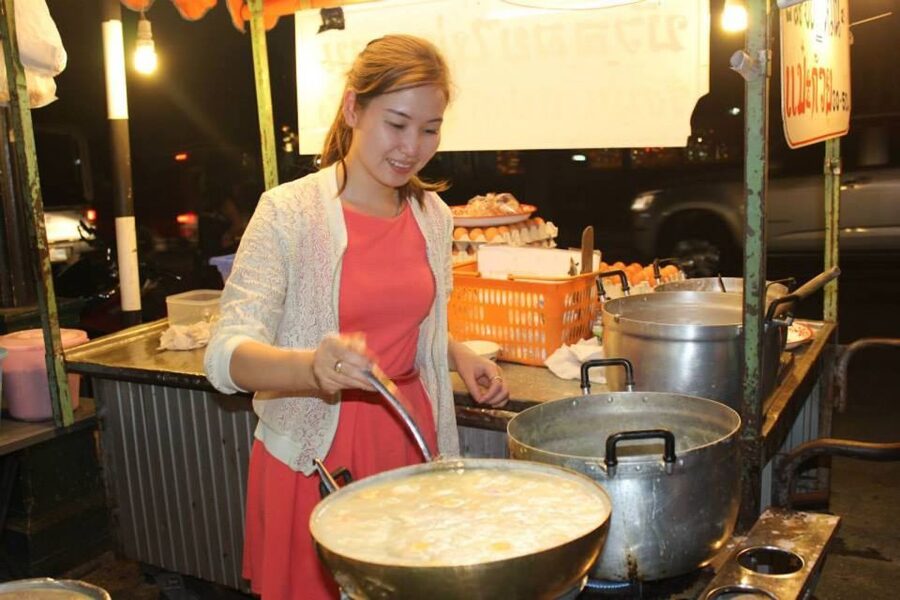
This is not a quick lap around one market with a single snack in hand. It is a moving dinner, food class, language lesson, and introduction to local market life rolled into 150 minutes.
The guide leads the ordering, which matters in Chiang Mai. At a busy stall, you may not know which tray holds northern sausage, which bowl contains curry, or how to ask for something mild. Your guide takes care of the first round, explains what arrives, and helps you build the confidence to order on your own later.
Guides named Goal, Jay, Chai, T, Go, Nop, and Tienchai have led this experience at different times. Goal appears often in the feedback and is praised for his humor, clear explanations, and care with the group. Jay is also frequently singled out for his easy manner and strong English. The exact guide is not guaranteed, but the pattern is clear: guide quality is a major part of the experience.
I like that the food is not limited to familiar Thai restaurant standards. You may know pad Thai and mango sticky rice already. Here, the focus shifts toward northern Thai food and dishes you may not recognize from a menu back home.
More Food Tours in Chiang Mai
- Small-Group Chiang Mai Evening Street Food Tour
★ 4.5 · 826 reviews - Northern Flavours Chiang Mai Food Tour with 15+ Tastings
★ 5.0 · 513 reviews - The 10 Tastings of Chiang Mai With Locals: Private Street Food Tour
★ 5.0 · 216 reviews
Starting with hotel pickup and a small group
Pickup is included from hotels in central Chiang Mai. You should wait in the lobby 10 minutes before the scheduled pickup time, then meet the rest of the group and your guide.
The transport has been praised for being clean, comfortable, prompt, and safe. That is useful in Chiang Mai, where moving between markets can take time. One practical warning: traffic can eat into the evening, especially at busy times. The tour still delivers plenty of food, but you should not expect every minute to be spent walking and eating.
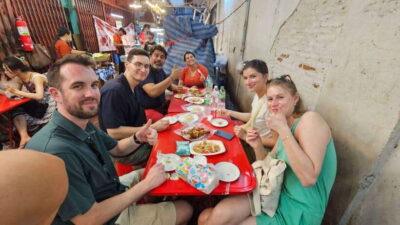
The group limit of 10 is one of the tour’s strongest features. Food tours become less useful when one guide has to manage 20 or 30 people. Here, you have a better chance to hear explanations, ask about ingredients, and get help with spice levels or unfamiliar textures.
It is also a friendly setup for solo visitors. The shared plates give you an easy reason to talk with other people, and the pace creates a natural dinner-table feeling even though you are eating at market stops.
The first market: learning how to order
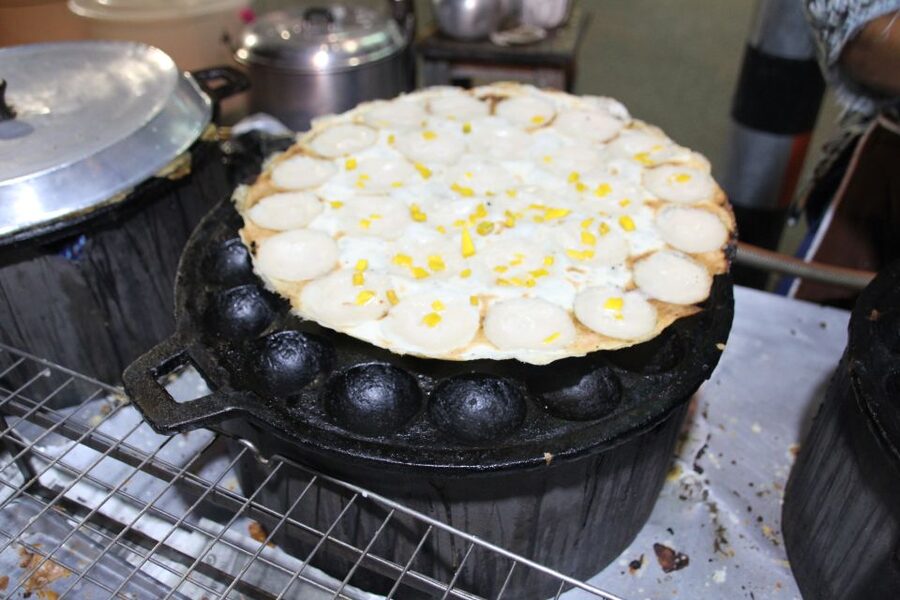
The first stop is where the tour’s system becomes clear. Your guide introduces the food, orders a selection, and explains what you are looking at before you start tasting.
You will learn basic phrases for ordering in Thai. The lesson is not a formal language class, but it is practical. You get phrases connected to food, ordering, and spice, then practice using them at the stalls. That small step can make the rest of your stay less intimidating.
The included leaflet lists popular Thai dishes and useful Thai phrases. Keep it in your day bag. It is the sort of simple tool that becomes valuable later when you are standing alone at a night market, trying to work out what to order.
You may begin with kanom jeen, sometimes written as khanom chin. These soft rice noodles are served with sauces and toppings, and the dish can vary by region. The Chiang Mai setting gives the guide a chance to explain how northern food differs from Thai food you may have tried in Bangkok or at home.
The first market also helps you understand how Thai meals work. You are not being handed one large plate and told to finish it. Several dishes arrive in shared portions, so you can taste a wider range without committing to a full serving of something you may not like.
Northern Thai specialties, stewed pork leg, and coconut dumplings
The heart of the evening is the succession of local dishes. The exact menu changes, so you should treat the advertised food as a guide rather than a fixed promise.
Northern Thai specialties are the main reason to book this tour instead of simply eating at a familiar restaurant. You might encounter curries, salads, soups, sausages, relishes, or other regional foods. Guides explain the ingredients and the background of each dish, including how food connects with northern culture and influences from nearby regions.
Stewed pork leg is another featured dish. It is slow-cooked, tender, and very different from the quick grilled foods many people associate with street markets. A guide can show you which parts to try and how the dish fits into the wider range of Thai comfort food.
Then come coconut dumplings and other sweets. These provide a useful change after salty, spicy, and sour dishes. The dessert course may also include several other Thai sweets, depending on what is available that evening.
The quantity is generous. Reports of 10 or more dishes, 14 dishes, several main courses, salads, and four desserts are common in the experience feedback. Portions are generally shared, but the overall amount can still be overwhelming. If you want to reach the sweets, pace yourself from the beginning.
More eating your way around Chiang Mai:
- Phuket: Full Day City Tour with Night Market
★ 4.5 · 2,888 reviews - Bangkok: Backstreets Food Tour with 15+ Tastings
★ 4.9 · 2,880 reviews - Southern Flavors Phuket Food Tour with 15+ Tastings
★ 5.0 · 1,933 reviews - Bangkok Backstreets Food Tour with 15+ Tastings
★ 5.0 · 1,926 reviews
The second market, and sometimes a few more
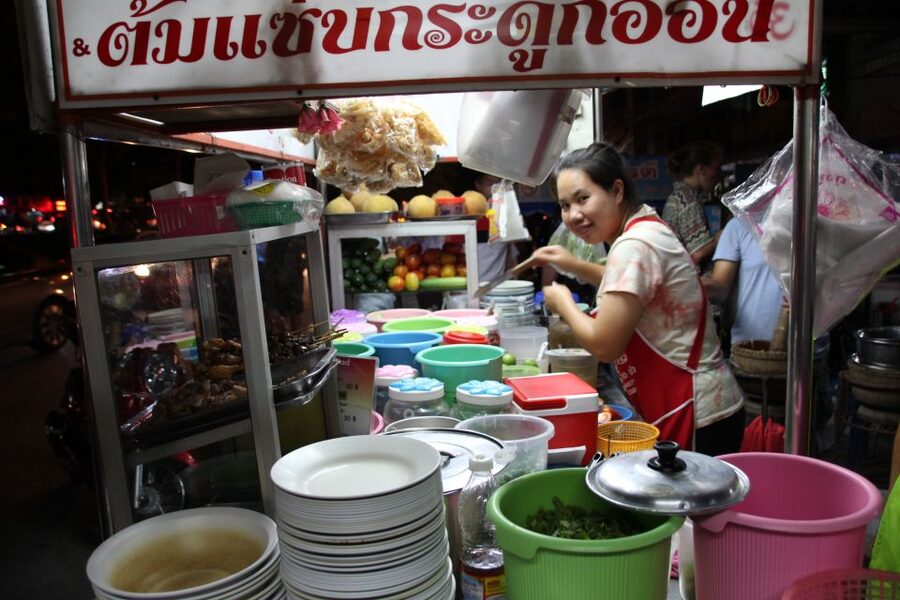
The advertised route visits at least two evening food markets. In practice, the evening can include three markets or four quality food stations, depending on the route, timing, and what is open.
That variety is useful because no single market can show you all of Chiang Mai’s food culture. One stop may be better for noodles, another for prepared dishes, and another for sweets or snacks. You get a wider look at how locals buy dinner than you would from sitting in one food court.
The tradeoff is time in the vehicle. More markets mean more driving, and traffic can be slow. If your priority is walking every alley and chatting with every vendor, this is not that kind of tour. If your priority is tasting a broad range of food efficiently, the transport is a fair bargain.
You may also notice that the markets are working places, not staged performances. Food is prepared for local customers, and the selection depends on the night. That means one evening may offer different dishes from the next. It also means you should accept some uncertainty as part of the experience.
How the guide changes the food experience
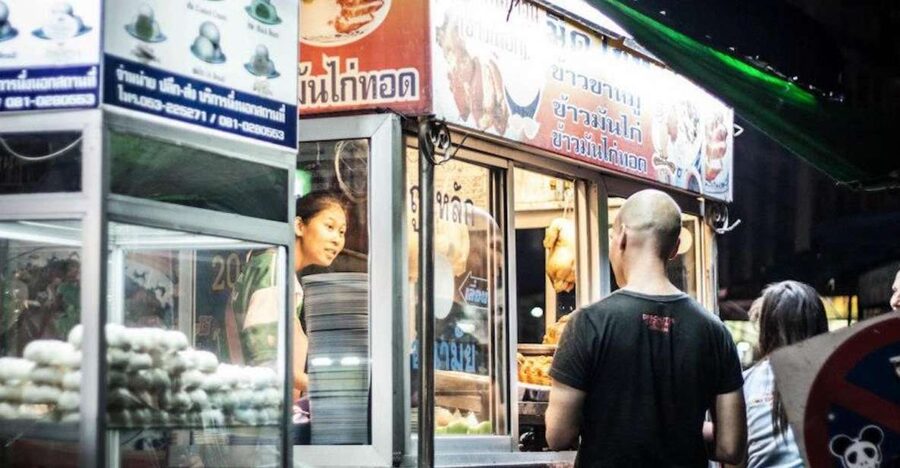
A good guide is especially useful when the menu includes unfamiliar food. You can ask what an ingredient is, how spicy a dish will be, and which part of the plate to eat first.
The guide also provides cultural context. You may learn why certain dishes are associated with northern Thailand, how Thai diners balance flavors, or how to handle shared plates. These explanations turn a series of tastings into a better understanding of the cuisine.
English ability has been consistently praised for the guides named in the feedback. Chai, Goal, Jay, and others are described as clear and engaging, with enough humor to keep the evening relaxed. That matters when you are learning new words while trying to remember which sauce belongs with which dish.
The guide can also help with spice. The menu includes both spicy and non-spicy food, but you should speak up early if you are sensitive to chili. One guide has been described as accommodating to fussy eaters and people who avoid spice. Still, that does not mean every dietary need can be handled.
Dietary limits and who should skip it
The operator clearly says the tour cannot accommodate vegetarians or pescatarians. Do not book it hoping that a vegetarian exception will be arranged. One individual experience mentions a vegetarian family member being accommodated, but that conflicts with the stated policy, so you should rely on the official restriction.
The same caution applies to serious allergies. The supplied details do not promise allergy handling, separate preparation, or a special menu. Ask the operator before booking if you have an allergy or strict dietary requirement.
Children under 8 are not suitable for this activity. Older children may enjoy the food and language practice, but the evening involves moving between markets and trying many dishes. Parents should also consider the spice, noise, and length of the meal.
This tour suits adventurous eaters, first-time visitors to Chiang Mai, solo diners, couples, and small groups who want a guided start to Thai food. It is especially useful on your first night because the leaflet and ordering lesson give you a head start for later meals.
Is $40 good value?
At $40 per person, this is not the cheapest way to eat in Chiang Mai. You can buy individual dishes at a market for very little. The value comes from the number of foods, the guide, the transport, and the confidence you gain from having someone order and explain everything.
All dishes and water are included. Other drinks, including alcohol, cost extra. Since the food portions are so generous, you are paying for a full evening meal rather than a few sample bites.
The small group also improves the value. You are not simply paying for transport to a market. You get direct access to a guide who can answer questions, translate, explain food customs, and help you try items you might otherwise pass by.
For a solo visitor, the price can make particular sense. Ordering 10 or more dishes alone would be wasteful, and you might not know which stalls to choose. Sharing the cost with a group lets you taste much more.
What to bring and how to pace yourself
Wear comfortable shoes. You will be moving through markets and food areas, and the evening is more enjoyable when you are not worrying about your feet.
Arrive hungry, but not starved. A light lunch and no heavy afternoon snack is a better plan than skipping food all day. The menu may include soups, curries, salads, noodles, pork, dumplings, and several desserts, so you need room for variety.
Drink the included water, especially if the food is spicy. Other drinks are not included, and alcoholic drinks cost extra.
Keep your leaflet after the tour. The practical payoff is not just the meal. You can use the food names and Thai phrases to order at another market, restaurant, or food stall during the rest of your trip.
Cancellation, timing, and transport details
The experience lasts 150 minutes, though traffic and the number of stops can shape the pace. Pickup and drop-off are included for hotels in central Chiang Mai. Accommodation outside the city area may be possible for a small surcharge, arranged directly with the operator.
The tour is offered in Thai and English. You can cancel up to 24 hours before the activity for a full refund, and the reserve-now, pay-later option keeps payment flexible while you finalize your plans.
The transport has received a 92 percent perfect score, which supports choosing this tour if you prefer not to arrange taxis between several markets yourself.
Should you book this Chiang Mai street food tour?
Book it if you want a guided introduction to northern Thai food, prefer tasting many dishes instead of choosing one dinner, and like the idea of learning a few useful Thai phrases along the way. The combination of small group, hotel transport, generous food, and strong guides makes $40 a fair price for a first evening in Chiang Mai.
Skip it if you are vegetarian, pescatarian, under 8, or looking for a quiet restaurant meal. Also skip it if traffic between markets would frustrate you. For everyone else, arrive with comfortable shoes, an empty stomach, and enough curiosity to try something you would not order alone.
FAQ
How long does the Chiang Mai street food tour last?
The tour lasts 150 minutes.
How much does the tour cost?
The price is $40 per person.
How many markets does the tour visit?
The planned route visits at least two evening street food markets. Depending on the night, the group may visit three markets or several food stations.
Is hotel pickup included?
Yes. Roundtrip hotel pickup and drop-off are included for accommodations in Chiang Mai city center.
What time should I be ready for pickup?
You should be in your hotel lobby 10 minutes before the scheduled pickup time.
Is the tour available in English?
Yes. The live guides speak Thai and English.
What food will I try?
The food can include kanom jeen, northern Thai specialties, stewed pork leg, coconut dumplings, other savory dishes, Thai desserts, and sweets. The exact dishes vary from night to night.
Are drinks included?
Water is included. Other drinks, including alcoholic beverages, are not included.
Can vegetarians join the tour?
No. The tour is not suitable for vegetarians or pescatarians.
Can children join the tour?
Children under 8 cannot join the activity.
What happens if I need to cancel?
You can cancel up to 24 hours in advance for a full refund. You can also reserve now and pay later, subject to the booking terms.
More Food & Drink in Chiang Mai
- Bangkok: White Orchid Chao Phraya Dinner Cruise free Beer
★ 4.4 · 4,573 reviews - Bangkok by Night: Temples, Markets and Food Tuk-Tuk Tour
★ 5.0 · 3,752 reviews - Bangkok Midnight Food Tuk Tuk Tour
★ 5.0 · 2,542 reviews - Bangkok: Michelin Guide Street Food Tour by Tuk Tuk
★ 4.4 · 1,274 reviews
Just added in Chiang Mai
- Chiang Mai: Evening Chanting & Meditation★ 4.5 · 69 reviews
- 1 Hour Deep Tissue Thai Massage with Balm – Free Transportation★ 5.0 · 64 reviews
- Whitewater Rafting Adventure★ 5.0 · 205 reviews
- 8 hour Sticky waterfall, ATV and White water rafting Adventures★ 5.0 · 308 reviews
- Meditation Retreat and Self-Care in Nature★ 5.0 · 46 reviews
- Chiang Mai: Art in Paradise Illusion Museum Entry Ticket★ 4.4 · 82 reviews
- Chiang Mai: Elephants, Sticky Waterfalls, Market and Temple★ 4.9 · 227 reviews
- Doi inthanon National Park + 2Hour Fantastic Trekking with Lunch★ 4.5 · 233 reviews
Street Food & Food Tours, compared.

Bangkok: Backstreets Food Tour with 15+ Tastings
Read our review →
Southern Flavors Phuket Food Tour with 15+ Tastings
Read our review →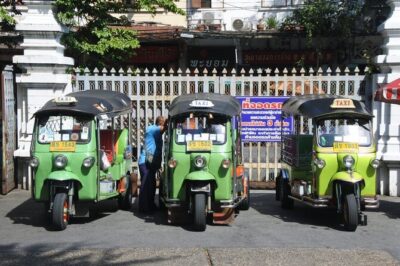
Bangkok: Michelin Guide Street Food Tour by Tuk Tuk
Read our review →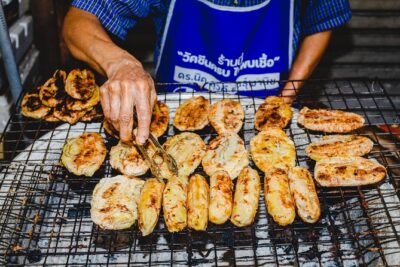
Bangkok Authentic Tasting Thai-Chinatown Walking Food Tour
Read our review →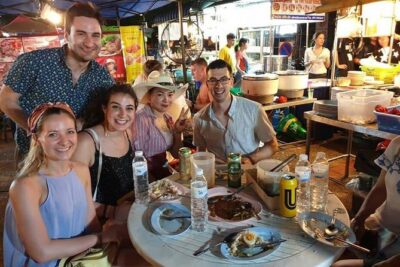
Small-Group Chiang Mai Evening Street Food Tour
Read our review →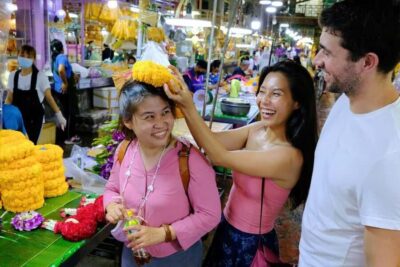
Bangkok: Tuk Tuk Adventure Chinatown Michelin Food & Temples
Read our review →Browse the lists this tour appears in