
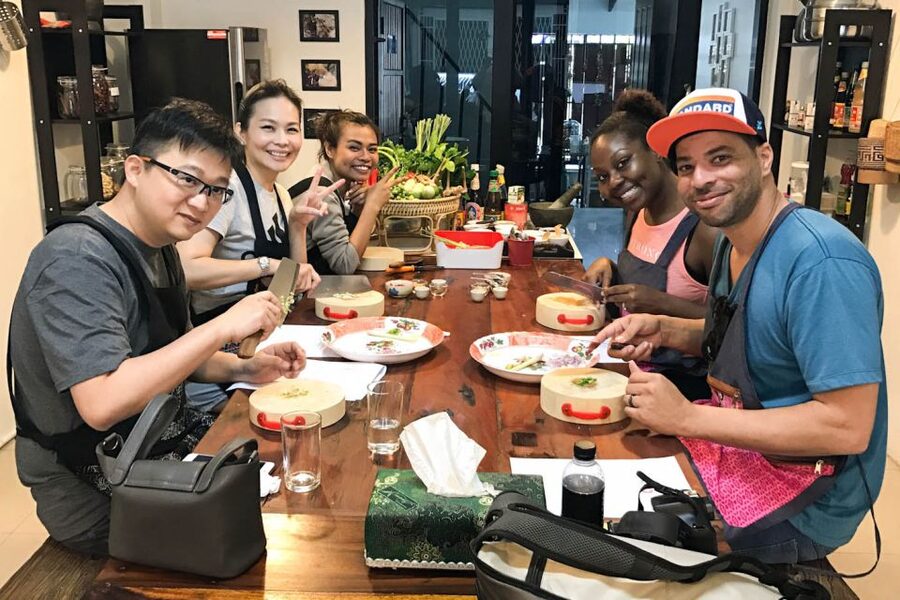
Reviewed · THAI COOKING CLASSES
Bangkok: Thai Cooking Class and Onnuch Market Tour
Bangkok: Thai Cooking Class and Onnuch Market Tour
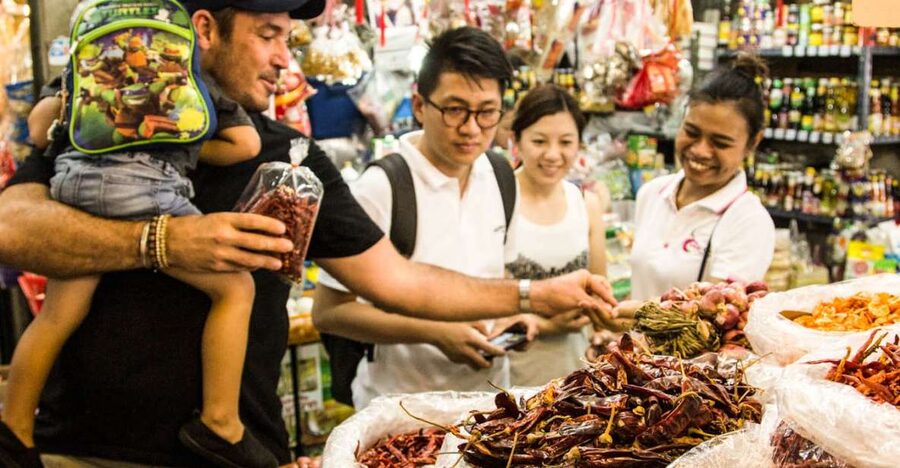
The best part of this half-day class happens before you reach the stove. At Onnuch Market, your instructor helps you choose herbs, vegetables, spices, and other ingredients, turning an ordinary shopping trip into a quick lesson in how Thai cooks build flavor.
I like the small group of eight because it gives you room to ask questions and follow each step. I also like the range of dishes: Pad Thai, papaya salad, Thai curry, and mango sticky rice cover noodles, salad, spice, and dessert in one sitting.
The main drawback is the pace. Four dishes in four hours is a full schedule, so this suits you best if you want to cook a lot rather than linger over one recipe. Arrive on time, too, since missing the market visit means missing an important part of the class.
Key points to know before booking
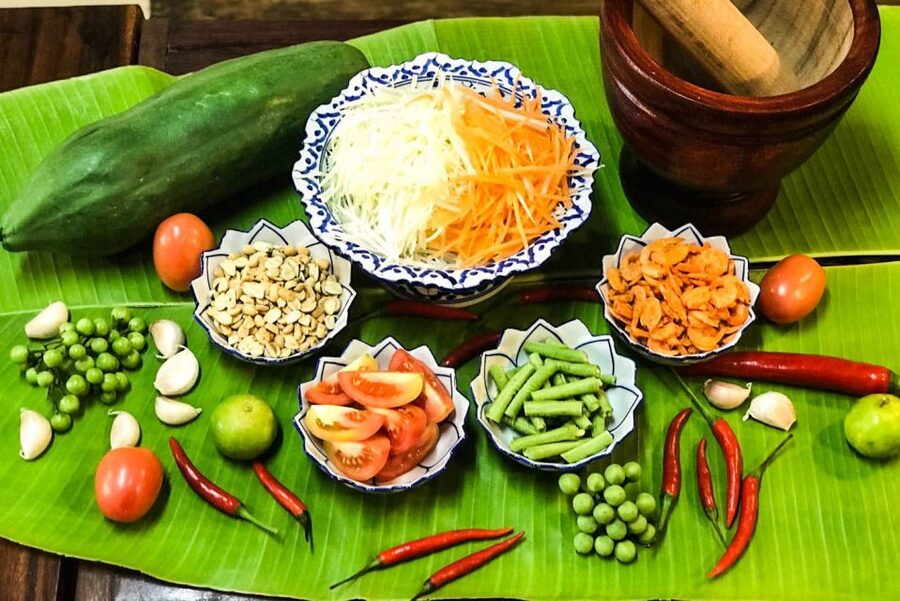
- Four dishes in one class: Prepare Pad Thai, papaya salad, Thai curry, and mango sticky rice, with a different menu each day.
- Market shopping comes first: Visit Onnuch Market with your instructor and choose the ingredients used in your meal.
- Small class size: The group is limited to eight participants, making it easier to ask questions and keep up.
- Two Bangkok start times: Meet at 8:45 a.m. for the morning class or 1:45 p.m. for the afternoon class.
- Meal and refreshments included: Eat the dishes you cook, with unlimited tea, coffee, and water.
- Good value at $43: The price covers the market visit, ingredients, equipment, instruction, four dishes, Wi-Fi, and your finished meal.
Starting at Pink Chili Thai Cooking School
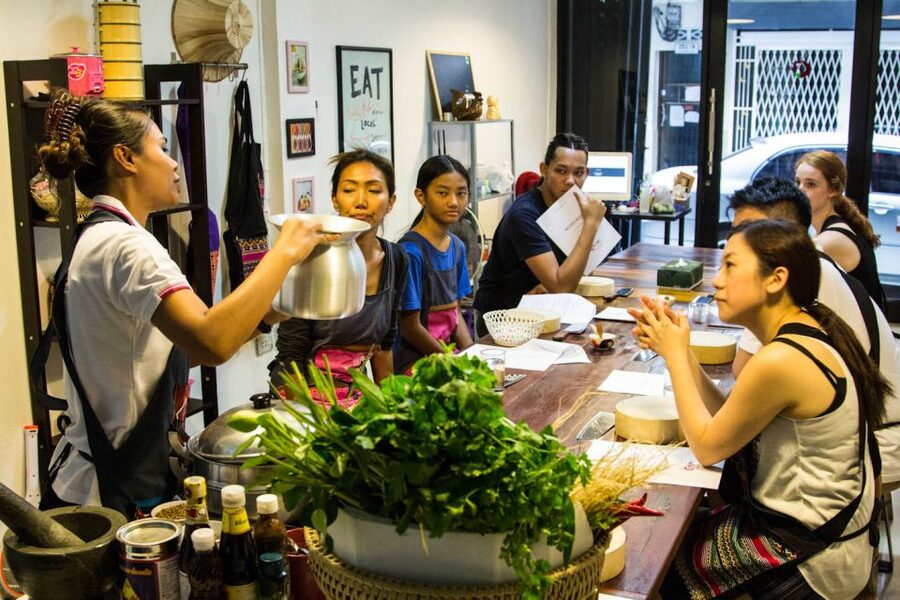
Your class begins at Pink Chili Thai Cooking School in Bangkok. The morning meeting time is 8:45 a.m., while the afternoon class begins at 1:45 p.m., and the activity returns to this same location after about four hours.
You need to take the meeting time seriously. The market visit comes first, so arriving late may mean missing it rather than simply joining the cooking portion a few minutes behind everyone else.
The class is taught in English and is limited to eight people. That number matters in a hands-on lesson. You are not just watching a demonstration from the back of a large room. You can ask about an unfamiliar herb, check a cooking step, and get help as you work.
The school provides the cooking equipment and ingredients, so you do not need to bring supplies. Wi-Fi, tea, coffee, and water are also included. Alcohol is not included, which is hardly a problem for a daytime class built around food and cooking.
More Cooking Classes in Bangkok
- Bangkok: Hands-on Thai Cooking Class and Market Tour
★ 4.9 · 1,614 reviews - Bangkok: Tingly Thai Cooking School Half-Day Cooking Class
★ 4.9 · 1,191 reviews - Bangkok: Maliwan Thai Cooking Class with Market Tour
★ 4.9 · 1,133 reviews
Why the Onnuch Market visit matters
Many cooking classes begin with neatly arranged ingredients on a counter. This one starts with the less polished and more useful part: finding those ingredients in a Bangkok food market.
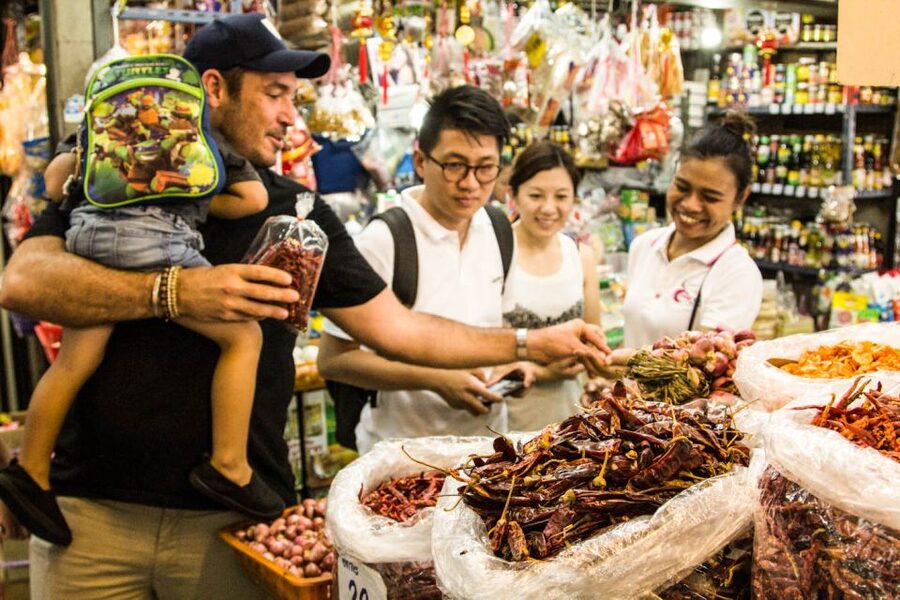
At Onnuch Market, your instructor guides you as you select the vegetables, herbs, spices, and other items needed for the menu. The value is not only in seeing the market. You also learn what to look for when choosing fresh produce and how individual ingredients fit into Thai cooking.
This is a busy, traditional food market rather than a sightseeing stop designed only for photographs. You can expect a practical walk through the food stalls, with the market visit tied directly to the meal you will prepare later.
The market gives the class a clear sense of place. Thai food can look simple on a restaurant menu, but its flavor often depends on the balance and freshness of several small ingredients. Seeing those ingredients before they are chopped or mixed helps you understand the food in a more direct way.
I would pay close attention during this part, even if you are eager to start cooking. The market visit is brief compared with a full market tour, but it adds context that a classroom-only lesson would miss.
Cooking four Thai classics in four hours
Back at the school, you use the market purchases in four dishes. The menu changes each day, but the listed class includes Pad Thai, papaya salad, Thai curry, and mango sticky rice.
That combination gives you a broad sample of Thai cooking. Pad Thai brings noodles and the familiar sweet, salty, sour balance associated with the dish. Papaya salad adds fresh texture and a sharper flavor profile. Thai curry brings herbs and spices into the lesson, while mango sticky rice provides a sweet finish.
Cooking four dishes in one class is ambitious. You will move from one task to the next, learning about the ingredients as you use them. That makes the session productive, but it also means you should not expect a slow, private lesson focused on mastering one recipe in fine detail.
For many people, the busy pace is part of the fun. You get a sense of how several dishes can come together for one Thai meal, rather than spending most of the afternoon on a single curry or noodle dish.
The class also helps connect the market to the plate. When your instructor explains the herbs, vegetables, and spices you bought, the lesson becomes more than a recipe demonstration. You see how the ingredients change as they are prepared and combined.
Pad Thai, papaya salad, curry, and mango sticky rice
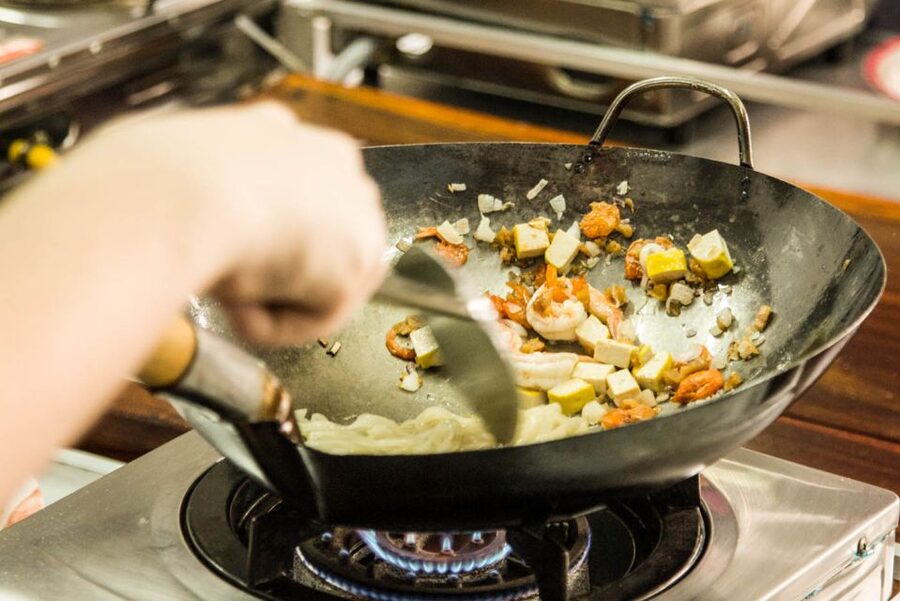
Pad Thai is the most familiar dish on the menu for many people, but making it yourself gives you a better feel for its balance. You can watch how the ingredients come together rather than treating the dish as a fixed restaurant order.
Papaya salad offers a different lesson. It is not simply another noodle or rice dish, so it broadens the class and gives you a fresh, crisp counterpoint to the curry and Pad Thai.
The curry section is where the herbs and spices from the market become especially useful. You learn how the ingredients contribute to the fragrance and flavor of the dish, instead of meeting them only as an anonymous sauce on a plate.
Mango sticky rice ends the meal on a gentler note. It is a useful addition because a Thai cooking lesson that covers only savory food would leave out one of the country’s best-known desserts.
The menu changes daily, so you should not treat the four listed dishes as a guaranteed fixed menu for every date. The important point is the format: four Thai dishes in one class, with a mix of savory food, noodles, curry, salad, and dessert.
Other kitchens to cook in around Bangkok:
- Hands on Thai Cooking Class and Market Tour
★ 5.0 · 660 reviews - Tingly Thai Cooking Class with Morning Market Tour
★ 5.0 · 589 reviews - Hands-on Thai Cooking Class & Market Tour in Sukhumvit
★ 5.0 · 571 reviews - Pink Chili – Thai Cooking Class and Market Tour in Bangkok
★ 5.0 · 416 reviews
The food you cook becomes your lunch or dinner
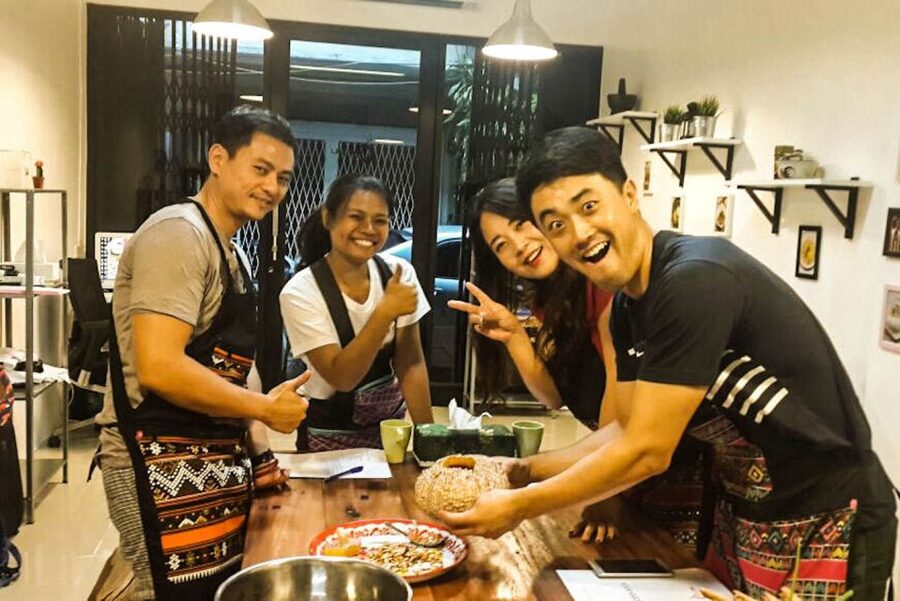
At the end, you sit down with the other students and eat the food you prepared. This is more satisfying than receiving a separate meal because you can connect each dish with the steps that produced it.
The meal also gives you a chance to compare results and talk through the class. Since the group is small, the final table is likely to feel like the natural end of a shared cooking session rather than a quick handoff of food.
Unlimited tea, coffee, and water are included. Alcoholic drinks are not, so plan on a nonalcoholic meal unless you make separate arrangements outside the activity.
The food itself is the main payoff. The class has been described as rewarding despite its intense pace, and that is a fair way to think about it. You do a lot in four hours, but you also finish with four dishes to taste rather than a recipe card and a demonstration you never get to eat.
What makes the small group useful
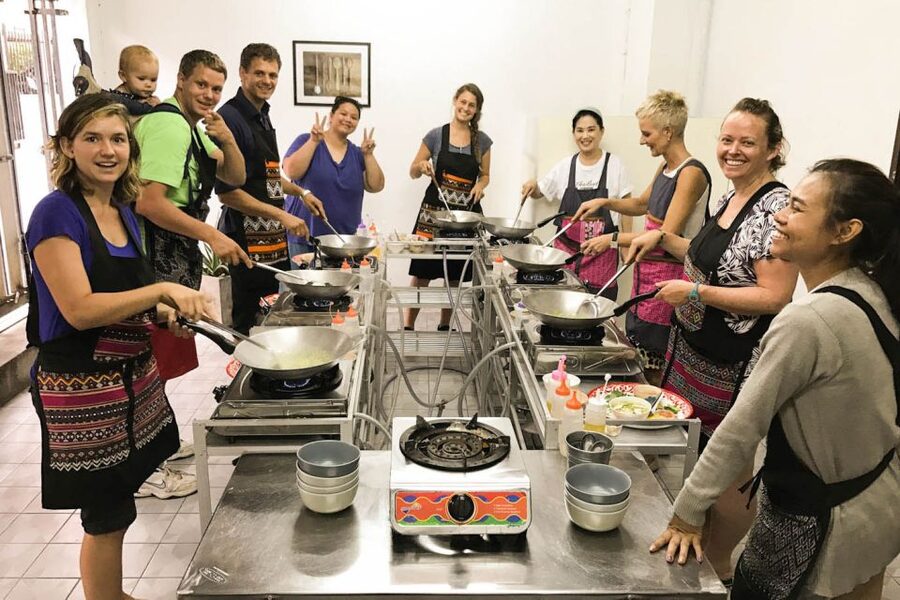
A limit of eight participants is one of the stronger features of this class. Cooking lessons become less useful when you cannot see the work surface or get the instructor’s attention.
Here, the small group should make it easier to ask about unfamiliar ingredients and get help as you prepare each dish. It also gives the instructor a better chance to keep the class moving when several dishes are being prepared at once.
The tradeoff is that you are still part of a group. You will share the pace, the cooking area, and the final meal with other students. If you want a completely private class or a menu built around your own dietary needs, the supplied details do not promise that arrangement.
For most people, eight is a comfortable size. You have company, but the class does not feel like a large demonstration where personal guidance is hard to get.
Is $43 a fair price?
At $43 per person, this is a solid value if you want more than a cooking demonstration. The fee covers the Onnuch Market visit, your ingredients, cooking equipment, English instruction, four dishes, refreshments, Wi-Fi, and the food you prepare.
The market visit adds real value because it gives you an activity before the cooking begins. You are not paying only for time in a classroom. You are also getting a guided look at the ingredients and a practical lesson in selecting them.
The four-dish format makes the price more appealing for people with limited time in Bangkok. In four hours, you see a market, learn about Thai ingredients, cook several well-known dishes, and eat the finished meal.
The value is less clear if you already plan to spend several days in a long cooking course or want a very slow lesson. This class is designed for a compact introduction, not a deep professional training session.
Still, the combination of market, cooking, and meal gives you a good return for a half-day activity. The free cancellation option up to 24 hours before the start also gives you some flexibility, and the reserve-now, pay-later option means you do not have to pay at booking.
Who should book this Bangkok class?
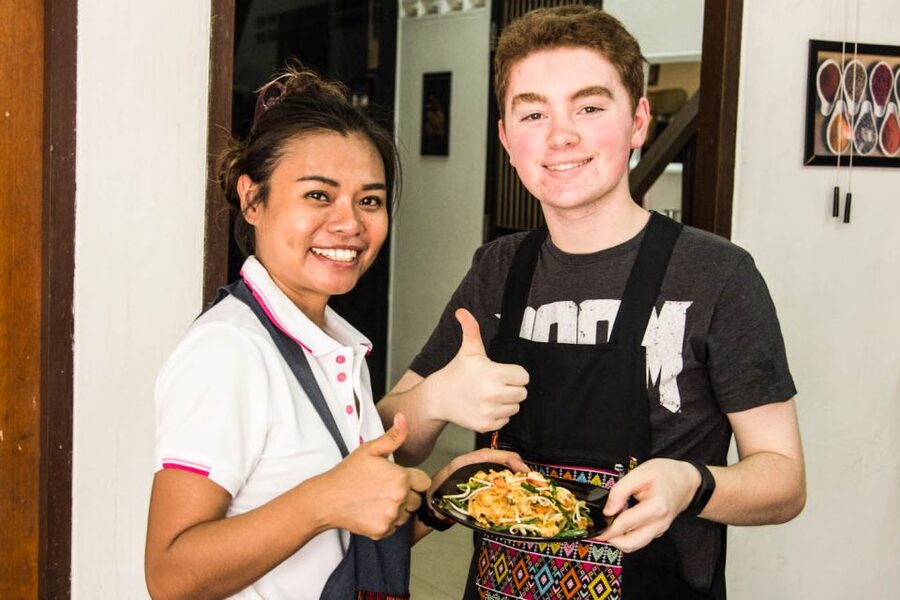
I would recommend it to first-time visitors who want a direct introduction to Thai food. It is also a good fit for home cooks who want to understand ingredients, not just eat familiar dishes in restaurants.
The class works well for people who enjoy active activities. You will shop, prepare, cook, and eat, so there is little idle time. If you prefer to sit back while an instructor does the work, choose a demonstration-style class instead.
Families and mixed-age groups may like the clear sequence of the session, though the provided information does not specify age rules. Anyone with food restrictions should confirm details before booking, since no special dietary arrangements are stated.
The morning option is useful if you want to keep the afternoon free. The afternoon option may fit better after a slower Bangkok morning. Either way, build in enough time to reach Pink Chili Thai Cooking School before the meeting time.
Practical details for a smooth visit
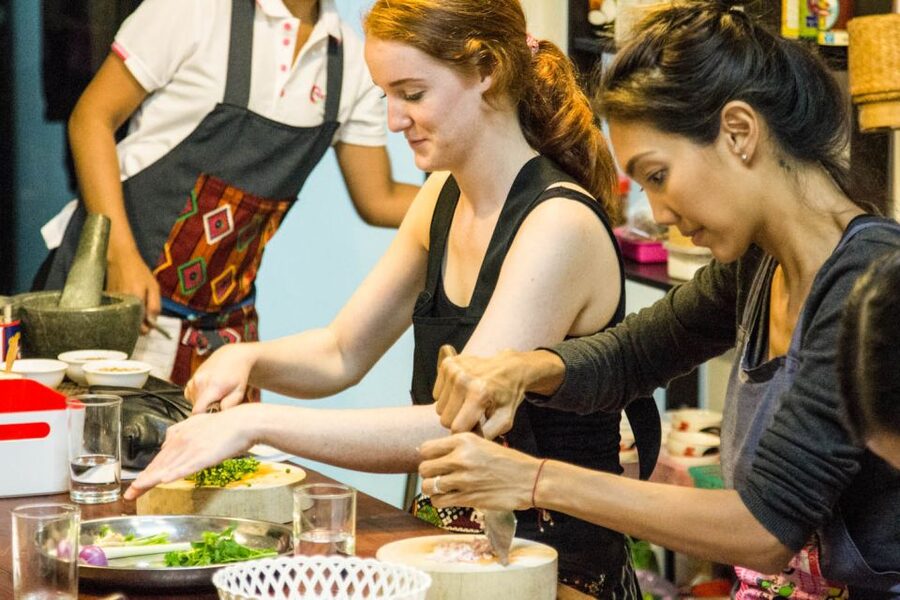
Wear something comfortable for a four-hour activity and be ready to move between the market and cooking school. The key practical rule is simple: arrive early enough for the market departure.
You do not need to bring cooking equipment or ingredients. Those are included, along with tea, coffee, and water.
The instructor speaks English, and the group is limited to eight. The experience ends back at Pink Chili Thai Cooking School, so your return point is the same as your starting point.
Check the available date before assuming the exact menu. The class uses a different menu each day, even though Pad Thai, papaya salad, Thai curry, and mango sticky rice describe the main cooking themes.
Should you book the Onnuch Market cooking class?
Book it if you want to cook four Thai dishes in one efficient half-day and like the idea of choosing ingredients at a real Bangkok market. The market stop, small group, and meal at the end give this class more substance than a lesson held entirely indoors.
Skip it if you want a quiet, highly focused session on one recipe, or if you dislike a quick pace. For everyone else, $43 is a reasonable price for market shopping, instruction, ingredients, equipment, refreshments, and a meal you create yourself.
FAQ
Where does the Thai cooking class start?
The activity starts at Pink Chili Thai Cooking School in Bangkok.
What time does the morning class begin?
The morning class meeting time is 8:45 a.m.
What time does the afternoon class begin?
The afternoon class meeting time is 1:45 p.m.
How long does the activity last?
The cooking class and market visit last four hours.
Where does the market visit take place?
The class visits Onnuch Market, where you choose ingredients with guidance from the instructor.
Which dishes will I cook?
The class includes Pad Thai, papaya salad, Thai curry, and mango sticky rice. The menu changes each day.
Is the class taught in English?
Yes. The instructor language is English.
How many people are in the group?
The class is limited to eight participants.
Are ingredients and cooking equipment included?
Yes. Ingredients and cooking equipment are included, along with unlimited tea, coffee, water, and Wi-Fi. Alcoholic drinks are not included.
Just added in Bangkok
- re:leaf spa and massage★ 4.0 · 10 reviews
- Wonderful Pearl Dinner Cruise★ 3.5 · 27 reviews
- 3-Hour Bangkok Walking Tour: Wat Pho and Wat Arun★ 5.0 · 102 reviews
- Yoga in the Park Thailand★ 5.0 · 12 reviews
- Visit Wat Pho and Wat Arun with Local Expert★ 4.0 · 14 reviews
- White Orchid Sunset Dinner Cruise Calypso Ladyboy Cabaret Show★ 4.0 · 10 reviews
- Miracle Bangkok Airport Lounges – Relax Before You Fly★ 3.0 · 32 reviews
- Visit temples in and around Bangkok with a former monk of 10 years★ 5.0 · 30 reviews
Thai Cooking Classes, compared.
Half-Day Thai Cooking Class at Organic Farm in Chiang Mai
Read our review →
Chiang Mai: Cooking Class, Market & Thai Herbs Garden Tour
Read our review →
Chiang Mai: Authentic Cooking Class with Market & Farm Visit
Read our review →
Phuket Thai Cooking Class with Market Tour Option
Read our review →
Bangkok: Hands-on Thai Cooking Class and Market Tour
Read our review →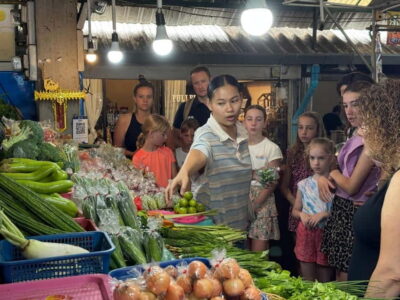
Chiang Mai: Cooking Class with Market and Pickup
Read our review →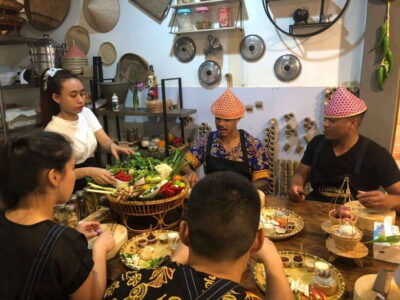
Bangkok: Tingly Thai Cooking School Half-Day Cooking Class
Read our review →Browse the lists this tour appears in