
Reviewed · THAI COOKING CLASSES
Hands-On Thai Cooking Class Bangkok with Local Chef (Small Group)
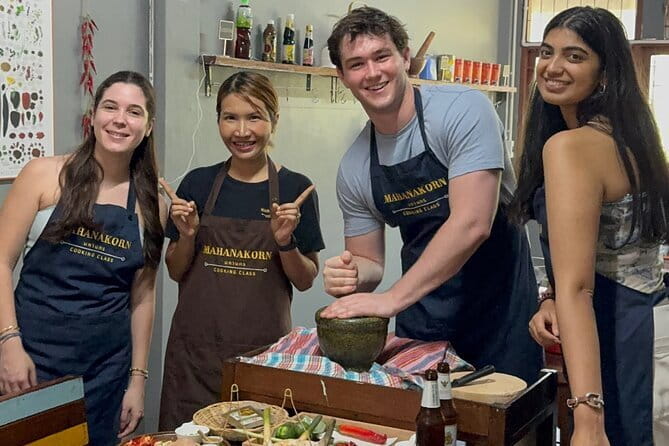
Bangkok’s Mahanakorn Thai Cooking Class gets to the useful heart of Thai food: you cook it yourself, from fresh ingredients, under the eye of a local chef. Chef Joyce is known for her warm, funny teaching style, and the class goes beyond simply following a recipe. You learn why the food tastes the way it does, including how to make curry paste from scratch with a stone mortar and pestle.
I especially like the small maximum of eight people, which gives you room to ask questions and work at your own station. I also like the four-course format, generous portions, recipe booklet, and photos, all included in the $38.72 price. The main consideration is the location in Phasi Charoen, which may be a trek from central Bangkok, though it is near public transportation and close to Wat Paknam, a striking temple worth adding to your day.
Key points at a glance
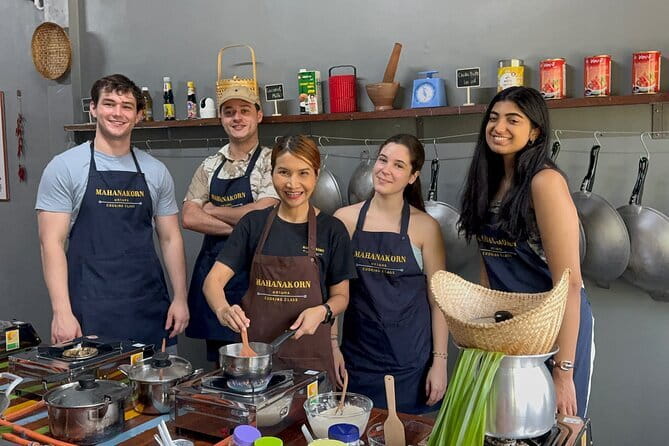
- Chef Joyce leads a personal, relaxed class: Her patient and humorous style suits both first-time cooks and people who already make Thai food at home.
- You cook four dishes from scratch: The menu can include favorites such as tom yum soup, pad thai, green curry with chicken, and mango sticky rice.
- Fresh curry paste is a real highlight: You may work with a stone mortar and pestle rather than relying on a ready-made jar.
- The group is capped at eight: This makes hands-on instruction much more practical than in a large demonstration class.
- Lunch and dinner sessions are available: Pick the time that fits your Bangkok plans and appetite.
- The class ends where it starts: Plan extra time for transport, and consider pairing it with nearby Wat Paknam.
What the three-hour Bangkok cooking class is really like
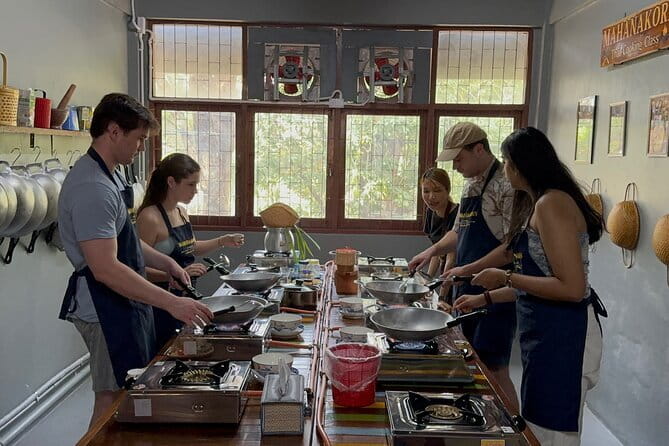
This is not a show where you sit back and watch a chef do all the work. The point is to get your own hands into the process. You receive ingredients and equipment, listen to step-by-step instructions, cook at your station, and eat the food you prepare.
The advertised duration is about three hours. One detailed account describes a longer session of roughly four hours, so you should allow some flexibility if your schedule is tight. Cooking four dishes, tasting ingredients, asking questions, and eating a full meal can take time.
The class is designed for all skill levels. You do not need Thai cooking experience, and you do not need to arrive with professional knife skills. The chef explains the ingredients and techniques as you go, making this a sensible choice if Thai food feels mysterious in your own kitchen.
At the same time, the class is not only for beginners. People who already cook Thai food at home have found that the traditional methods and ingredient explanations can correct habits picked up from simplified recipes. That is useful because Thai dishes often depend on balance, freshness, and the order in which ingredients are cooked.
More Cooking Classes in Bangkok
- Bangkok: Hands-on Thai Cooking Class and Market Tour
★ 4.9 · 1,614 reviews - Bangkok: Tingly Thai Cooking School Half-Day Cooking Class
★ 4.9 · 1,191 reviews - Bangkok: Maliwan Thai Cooking Class with Market Tour
★ 4.9 · 1,133 reviews
Meeting Chef Joyce and setting up your station
The class begins at Mahanakorn Thai Cooking Class, at 139 35 Soi Ratchamongkhon Prasat 5 in Phasi Charoen. This is not in the middle of Bangkok’s main tourist core, so check your route carefully before setting out.
The neighborhood setting is part of the appeal. The cooking school is near canals, bridges, and Wat Paknam, whose large golden Buddha is a memorable local sight. You can visit the temple before or after class, but allow enough time to get back to the meeting point. The activity finishes at the same location where it begins.
Once you arrive, the small format should feel easy to manage. The maximum group size is eight people, and the available equipment and hygiene supplies are included. That matters because you are not waiting for a whole room to finish before touching an ingredient.
Chef Joyce and her assistant guide the session. Joyce’s teaching style comes through as warm, patient, and playful, with plenty of attention to the names and uses of each ingredient. You can ask questions freely rather than trying to keep up with a large demonstration at the front of the room.
Learning the building blocks of Thai flavor
The most useful part of the experience is the ingredient lesson. Thai food is often reduced to a few familiar labels, such as spicy, sweet, sour, or salty. A good class shows you how those flavors work together and how small changes affect the final dish.
You learn about the ingredients used in Thai cooking and get practical advice on technique. The supplied information does not promise a fixed menu for every session, but the dishes described include pad thai, green curry with chicken, tom yum soup, and mango sticky rice.
The class also looks at ingredients you might normally buy ready-made. Thai chili paste and curry paste are examples. Instead of treating a jar as the starting point, you may learn how to build the paste yourself, using fresh ingredients and traditional grinding methods.
That hands-on approach gives you something more useful than a list of ingredients. You see the texture change as the paste is worked, taste the components, and understand why the finished dish has more character than a quick shortcut. One account specifically highlights green curry paste made with a stone mortar and pestle rather than a blender or prepared product.
Do not expect every dish to suit your personal spice preference automatically. Thai food has strong flavors, and the class is built around authentic cooking rather than heavily softened restaurant food. The advantage is that you can ask questions and learn how the balance is created.
Cooking four dishes, one at a time
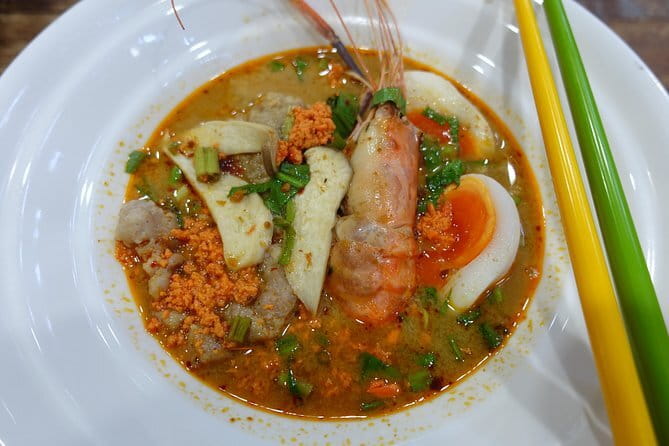
The four-course structure keeps the class active. The stated lunch inclusion is a four-course Thai cooking class, and the wider experience offers lunch and dinner options. You cook one dish, then eat it before moving on, so the meal develops throughout the session.
Other kitchens to cook in around Bangkok:
- Hands on Thai Cooking Class and Market Tour
★ 5.0 · 660 reviews - Tingly Thai Cooking Class with Morning Market Tour
★ 5.0 · 589 reviews - Hands-on Thai Cooking Class & Market Tour in Sukhumvit
★ 5.0 · 571 reviews - Pink Chili – Thai Cooking Class and Market Tour in Bangkok
★ 5.0 · 416 reviews
Tom yum soup
Tom yum introduces the sharp side of Thai cooking. The dish is known for its hot and sour balance, and it helps you see how aromatic ingredients work together rather than relying on one overpowering flavor.
The order of cooking matters here. The chef can show you how the ingredients affect the broth and how to judge the final balance. Since you eat the dish you have just prepared, you can connect each step with the taste in front of you.
Pad thai
Pad thai is familiar to many people, but restaurant versions can hide the technique. In class, you get to see how the noodles, sauce, vegetables, and other ingredients come together in the pan.
This is one of the best dishes to learn if you plan to cook Thai food at home. The chef’s advice can help you avoid the common mistake of treating the sauce as the entire recipe. Timing and texture matter just as much.
Green curry with chicken
Green curry is the dish where the traditional method becomes especially interesting. The class may use a freshly made curry paste, prepared with a stone mortar and pestle rather than a blender.
That process takes more effort than opening a packet, but it gives the lesson real purpose. You learn what is in the paste and how the ingredients change as they are crushed. Some people may find the course filling by this point, especially after soup and noodles, but that is also a useful warning to pace yourself.
Mango sticky rice
Mango sticky rice provides a sweet finish and a welcome change after several savory dishes. It is simple in appearance, but the quality depends on the rice, the coconut mixture, and the balance of sweetness.
The dish is also easy to remember and repeat at home. If you want one recipe that brings back your Bangkok trip without a long shopping list, this is a strong candidate.
Why the small group matters

A small class is not just a pleasant extra. It changes how much you can learn. With no more than eight people, the chef can keep an eye on your technique, answer questions, and help when a step is unclear.
You cook at your own station rather than watching someone else handle every ingredient. That gives you a better chance to remember the process after you return home. It also helps families and couples take part together instead of assigning one person to observe.
The atmosphere appears to be relaxed rather than formal. Families of four have found the setup welcoming, while couples and solo participants can expect a social meal without being placed in a huge group. The class is interactive, but it is not presented as a competition.
The assistant also matters. A second person can help keep ingredients, equipment, and timing under control while Joyce teaches. That should make the session feel organized without losing its personal quality.
The meal is part of the lesson

You do not simply prepare food and leave. You sit down and eat what you have made, with bottled water included. The portions are described as generous, so plan this as a proper meal rather than a small tasting.
The cook-and-eat rhythm is one of the strongest parts of the experience. You can notice the texture while the dish is fresh, then compare it with the next course. It also gives you a chance to talk with the chef and the other people in your group.
Alcohol is not included. Alcoholic drinks are limited to participants aged 20 and above, so do not count on wine or beer as part of the meal. The experience is built around the food, water, and cooking instruction.
The four dishes may be more food than some people expect from a three-hour class. If you choose a lunch session, arrive ready to eat. If you choose dinner, you may want to keep the meal before class light.
What you take home besides a full stomach
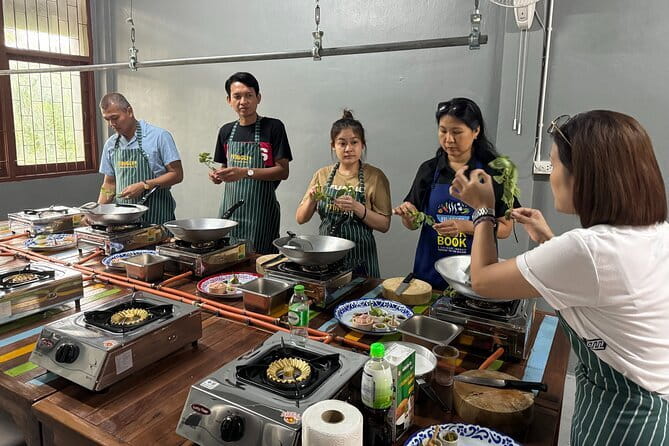
The practical value comes after the class. You receive a PDF recipe booklet, which gives you a reference for recreating the dishes. Photos from the experience are also included, so you do not need to worry about documenting every step while cooking.
The recipe booklet cannot replace the chef’s explanations, but it helps you remember the sequence and ingredients. Pay attention during the class to the details that are difficult to capture on paper, such as texture, aroma, and the point at which a paste is properly ground.
You also leave with a better sense of how to adapt Thai ingredients outside Thailand. The class specifically discusses store-bought items such as Thai chili paste and shows how to make them from scratch. That can help you decide when a shortcut is acceptable and when the flavor depends on fresh preparation.
Is $38.72 good value?
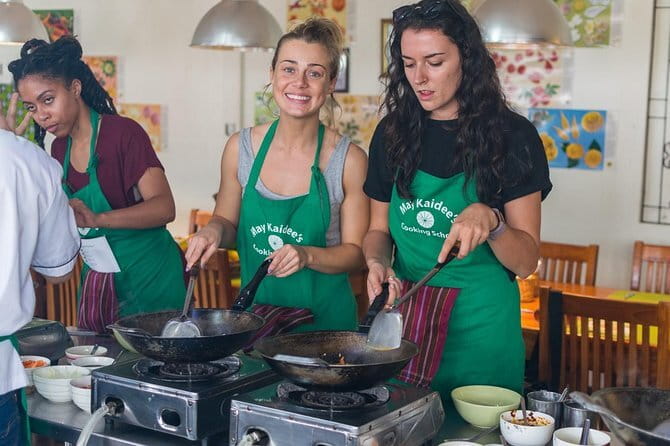
At $38.72 per person, this is a strong value if you want a meal plus real instruction. The price includes four courses, ingredients, cooking equipment, hygiene supplies, a guide, bottled water, photos, and the PDF recipes.
Many cooking classes charge a premium for the setting or for a long market visit. This experience puts the money into the hands-on kitchen time instead. You are paying for instruction, food, and a small group rather than just a demonstration.
The value depends partly on how much you use the recipes later. If you only want to eat Thai food once, a regular restaurant meal will be cheaper. If you want to understand the food and repeat it at home, the class offers more lasting value.
The location also affects the calculation. If you are staying far from Phasi Charoen, transport takes extra time and may add cost. On the other hand, the nearby canal setting and Wat Paknam give you a reason to make the journey part of a larger outing.
Who should book this class?
I would recommend it to first-time cooks who want a friendly introduction without feeling embarrassed about basic questions. The chef’s step-by-step approach and small group should make the process manageable.
It also suits confident home cooks. The fresh curry paste method, ingredient tasting, and traditional preparation can add something beyond the simplified Thai recipes many people use abroad.
Families should find the format useful because everyone can take part, and the four-course meal gives the session a clear rhythm. Couples can treat it as both a meal and a shared activity. Solo participants should also have enough interaction, thanks to the small group and guided cooking.
I would think twice if you have very limited time in Bangkok or dislike full meals. The location is outside the busiest central areas, and four dishes can leave you quite full. The class is also not suitable for wheelchair users, since wheelchair access is not available.
Booking confirmation is provided at the time of purchase. Free cancellation is available up to 24 hours before the start time, while cancellations or changes made inside that window are not accepted for a refund.
My verdict: a useful and tasty Bangkok experience
Book this class if you want more than a plate of pad thai and a quick photo. The best reasons are the small group, Chef Joyce’s personal instruction, the fresh ingredients, and the chance to make curry paste from scratch.
I would plan the class alongside Wat Paknam and allow extra time for transport. Choose lunch or dinner according to your schedule, but arrive hungry enough for four courses.
The main drawback is the out-of-center location and the possibility that the session runs longer than the advertised three hours. For many people, that is a fair trade. You get a full meal, practical Thai cooking skills, recipes to take home, and a local neighborhood setting for less than $40.
FAQ
How long does the Thai cooking class last?
The advertised duration is approximately three hours. A detailed experience account described a session of about four hours, so allow some extra time if your schedule is tight.
How many people can join the class?
The activity has a maximum of eight participants.
Is the class suitable for beginners?
Yes. The class is designed for all skill levels, and no previous cooking experience is required.
What dishes might I cook?
The four-course class can include Thai favorites such as tom yum soup, pad thai, green curry with chicken, and mango sticky rice. The exact menu is not specified as fixed for every session.
Are lunch and dinner classes available?
Yes. You can choose between lunch and dinner class options.
Is food included in the price?
Yes. The lunch class includes a four-course Thai cooking meal, and the experience includes all fresh ingredients and bottled water.
Are cooking equipment and hygiene supplies provided?
Yes. Cooking and hygiene equipment are included.
Do I receive recipes after the class?
Yes. A PDF recipe booklet is included.
Is the class wheelchair accessible?
No. Wheelchair access is not available. The meeting point is near public transportation, and the activity ends back at the starting location.
Just added in Bangkok
- re:leaf spa and massage★ 4.0 · 10 reviews
- Wonderful Pearl Dinner Cruise★ 3.5 · 27 reviews
- 3-Hour Bangkok Walking Tour: Wat Pho and Wat Arun★ 5.0 · 102 reviews
- Yoga in the Park Thailand★ 5.0 · 12 reviews
- Visit Wat Pho and Wat Arun with Local Expert★ 4.0 · 14 reviews
- White Orchid Sunset Dinner Cruise Calypso Ladyboy Cabaret Show★ 4.0 · 10 reviews
- Miracle Bangkok Airport Lounges – Relax Before You Fly★ 3.0 · 32 reviews
- Visit temples in and around Bangkok with a former monk of 10 years★ 5.0 · 30 reviews
Thai Cooking Classes, compared.
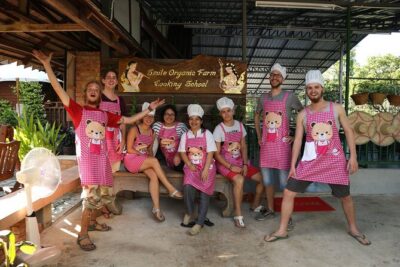
Half-Day Thai Cooking Class at Organic Farm in Chiang Mai
Read our review →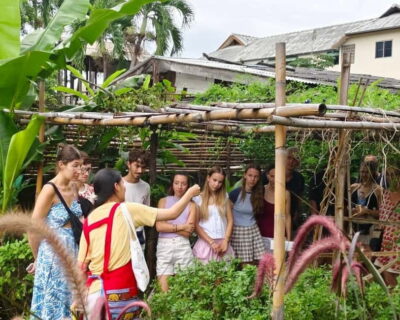
Chiang Mai: Cooking Class, Market & Thai Herbs Garden Tour
Read our review →
Chiang Mai: Authentic Cooking Class with Market & Farm Visit
Read our review →
Phuket Thai Cooking Class with Market Tour Option
Read our review →
Bangkok: Hands-on Thai Cooking Class and Market Tour
Read our review →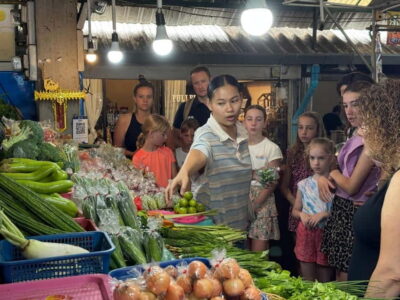
Chiang Mai: Cooking Class with Market and Pickup
Read our review →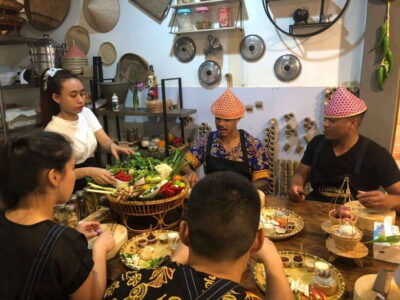
Bangkok: Tingly Thai Cooking School Half-Day Cooking Class
Read our review →Browse the lists this tour appears in