
Reviewed · THAI COOKING CLASSES
Silom Thai Cooking School with Fresh Market Tour
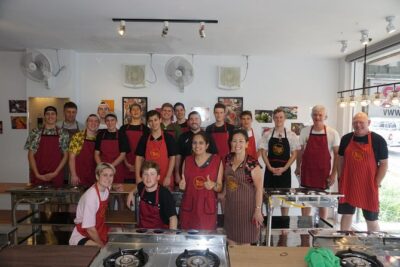
Bangkok’s best food lesson may begin before the cooking starts. In the morning, you walk to a local market, learn how to choose Thai ingredients, taste some fruit, and bring supplies back to the school. Then you prepare five dishes from scratch, with instructors such as Ju, Nuy, Toom, Choochoo, and Jewel guiding each step.
I like the small class size, capped at 10 people, and the practical setup that moves you from preparation to cooking to eating without much waiting. I also like that you leave with a recipe book, so the class can continue in your own kitchen. The main drawback is simple: the market visit is available only in the morning, and the menu can change.
Key points to know before booking
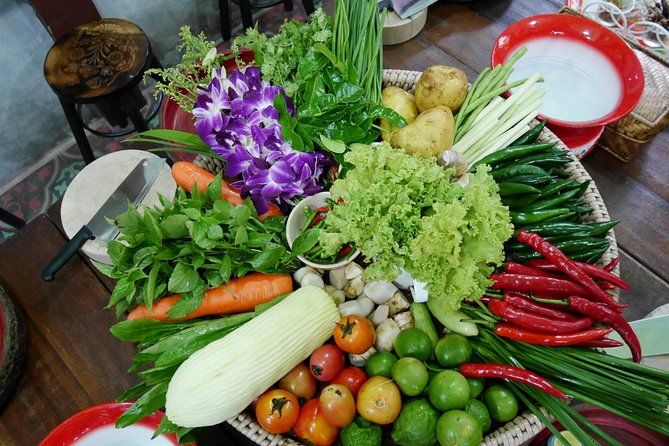
- Morning market walk: Learn about Thai herbs, vegetables, fruit, and other ingredients before cooking.
- Five dishes included: You prepare and eat five Thai courses, although the exact menu may change.
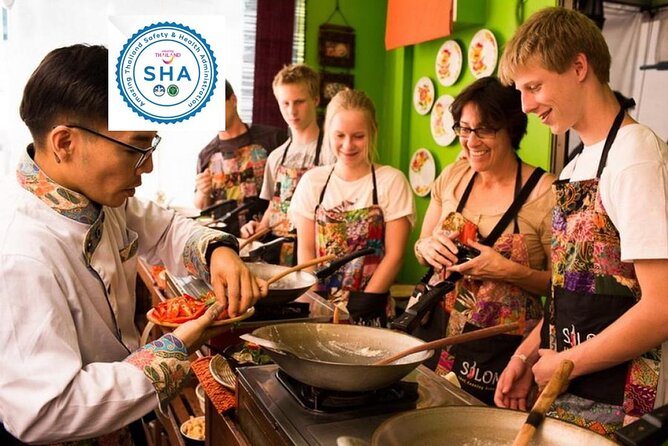
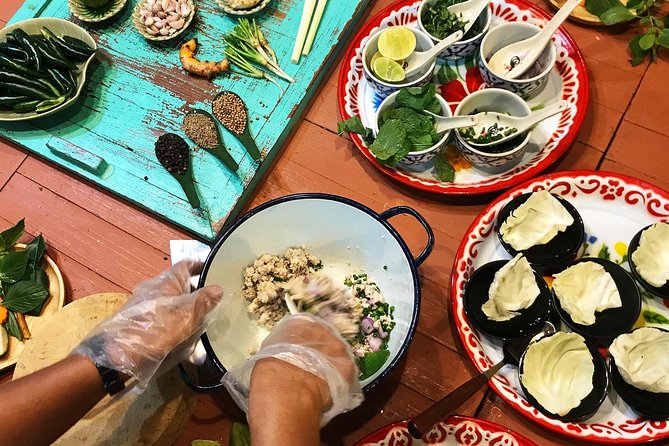
- A genuinely hands-on class: You chop, mix, cook, and follow each recipe rather than watching a chef do all the work.
- Only 10 people per class: The small group makes it easier to ask questions and get help.
- Recipe book included: You can try the dishes again after returning home.
- Three session choices: Morning, afternoon, and evening classes are offered, but only the morning class includes the market visit.
Why this Bangkok cooking class works so well
Thai food is built on balance. Sweet, salty, sour, spicy, fresh, creamy, and aromatic flavors all have to land in the right place. A cooking class is useful because it shows you the small decisions behind a dish, not just the finished plate.
At Silom Thai Cooking School, you do not simply sit at a counter and watch a demonstration. You work through the recipes with an instructor. The staff explain the ingredients, guide your preparation, and help you cook each dish. That matters if you are not confident in the kitchen. One participant described the lessons as easy to follow even for a clueless cook, which is a fair description of the class’s beginner-friendly approach.
The format also suits people who want a social activity without committing to a full-day tour. The class lasts about three hours and ends back at the school. You eat what you have prepared, so the meal feels like part of the lesson rather than an extra stop tacked onto the end.
The experience has earned a 5 out of 5 rating from 73 ratings, with 99 percent recommending it. Ratings are never a guarantee, but the pattern points to the same strengths again and again: friendly instructors, good organization, clean equipment, tasty food, and a class that feels fun rather than stiff.
More Cooking Classes in Bangkok
- Bangkok: Hands-on Thai Cooking Class and Market Tour
★ 4.9 · 1,614 reviews - Bangkok: Tingly Thai Cooking School Half-Day Cooking Class
★ 4.9 · 1,191 reviews - Bangkok: Maliwan Thai Cooking Class with Market Tour
★ 4.9 · 1,133 reviews
Starting at Silom Thai Cooking School in Bang Rak
The meeting point is Silom Thai Cooking School at 6/14 Decho Road in Bangkok’s Bang Rak district. The school is near public transportation, but hotel pickup and drop-off are not included, so you need to make your own way there.
For the morning class, arrive between 8:30 and 8:45 a.m. The group starts gathering for the market walk at 8:45. You can still join by 9:05, but the market visit may already be under way. Late arrivals stay at the school until the group returns, which means you would miss the most distinctive part of the morning.
That strict timing is worth taking seriously. The market is not a decorative extra. It gives you the first look at the ingredients you will later prepare, and it helps connect the food on your plate with the shopping habits behind it.
Afternoon and evening sessions skip the market tour. They may suit your schedule better, especially if you have a morning temple visit or an early Bangkok departure planned, but choose the morning option if ingredient shopping is a major reason for booking.
The local market visit adds real context
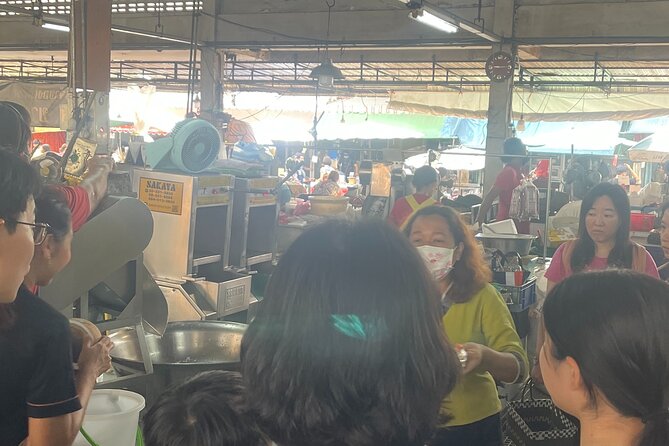
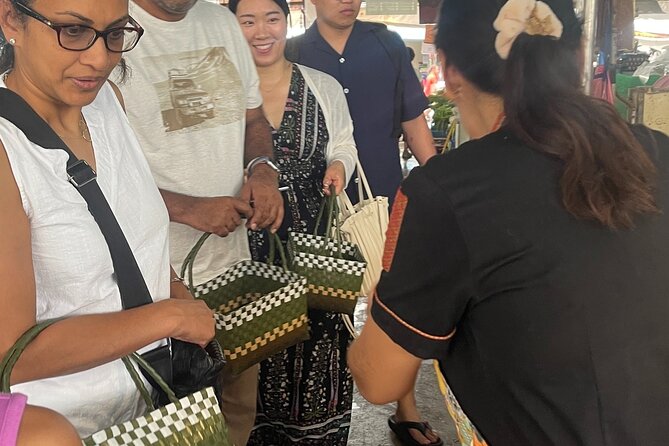
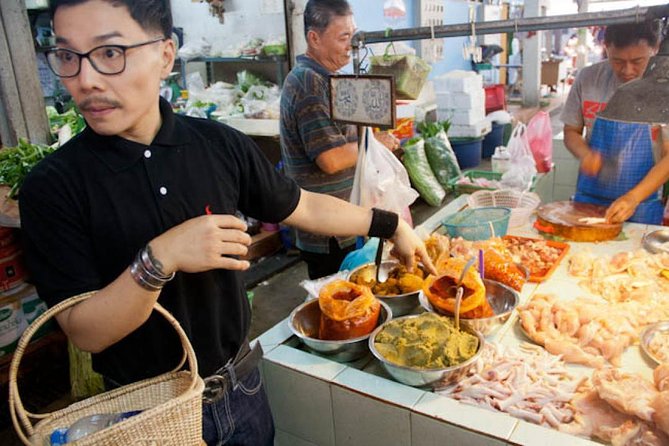
The morning tour begins with a walk to a local market. Your instructor explains how to choose the ingredients needed for the day, rather than simply pointing out unfamiliar produce. This gives you a useful introduction to the working parts of Thai cooking.
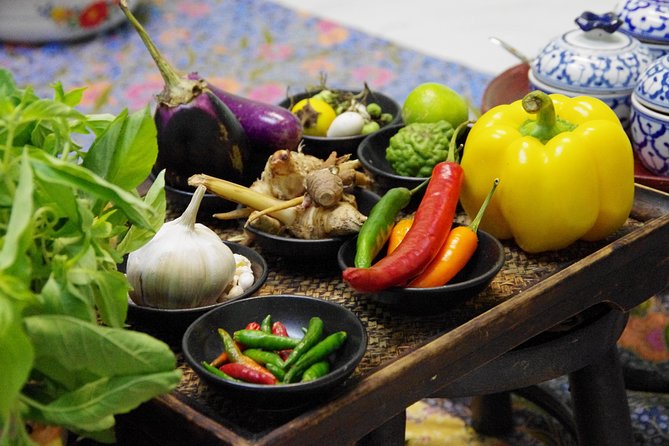
You might see the herbs, vegetables, fruit, and other supplies before they are cleaned and arranged at the school. Some participants also get to taste local fruit. That small tasting helps turn the market from a quick shopping stop into a lesson in flavor.
I like this part because it gives you something a recipe book cannot. A list may tell you to use a particular herb or vegetable, but the market shows you what the ingredient looks like, how fresh produce is selected, and how much variety Thai cooks work with.
The market visit is also short enough that it does not swallow the whole morning. You return to the school and begin cooking, so the experience keeps moving. Expect walking and the usual heat of Bangkok, though the provided information does not specify the exact market route or distance.
Preparing five dishes from scratch
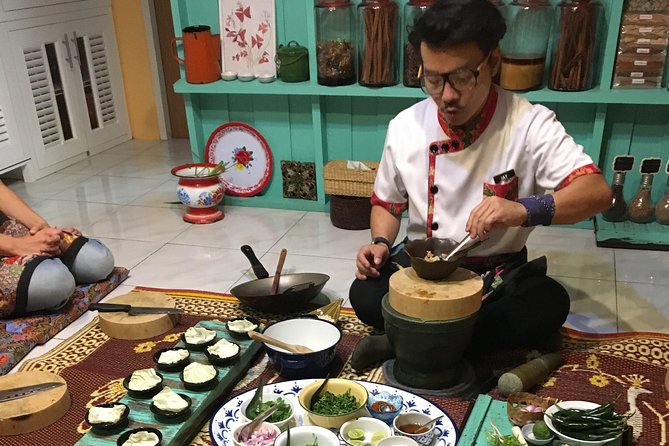
Back at the school, the instructor leads you through five Thai dishes. The exact menu is subject to change, but examples mentioned for the class include pad thai, tom yum soup, Thai green curry, som tam salad, and mango sticky rice.
That is a good spread. You get more than one style of Thai cooking, from noodles and soup to curry, salad, and dessert. You also see how different techniques and flavor combinations fit together.
The point is not to rush through five restaurant-style plates. The value is in following the sequence for each dish. Thai cooking often depends on preparation before the heat goes on, so learning when to cut, mix, add, and taste is more useful than memorizing a list of ingredients.
The school separates preparation, cooking, and eating areas. One participant appreciated that the next preparation station was ready after each dish, keeping the lesson orderly. That setup matters in a three-hour class. You spend your time cooking and eating rather than waiting for a workspace to be cleared.
Instructors have received especially warm praise for their humor and patience. Ju was described as professional and organized. Nuy helped make a solo participant feel comfortable. Toom was praised for her energy and sense of humor, while Choochoo was noted for explaining each step patiently. Jewel was described as kind, funny, and attentive.
The individual instructor will depend on your session, so you should not book expecting one particular person. Still, the repeated comments about the teaching style suggest a consistent strength: the class aims to keep instructions clear and the mood relaxed.
Other kitchens to cook in around Bangkok:
- Hands on Thai Cooking Class and Market Tour
★ 5.0 · 660 reviews - Tingly Thai Cooking Class with Morning Market Tour
★ 5.0 · 589 reviews - Hands-on Thai Cooking Class & Market Tour in Sukhumvit
★ 5.0 · 571 reviews - Pink Chili – Thai Cooking Class and Market Tour in Bangkok
★ 5.0 · 416 reviews
What you actually eat at the end
You sit down and eat the dishes you have prepared. This is one of the best parts of the format. You are not tasting a sample made by somebody else. You are eating the result of your own chopping, seasoning, and cooking.
Come hungry. Five dishes can make a generous meal, and one participant called the class a five-course lunch. The timing also means you eat throughout the session rather than waiting until the very end for one large meal.
The menu is not fixed, so do not treat the examples as a promise for your date. If a particular dish is essential to you, ask about the current menu before booking. The school offers a vegetarian option, and dietary restrictions should be reported at the time of booking.
The reviews also describe the food as fresh and delicious, with one participant saying the recipes were simple enough to recreate in Australia. That is an important measure of value. A cooking class is more useful when you can remember the method and repeat it at home, rather than enjoying a meal that you cannot reproduce.
One note on spice: Thai food can be hot. A participant jokingly recalled crying because of the chili, while praising the instructor’s humor. If you have a low tolerance for heat, tell the instructor clearly and early. The supplied information confirms that dietary needs should be reported when booking, but it does not promise that every dish can be adjusted to any preference.
The recipe book makes the class more useful later
The recipe book is easy to overlook when comparing cooking classes, but it adds practical value. You can enjoy the meal in Bangkok, then use the recipes when you return home.
The book covers the menu prepared during the class, though the courses may change. That means your exact dishes may differ from another session. Still, you have a written reference for the techniques and ingredient combinations taught that day.
Some participants also received a small gift or souvenir. Those extras are not clearly promised as part of every booking, so I would treat them as a pleasant possibility, not a reason to choose the class.
Is the $58.67 price good value?
At $58.67 per person, the class costs more than simply ordering pad thai, curry, and mango sticky rice at a Bangkok restaurant. That comparison misses the point, though. Your price includes instruction, all ingredients, five dishes, the meal, and a recipe book. The morning session also includes the market visit.
For three hours of structured activity in a class limited to 10 people, I consider the price fair. The small group is important. A larger class might lower the cost, but you could spend more time watching than cooking. Here, you have a better chance to ask questions and get help when a recipe goes off course.
The value is strongest if you enjoy cooking, want to learn Thai food properly, or plan to use the recipes at home. It is weaker if you only want a cheap meal or have no interest in preparing food yourself.
The experience also works well for solo visitors. You do not need to bring a partner, and the class format gives you something to do without making you feel conspicuous. Families can enjoy it too, although children aged 6 and over need an adult ticket. Children under 6 are admitted free, limited to one child per group.
Choosing morning, afternoon, or evening
Choose the morning class if you want the full experience. You get the market visit, ingredient lesson, cooking class, and meal in one three-hour session. Arrive early, since missing the market means waiting at the school until the group returns.
Choose the afternoon class if you prefer a later start or want to pair the activity with a morning in another part of Bangkok. You will still receive the hands-on cooking class, five dishes, meal, and recipe book, but not the market visit.
Choose the evening class if you want a food-focused night and do not need the shopping lesson. This option can fit neatly into a day of sightseeing, but the absence of the market makes it a slightly less complete cultural experience.
The class menu and courses can change. If you are comparing session times mainly because of the menu, confirm what is being prepared before you commit.
Who will enjoy this experience most?
I would recommend this class to you if you want:
- A practical introduction to Thai cooking
- A small group rather than a large demonstration
- A meal you help prepare
- A market visit and ingredient lesson
- Recipes you can try again at home
- A social activity that works for solo visitors
- A family-friendly class with options for younger children
It is less suitable if you dislike spicy food, do not enjoy cooking, or want a private class with a guaranteed menu. It is also not the right choice if you need hotel transportation, since you must reach the school on your own.
The class is near public transportation, and most people can take part. Still, you should allow enough time to reach Decho Road, especially for the early morning meeting time.
Booking advice and cancellation terms
Confirmation is provided at booking, and free cancellation is available up to 24 hours before the start time. Canceling or changing the booking less than 24 hours before the activity does not qualify for a refund.
The class requires a minimum number of participants. If the operator cancels because that minimum is not met, you are offered another date or experience, or a full refund.
You should also report vegetarian needs and other dietary restrictions when booking. The operator states that the class can provide a vegetarian option, but the menu itself may change.
Should you book the Silom Thai Cooking School class?
Yes, if you want more than a meal and less than a full-day food tour. The morning market visit, small class, friendly instruction, five dishes, and recipe book create a useful three-hour introduction to Thai food.
I would choose the morning session and arrive before 8:45 a.m. That option gives you the clearest sense of how Thai ingredients move from market stall to cooking station to plate. If your schedule only allows afternoon or evening, the class still offers the main benefit: you cook and eat five dishes with an instructor.
At $58.67, it is not the cheapest way to eat in Bangkok. It is a reasonable price for a guided activity, a full meal, ingredients, and skills you can take home. Book it if you want to cook, not simply watch.
FAQ
Where does the cooking class meet?
The class meets at Silom Thai Cooking School, 6/14 Decho Road, Khwaeng Suriya Wong, Khet Bang Rak, Bangkok 10500, Thailand.
How long does the experience last?
The activity lasts approximately three hours and ends back at the school.
Does every session include the fresh market visit?
No. The local market visit is included with the morning session only. Afternoon and evening classes do not include it.
What time should I arrive for the morning class?
Arrive between 8:30 and 8:45 a.m. The group begins organizing the market visit at 8:45 a.m. The latest stated arrival time is 9:05 a.m.
How many people are in each class?
Each class is limited to a maximum of 10 participants.
How many dishes will I cook?
You will prepare five Thai dishes. The specific menu and courses may change.
Is a vegetarian option available?
Yes. A vegetarian option is available, and you should notify the operator of dietary restrictions when booking.
Are children allowed to join?
Yes. Children under 6 receive free admission, limited to one child per group. Children aged 6 and over must purchase an adult ticket.
Is transportation from my hotel included?
No. Hotel pickup and drop-off are not included. You need to reach the school at the stated meeting point yourself.
Just added in Bangkok
- re:leaf spa and massage★ 4.0 · 10 reviews
- Wonderful Pearl Dinner Cruise★ 3.5 · 27 reviews
- 3-Hour Bangkok Walking Tour: Wat Pho and Wat Arun★ 5.0 · 102 reviews
- Yoga in the Park Thailand★ 5.0 · 12 reviews
- Visit Wat Pho and Wat Arun with Local Expert★ 4.0 · 14 reviews
- White Orchid Sunset Dinner Cruise Calypso Ladyboy Cabaret Show★ 4.0 · 10 reviews
- Morning Buddhist Almsgiving, Grand Palace and Flower Market Tour in Bangkok★ 3.5 · 9 reviews
- Miracle Bangkok Airport Lounges – Relax Before You Fly★ 3.0 · 32 reviews
Thai Cooking Classes, compared.
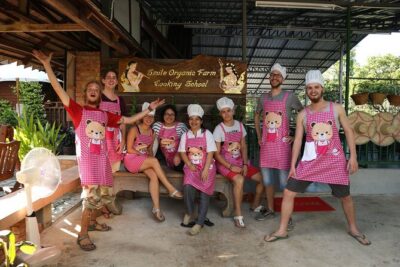
Half-Day Thai Cooking Class at Organic Farm in Chiang Mai
Read our review →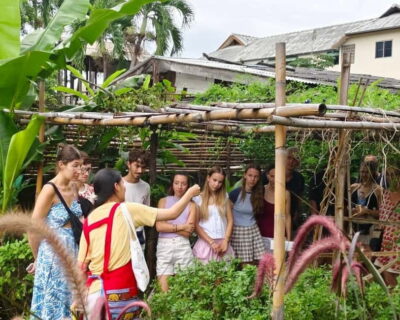
Chiang Mai: Cooking Class, Market & Thai Herbs Garden Tour
Read our review →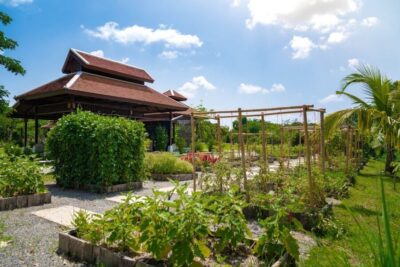
Chiang Mai: Authentic Cooking Class with Market & Farm Visit
Read our review →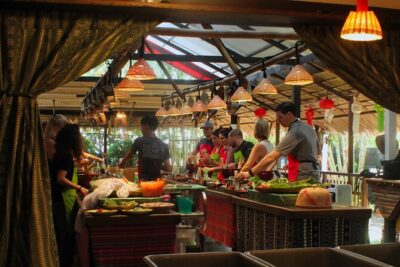
Phuket Thai Cooking Class with Market Tour Option
Read our review →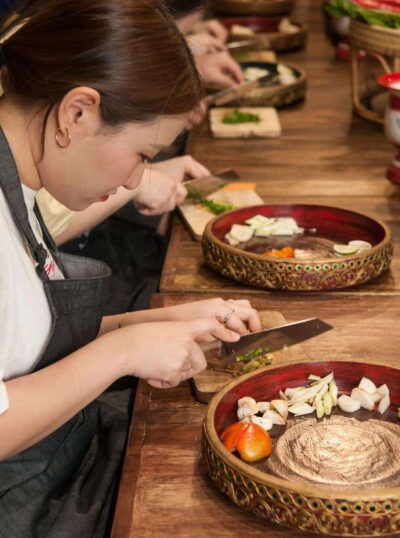
Bangkok: Hands-on Thai Cooking Class and Market Tour
Read our review →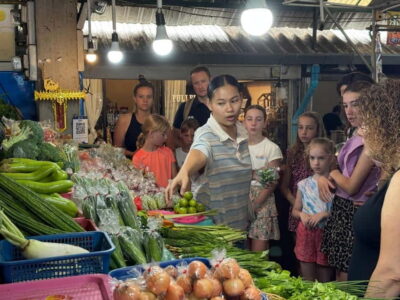
Chiang Mai: Cooking Class with Market and Pickup
Read our review →
Bangkok: Tingly Thai Cooking School Half-Day Cooking Class
Read our review →Browse the lists this tour appears in