
Reviewed · STREET FOOD & FOOD TOURS
Small-Group: Unseen Bangkok’s Chinatown Walking Tour
Bangkok’s Chinatown is easy to visit on your own, but its tiny lanes, old shrines, wholesale shops, and tucked-away community corners are far easier to understand with someone who knows the area. This tour takes you beyond the main Yaowarat road into Sampeng Market, Talat Noi, old temples, street art, and local eating spots.
I like two things right away: the tour keeps its group small, and it includes more than sightseeing. You get street snacks, coffee, a sit-down Thai-Chinese lunch, and local transport. Guides such as Bobby, Aom, Mai, Eng, and Gee have been praised for their warmth, clear explanations, and ability to show places you might walk past alone.
The main consideration is that this is a history-and-community walk, not a dedicated shopping trip. Sampeng Market is included, but the tour’s focus is Chinatown’s people, buildings, beliefs, and daily life. Expect roughly three hours on foot, in heat, crowds, and all-weather conditions.
Key points at a glance
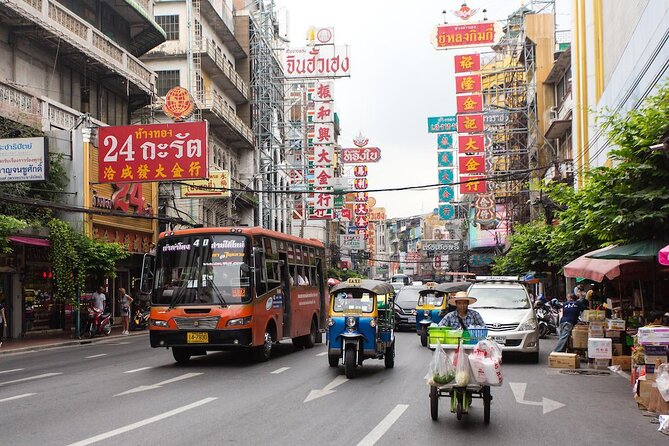
- Sampeng Market beyond the main road: Squeeze through narrow lanes lined with wholesale shops and bargain goods.
- Old Chinatown stories: Hear about Chinese settlement, local buildings, a former red-light district, and community life.
- Temples, shrines, and an old school: Visit religious and neighborhood sites that are easy to miss without a guide.
- Food built into the walk: Try Chinese street snacks, stop for a drink, and finish with Thai-Chinese food at a long-running restaurant.
- Small-group attention: The main description limits the group to eight, while the operating details list a maximum of ten.
- A practical starting point: Meet at 10:00 a.m. outside Exit 1 of MRT Hua Lamphong, at street level.
Starting at Hua Lamphong and entering old Chinatown
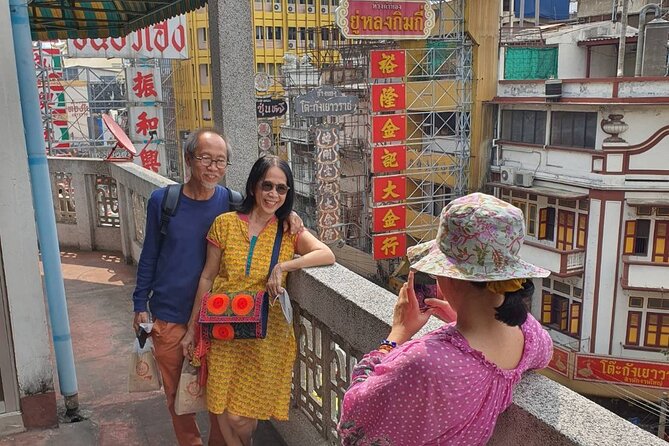
Your morning begins at 10:00 a.m. at the Better Coffee Building, near MRT Hua Lamphong Exit 1. The stated meeting point is at street level, so allow enough time to leave the station and find the coffee building at 320 TangHuaPak on Rama IV Road.
This is a useful start for a walking tour because you meet near public transport rather than spending time on hotel pickup. Hotel transportation is not included. The tour ends back at the meeting point, which makes the timing easier to plan if you have an afternoon reservation elsewhere.
The walk begins with an introduction to Bangkok’s Chinese community and the older parts of the neighborhood. Your guide may be Bobby, Aom, Mai, Eng, Gee, George, Buoy, or another member of the local guiding team. The strongest guide experiences have included clear storytelling, easy conversation, and a willingness to adjust the pace. One guide, Aom, was especially praised for keeping the walk comfortable, while Bobby was noted for staying beyond the scheduled time and helping with photos and videos.
The exact route can vary. One account included a ferry ride from the Sathorn area, while the published meeting point is Hua Lamphong. Treat the MRT meeting point as the firm plan, and view any extra transport or route adjustment as something that may depend on your guide and group.
More Food Tours in Bangkok
- Bangkok: Backstreets Food Tour with 15+ Tastings
★ 4.9 · 2,880 reviews - Bangkok Backstreets Food Tour with 15+ Tastings
★ 5.0 · 1,926 reviews - Bangkok: Michelin Guide Street Food Tour by Tuk Tuk
★ 4.4 · 1,274 reviews
Temples, shrines, and the old Chinese neighborhood
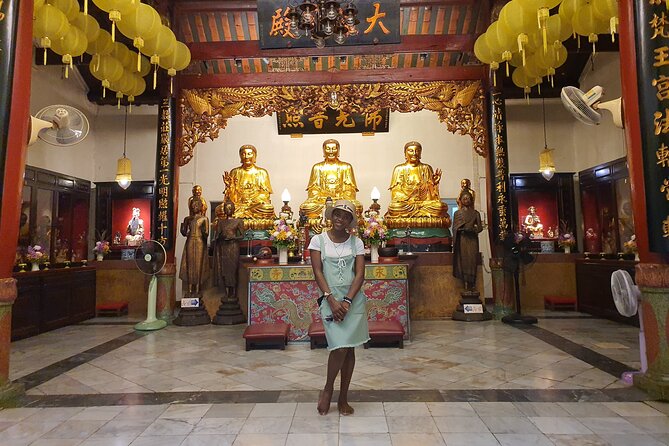
One early part of the walk focuses on ancient Chinese temples, a Chinese shrine, and an old school. You also stop at a local coffee shop for a drink. These pauses break up the walking and give you a chance to look around instead of rushing from one sight to another.
The shrine visit is one of the tour’s strongest features. Chinatown’s religious sites are not simply decorative stops. They help explain how Chinese communities kept customs alive in Bangkok, and your guide can connect the buildings to local life and family traditions.
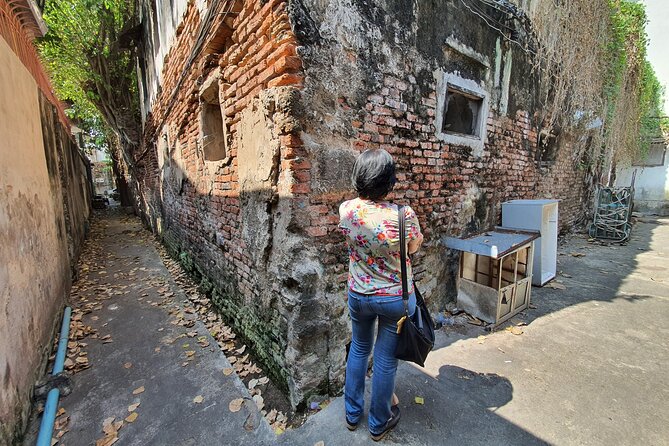
The route includes an old Chinese house described as the oldest Chinese house in Bangkok. The available details do not give it a formal name, so do not expect a standard landmark with a large entrance or a long queue. Its value lies in seeing an older piece of the neighborhood within the streets where people still live and work.
You may also see a hidden school and older buildings while hearing stories about the area. This is where a local guide adds real value. A solo walk through Chinatown can show you signs, stalls, and architecture, but it cannot easily explain why a small lane matters or how a former building fits into the district’s past.
One fair warning: the depth of temple commentary may vary by guide. Strong guides such as Bobby, Buoy, George, and Gee were praised for detailed explanations about Chinatown and Thai-Chinese culture. One experience was less satisfied with the amount of information given at the major temples. If temple architecture is your main interest, ask questions as you go.
Street art and the former red-light district
The walk continues toward a street art area and a Chinese shrine, with time to notice old facades and neighborhood details. Street art gives the route a modern layer. It also helps show that Chinatown is not frozen in the past. Old businesses, religious buildings, homes, markets, and newer creative work occupy the same small area.
Another stop is the former red-light district of Chinatown. The visit lasts about 15 minutes, so this is a short historical stop rather than a full museum-style presentation. Its importance is the reminder that the district has changed uses over time. A good guide can place the area within the wider story of work, migration, commerce, and social life in old Bangkok.
You should expect some walking on busy streets and through compact lanes. This is not a polished sightseeing route with wide paths. You may need to keep close to the group and watch your footing. Comfortable shoes are essential, and light clothing is sensible because the tour operates in all weather.
The physical demand is moderate. The tour lasts about three to four hours, with the core walking portion described as three hours. Breaks for coffee, food, temples, and short explanations keep it manageable, but you should still be comfortable walking for much of the morning.
Sampeng Market and the 150-year-old fresh market
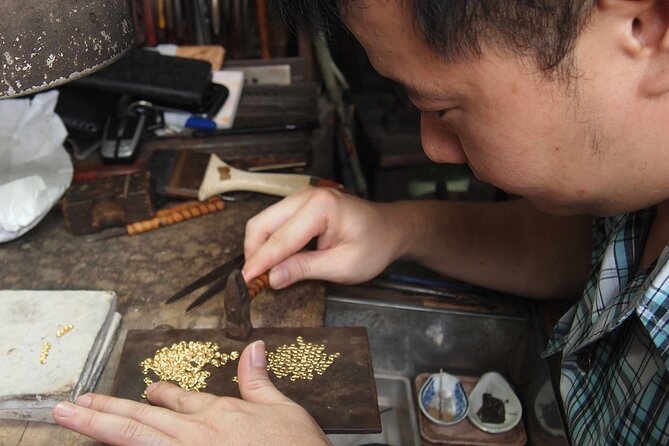
Sampeng Market is the shopping section of the walk, but it is important to set the right expectation. This is not a long, free period for browsing every stall. You move through narrow market lanes with a guide, passing wholesale shops and bargain goods as part of the larger Chinatown story.
Sampeng is useful because it shows the commercial side of the district. You see how tightly packed shops serve local trade and how the market functions as more than a tourist stop. You may have time to bargain hunt or buy small items, but the tour’s emphasis remains on seeing the area and understanding its role.
The market can be crowded and cramped. That is part of the experience, but it may frustrate you if you prefer quiet streets or careful shopping. Keep your belongings secure, stay aware of the group, and avoid expecting a relaxed retail outing.
The route also passes through a 150-year-old fresh market. This is one of the more grounded sections of the tour because it connects Chinatown to everyday food buying. You can see the working side of the neighborhood rather than only the photogenic temples and signs.
Food markets can be intense in Bangkok. Smells, close quarters, wet floors, and moving crowds are possible. The tour is designed for people who want that real street-level feel, not for anyone seeking a carefully controlled food hall.
More eating your way around Bangkok:
- Old Siam Bangkok Food Tour with 15+ Tastings
★ 5.0 · 867 reviews - Bangkok Authentic Tasting Thai-Chinatown Walking Food Tour
★ 4.9 · 852 reviews - Bangkok: Tuk Tuk Adventure Chinatown Michelin Food & Temples
★ 4.3 · 725 reviews - Bangkok Tuk-Tuk Tour by Night with Chinatown Street Food Meal
★ 5.0 · 635 reviews
Snacks, coffee, and a Thai-Chinese lunch
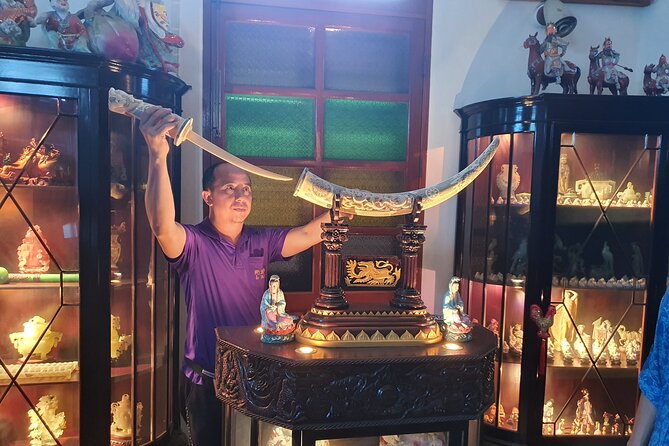
Food is included throughout the walk. You receive Chinese street-vendor snacks, stop for a local drink, and finish with lunch at a restaurant that has been open for 30 years. Drinks at lunch are available for purchase, and alcoholic drinks are not included.
The food stops make the tour more than a sightseeing loop. A snack gives you a quick taste of Chinatown while you are walking, while lunch lets you sit down and talk with your guide. Past experiences have included noodle soup, dim sum, fried oysters, Thai coffee, iced tea, and other Thai-Chinese dishes, though the precise menu can vary.
This is helpful if you want an introduction to local flavors without planning every food stop yourself. It is also a good way to ask about ingredients, eating customs, and neighborhood restaurants you can return to later.
Do not book this as a full food tour. The food supports the walking experience rather than replacing it. Portions, dishes, and drinks may differ, and your own additional purchases are not covered. If you have dietary restrictions, the supplied details do not confirm special arrangements, so you should ask the operator before booking.
The lunch restaurant is a practical ending because you can rest after the market and temple stops. It also gives the guide a chance to answer questions. Several guide experiences have been praised for making the meal feel personal and conversational, especially when the group was very small or consisted of just one person.
What the small group changes
The tour is promoted as limited to eight people, which is a strong advantage in Chinatown’s narrow lanes. The additional operating information gives a maximum of ten, so the final group size may be slightly larger than the main description suggests.
Even ten people is more manageable than a large coach group in this setting. You can hear the guide more easily, stop in tighter spaces, and ask questions without holding up a crowd. A very small group can also lead to a more flexible pace. One person was given extra attention when traveling alone, and another group stayed out longer than the planned three hours.
The guides are a major part of the experience. Bobby was praised for storytelling and extra time. Aom was noted for a comfortable pace and broad explanations about Thailand. Mai was described as professional and kind, while Eng was praised for knowing the area and balancing walking with temple, coffee, market, and lunch stops. Gee was valued for explaining local culture and history in Talat Noi.
Those names do not guarantee who will lead your tour. They do show the range of guiding styles available. If you care strongly about a particular guide, the supplied details do not promise a guide request, so book for the route and format rather than a named individual.
Is $52.14 a fair price?
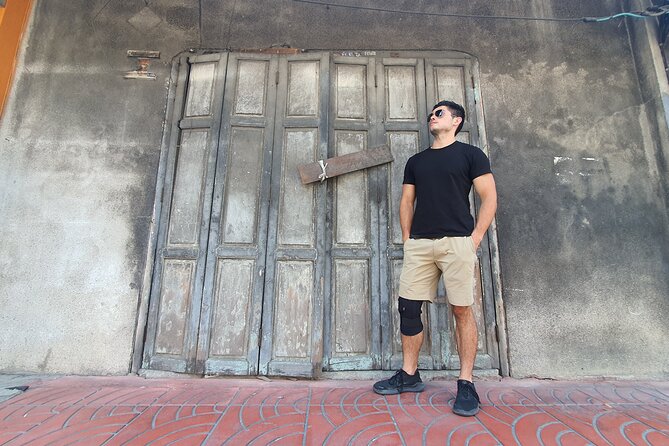
At $52.14 per person, the price is reasonable if you plan to make use of the full package. You are paying for a local guide, food and drink samples, lunch, local transport during the tour, and a small-group format. A self-guided walk costs less, but you would need to arrange your own route, research the history, choose food stops, and pay separately for what you eat.
The value is strongest for a first visit to Chinatown or for anyone who wants context rather than just photographs. It is less compelling if you already know the district well, want a long shopping session, or prefer exploring entirely at your own pace.
The tour is booked an average of 28 days ahead, so planning early is sensible if your Bangkok schedule is fixed. Free cancellation is available until 24 hours before the start time. Changes or cancellations inside that period are not accepted for a refund.
Who should book this Chinatown walk?
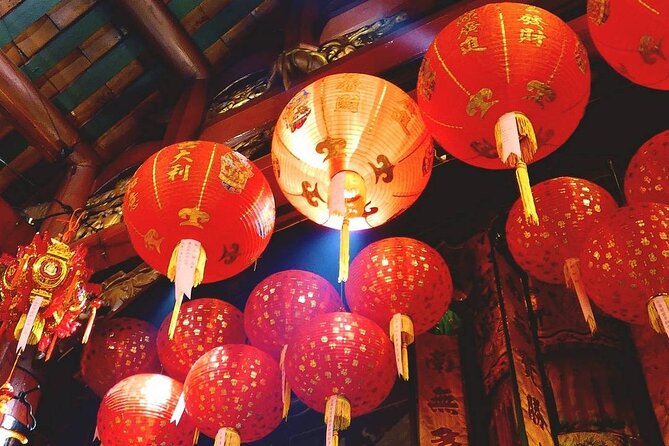
I would choose this tour if you like local neighborhoods, food breaks, old buildings, religious sites, and stories about how a district works. It suits first-time Bangkok visitors who want a more focused introduction to Chinatown, as well as returning visitors who have already seen the main Yaowarat strip.
It is also a good fit for solo visitors and couples. The small format makes conversation easier, and the guides have shown they can adapt when only one person books.
I would be cautious if you have difficulty walking in heat, dislike crowded markets, or want a formal temple tour with lengthy architectural explanations. The tour requires moderate fitness, operates in all weather, and includes narrow lanes, busy roads, and market conditions.
Should you book it?
Book this tour if you want Chinatown’s side streets, community spaces, old markets, shrines, snacks, and local lunch in one morning. The best reason to go is not one famous sight. It is the way a good guide connects many small details, from a hidden school to a former red-light district and a 150-year-old market.
Skip it if shopping is your main goal or if you want complete control over every stop. Sampeng Market is part of the route, but the heart of the experience is history, culture, food, and daily life. For the right kind of visitor, $52.14 buys a useful introduction to a complicated neighborhood without the strain of planning it alone.
FAQ
Where does the tour begin?
It begins at 10:00 a.m. at street level near MRT Hua Lamphong Exit 1, at the Better Coffee Building, 320 TangHuaPak on Rama IV Road.
Where does the tour end?
The activity ends back at the meeting point.
How long does the tour last?
The tour lasts about three to four hours, with the main walking experience described as approximately three hours.
Is hotel pickup included?
No. Hotel pickup and drop-off are not included.
Is local transportation included?
Yes. Local transportation fees during the trip are included.
How large is the group?
The main description limits the group to eight people. The additional operating information lists a maximum of ten travelers.
What food is included?
The tour includes food and drink samples, Chinese street snacks, a local drink stop, and lunch featuring typical Thai-Chinese dishes.
Are drinks at lunch included?
Drinks at the lunch restaurant are available for purchase. Alcoholic beverages are not included.
Does the tour include Sampeng Market?
Yes. The route includes walking through Sampeng Market’s narrow lanes and wholesale shops, with time to look for bargains.
What should I wear?
Wear comfortable walking shoes and dress for the weather. The tour operates in all weather conditions, and a moderate level of physical fitness is recommended.
More Walking Tours in Bangkok
- Bangkok: City Highlights Temple and Market Walking Tour
★ 4.5 · 3,990 reviews - Bangkok: Grand Palace and Wat Phra Kaew Guided Walking Tour
★ 4.4 · 2,417 reviews - Bangkok: Wat Pho and Wat Arun Guided Walking Tour
★ 4.6 · 1,720 reviews - Bangkok: Discover a Taste of Chinatown – 2 Hr Walking Tour
★ 4.2 · 152 reviews
Just added in Bangkok
- re:leaf spa and massage★ 4.0 · 10 reviews
- Wonderful Pearl Dinner Cruise★ 3.5 · 27 reviews
- 3-Hour Bangkok Walking Tour: Wat Pho and Wat Arun★ 5.0 · 102 reviews
- Yoga in the Park Thailand★ 5.0 · 12 reviews
- Visit Wat Pho and Wat Arun with Local Expert★ 4.0 · 14 reviews
- White Orchid Sunset Dinner Cruise Calypso Ladyboy Cabaret Show★ 4.0 · 10 reviews
- Morning Buddhist Almsgiving, Grand Palace and Flower Market Tour in Bangkok★ 3.5 · 9 reviews
- Miracle Bangkok Airport Lounges – Relax Before You Fly★ 3.0 · 32 reviews
Street Food & Food Tours, compared.

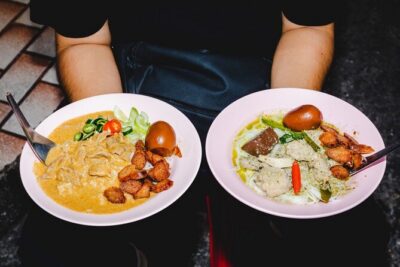
Bangkok: Backstreets Food Tour with 15+ Tastings
Read our review →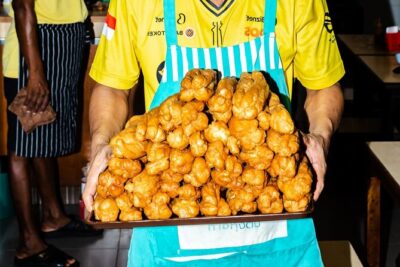
Southern Flavors Phuket Food Tour with 15+ Tastings
Read our review →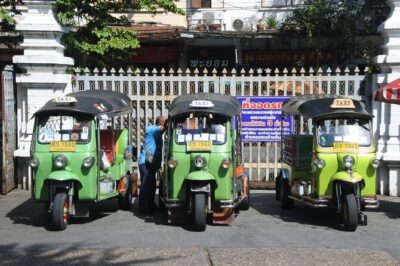
Bangkok: Michelin Guide Street Food Tour by Tuk Tuk
Read our review →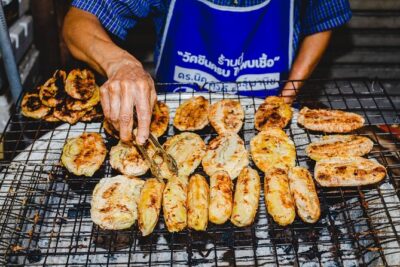
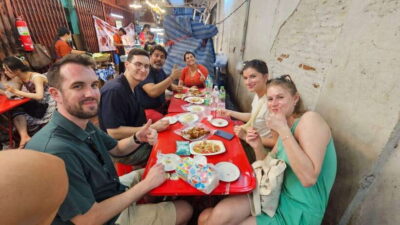
Bangkok Authentic Tasting Thai-Chinatown Walking Food Tour
Read our review →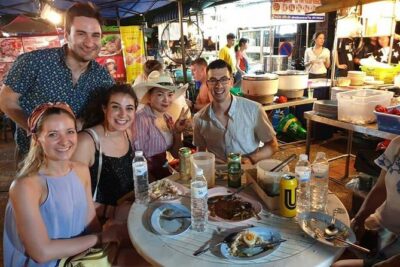
Small-Group Chiang Mai Evening Street Food Tour
Read our review →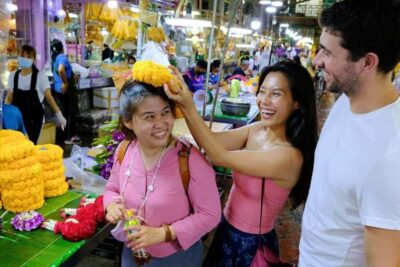
Bangkok: Tuk Tuk Adventure Chinatown Michelin Food & Temples
Read our review →Browse the lists this tour appears in