
Reviewed · STREET FOOD & FOOD TOURS
Bangkok: Discover a Taste of Chinatown – 2 Hr Walking Tour
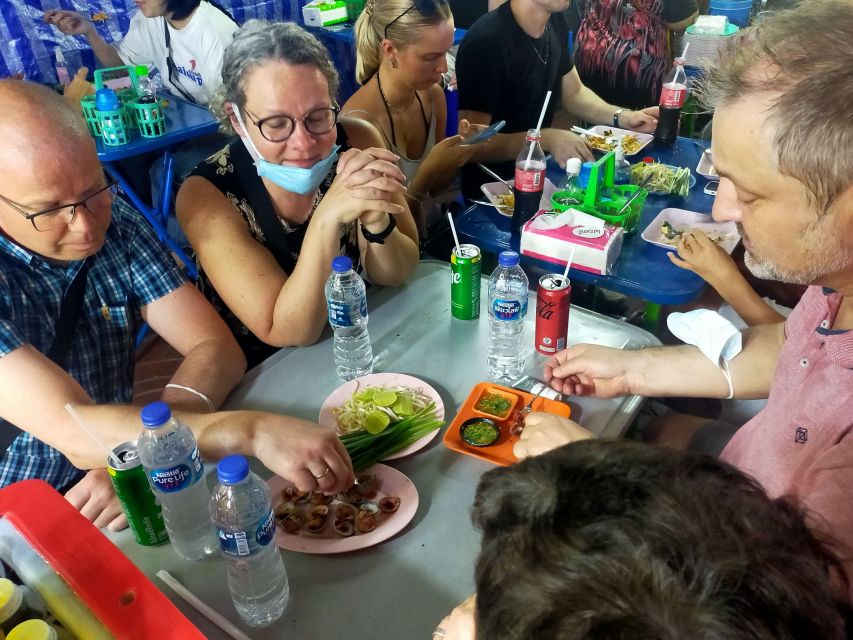
Bangkok’s Chinatown is best understood one bite at a time, and this two-hour walk lets you sample Yaowarat without being tied to a strict menu. Your guide may lead you to MICHELIN Bib Gourmand rice noodle soup at Guay Jub Ouan Pochana, crispy dough sticks at Pa Tong Go Savoey, dim sum, sweets, and small local food stops that are easy to miss alone.
I like the flexible format, since you can spend more on savory food, sweets, or dishes that suit your diet. I also like the cultural side: guides such as Fern, Paew, Jin, and Chai have taken time to explain temples, Buddhist customs, food traditions, and everyday life in Chinatown.
The main catch is price. At $64 per person, this is not a cheap way to eat, and food costs extra. Two hours also passes quickly, so you may need to choose between lingering over a dish, taking photos, and covering more streets.
Key points at a glance
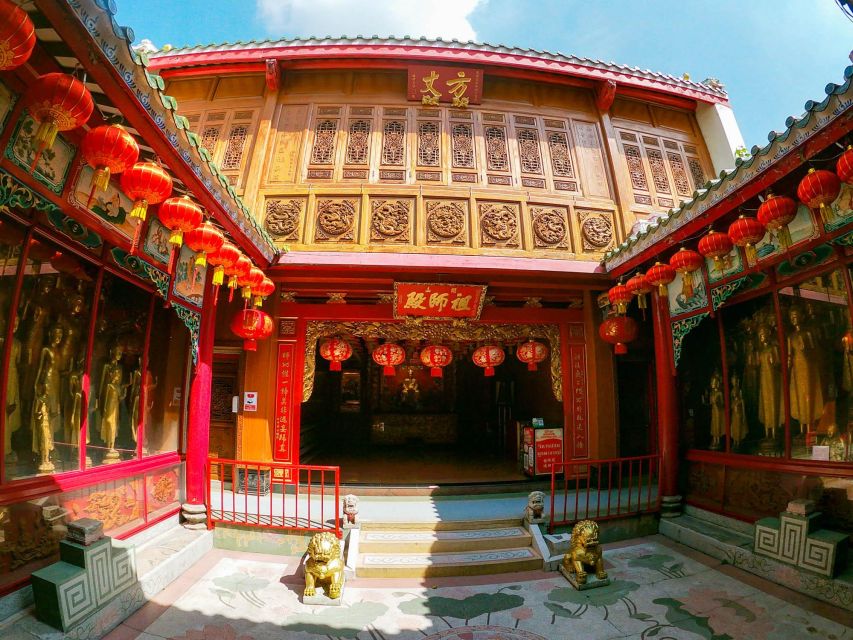
- Start at Wat Mangkon MRT: Meet outside Exit 3, then walk directly into Yaowarat.
- Choose your own bites: There is no fixed tasting menu, so you pay only for the food you decide to try.
- Look for famous stops: Guay Jub Ouan Pochana, Pa Tong Go Savoey, HKN Hong Kong Noodle, and HAGOW Yaowarat may feature in the route.
- Expect more than food: Guides may include temples, Buddhist customs, Chinatown history, and practical restaurant tips.
- Small groups help: The group is limited to nine people, with some departures becoming one-on-one walks when few people book.
- Plan for walking: Comfortable shoes, cash, sun protection, and rain protection matter. The route is not wheelchair accessible.
Meeting Chinatown at Wat Mangkon MRT
The tour begins outside Exit 3 of Wat Mangkon MRT station. This is a useful meeting point because you avoid arranging a hotel transfer and can reach Chinatown by Bangkok’s metro system.
Your guide will hold a TripGuru sign. Arrive 10 minutes early, since Yaowarat streets can be noisy and crowded, and you do not want to start the walk by chasing the group through traffic.
The guide is the key to the experience. English-speaking guides have included Fern, Paew, Jin, Chai, Sunday, Belle, and Tom. The exact guide depends on your date, but the strongest part of this tour is the local explanation as you walk. You can ask about ingredients, Thai customs, Buddhism, restaurant choices, and how particular foods fit into daily life.
The group size is limited to nine. That is small enough for questions and quick decisions at food stalls. Several past departures have had only one or two participants, which allowed the guide to tailor the route around food preferences, sightseeing, or dietary needs.
More Food Tours in Bangkok
- Bangkok: Backstreets Food Tour with 15+ Tastings
★ 4.9 · 2,880 reviews - Bangkok Backstreets Food Tour with 15+ Tastings
★ 5.0 · 1,926 reviews - Bangkok: Michelin Guide Street Food Tour by Tuk Tuk
★ 4.4 · 1,274 reviews
Walking into Yaowarat’s food streets
From Wat Mangkon, the route moves into the Yaowarat Night Market area for about two hours. This is not a sit-down restaurant crawl with a prepared sequence of courses. It is a moving food walk, with the guide adjusting the stops according to weather, stall availability, your interests, and what is open that day.
That flexibility is useful in Chinatown. You might want a full savory meal, a few snacks, dessert, or a mix of everything. You can tell the guide what appeals to you, and the route may change to match.
There is also a tradeoff. Since there is no fixed itinerary, you cannot count on every named food stop appearing on your tour. Guay Jub Ouan Pochana, Pa Tong Go Savoey, HKN Hong Kong Noodle, and HAGOW Yaowarat are highlighted possibilities, not guaranteed appointments. Restaurant availability and conditions on the street can change.
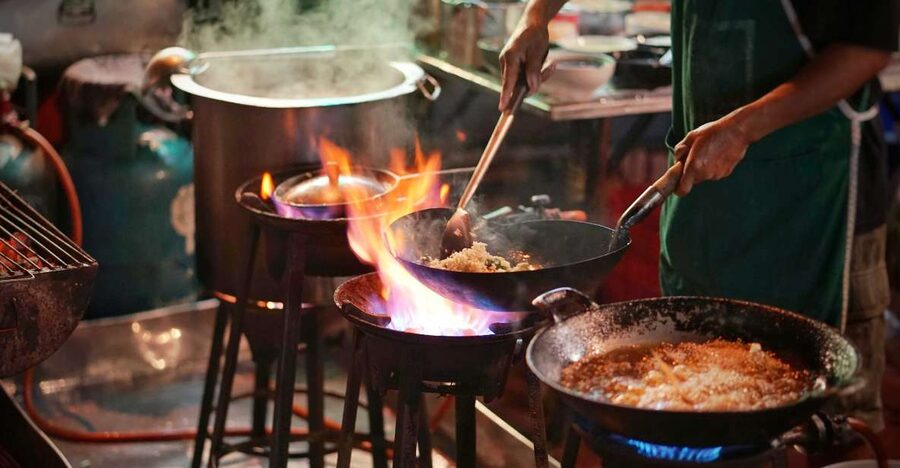
The walk itself is part of the meal. You will see food being prepared in open stalls, hear the clatter of Chinatown, and get a sense of how restaurants and vendors fit into the neighborhood. Keep your camera ready, but do not let photography take over. The two-hour schedule is short.
What you may taste at Guay Jub Ouan Pochana
Guay Jub Ouan Pochana is known for its rice noodle soup and MICHELIN Bib Gourmand recognition. This kind of stop gives the walk a useful anchor: instead of sampling random snacks, you can try a dish with a clear local reputation and learn what makes it popular.
Your guide can help explain the dish, how it is eaten, and what to notice in the bowl. If you are not familiar with Thai or Chinese-influenced noodle dishes, that guidance is valuable. You get more from the food when you know what you are trying.
Keep in mind that this is not a prepaid tasting. All food and drink expenses are separate from the $64 tour price. Carry cash, as the practical information for the tour specifically recommends it. If you want to sample several dishes, your total cost will rise.
Pa Tong Go Savoey and the pleasure of a simple snack
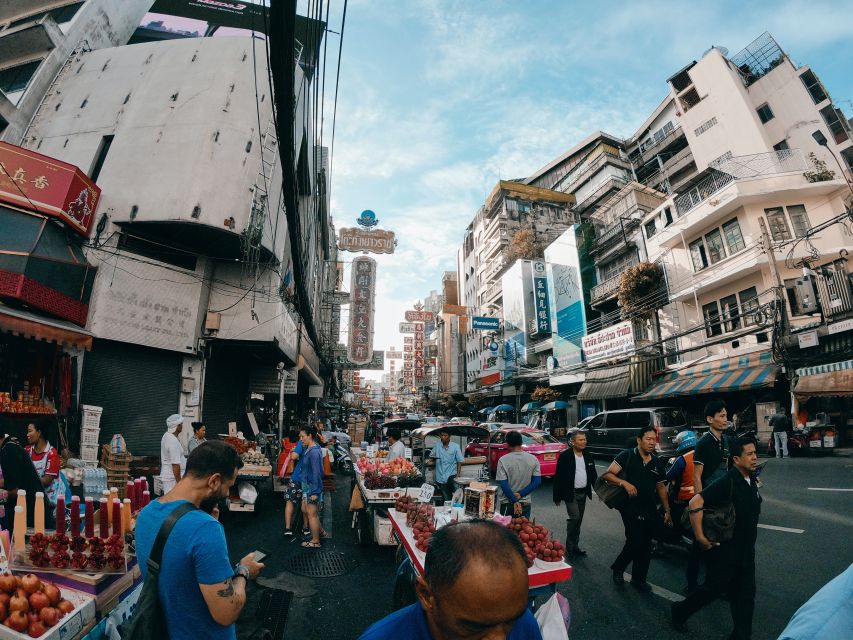
Pa Tong Go Savoey is known for crispy dough sticks, a straightforward snack that can be more revealing than a large restaurant meal. A good guide will help you understand how the food fits into local eating habits rather than simply handing you a dish and moving on.
This is one reason the flexible format works well. You can decide if you want another savory stop or save room for something sweet. You are not committed to a set number of tastings.
The downside is that the experience depends on your appetite and choices. If you arrive hungry, you may spend more than expected. If you want to photograph every stall or shop for food to take away, you may feel rushed by the two-hour limit.
More eating your way around Bangkok:
- Old Siam Bangkok Food Tour with 15+ Tastings
★ 5.0 · 867 reviews - Bangkok Authentic Tasting Thai-Chinatown Walking Food Tour
★ 4.9 · 852 reviews - Bangkok: Tuk Tuk Adventure Chinatown Michelin Food & Temples
★ 4.3 · 725 reviews - Bangkok Tuk-Tuk Tour by Night with Chinatown Street Food Meal
★ 5.0 · 635 reviews
Noodles, dim sum, and room for personal taste
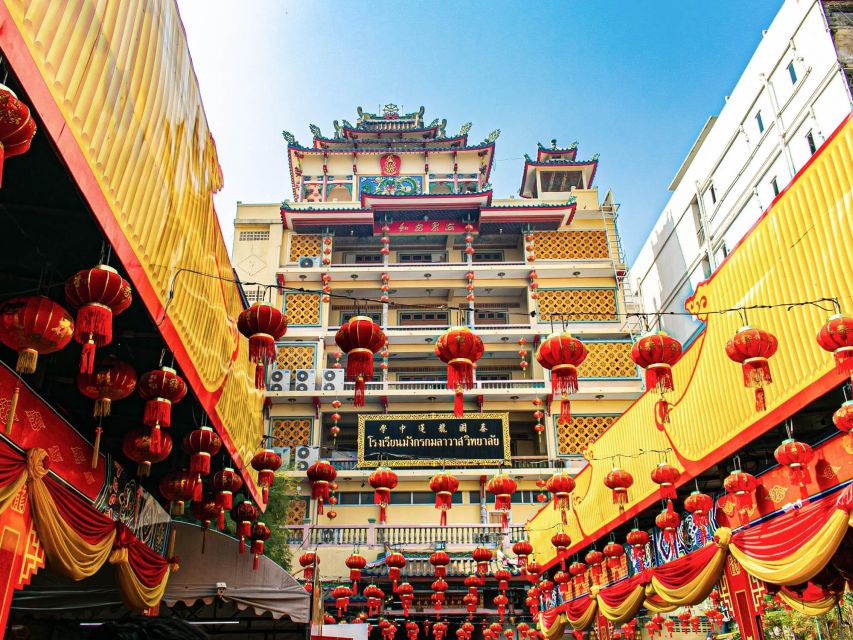
The suggested stops also include HKN Hong Kong Noodle and HAGOW Yaowarat, where dim sum may be part of the route. These possibilities show the mixed character of Yaowarat’s food scene. Chinatown is not limited to one style of Thai street food. Chinese-influenced dishes, noodles, snacks, sweets, and Thai flavors share the same streets.
The guide can help you make choices if you are unsure what to order. This matters for first-time visitors who may not recognize ingredients or know how large a portion will be. It also helps if you have a food restriction. One past guide, Paew, adjusted the walk for a participant with a nut allergy.
Still, tell your guide about allergies and dietary needs at the start. The tour says it caters to different tastes and dietary needs, but the food is bought from independent stalls and restaurants. You should ask questions before ordering and make your own decision about what is safe.
The cultural side of the walk
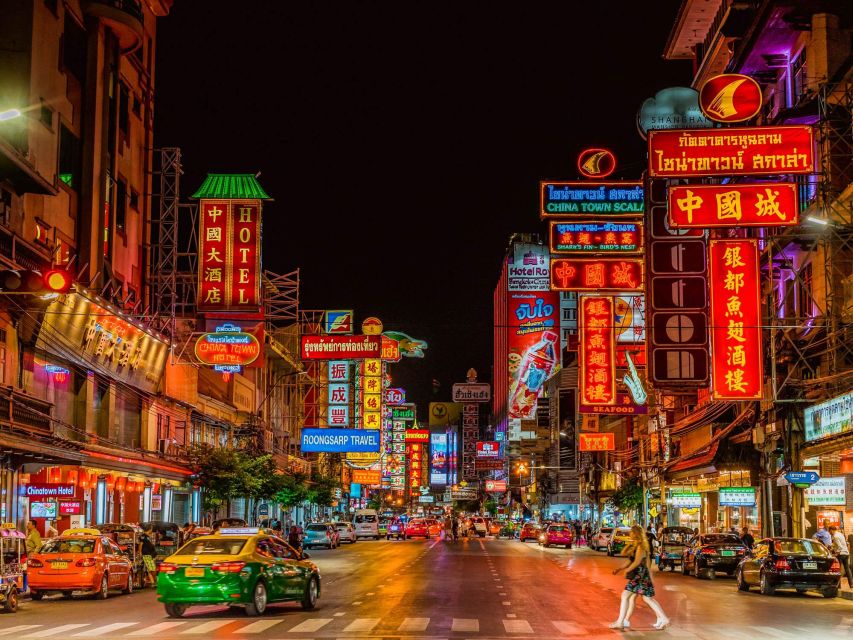
The food is the main reason to book, but the walk can also include temples and Buddhist customs. One guide showed a participant two temples and explained how to pray. Another took a family inside a Buddhist temple during a ceremony, while also discussing Thai culture and daily customs.
These moments add value because they connect the food streets to the people who live and worship in the area. You may learn about Chinatown beyond restaurant names, including why certain dishes matter and how local customs shape everyday life.
The cultural portion is not presented as a separate sightseeing tour. It depends on time, access, and what is happening during your visit. Some people may prefer to spend every minute eating, while others will appreciate the pause at a temple.
Dress and behavior should be respectful around religious sites. Bring a scarf or sarong if you need one for appropriate coverage. Sunglasses, a hat, sunscreen, and an umbrella are also sensible in Bangkok’s heat and sudden rain.
How the guides shape the experience
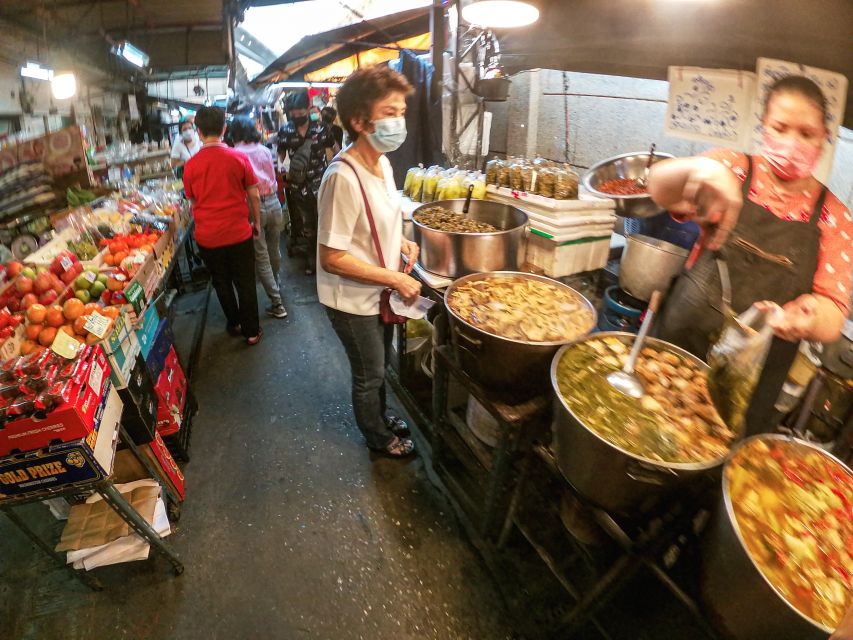
The repeated praise for this experience centers on the guides’ warmth, food advice, and ability to answer questions. Fern has been described as funny, energetic, and careful about group safety. Paew has adjusted routes for individual tastes and allergies. Jin has tailored a walk around food, sightseeing, and history, while speaking with local vendors along the way.
That personal approach matters more here than a polished script. A fixed audio guide could name restaurants, but it could not easily decide when you need a milder dish, when to stop for a temple, or which question to follow.
Guides have also helped with practical matters after the tour, including restaurant and bar suggestions and even assistance negotiating a taxi. That is not a promised part of the service, so treat it as a possible bonus rather than a feature you should expect every time.
Because English is the stated tour language, you should be able to ask questions and follow explanations. One participant found some words difficult to understand, so accents and street noise may occasionally require you to ask the guide to repeat something.
Is $64 good value?
The $64 price pays for a two-hour walking tour, an English and Thai-speaking guide, insurance, and carbon emissions offset credits. It does not cover the food you eat, personal expenses, or transport to and from the meeting point.
That makes the value depend on what you want from Chinatown. If you only want the cheapest possible meal, you can spend far less by walking through Yaowarat on your own. The tour is more useful if you want someone to reduce the guesswork, explain the food, and point you toward places you might not find without help.
The small group size improves the value. With a maximum of nine people, the guide can usually hear your questions and adapt the walk. If you are alone on a departure, you may receive a very personal route, though that cannot be guaranteed.
I would think of the $64 as a fee for context and confidence, not a payment for two hours of food. Budget extra for tastings, and decide in advance how much you want to eat. Several small bites can add up quickly.
Timing, walking, and comfort
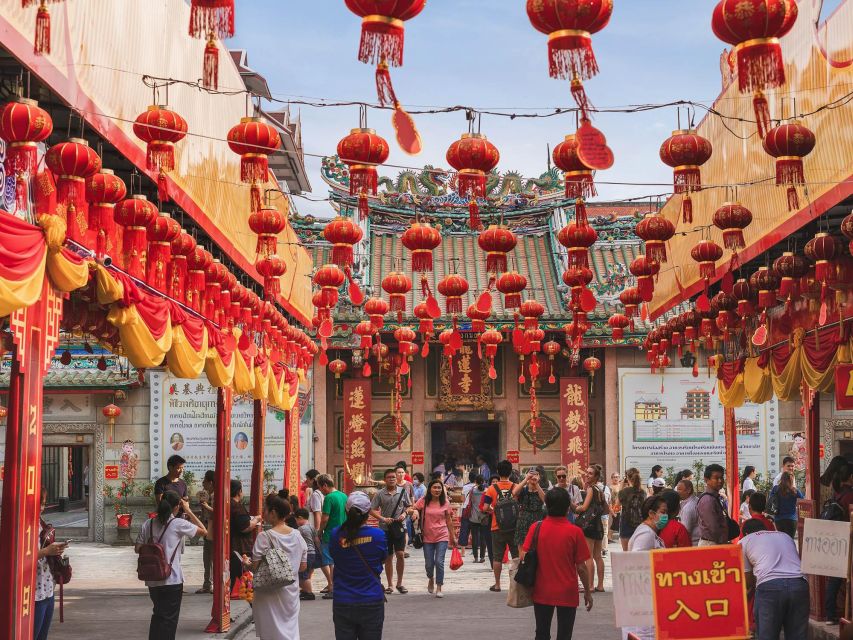
Two hours is enough to get a taste of Yaowarat, but it is not enough for a slow meal at every stop. You will be on your feet, crossing busy streets, pausing at stalls, and moving between food areas.
Wear comfortable shoes. The recommended packing list also includes sunglasses, a hat, an umbrella, sunscreen, insect repellent, cash, a camera, and a scarf or sarong. You do not need to bring everything, but Bangkok’s heat, rain, and street conditions make the advice practical.
The route is not suitable for wheelchair access, and the activity is not recommended for people with mobility impairments, heart problems, respiratory issues, or pregnancy. If you need frequent seating or a route with smooth, step-free access, this is not the right format.
Weather and stall availability can change the route. An umbrella is not just a rainy-season item, since it can also provide shade.
The responsible travel angle
The experience is described as GSTC-certified and includes carbon emissions offset credits. That does not change the food or walking route, but it gives the tour a responsible travel feature for people who consider the environmental side of their bookings.
The more direct local benefit comes from eating at neighborhood stalls and small restaurants rather than staying within a large international food brand. Your spending goes toward the food you select, while the guide adds local context and helps you order with care.
The tour is also light on transport. You meet at the MRT station and walk through the area, rather than using a private vehicle for a short urban route. That suits a city neighborhood where the streets and food preparation are the main attraction.
Who should book this Chinatown walk?
I would recommend it to a first-time Bangkok visitor who wants an easy introduction to Yaowarat and does not know where to begin. It also suits solo visitors, couples, and small families who want a guide to explain unfamiliar dishes and customs.
Food-minded visitors will get the most from it, especially if they enjoy trying small portions and making decisions as they go. The tour can also work for cautious eaters, since you are not forced into a fixed menu.
I would hesitate if you want a long, relaxed food crawl with guaranteed tastings included. The two-hour window is brisk, food is extra, and the itinerary can change. It is also a poor fit if you need wheelchair access or have a health condition that makes hot-weather walking difficult.
Free cancellation is available up to 24 hours before the activity, and you can reserve now and pay later. Those terms help if your Bangkok schedule is still changing, but they do not remove the need to check the meeting time and arrive early.
Should you book it?
Book this tour if you want a local guide, flexible food choices, and cultural background in one short Chinatown outing. The strongest value comes from the personal advice: what to try, how to approach a temple, and where to eat after the walk.
Skip it if your main goal is the lowest possible food bill or a carefully timed tasting menu. For everyone else, $64 is a reasonable fee for getting your bearings in Yaowarat, provided you budget separately for the dishes and accept that the best stops may change.
FAQ
Where does the Bangkok Chinatown food tour start?
Meet outside Exit 3 of Wat Mangkon MRT station. Your guide will hold a TripGuru sign, and you should arrive 10 minutes before the scheduled meeting time.
How long does the walking tour last?
The tour lasts two hours, including the walk through the Yaowarat Night Market area and food stops.
Is food included in the $64 price?
No. The price includes the walking tour, guide, insurance, and carbon emissions offset credits. You pay separately for all food tastings and personal expenses.
Which food stops might be included?
Possible stops include Guay Jub Ouan Pochana, Pa Tong Go Savoey, HKN Hong Kong Noodle, and HAGOW Yaowarat. The route can change because of weather, restaurant availability, and other conditions.
Is the tour suitable for wheelchair users?
No. The activity is not wheelchair accessible and is not recommended for people with mobility impairments.
Can I cancel the tour if my plans change?
Yes. You can cancel up to 24 hours in advance for a full refund. You can also reserve now and pay later, subject to availability and booking terms.
More Walking Tours in Bangkok
- Bangkok: City Highlights Temple and Market Walking Tour
★ 4.5 · 3,990 reviews - Bangkok: Grand Palace and Wat Phra Kaew Guided Walking Tour
★ 4.4 · 2,417 reviews - Bangkok: Wat Pho and Wat Arun Guided Walking Tour
★ 4.6 · 1,720 reviews - Bangkok: Grand Palace and Wat Arun Guided Walking Tour
★ 4.5 · 118 reviews
Just added in Bangkok
- re:leaf spa and massage★ 4.0 · 10 reviews
- Wonderful Pearl Dinner Cruise★ 3.5 · 27 reviews
- 3-Hour Bangkok Walking Tour: Wat Pho and Wat Arun★ 5.0 · 102 reviews
- Yoga in the Park Thailand★ 5.0 · 12 reviews
- Visit Wat Pho and Wat Arun with Local Expert★ 4.0 · 14 reviews
- White Orchid Sunset Dinner Cruise Calypso Ladyboy Cabaret Show★ 4.0 · 10 reviews
- Morning Buddhist Almsgiving, Grand Palace and Flower Market Tour in Bangkok★ 3.5 · 9 reviews
- Miracle Bangkok Airport Lounges – Relax Before You Fly★ 3.0 · 32 reviews
Street Food & Food Tours, compared.

Bangkok: Backstreets Food Tour with 15+ Tastings
Read our review →
Southern Flavors Phuket Food Tour with 15+ Tastings
Read our review →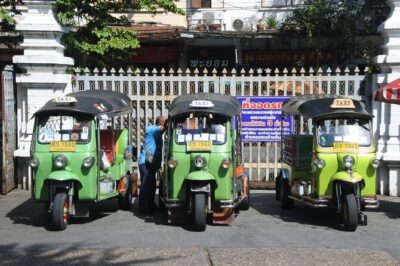
Bangkok: Michelin Guide Street Food Tour by Tuk Tuk
Read our review →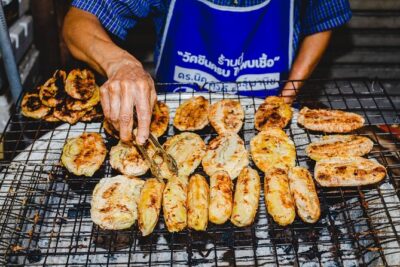
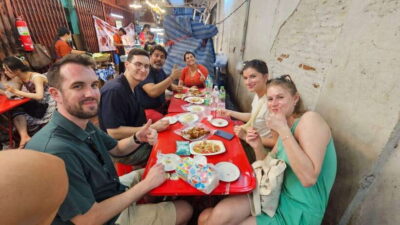
Bangkok Authentic Tasting Thai-Chinatown Walking Food Tour
Read our review →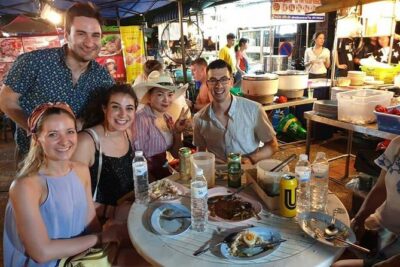
Small-Group Chiang Mai Evening Street Food Tour
Read our review →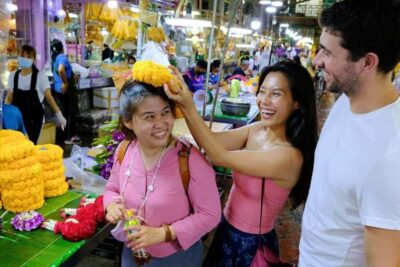
Bangkok: Tuk Tuk Adventure Chinatown Michelin Food & Temples
Read our review →Browse the lists this tour appears in