
Reviewed · THAI COOKING CLASSES
Half-Day Thai Cooking Class on a Local Farm Near Chiang Mai
The best part of this Chiang Mai cooking class is that it begins before you reach the stove. You visit a local market, walk through an organic farm, learn about Thai herbs, and then cook a full set of dishes from scratch. The market-to-table flow gives the food some context instead of treating Thai cooking as a quick recipe demonstration.
I especially like the chance to pick seasonal fruit straight from the trees, with longans available in July and August and mangoes from March through May. I also like the relaxed pool area, a welcome change after several hours of chopping and stirring. The main consideration is the six-hour length, which makes this a full half-day outing rather than a short cooking lesson.
Key points to know
- Market visit first: Start by learning how Thai cooks select fresh ingredients before heading to the farm.
- Hands-on cooking: Prepare curry paste, curry, stir-fry, soup, spring rolls, Pad Thai, and Tom Yum Goong.
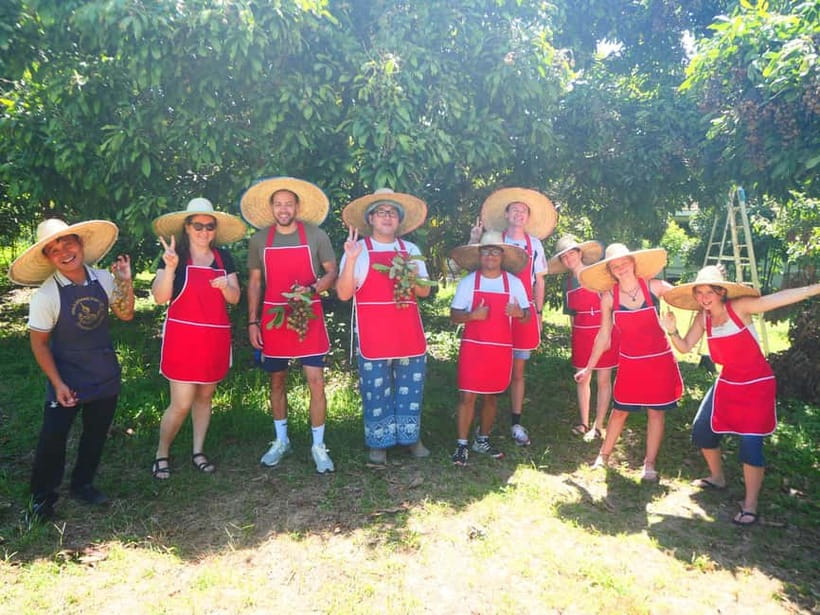
- Seasonal fruit picking: Pick longans in July and August or mangoes in March through May, depending on your visit.
- Farm setting: Walk through an organic herb garden and learn about growing local ingredients.
- Comfortable timing: Morning pickup runs from 8:00 to 8:30am, while the evening course begins with pickup from 3:00 to 3:30pm.
- Good value at $28: The price includes transport, ingredients, recipes, and access to the farm facilities.
From Chiang Mai market to the cooking table
This experience makes sense for anyone who wants more than a list of Thai dishes to copy at home. You begin at a local market, where you can see the raw materials before they are chopped, pounded, and turned into lunch or dinner.
The market visit also helps explain why Thai cooking depends so heavily on freshness. The class includes a lesson on choosing ingredients, so you get practical guidance rather than simply being handed a prepared basket. That small step matters. A curry paste recipe is useful, but knowing what good produce looks like makes it easier to repeat the dish later.
You should expect the market stop to be part of the learning process, not a major sightseeing visit. The supplied details do not give a fixed market name or a precise length of stay, so do not book this expecting a long shopping session. Think of it as a useful introduction before the main farm visit.
Hotel pickup is included for accommodations within three kilometers of Chiang Mai Old City. The morning pickup window is 8:00 to 8:30am, and the evening course pickup window is 3:00 to 3:30pm. Give the school your hotel name and address in advance. If you stay outside that radius, the included pickup may not apply.
More Cooking Classes in Chiang Mai
- Half-Day Thai Cooking Class at Organic Farm in Chiang Mai
★ 5.0 · 19,087 reviews - Chiang Mai: Cooking Class, Market & Thai Herbs Garden Tour
★ 4.9 · 4,824 reviews - Chiang Mai: Authentic Cooking Class with Market & Farm Visit
★ 4.9 · 4,546 reviews
An organic farm with a practical purpose
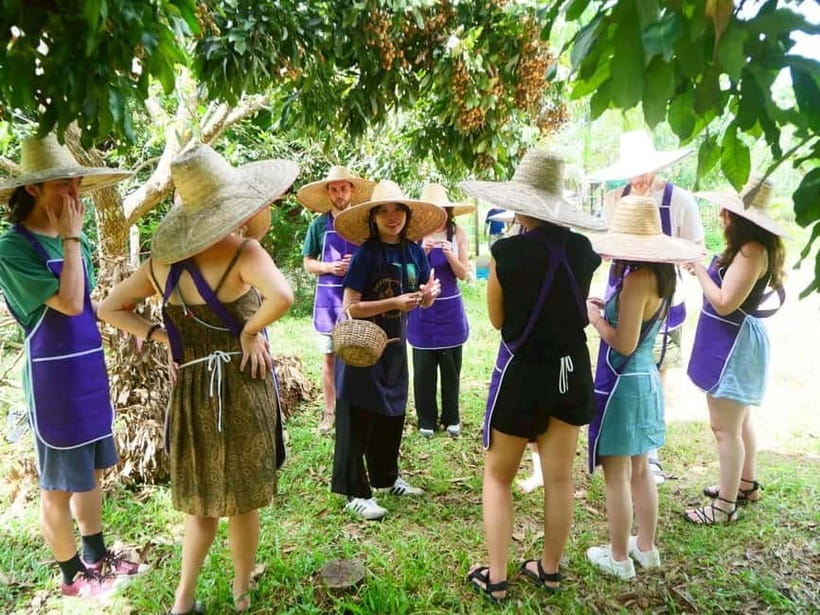
After the market, you head to the organic farm outside the city. The farm visit gives the cooking class a quieter setting and lets you see herbs and vegetables where they grow.
You take a walk through the herb garden and learn about the local ingredients used in the class. This is useful because Thai food can seem like a blur of unfamiliar leaves, roots, chilies, and aromatics when you first encounter it. Seeing the plants helps connect the flavor on your plate with its source.
The farm setting also adds a welcome change of pace. Chiang Mai Old City is easy to explore on foot, but a few hours in the countryside can feel like a proper break from temples, traffic, and shop-lined streets. You are not just sitting in a classroom with ingredients laid out in front of you.
The organic farming element is an educational part of the visit, rather than a separate agricultural tour. You learn tips about growing herbs and vegetables, then use some of those ideas in the kitchen. If your main goal is cooking, the farm walk should feel well matched to the class. If you want a long, detailed farm tour, the available information does not promise that.
Cooking several Thai classics from scratch
The kitchen session is the heart of the experience. Instead of watching an instructor prepare one dish, you take part in a range of cooking tasks. The class can include curry paste, curry, stir-fry, soup, and spring rolls, with Pad Thai and Tom Yum Goong specifically named as examples.
That selection gives you a useful overview of Thai cooking. Curry paste teaches you how a dish starts with pounding and blending aromatics. Stir-fry shows the value of heat and timing. Soup brings together sour, spicy, and savory flavors. Spring rolls add a different technique and texture.
Pad Thai is a sensible choice for a class because it is familiar to many first-time visitors, yet still benefits from proper preparation. Tom Yum Goong, or spicy prawn soup, introduces a sharper and more aromatic side of Thai food. The class is therefore not limited to one style of dish.
You will work with all the ingredients supplied for the lesson. The experience is described as hands-on, so expect to chop, mix, stir, and assemble rather than simply watch Louna or another instructor work at the front. The English-language instruction is useful for asking about ingredients and cooking steps as you go.
The exact menu may vary, since the class uses seasonal ingredients and begins with a market visit. You should treat the named dishes as the expected range rather than a guaranteed, fixed menu for every date. This is common sense for a farm-based class, but it is worth keeping in mind if you have your heart set on one particular dish.
What the guide adds to the day
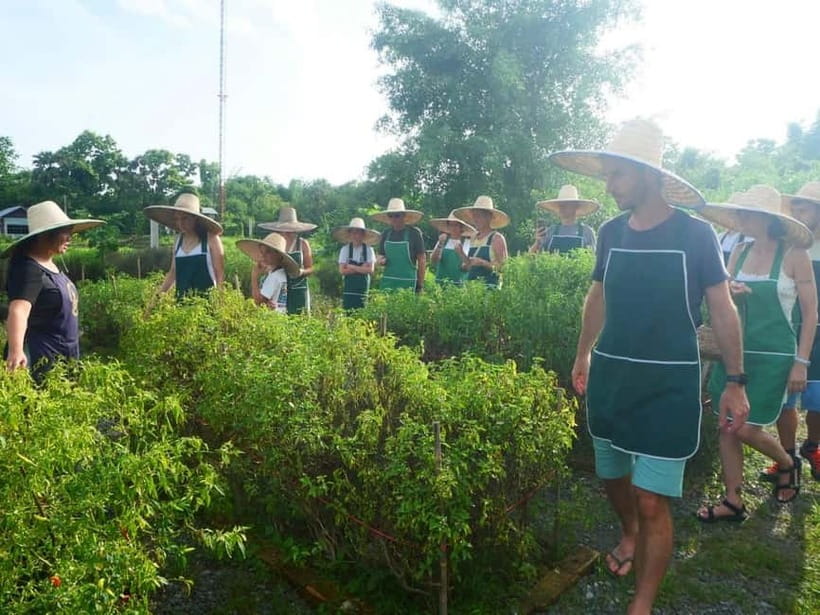
The English-speaking guide is an important part of a cooking class. You need clear instructions when a curry paste is being balanced or when a dish must be cooked in the right order.
Louna is named as the guide for one of the highly rated sessions. The experience includes friendly help throughout the cooking, with assistance available when needed. That matters more here than a long lecture. A good instructor needs to notice when someone is unsure about a step and explain it without taking over.
The class has a rating of 4.9 from 32 reviews, and transport receives a perfect score from 92 percent of participants. Those numbers point to two areas that matter in practice: a well-liked teaching experience and dependable pickup. They do not guarantee that every group will have the same guide or menu, but they give you useful evidence when comparing similar classes.
The class is taught in English. If your cooking vocabulary is limited, the practical format should help, since you can follow the demonstration and work with the ingredients directly. Still, this is a group cooking experience, so the pace may be set by the class rather than by your own kitchen habits.
Other kitchens to cook in around Chiang Mai:
- Thai and Akha Cooking Class in Chiang Mai
★ 5.0 · 4,358 reviews - Chiang Mai: Cooking Class with Market and Pickup
★ 4.9 · 1,365 reviews - Chiang Mai: Cooking Class with Organic Farm at Mama Noi
★ 4.9 · 1,151 reviews - Full Day Thai Cooking at Farm (Chiang Mai)
★ 5.0 · 1,127 reviews
Fruit picking adds a seasonal bonus
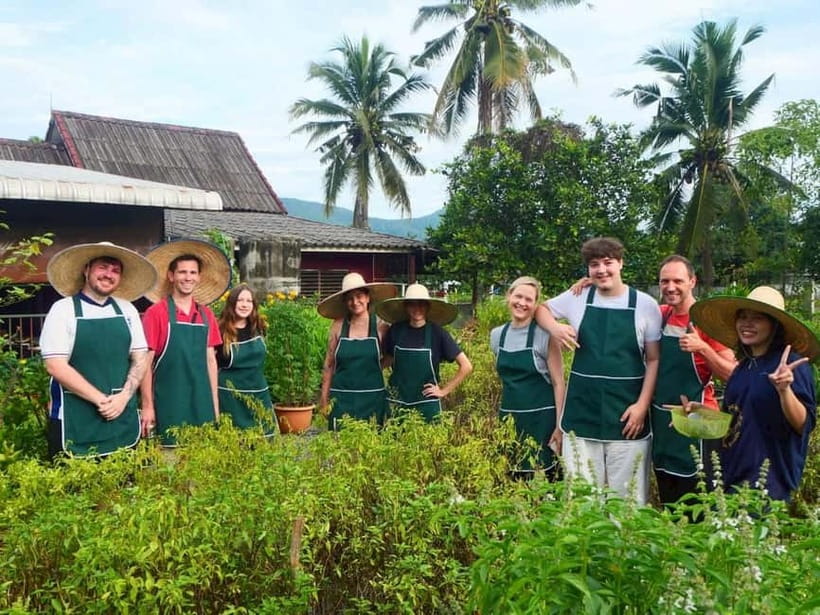
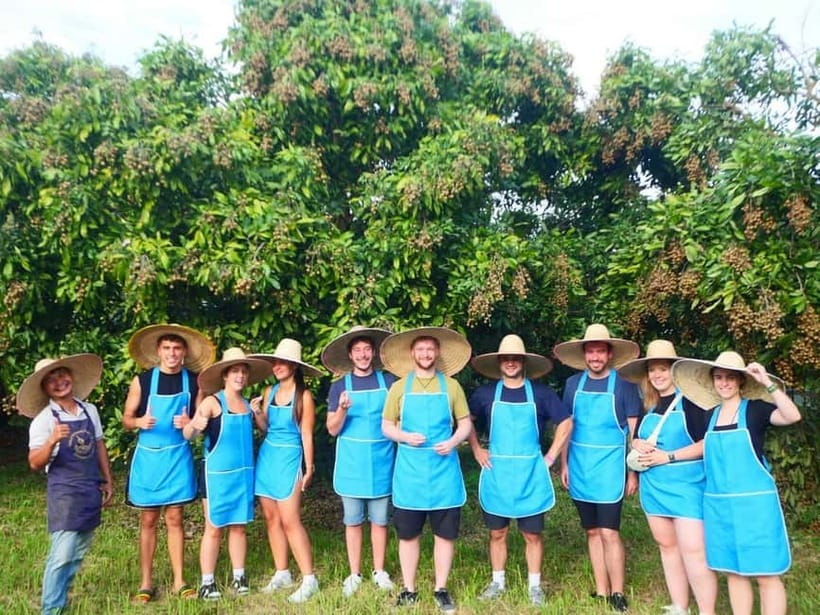
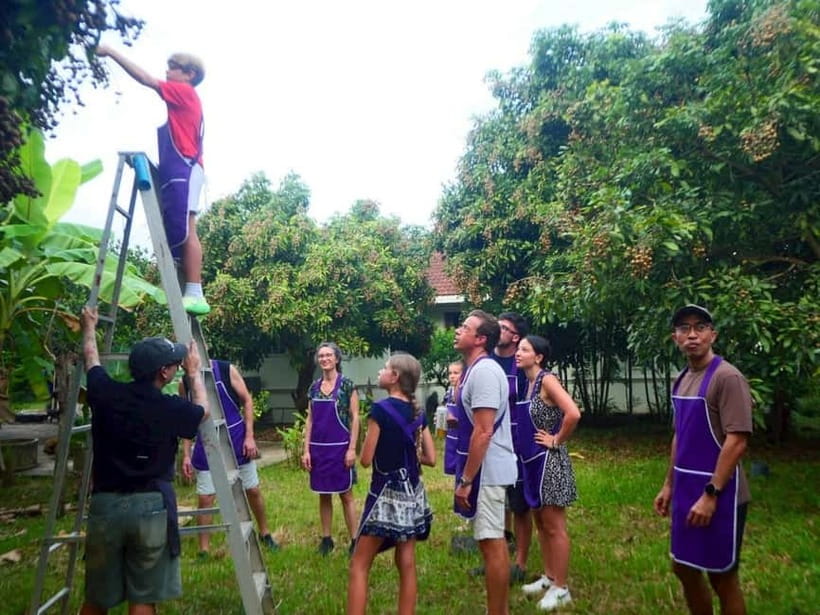
The fruit-picking part is one of the more distinctive details. You may pick longans directly from the trees in July and August, or mangoes from March through May.
This is a small activity, but it makes the farm visit feel connected to the time of year. You are not just looking at plants in a garden. You may get to take part in a harvest that changes with the calendar.
Do not assume fruit picking is available year-round. The supplied schedule names specific months, so your experience will depend on when you visit. If this is a major reason for booking, check the dates carefully before you reserve.
For children and families, the fruit trees may be a highlight. For adults focused on cooking, it is a pleasant extra rather than the main event. Either way, it gives you a simple break between the farm walk and the kitchen work.
Pool time keeps the six-hour schedule relaxed
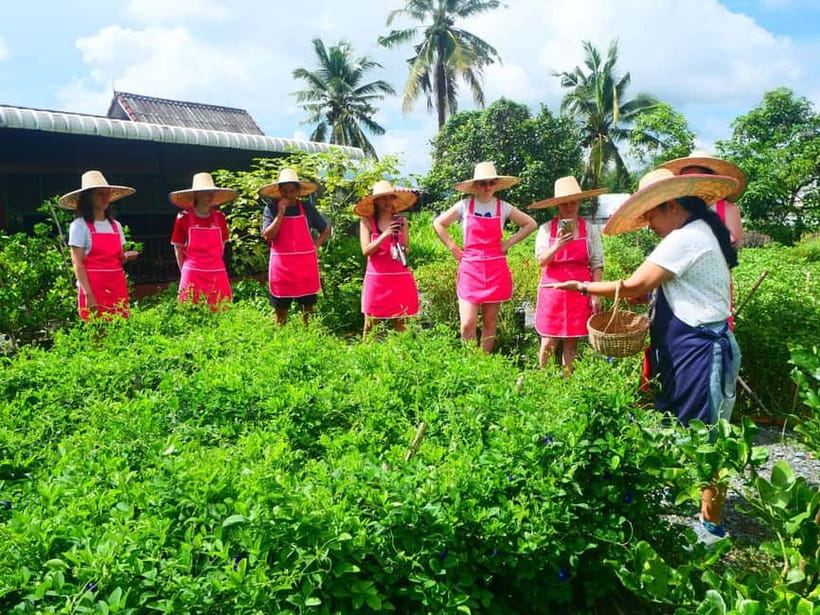
After cooking, you can relax in the chill-out area beside the swimming pool or take a swim. This is a useful inclusion because six hours is a substantial amount of time for a food activity.
The pool changes the mood from lesson to leisure. You do not need to rush back to the city as soon as the final dish is prepared. If you are taking the evening course, this can also make the afternoon feel less tightly scheduled.
Bring whatever you need for pool time if you plan to swim, although the provided details do not list towels or changing facilities. The pool is best understood as an optional way to unwind, not as the main purpose of the visit.
I like this feature for travelers planning a slower Chiang Mai day. You get a market visit, a countryside setting, a cooking class, fruit picking when in season, and a quiet place to rest. If you prefer a fast, focused lesson with no downtime, the pool period may feel unnecessary.
Is $28 a fair price?
At $28 per person, this is strong value if you use the full package. The fee includes an air-conditioned vehicle, all cooking ingredients, an electronic recipe book, and a photo album on the school’s Facebook page.
The transport is particularly useful in Chiang Mai. You avoid arranging your own ride to a farm outside the city, and the air-conditioned vehicle is a practical comfort in Thailand’s heat. Pickup is included within three kilometers of the Old City, so check your hotel location before booking.
The electronic recipe book gives the class value after you return home. A cooking lesson is much more useful when you can recreate the dishes later, though the exact recipe contents are not specified. The Facebook photo album is a nice extra for keeping a record of the day, but I would treat it as a bonus rather than a reason to choose the class.
At this price, you are paying for more than a single meal. You receive transport, a market introduction, farm time, instruction, ingredients, several possible dishes, and access to the pool area. Compared with a short city cooking lesson, the countryside setting helps justify the six-hour schedule.
Morning or evening course?
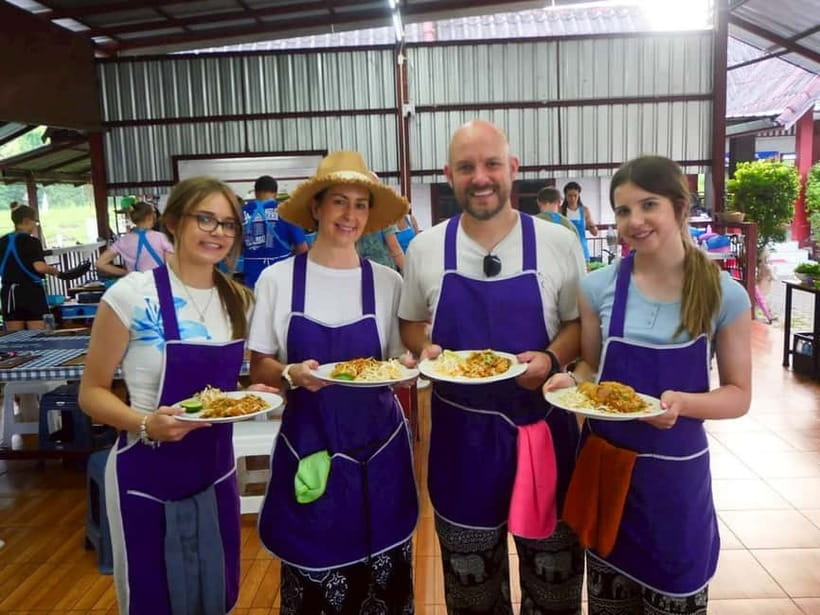
You can choose between a morning and evening option, subject to availability. Morning pickup is between 8:00 and 8:30am. Evening pickup is between 3:00 and 3:30pm.
The morning option suits you if you want to finish the activity with plenty of time left in the day. It may also be the better choice if you want a full meal after the class and prefer not to return to your hotel late.
The evening course works well if you want to spend the morning in Chiang Mai Old City or visit another attraction first. Its timing may also create a more relaxed afternoon at the farm. The supplied details do not state the exact return time for either option, so leave some flexibility in your evening plans.
Because the fruit schedule is seasonal, the month of your visit matters more than the choice of morning or evening. Longans are associated with July and August, while mangoes are associated with March through May.
Who will enjoy this farm cooking class?
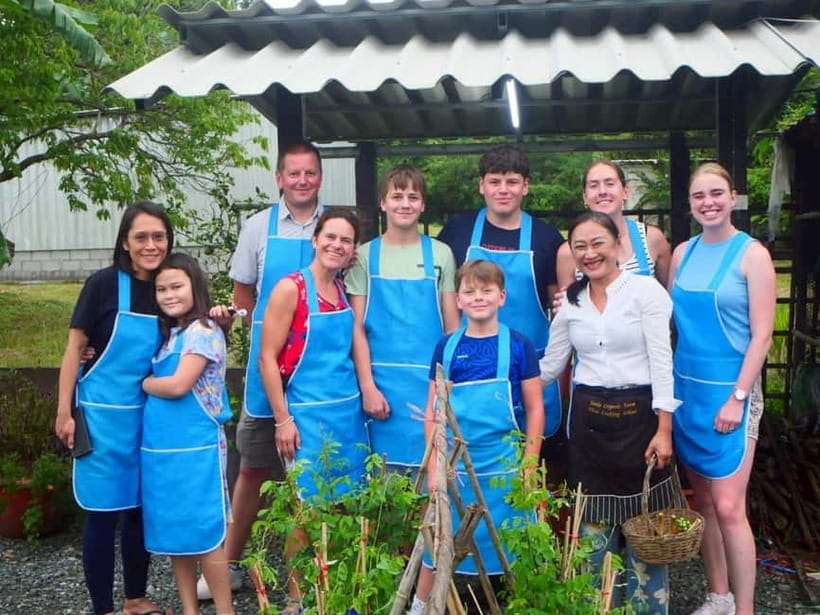
I would recommend this experience to first-time visitors who want a gentle introduction to Thai food and rural Chiang Mai. You get useful food knowledge without needing prior cooking experience.
It also suits couples, families, and small groups who want an activity with several parts. One person may enjoy the market, another the fruit trees, and someone else the pool. The class has enough variety to keep the day from feeling like six straight hours at a chopping board.
It is a good choice if you value a relaxed setting and want to bring recipes home. The electronic recipe book makes the lesson practical beyond the day itself.
You may want a different format if you are a serious home cook looking for advanced technique, a fixed menu, or a long farm study. The available information presents this as a friendly, accessible class, not a professional culinary course. You should also think twice if you dislike group activities or have only a narrow window in Chiang Mai, since the full experience takes six hours.
Booking details worth checking
Free cancellation is available up to 24 hours before the experience for a full refund. You can also reserve now and pay later, which helps if your Chiang Mai schedule is still changing.
The activity is offered in English. Pickup is limited to accommodation within three kilometers of Chiang Mai Old City, and you need to provide your hotel name and address ahead of time.
The rating is 4.9 from 32 reviews, with one French-speaking participant describing a market visit followed by a large cooking hall, where the group prepared a dish, soup, and curry. Louna was singled out for staying cheerful and offering help when needed. That detail gives you a useful picture of the class: organized, social, and guided rather than self-directed.
Should you book this Chiang Mai cooking class?
Book it if you want Thai cooking joined with a market visit, farm setting, seasonal fruit, and time to relax by a pool. At $28, the combination offers good value, especially with hotel pickup, ingredients, recipes, and air-conditioned transport included.
I would choose the morning option if you want a clear afternoon afterward, and the evening option if you prefer a slower start to the day. Check your hotel distance and the fruit season before booking.
Skip it if you want a short city lesson, advanced culinary training, or a guaranteed menu with no seasonal changes. For most visitors who want to understand Thai food while enjoying a peaceful countryside break, this is a well-priced and unusually complete half-day outing.
FAQ
How long does the Thai cooking class last?
The experience lasts six hours.
How much does the experience cost?
The price is $28 per person.
Is hotel pickup included?
Yes. Pickup is included from hotels or accommodations within three kilometers of Chiang Mai Old City.
What time is pickup?
Morning pickup is between 8:00 and 8:30am. Evening pickup is between 3:00 and 3:30pm.
Is the class taught in English?
Yes. The instructor language is English.
What dishes can I learn to cook?
The class can include curry paste, curry, stir-fry, soup, spring rolls, Pad Thai, and Tom Yum Goong, or spicy prawn soup.
Are cooking ingredients included?
Yes. All ingredients for the cooking class are included.
Do I receive the recipes?
Yes. An electronic recipe book with the recipes is included.
Can I cancel for a refund?
Yes. You can cancel up to 24 hours in advance for a full refund.
Just added in Chiang Mai
- Inthanon Day Trip from Chiang Mai with Lunch – Group or Private★ 5.0 · 182 reviews
- Jewellery Making Class with Silversmithing in Chiang Mai★ 4.5 · 11 reviews
- No.1 Chiang Mai: Historical City Bike Tour★ 5.0 · 10 reviews
- 10KM Inflatable Kayaking Adventure★ 5.0 · 23 reviews
- Chiang Mai: Historic Old City Bike Tour – Morning or Night★ 5.0 · 202 reviews
- Half-day E-bike Nam Phrae (hilly, fully paved roads, GUIDED)★ 5.0 · 122 reviews
- Inthanon Heaven Trail(Living Green Elephant Sanctuary)★ 5.0 · 52 reviews
- Half Day Car Hire with an English Speaking Driver in Chiang Mai★ 5.0 · 16 reviews
Thai Cooking Classes, compared.
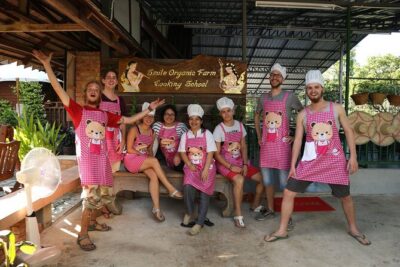
Half-Day Thai Cooking Class at Organic Farm in Chiang Mai
Read our review →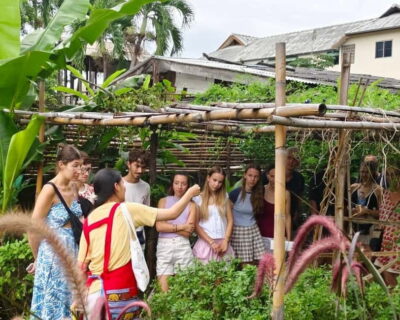
Chiang Mai: Cooking Class, Market & Thai Herbs Garden Tour
Read our review →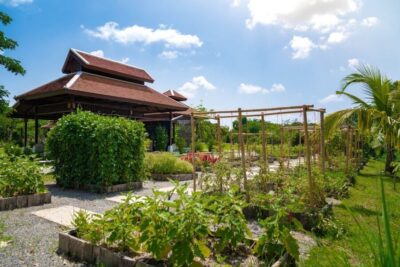
Chiang Mai: Authentic Cooking Class with Market & Farm Visit
Read our review →
Phuket Thai Cooking Class with Market Tour Option
Read our review →
Bangkok: Hands-on Thai Cooking Class and Market Tour
Read our review →
Chiang Mai: Cooking Class with Market and Pickup
Read our review →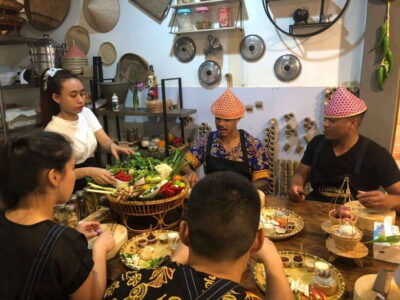
Bangkok: Tingly Thai Cooking School Half-Day Cooking Class
Read our review →Browse the lists this tour appears in