
Reviewed · RIVER KWAI & KANCHANABURI TOURS
Samut Prakan: Erawan Museum Discounted Admission Ticket
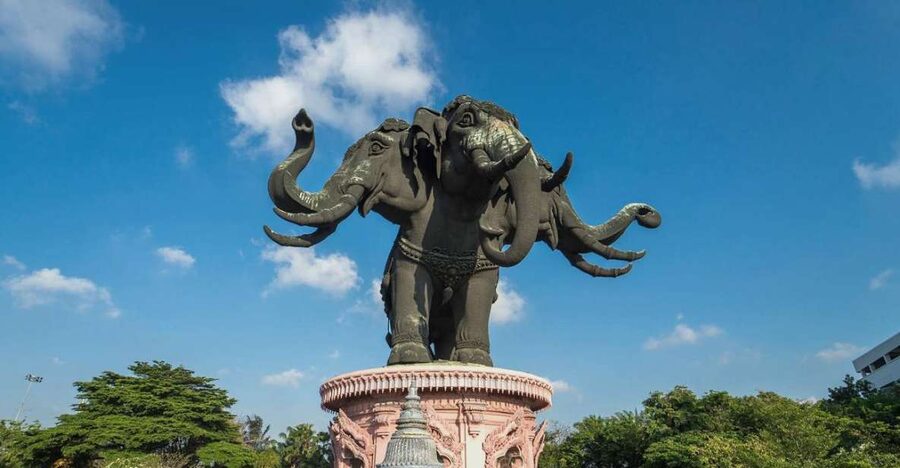
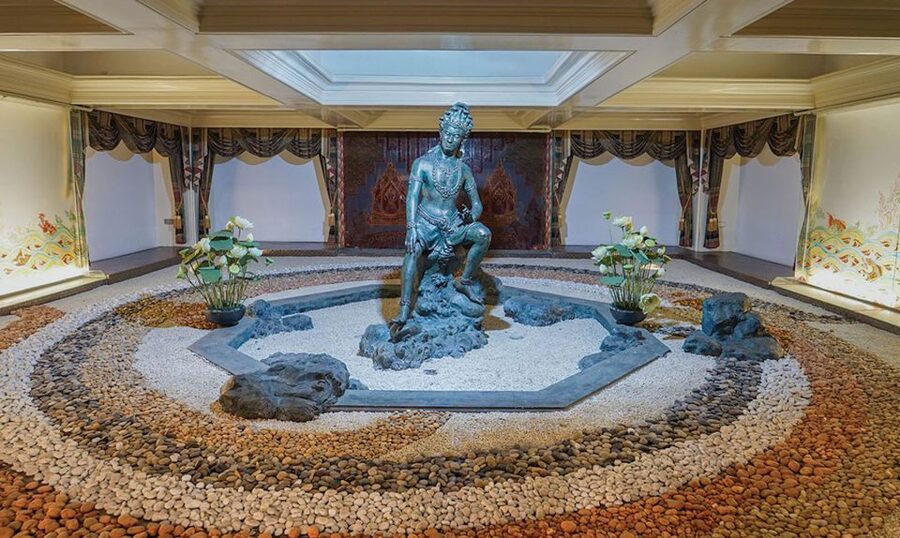
The first thing you notice is the massive three-headed bronze elephant, rising above the museum like a strange, beautiful landmark from another world. Inside, the building turns the old idea of three cosmic levels into a real visit: Underworld below, Earth in the middle, and Heaven inside the elephant above.
I like two things especially. The first is the mix of Thai, Asian, and Western art in one carefully planned building. The second is the discounted $12 ticket, which includes flowers, incense, a lotus flower, the museum, and its surrounding gardens. The main thing to consider is that your ticket works only on the selected date and time, so this is not a casual stop you can shift around at the last minute.
Key points to know before you go
- The elephant is the museum’s main event: The three-headed sculpture forms part of the building itself and gives you excellent photo opportunities outside.
- Three levels tell one big story: The museum moves from the Suvarnabhumi Underworld to Earth and then the Cosmo level, symbolizing Heaven.
- The underground gallery holds prized objects: Look for Benjarong ceramics, porcelain, ancient artifacts, and the Naga figure linked with water and the underworld.
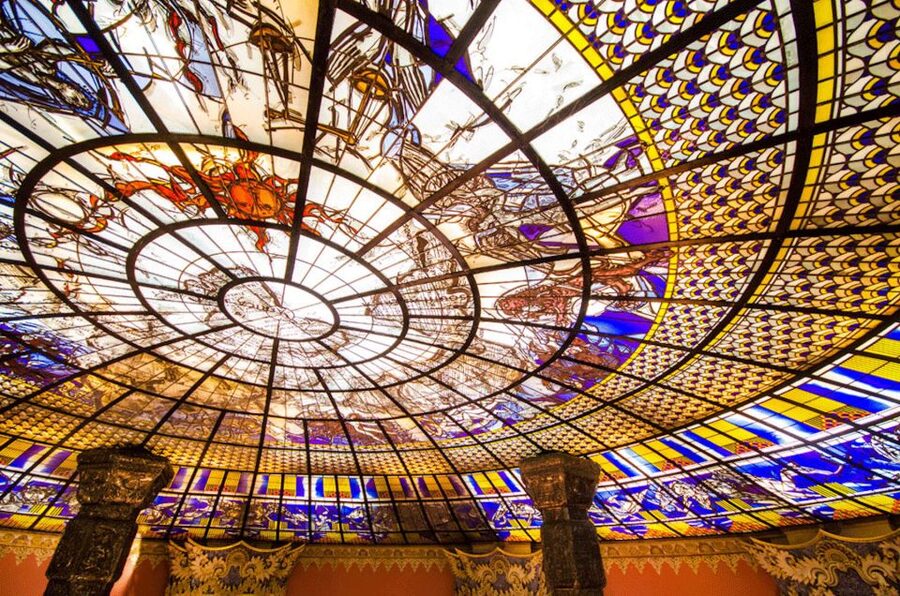
- The central hall mixes world art styles: Stained glass, painted ceilings, and Eastern and Western details make the Earth level more than a simple display room.
- The garden adds breathing room: Rare trees from across Thailand, including species tied to Thai literature, surround the building.
- Dress and conduct matter: Shorts, short skirts, sleeveless shirts, food, drinks, pets, and commercial photography are not permitted.
Why the Erawan Museum feels unlike a normal museum
The Erawan Museum is just outside Bangkok in Samut Prakan, but it does not feel like a standard collection placed in a plain gallery. The building itself is the exhibit. The elephant, the decorated rooms, the religious symbols, and the garden all work together.
The museum was created as a symbol of peace and humanity. That idea comes through in the way it brings together art, philosophy, religious thought, and objects from across Asia. You are not simply walking from one glass case to another. You are moving through a symbolic universe.
The layout follows a three-part idea found in many religious and philosophical traditions. The lower section represents the past and the underworld. The central section represents the human world. The space inside the elephant represents Heaven. This gives the visit a clear shape, even if you know little about the museum before arriving.
I like this approach because the architecture gives meaning to the objects. You can look at a ceramic bowl in the lower gallery, then climb into the dramatic central hall, then follow the passageways upward toward painted scenes of gods and goddesses. The museum asks you to notice the relationship between the collection and the building.
Other long days west of Bangkok:
- From Bangkok: Erawan Park & Kanchanaburi Small-Group Tour
★ 4.5 · 1,582 reviews - From Bangkok: Historical Day Tour to River Kwai
★ 4.6 · 868 reviews - Bridge on the River Kwai and Thailand-Burma Railway Tour
★ 4.5 · 658 reviews
Arriving from Bangkok by BTS
You can reach the museum from Bangkok using the BTS Skytrain Green Line. Exit at Chang Erawan Station, also identified as E17, and use Exit 2. A free shuttle tuk-tuk service runs from there to the museum every day.
That shuttle detail matters. The museum is close enough to the station to be practical, but you do not need to work out a separate taxi ride once you reach the BTS. Still, allow some flexibility around your booked entry time. The ticket is tied to a specified date and time, and arriving late could make the visit less convenient.
Your meeting point is the Erawan Museum at 99 Tambon Bang Muang Mai, Amphoe Mueang Samut Prakan, Samut Prakan 10270. Transfers are not included, so you pay for your own journey to the station or museum. The BTS and shuttle combination keeps the transport simple and usually costs less than arranging a private ride.
The museum provides access to the surrounding grounds, not only the indoor galleries. That is useful because you will want time outside before or after the interior visit. The elephant is large enough to change your sense of scale, and the garden gives you a quieter setting for photographs.
The three-headed elephant sets the tone
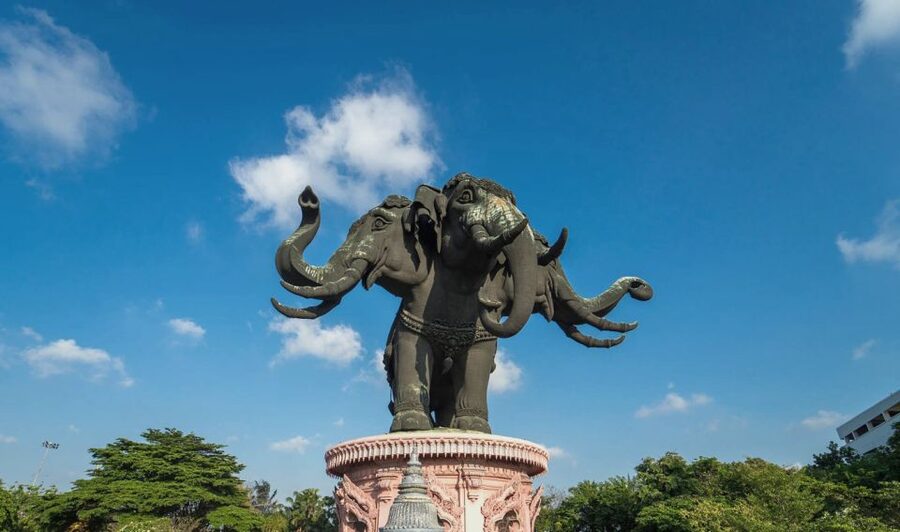
Start outside and look up. The three-headed bronze elephant is not a statue placed beside the museum. It forms part of the building and dominates the entire site.
The sculpture is described as the first and largest hand-carved sculpture of its kind in the world. Its size makes it easy to understand why the museum was built around it. You can photograph it from the exterior, then enter the structure and see how the building uses the elephant’s body, legs, and lower base.
The elephant also gives the museum a strong Thai identity. Erawan is the Thai name for Airavata, the mythic elephant associated with Hindu and Buddhist traditions. You do not need to know every part of that story to appreciate the sculpture, but a little context helps explain why an elephant carries the highest level of the museum.
The outside area is worth more than a quick photo stop. Look at the relationship between the sculpture and the surrounding grounds. The garden contains rare tree species from different parts of Thailand, and some have a place in Thai literature. It is a pleasant counterpoint to the large, ornate building.
The Suvarnabhumi level: objects from the past
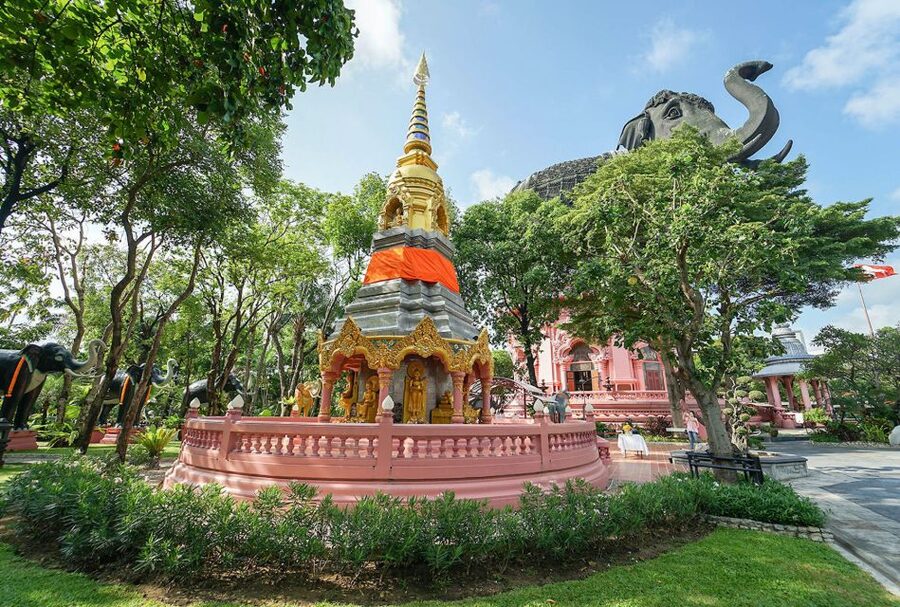
Begin below ground at the Suvarnabhumi Level. This section represents the Underworld and the past. It is also where you see many of the owner’s collected artifacts and porcelain pieces.
The collection includes ancient objects and Thai Benjarong ceramic ware. Benjarong is known for its detailed multicolored decoration, and the pieces give you a close look at Thai craftsmanship. Here, smaller objects benefit from the darker, more enclosed setting. Take your time rather than treating the room as a passage to the upper levels.
The Naga figure is another important detail. In Buddhist belief, Naga is a snake-like god of the underworld and a giver of waters. The image connects the objects below with the larger religious ideas behind the museum.
This lower gallery may appeal most to visitors who like decorative arts, ceramics, and symbolism. If you mainly want the giant elephant and the biggest visual effects, you might find this section quieter than expected. I would still begin here because the sequence works best when you move upward from the past toward the human world and then Heaven.
More ticketed sights around Bangkok:
- The Ultimate Ancient city of Ayutthaya Private Day Trip
★ 5.0 · 139 reviews - Samut Prakan: The Erawan Museum Admission Ticket (NON THAI)
★ 4.8 · 89 reviews - Ancient City Ayutthaya Private Guided Day Tour
★ 5.0 · 49 reviews - Private Guided Day Tour to Erawan Museum & Ancient City
★ 4.5 · 25 reviews
The Earth section and its remarkable ceiling
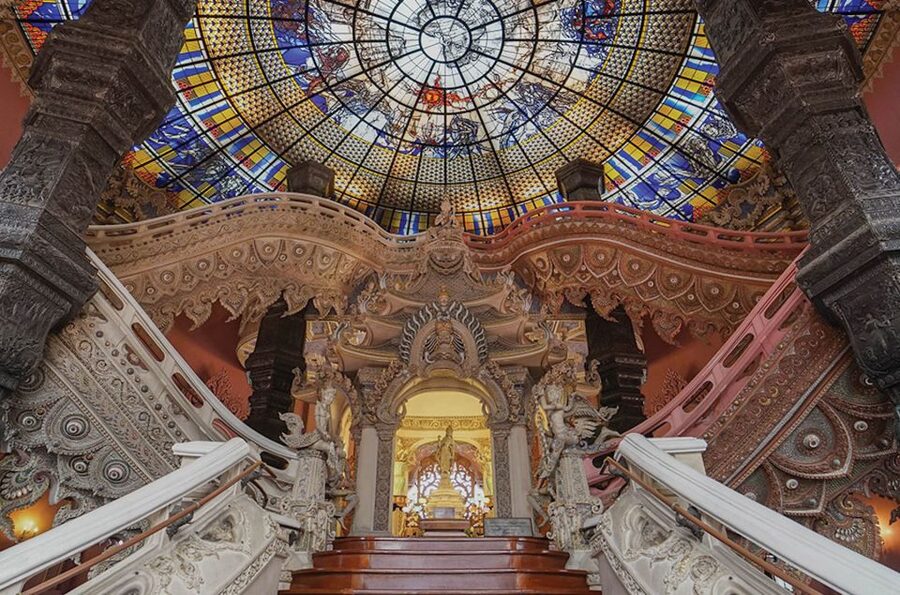
The Earth Section occupies the circular base supporting the elephant. This is the museum’s central level, both physically and symbolically. It represents the human world, and it is where the building’s blend of art styles becomes most obvious.
The interior combines Eastern and Western forms in a way that feels unusual rather than neatly divided. Look up at the entrance ceiling. Its design recalls the ceiling of the Earth, while the stained glass creates a pattern suggesting the planet itself.
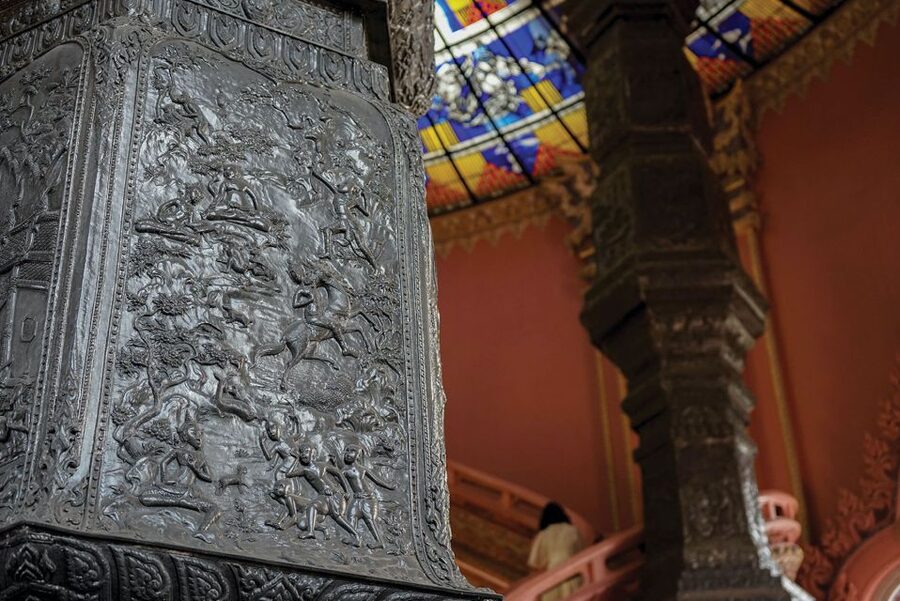
This is one of the best places for photographs, but you should also pause and study the details. The ceiling, columns, decorative surfaces, and displays create a busy visual field. A quick walk through will give you impressive pictures. A slower visit will help you see how the museum turns architecture into a lesson about the world.
The central hall also provides a useful pause between the two more symbolic sections. Below, you have artifacts linked with the past and the underworld. Above, you are heading into the body of the elephant and its images of Heaven. Earth is the bridge between them.
The Cosmo level inside the elephant
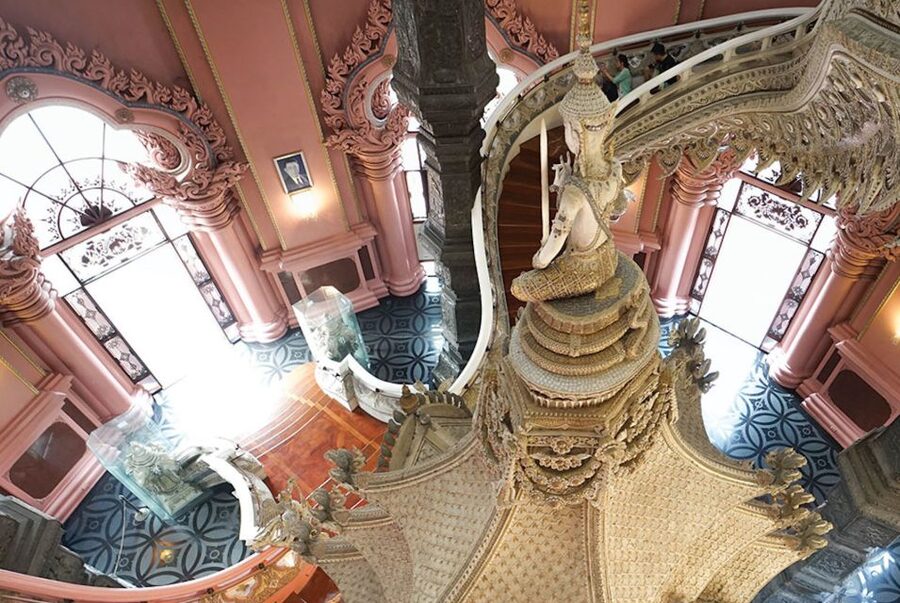
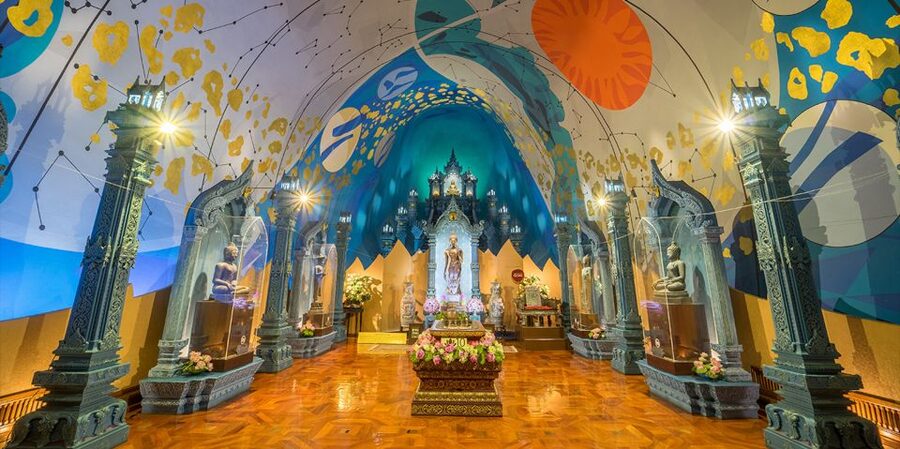
The upper section is called the Cosmo Level. It lies inside the body of the elephant and represents Heaven. To reach it, you follow two passageways from the right and left elephant feet.
That approach is part of the fun. The elephant is not only visible from outside. You move through its structure, then arrive in a space painted with stories of gods and goddesses floating in Heaven. It is the most theatrical section of the visit.
The Cosmo Level feels different from the lower gallery. Instead of focusing mainly on collected objects, it surrounds you with painted religious imagery and the unusual sensation of being inside a huge animal sculpture. This is likely to be the section that stays in your memory longest.
You should keep your voice low and behave respectfully. The museum asks visitors to be quiet, and the space has a sacred quality even though it is also a popular photo setting. You may take personal pictures, but commercial photography and commercial video are not allowed inside.
The garden and outdoor photo time
After the indoor levels, walk around the grounds. The garden contains rare trees from throughout Thailand, with some species connected to Thai literature. The outdoor area gives you a chance to slow down after the intense decoration inside.
The garden is also useful if you want more than architecture in your photographs. The elephant provides the dramatic image, while the trees and surrounding grounds offer softer views. I would plan to visit the exterior twice, once before entering and again after seeing the interior. Your understanding of the building changes after you have followed its three symbolic levels.
Food and drinks are not permitted, so plan to eat before or after your visit. The museum is not a place to combine a meal with sightseeing. That restriction may be inconvenient, especially in Thailand’s heat, but it helps keep the galleries and collection protected.
What the $12 ticket is really worth
At about $12 per person, this is a reasonably priced cultural stop if you value unusual architecture, Thai religious imagery, decorative arts, and photography. The ticket includes the museum, the outdoor areas, flowers, incense, and a lotus flower. Taxes and fees are also included.
The value is strongest because the building provides several experiences in one visit. You get the giant exterior sculpture, three distinct interior levels, a collection of ceramics and artifacts, painted religious scenes, and a garden. It is not a large museum with hundreds of rooms, but it has a clear identity and plenty to see.
An audio guide is included in English, Thai, Chinese, Korean, and Russian. That can help you understand the symbolism without arranging a private guide. No individual guide is named for this experience, so expect a self-guided visit supported by the audio options.
The price may feel less attractive if you only want a quick photograph of the elephant. In that case, transport and a timed entry may take more planning than the short stop seems to justify. If you are already visiting Samut Prakan or want a distinct cultural attraction outside central Bangkok, the ticket makes better sense.
Timing, clothing, and practical limits
Your ticket is valid for one day, but you can visit only on the specified date and time selected when you book. Check the available starting times before paying. The free cancellation policy allows a full refund if you cancel at least 24 hours in advance, and the reserve-now, pay-later option can help if your Bangkok plans are still shifting.
Dress modestly. Shorts, short skirts, and sleeveless shirts are not permitted. Wear clothing that covers your shoulders and reaches below the knee so you do not risk problems at the entrance.
Leave pets at home. Food and drinks are also not allowed inside the museum. Personal photography is welcome, but commercial photos and videos are forbidden indoors.
One booking issue is worth knowing. A Japanese visitor had trouble getting the ticket issued and confirmed by the travel company, but staff worked through the problem and provided kind help so the visit could go ahead. I would keep your booking confirmation ready and allow time for any voucher check at the entrance.
Who should book the Erawan Museum
I would recommend this experience to you if you enjoy architecture, religious art, Thai design, decorative objects, and memorable photo settings. It also suits anyone who wants a cultural stop outside Bangkok without committing to a full-day guided excursion.
Families may like the elephant’s scale and the unusual rooms, although younger children may not care much about the ceramics or symbolism. Photographers will find many angles, but remember that commercial shooting is restricted inside.
You should think twice if your clothing cannot meet the modest dress rules, if you dislike timed entry, or if you want a conventional art museum with clear labels and a simple floor plan. The Erawan Museum is ornate and symbolic. Its appeal comes from the whole setting rather than from one famous object in a plain gallery.
The overall rating is 4.8 from 20 ratings, and the strongest themes are the unusual architecture, the sacred atmosphere, and the warm Thai hospitality. That matches the attraction’s main strength: it offers a distinctive place, not just another collection of objects.
Should you book it?
Book this ticket if you want to see one of the most unusual buildings near Bangkok and you are happy to follow a set entry time. The three-headed elephant, the three-level symbolic route, and the garden make the $12 price fair, especially with the audio guide and small ceremonial items included.
Skip it if your Bangkok schedule is too tight for a timed visit or if your main goal is only a quick outdoor photograph. For everyone else, the Erawan Museum offers an easy BTS outing with plenty of visual detail and a strong sense of place.
FAQ
Where is the Erawan Museum?
The museum is at 99 Tambon Bang Muang Mai, Amphoe Mueang Samut Prakan, Chang Wat Samut Prakan 10270, Thailand.
How can I reach the museum by public transport?
Take the BTS Skytrain Green Line to Chang Erawan Station, E17. Use Exit 2, where a free shuttle tuk-tuk service operates every day.
Is transportation included with the ticket?
No. Transfers are not included. The ticket covers admission and the listed inclusions at the museum.
What languages are available for the audio guide?
The audio guide is available in English, Thai, Chinese, Korean, and Russian.
What should I wear to the Erawan Museum?
Dress modestly. Shorts, short skirts, and sleeveless shirts are not permitted.
Can I cancel the booking?
Yes. You can cancel up to 24 hours in advance for a full refund. The ticket is valid only on the specified date and time you book.
More Museums in Bangkok
- Skip the Line: Patpong Museum Guided Tour
★ 5.0 · 80 reviews - Jim Thompson’s House and National Museum Bangkok (Phranakorn)
★ 4.0 · 9 reviews - Jim Thompson House Museum Entrance Ticket & Hotel Pick up
★ 4.0 · 9 reviews - Ancient City Bangkok and Erawan Museum Tickets
★ 4.5 · 8 reviews
Just added in Bangkok
- re:leaf spa and massage★ 4.0 · 10 reviews
- Wonderful Pearl Dinner Cruise★ 3.5 · 27 reviews
- 3-Hour Bangkok Walking Tour: Wat Pho and Wat Arun★ 5.0 · 102 reviews
- Yoga in the Park Thailand★ 5.0 · 12 reviews
- Visit Wat Pho and Wat Arun with Local Expert★ 4.0 · 14 reviews
- White Orchid Sunset Dinner Cruise Calypso Ladyboy Cabaret Show★ 4.0 · 10 reviews
- Morning Buddhist Almsgiving, Grand Palace and Flower Market Tour in Bangkok★ 3.5 · 9 reviews
- Miracle Bangkok Airport Lounges – Relax Before You Fly★ 3.0 · 32 reviews
River Kwai & Kanchanaburi Tours, compared.
From Bangkok: Erawan Park & Kanchanaburi Small-Group Tour
Read our review →
From Bangkok: Historical Day Tour to River Kwai
Read our review →
Bridge on the River Kwai and Thailand-Burma Railway Tour
Read our review →
Erawan Waterfalls and Bridge Over River Kwai Tour from Bangkok
Read our review →
Erawan Waterfall and Elephant Care: Private Tour to Kanchanabur
Read our review →
Kanchanaburi Full Day Tour: River Kwai and Erawan Falls
Read our review →
Floating Markets and Bridge on River Kwai Tour from Bangkok
Read our review →
River Kwai Day Tour from Bangkok – History, Scenery & Culture
Read our review →Browse the lists this tour appears in