
Reviewed · RIVER KWAI & KANCHANABURI TOURS
Bangkok: Bridge on the River Kwai and Thailand-Burma Railway Tour
The most powerful part of this day is the contrast between the pleasant river journey and the grim story behind the Thailand-Burma Railway. You walk across the Bridge on the River Kwai, visit the cemetery where many prisoners of war are buried, then ride the railway built under brutal wartime conditions. I like the long-tailed boat ride and the chance to hear the story from local guides such as Rach and Oom. I also like that the tour links the main sites rather than treating the bridge as a quick photo stop.
The catch is the length. This is an 11-hour day, and heavy Bangkok traffic can make the return even slower. You should also know that the train ride is included, but a guaranteed seat costs an extra 300 baht per person, paid locally. That charge includes tea or coffee, water, a cold towel, and a certificate.
Key points to know before booking
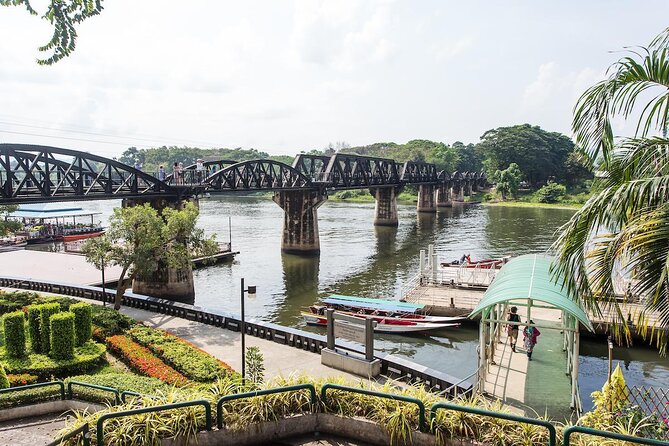
- The bridge is part of the wartime Death Railway: You see the bridge, walk across it, and hear how prisoners of war and forced laborers were made to build the railway from 1942 to 1943.
- The transport is varied: An air-conditioned vehicle, long-tailed boat, and train keep the day from becoming one long road journey.
- The cemetery is the emotional center: Kanchanaburi War Cemetery is carefully maintained and gives the history a human scale.
- The train seat costs extra: Pay about 300 baht at the station if you want a guaranteed seat and the included refreshments.
- Guides make a real difference: Rach, Oom, Zoom, and other local guides have been praised for clear explanations, humor, and help with photographs.
- Expect a long day: Hotel pickup begins around 7:00 a.m., with pickup from some hotels 30 to 60 minutes earlier.
Why the River Kwai day matters
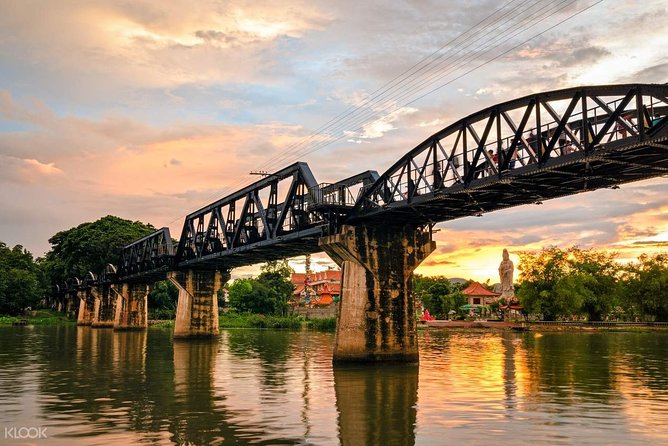
The Bridge on the River Kwai is not simply a famous film location. It is part of the Thailand-Burma Railway, built by Japan during World War II between 1942 and 1943. Prisoners of war from Britain, Australia, the Netherlands, the United States, and other countries were forced to work alongside Asian laborers under terrible conditions.
The railway linked Thailand with Burma, now Myanmar, and became known as the Death Railway because so many people died during its construction. Disease, hunger, exhaustion, violence, and dangerous working conditions took a terrible toll.
A visit here works best when you give the sites their proper weight. The boat ride and train journey are enjoyable, but the central subject is suffering and remembrance. I appreciate that this tour includes the cemetery and museum, rather than presenting the bridge as a stand-alone attraction.
The 1957 film helped make the bridge famous around the world, although the real story is more complicated than the movie suggests. Your guide can help separate the film version from the actual wartime events. Guides Rach and Oom have been particularly appreciated for explaining the different sides of the conflict and answering questions along the way.
Other long days west of Bangkok:
- From Bangkok: Erawan Park & Kanchanaburi Small-Group Tour
★ 4.5 · 1,582 reviews - From Bangkok: Historical Day Tour to River Kwai
★ 4.6 · 868 reviews - Bridge on the River Kwai and Thailand-Burma Railway Tour
★ 4.5 · 658 reviews
Starting early from Bangkok
The advertised start time is 7:00 a.m., but your hotel pickup can be scheduled 30 to 60 minutes before that, depending on where you stay. Pickup and return are available from most centrally located Bangkok hotels. You must provide your hotel information when booking, or the reservation may be cancelled.
The group vehicle is air-conditioned, a welcome feature in Thailand’s heat. The group can include up to 15 people, although some departures are much smaller. A small group makes it easier to ask questions and get help with photographs. It also gives the guide more room to adjust the pace.
The drive to Kanchanaburi takes time. One guide helped make the journey feel shorter with stories and conversation, while another departure included several useful breaks. Still, you should not mistake this for a quick outing beyond Bangkok. It is a full day with several hours on the road.
Bangkok traffic is the main unknown. The return journey can be slow, especially later in the day. Build no important evening appointment around your arrival time. If you have a flight, dinner reservation, or theatre booking, leave a generous cushion.
Reaching the bridge by long-tailed boat
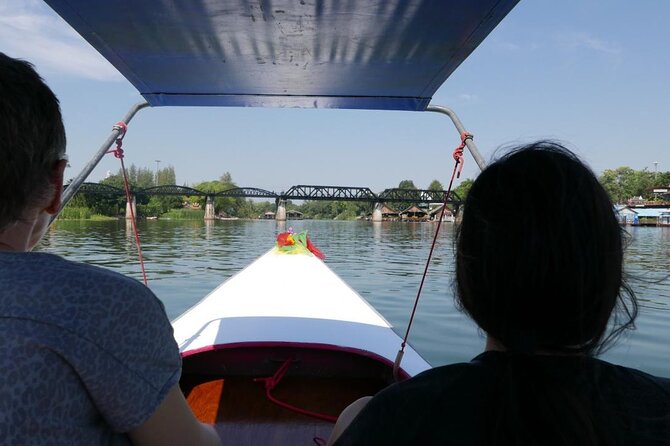
One of the most enjoyable parts of the tour is the ride by long-tailed speedboat along the river. Instead of approaching the bridge only by road, you see the water and surrounding jungle before arriving at the historic structure.
The boat also adds a sense of place. The bridge is not an isolated monument in a museum courtyard. It crosses a working river, and the water route gives you a better feel for its setting. You can take photographs as you approach, although hold on to your belongings and follow your guide’s instructions.
Getting into and out of a long-tailed boat can be difficult if you have mobility problems. Tell your guide at the beginning of the tour. The driver can take you to the bridge by road instead.
The boat is not the place for a long historical lecture, so the main interpretation usually comes from the guide at the stops and during the drive. The ride is best understood as a scenic link between the transport and the story, not as a separate sightseeing cruise.
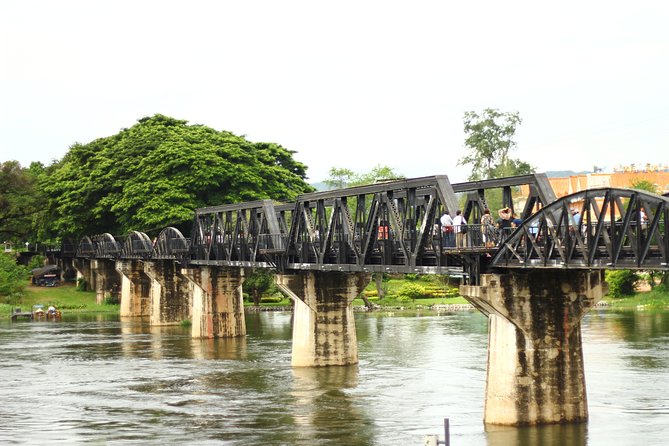
Walking across the Bridge on the River Kwai
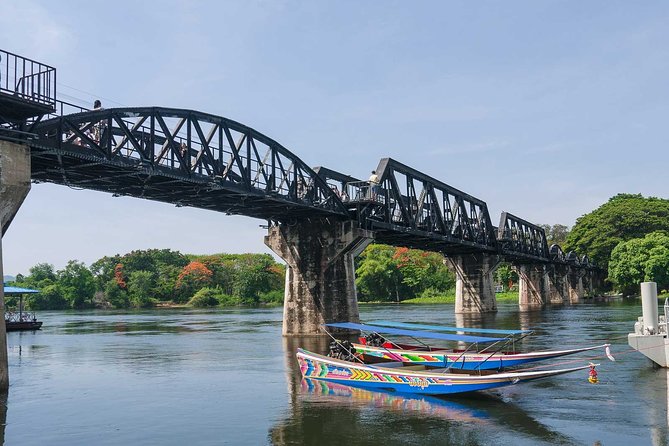
At the bridge, you have time to walk across and look along the railway line. The structure is a popular stop, so expect other people taking photographs and moving across the bridge. The walking surface can be uneven, and the bridge is high above the river, so wear sensible shoes and watch your footing.
The bridge itself is impressive, but the strongest part of the visit comes from knowing what it represents. Prisoners of war and enslaved laborers were forced to help build this railway during the war. Thousands died before the project was completed.
This is also where the film connection can distort your expectations. The real bridge and railway are meaningful because of the people who suffered here, not simply because a famous movie used the name. A good guide helps keep the visit grounded in fact.
You may have time for photographs and a walk over the bridge, but do not expect a long, quiet meditation in the middle of a busy attraction. The cemetery provides a more peaceful place for that.
Same base, a different sort of day:
- Bangkok: Damnoen Saduak Market and Maeklong Railway Market
★ 4.5 · 26,723 reviews - The Old Siam: Damnoen Saduak and Maeklong Railway Market
★ 4.5 · 10,992 reviews - From Bangkok: Ayutthaya Temples Guided Tour with Lunch
★ 4.7 · 10,535 reviews - Bangkok: Train Market & Floating Market with Boat Ride
★ 4.7 · 9,547 reviews
Kanchanaburi War Cemetery and the names behind the story
Kanchanaburi War Cemetery is the most solemn stop. It is the main prisoner of war cemetery for people who died while working on the Burma Railway. The cemetery lies on Saeng Chuto Road in Kanchanaburi and is carefully maintained.
Rows of graves make the scale of the losses easier to grasp. The inscriptions often show how young the men were. If you have a family connection to the war, this stop can be especially powerful. One visitor found a possible relative here, turning a historical visit into a deeply personal moment.
Allow yourself time to read the names and inscriptions. The official stop is about 30 minutes, which is enough for a respectful visit but may feel brief if you want to search for a particular grave.
The cemetery is not a place for loud conversation or rushed group photographs. You will get more from it if you slow down and treat it as a memorial rather than another item to tick off.
The JEATH War Museum in 20 minutes
The JEATH War Museum is small and focuses mainly on the ordeal of the prisoners of war who built the railway. Original photographs, letters, and drawings show the harsh conditions in the camps and the work sites.
Do not expect a large modern museum with extensive displays. The collection is compact, and some parts may feel dated. Its value comes from the personal material: faces, handwritten words, and drawings can say more than a long wall of general information.
The scheduled visit lasts about 20 minutes. That is enough to see the main displays, but anyone with a strong interest in wartime history may want more time. The guide’s explanation matters here, since the museum itself does not provide a full account of every aspect of the railway.
The museum and cemetery complement one another. The cemetery shows the names and ages of those who died. The museum gives a glimpse of the conditions they endured.
Lunch beside the River Kwai
Lunch is a buffet meal in Kanchanaburi, with a view of the river at the dining stop. It is included in the tour price, but beverages are not, so bring some cash for drinks.
The meal is practical rather than a major food experience. It gives you a chance to sit down after the walking, boat ride, and museum visit. Some food may be served warm rather than hot, so keep your expectations sensible.
The setting adds to the break. After a morning focused on war and loss, eating near the river gives the group time to reset before the train journey. The combination of scenery and a filling meal has been one of the more consistently praised parts of the day.
If you have dietary needs, the supplied information does not specify special menu arrangements. Ask the operator before booking rather than assuming the buffet will suit you.
Riding the Death Railway
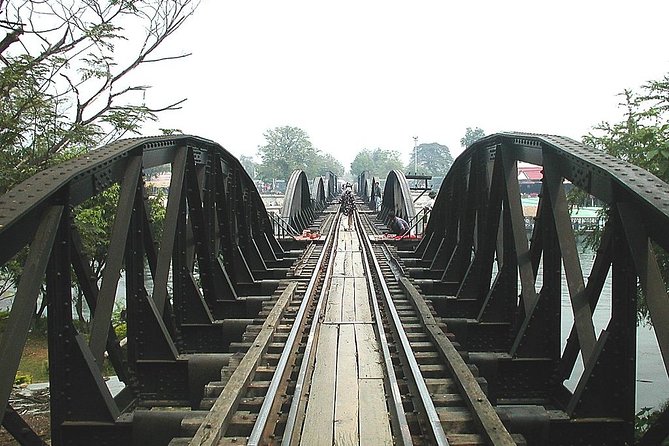
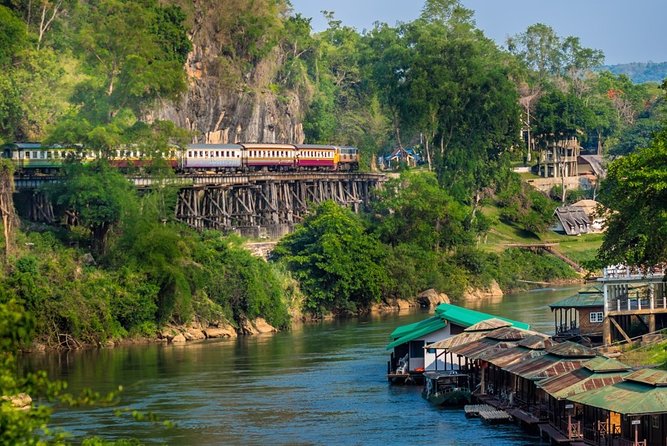
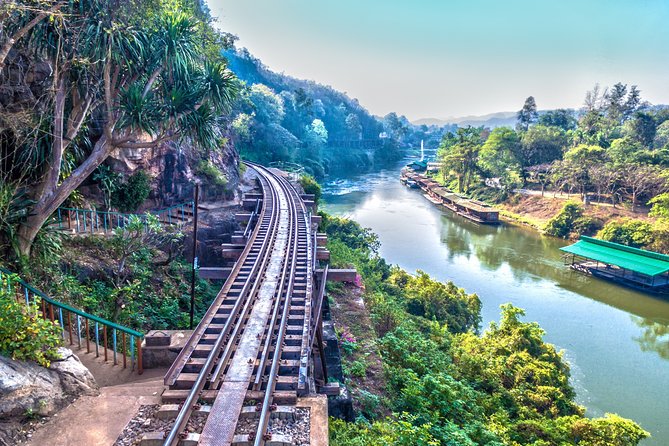
The train ride is the tour’s other major experience. You travel along the Death Railway and cross the bridge, seeing sections of the route from the same general corridor that made this place historically important.
Train travel adds something a road transfer cannot. You feel the railway’s curves and movement, watch the river and countryside pass by, and understand that this is still a working route rather than only a preserved exhibit. The scenery can be beautiful, but it sits beside a painful past.
The train ride can last around an hour and a half, depending on the schedule and conditions. One useful tip is to pay for the guaranteed seat if you value comfort. The local charge is about 300 baht per person. It includes tea or coffee, drinking water, a cold towel, and a certificate.
This extra charge has caused confusion because the train ride itself is included in the tour, while the reserved seat is not. You may be able to ride without paying the additional amount, but the guaranteed seat and small extras require local payment. Ask the guide to explain the arrangement before boarding.
The train may also feel long if you are focused only on the bridge. I think it works better when you treat it as a moving historical experience. Look outside, listen to the guide, and accept that part of the value is simply being on the railway.
What guides add to the day
This experience depends heavily on the guide. The strongest departures have included Rach, Oom, and Zoom, all praised for clear explanations and friendly help. Rach has helped visitors understand the real story behind the film, while Oom has been noted for keeping the plan clear, answering questions, taking photographs, and adding humor at suitable moments.
That personal touch matters during a long day. A guide who explains what you are seeing can turn a series of stops into a connected story. A guide who stays distant can leave you with a bridge, museum, and train ride that feel like separate activities.
Guide quality can vary, as it does on any group tour. One departure had communication problems because the guide spoke through a mask, and one account described late hotel pickup. If you cannot hear or understand something, speak up during the tour. The guide can often slow down, repeat an explanation, or give you extra help.
Is the 99.40 price good value?
At $99.40 per person, the price is reasonable for a full-day trip that includes hotel pickup and return from central Bangkok, an air-conditioned vehicle, guide, boat ride, train ride, entrance fees, and lunch.
The main value is convenience. Arranging the bridge, boat, railway, cemetery, museum, meals, and transport independently would take planning and would not remove the long travel time. Here, the route is organized for you.
The extra 300 baht for a guaranteed train seat should be included in your budget. It is not a large sum, but it can feel irritating if you arrive expecting every part of the train experience to be covered. The operator does state the charge in the tour information, yet the distinction between an included train ride and a paid reserved seat is easy to miss.
For a solo booking, check availability carefully. At least two people are required for a shared departure to operate. A single person can book, but the tour may be cancelled if the minimum is not met, with an alternative date or refund offered.
Who should book this tour?
I would choose this tour if you want the main River Kwai sites in one organized day and prefer a guide to explain the wartime background. It suits people interested in World War II, memorials, railway history, and the difference between movie mythology and documented events.
It also suits you if you like a day with changing activities. The boat, bridge walk, museum, buffet, and train prevent the outing from feeling like one long museum visit.
I would think twice if you dislike early starts, long road journeys, group meals, or uncertain return times. The route is tiring, and Bangkok traffic can extend the day beyond 11 hours. The bridge and train also involve uneven surfaces, steps, or awkward boarding, so tell the guide about mobility concerns before the boat departure.
FAQ
What time does the tour start?
The advertised start time is 7:00 a.m. Hotel pickup may take place 30 to 60 minutes earlier, depending on your hotel’s location.
Does the tour include hotel pickup and drop-off?
Yes. Pickup and drop-off are included for most centrally located Bangkok hotels. You must provide your hotel details when booking.
How long does the tour last?
The scheduled duration is approximately 11 hours. Heavy traffic returning to Bangkok can make the day longer.
Is the train ride included in the price?
The train ride is included, but a guaranteed seat costs approximately 300 baht per person. This is paid locally at the train station.
What does the 300 baht train payment include?
The payment guarantees a seat and includes tea or coffee, drinking water, a cold towel, and a certificate.
Is lunch included?
Yes. A buffet lunch is included. Beverages are not included.
What sites are visited?
The tour visits the Bridge on the River Kwai, the River Khwae area, Kanchanaburi War Cemetery, and the JEATH War Museum. It also includes a long-tailed boat ride and a train journey on the Death Railway.
Can people with mobility problems join?
Most people can participate, but getting into or out of the long-tailed boat may be difficult. Tell the guide at the start, and a road transfer to the bridge can be arranged instead.
How many people are in the group?
The maximum group size is 15 people. At least two people are required for a shared tour to operate.
Should you book it?
Book this tour if you want a well-organized, history-focused day that combines the major River Kwai sites with a boat ride and train journey. The cemetery and museum give the bridge its proper context, while guides such as Rach, Oom, and Zoom can make the long route much more rewarding.
Go in prepared for an early start, a tiring return through Bangkok traffic, and the extra train-seat charge. If you accept those conditions, the tour offers good value and a respectful way to encounter one of Thailand’s most important wartime memorial sites.
Just added in Bangkok
- re:leaf spa and massage★ 4.0 · 10 reviews
- Wonderful Pearl Dinner Cruise★ 3.5 · 27 reviews
- 3-Hour Bangkok Walking Tour: Wat Pho and Wat Arun★ 5.0 · 102 reviews
- Yoga in the Park Thailand★ 5.0 · 12 reviews
- Visit Wat Pho and Wat Arun with Local Expert★ 4.0 · 14 reviews
- White Orchid Sunset Dinner Cruise Calypso Ladyboy Cabaret Show★ 4.0 · 10 reviews
- Morning Buddhist Almsgiving, Grand Palace and Flower Market Tour in Bangkok★ 3.5 · 9 reviews
- Miracle Bangkok Airport Lounges – Relax Before You Fly★ 3.0 · 32 reviews
River Kwai & Kanchanaburi Tours, compared.
From Bangkok: Erawan Park & Kanchanaburi Small-Group Tour
Read our review →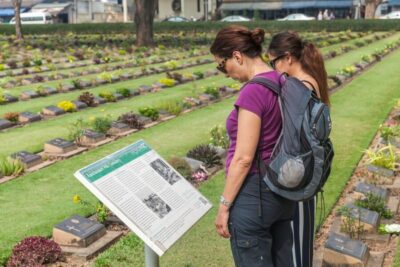
From Bangkok: Historical Day Tour to River Kwai
Read our review →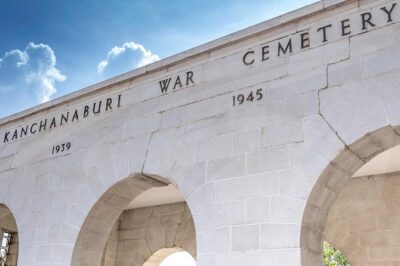
Bridge on the River Kwai and Thailand-Burma Railway Tour
Read our review →
Erawan Waterfalls and Bridge Over River Kwai Tour from Bangkok
Read our review →
Erawan Waterfall and Elephant Care: Private Tour to Kanchanabur
Read our review →
Kanchanaburi Full Day Tour: River Kwai and Erawan Falls
Read our review →
Floating Markets and Bridge on River Kwai Tour from Bangkok
Read our review →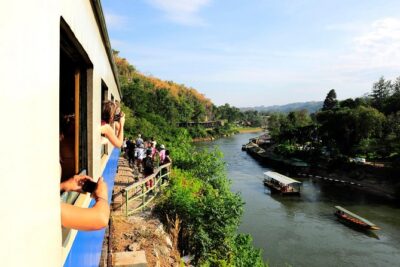
River Kwai Day Tour from Bangkok – History, Scenery & Culture
Read our review →Browse the lists this tour appears in