
Reviewed · TEMPLE & PALACE TOURS
Chiang Mai: Temple & City Tour Part II
Chiang Mai’s best temple experience may be the one that takes you away from the standard checklist. This walking tour visits four important temples, including Wat Chiang Man, the city’s oldest, then adds Shan and Burmese sites that are easy to miss on your own. Guides such as Katoon and Big bring personal experience of monastic life to the stories.
I like the mix of famous and less obvious places, and I like the chance to ask real questions about Buddhism, meditation, prayer, and daily life as a monk. The tour also keeps its carbon footprint low by relying on walking rather than a sightseeing vehicle.
The main catch is the heat and the amount of time on your feet. You will walk for hours, with little built-in comfort mentioned, so bring water, an umbrella, cash, and suitable clothing. The meeting point also needs careful checking because one guest found the map code difficult for taxis and even local people to understand.
Four temples, four different sides of Chiang Mai
- Wat Chiang Man dates to 1296, when King Mengrai founded it as Chiang Mai’s oldest temple.
- Wat Chiang Yuen reflects Shan life, occupying an area once used as a Shan residential quarter.
- Wat Pa Pao uses Shan Burmese design, giving you a clear change from the more familiar Lanna temple style.
- Wat Ku Tao has a remarkable chedi, believed to hold the ashes of Prince Saravadi, Chiang Mai’s first Burmese overlord.
- Former monks lead some departures, including Katoon and Big, adding practical insight into Buddhist customs and monastic life.
- The walking format keeps the visit personal, with private and small-group options, plus English, Chinese, and Thai guides.
Why this temple walk feels different
Many Chiang Mai temple visits focus on the grandest buildings inside the old city. This route takes a wider view. You begin with the city’s earliest royal temple, then move through places tied to Shan and Burmese communities and Chiang Mai’s changing political past.
That matters because northern Thailand is not defined by one architectural style or one strand of Buddhist practice. The four stops help you see how local identity was shaped by the Lanna kingdom, Shan communities, and Burmese influence.
The guide is central to the experience. Katoon appears to lead many departures, and his 18 years as a monk give him a useful way to explain matters that can seem mysterious from the outside. He has helped visitors understand meditation, basic temple etiquette, Buddha stories, monk life, and the meaning of artwork inside the temples.
Big, also known as Mr Big, has a similar background as a former monk and explains prayer, the life of monks, and Buddhist customs. Other guides named in the activity details include Eddy and Son. The quality of the experience will depend partly on who leads your departure, but the guide service is available in English, Chinese, and Thai.
I like that the walk leaves room for questions. You are not simply pointed toward a statue, given a date, and moved along. You can ask how people pray, why monks follow certain routines, or how Buddhist ideas shape ordinary life in Thailand.
More Temple Tours in Chiang Mai
- Chiang Mai: Chiang Rai Temples, Karen Tribe and Hot Springs
★ 4.7 · 5,401 reviews - Chiang Rai White Temple and Blue Temple Day Tour
★ 4.6 · 3,366 reviews - Chiang Mai: White, Red/Black & Blue Temples Tour with Lunch
★ 4.2 · 2,017 reviews
Wat Chiang Man and the start of Chiang Mai
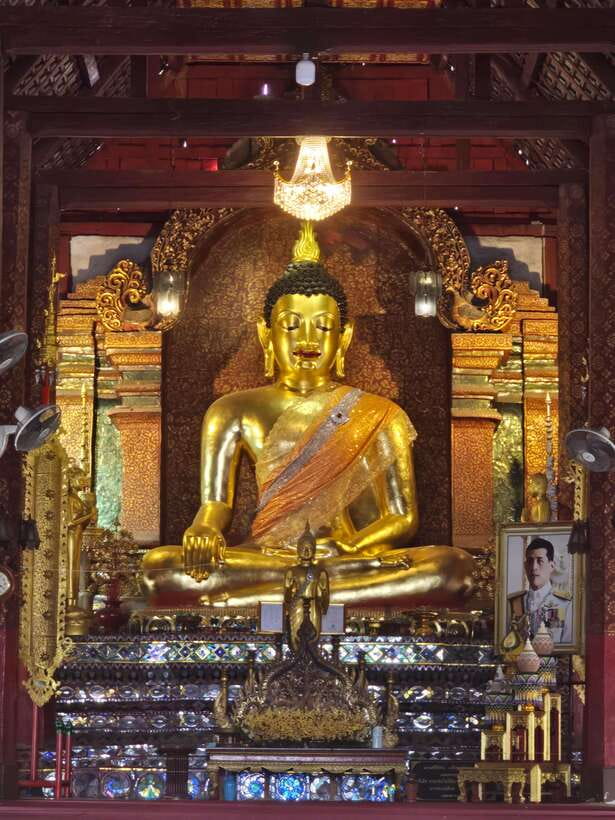
The first stop is Wat Chiang Man, founded by King Mengrai in 1296. That date gives the temple unusual weight: it belongs to the birth of Chiang Mai itself, not just to a later period of religious construction.
The temple is also associated with a crystal Buddha statue. Your guide can place that image and the building in the wider story of Chiang Mai’s early years, helping you see the temple as more than a pretty stop for photographs.
This is a strong opening because it gives you a historical anchor before the tour moves into less familiar territory. If you have already seen several Thai temples, the guide’s explanation of the site’s age, royal connections, and religious role can help the details fall into place.
Take your time here. Look at the building style, notice how people use the space, and pay attention to the difference between observing a religious site and treating it like a museum. You will receive basic instruction on entering temples respectfully, including appropriate clothing and conduct.
Wat Chiang Yuen and the Shan connection
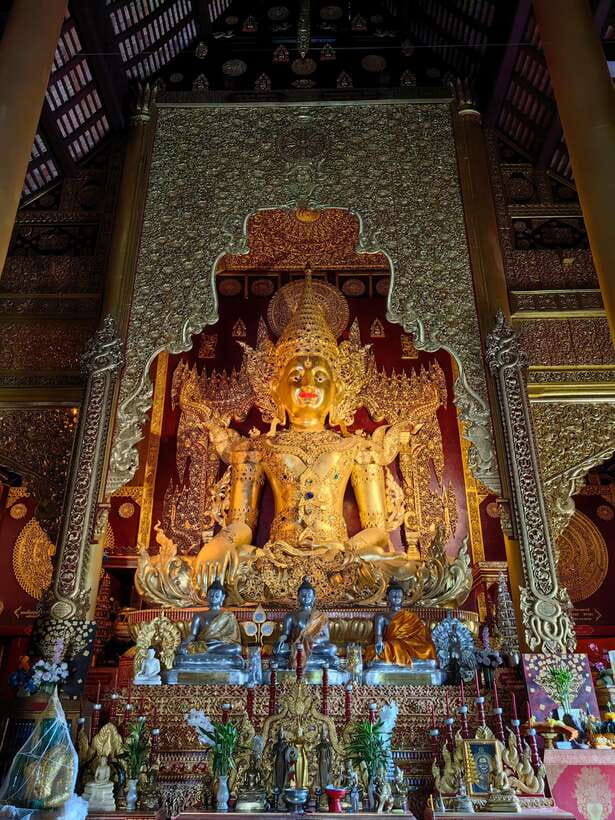
Wat Chiang Yuen offers a different kind of story. This 16th-century temple sits in an area that once served as a residential quarter for the Shan people.
That detail makes the visit especially useful for anyone trying to understand Chiang Mai beyond its postcard image. The city has long been connected to neighboring regions and communities, and the Shan presence adds another layer to its cultural past.
The temple may not carry the same instant fame as Wat Chiang Man, but that is part of its appeal. You are given time to consider how a religious building can also point to migration, community life, and changing power in northern Thailand.
A guide who understands local history can make this stop worthwhile. You might otherwise walk past, photograph the entrance, and miss why the area matters. With an explanation, the temple becomes part of a larger story about Chiang Mai’s people, not only its kings.
Wat Pa Pao and a change in architectural style
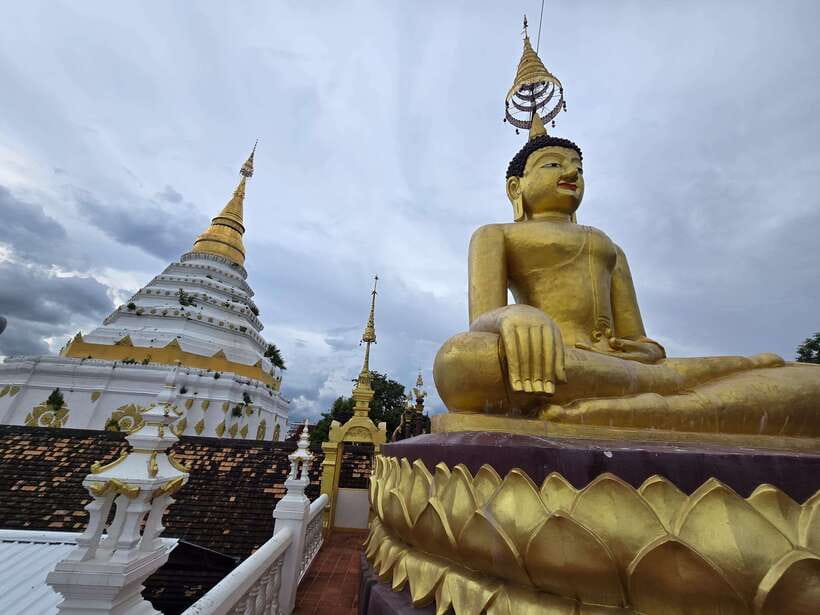
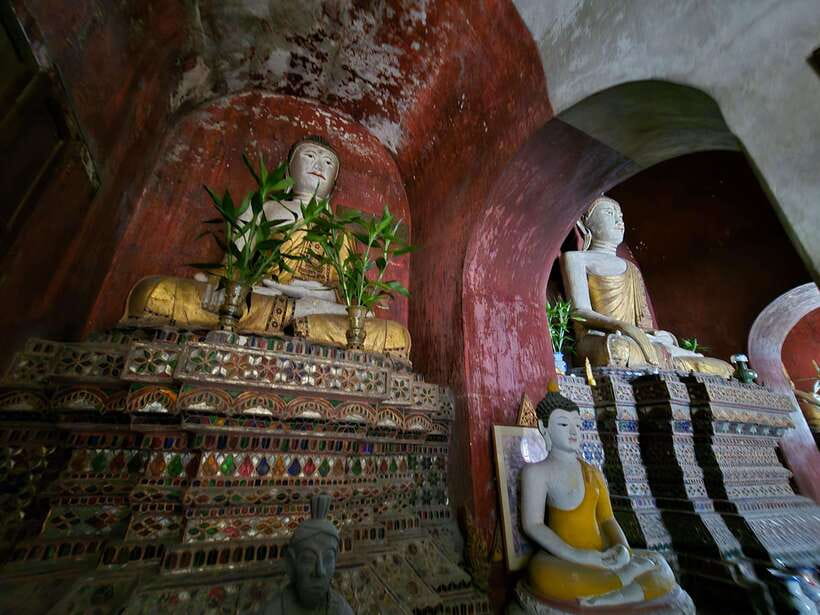
Wat Pa Pao is a Shan Burmese style temple outside Chiang Mai’s old city walls and moat. It gives the walk a clear visual shift from the Lanna forms many people associate with the old city.
The value here is comparison. After seeing Wat Chiang Man and Wat Chiang Yuen, you can look at Wat Pa Pao with a better eye for differences in decoration, layout, and influence. The temple’s style reflects the movement of people and ideas across the region.
This is also one of the stops that benefits most from a guide. Architecture can be difficult to read without help, especially when several Southeast Asian temple traditions overlap. Your guide can point out what makes the site Shan Burmese rather than leaving you with a general description.
The route outside the old walls also helps break up the usual central Chiang Mai sightseeing pattern. You are still close to the city’s historic core, but the walk is not limited to the same famous monuments found on every first-time visitor’s map.
More temples worth an hour in Chiang Mai:
- Chiang Mai: Doi Suthep and Wat Umong Enchanting Evening Tour
★ 4.6 · 1,811 reviews - Chiang Mai: 3 Hour Old City and Temples Guided Walking Tour
★ 4.6 · 1,568 reviews - Chiang Mai: Doi Suthep, Wat Umong, and Pha Lat Sunrise Tour
★ 4.7 · 1,425 reviews - Chiang Rai Temples: Private Tour from Chiang Mai
★ 5.0 · 1,267 reviews
Wat Ku Tao and Chiang Mai’s Burmese past
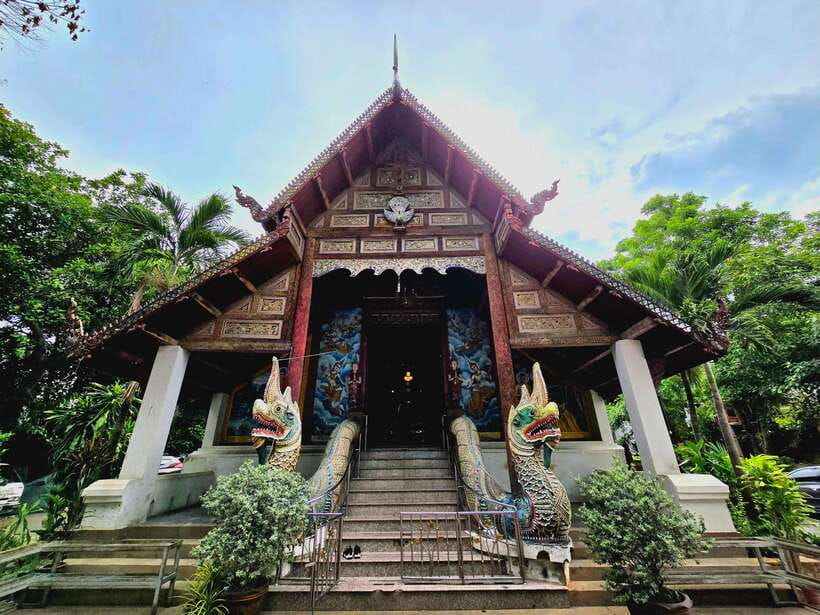
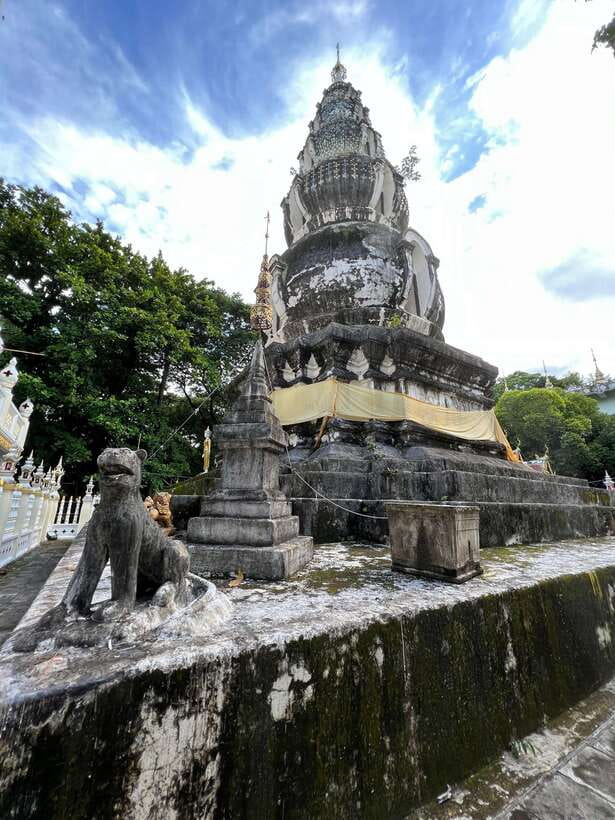
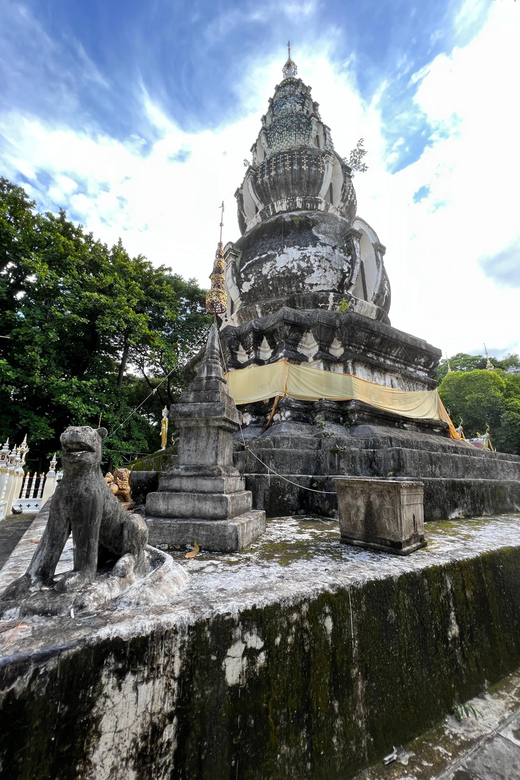
Wat Ku Tao is perhaps the most unusual stop on the route. Its chedi is thought to have been built in 1613 to hold the ashes of Prince Saravadi, who ruled as Chiang Mai’s first Burmese overlord from 1578 to 1607.
This stop brings politics into the temple visit. The building is not only a place of worship. It also points to a period when Chiang Mai’s leadership was tied to Burmese power.
The date, the unusual chedi, and the story of Prince Saravadi give your guide plenty to discuss. You can ask how religious buildings preserve political memory, and how different ruling groups left their mark on the city.
For me, this is the kind of stop that justifies choosing a guided walk. You may notice that the chedi looks unusual, but without the story, its importance is easy to miss. The guide turns a visual detail into a piece of Chiang Mai’s past.
Buddhism, meditation, and life as a monk
The strongest part of this experience is not simply the number of temples. It is the chance to talk about Buddhism in a direct and practical way.
Several guides have experience as former monks. Katoon has been described as explaining Buddha’s previous lives, artwork showing those stories, meditation, different types of temples, and the daily food and routines of monks. Big has also shared his experience of monastic life and shown visitors how to pray.
That does not make the walk a formal religious lesson. It gives you a respectful setting for questions. You can learn the basics of meditation, how to behave when entering a temple, and how Buddhism affects daily life in Thailand.
The pace appears to allow for longer conversations at quieter temples. That can be a major advantage if you want more than facts and photographs. It also means the experience may feel less efficient if your goal is simply to visit as many sites as possible.
Bring your questions. Ask about the Buddha images, the role of monks, or the difference between seeing a temple as a visitor and using it as a place of worship. The guides are praised for patience and for answering many questions, which makes this a better choice for curious visitors than for people who prefer a quick sightseeing loop.
Walking time, heat, and practical comfort
The tour begins at 8:20 am according to the activity details, though availability should be checked when you book. Some departures have been described as afternoon experiences, so confirm the exact start time rather than assuming every group follows the same schedule.
Expect a substantial walk. One participant specifically warned that the heat can be difficult if you are not used to it, and another described tired feet after combining this second part with the first temple tour on the same day.
Wear comfortable walking shoes and light, respectful clothing. Short skirts are not allowed, and temple visits require appropriate dress. An umbrella is listed as something to bring, and it can help with both sun and sudden rain. Carry drinks and cash, since food and extra drinks are not included.
The route is described as relatively easy, but easy does not mean effortless. You will be outdoors and on your feet for hours. The tour is not suitable for children under two, babies under one, pregnant women, or wheelchair users. Electric wheelchairs are also not permitted.
Smoking indoors, alcohol, drugs, drones, pets, weapons, sharp objects, explosive substances, excessive noise, and nudity are prohibited. These rules are standard for a temple-focused activity, but you should know them before arriving.
Group size, guides, and the meeting point
You can book a private or small-group departure. A private walk gives you more room to shape the conversation and ask personal questions. A small group can offer a more social outing while keeping the guide’s attention closer than on a large coach tour.
Some of the most memorable details associated with the guiding include help with photographs, patient explanations, and access to quieter temple areas. One guide helped a small group enter a temple that was closed at the time, while another took photos throughout the walk. These details cannot be guaranteed on every departure, but they show the practical value of having a local guide who knows the setting well.
Pay close attention to the meeting instructions. One guest had difficulty using the map code QXRP+3WX, which did not make sense to a taxi driver or a Thai person in a hotel lobby. If that code appears in your booking details, check the location in advance and allow extra time. A landmark such as the Three Kings Monument would be easier to communicate, but the supplied information does not confirm that as the official meeting point.
Hotel pickup and drop-off are included only with the private option. Do not assume that a group booking includes transport.
Is $31 a fair price?
At $31 per person, the tour offers good value if you want interpretation rather than transport alone. You are paying for a full day of guided walking, four temples, local history, Buddhist context, and the chance to ask questions in a small or private setting.
The value is strongest for first-time visitors who might otherwise see the temples as a series of beautiful but confusing buildings. A guide can explain why Wat Chiang Man matters, what the Shan connection means, and why Wat Ku Tao’s chedi is unusual.
It is less attractive if you have already spent several days walking Chiang Mai’s temples and prefer to explore alone. You will still need to pay for your own food and drinks, and the walk can be tiring in hot weather.
The tour also prioritizes reducing environmental impact and offsetting carbon emissions. That fits the walking format and may matter to you if you prefer a lower-impact way to see the city.
Free cancellation up to 24 hours before the activity and reserve-now, pay-later booking add flexibility. The activity is valid for one day, with available starting times shown during booking.
Who should book this walking tour?
I would choose this for you if you want to understand Chiang Mai’s religious life, not just photograph temple roofs. It suits curious adults, solo visitors, couples, and small groups who enjoy asking questions and walking at a thoughtful pace.
It is especially useful as a second temple day. The activity is called Part II, and one visitor used it alongside Part I to learn as much as possible. If you do both on the same day, plan a proper lunch and rest period. Your feet may protest by the final stop.
You should think twice if you dislike heat, cannot walk for several hours, or need step-free access. It is also not designed for very young children. Visitors who want a quick, vehicle-based tour may find the format too slow.
Should you book it?
Book this tour if the human side of Buddhism interests you. The four temples offer a smart mix: Chiang Mai’s oldest foundation, a Shan community connection, Shan Burmese architecture, and a chedi linked to Burmese rule.
I especially like the chance to learn from guides with monastic experience, including Katoon and Big, and to visit places you might not choose without local direction. Just confirm the meeting point, check the start time, dress respectfully, and prepare for heat and tired legs.
For $31, this is a strong choice for a thoughtful, low-impact introduction to Chiang Mai’s temples and culture. It is not the right pick for a short, effortless sightseeing ride.
FAQ
What temples does the tour visit?
The tour visits Wat Chiang Man, Wat Chiang Yuen, Wat Pa Pao, and Wat Ku Tao.
What time does the tour start?
The activity details list an 8:20 am start. Check the available starting time when booking, since departures may vary.
Is transportation included?
Walking and a tourist guide are included. Hotel pickup and drop-off are included only when you select the private option.
What languages are available?
Guides are available in English, Chinese, and Thai.
What should I bring?
Bring an umbrella, drinks, and cash. Wear respectful clothing and comfortable shoes for several hours of walking.
Can I cancel or pay later?
You can cancel up to 24 hours in advance for a full refund. Reserve-now, pay-later booking is also available.
Just added in Chiang Mai
- No.1 Chiang Mai: Historical City Bike Tour★ 5.0 · 10 reviews
- Inthanon Day Trip from Chiang Mai with Lunch – Group or Private★ 5.0 · 182 reviews
- Jewellery Making Class with Silversmithing in Chiang Mai★ 4.5 · 11 reviews
- 10KM Inflatable Kayaking Adventure★ 5.0 · 23 reviews
- Chiang Mai: Historic Old City Bike Tour – Morning or Night★ 5.0 · 202 reviews
- Half-day E-bike Nam Phrae (hilly, fully paved roads, GUIDED)★ 5.0 · 122 reviews
- Inthanon Heaven Trail(Living Green Elephant Sanctuary)★ 5.0 · 52 reviews
- Half Day Car Hire with an English Speaking Driver in Chiang Mai★ 5.0 · 16 reviews
Temple & Palace Tours, compared.
From Bangkok: Ayutthaya Temples Guided Tour with Lunch
Read our review →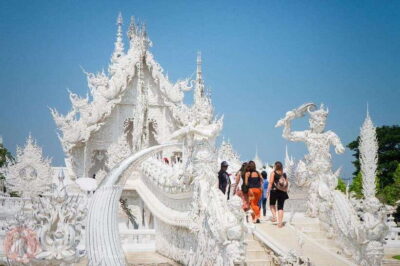
Chiang Mai: Chiang Rai Temples, Karen Tribe and Hot Springs
Read our review →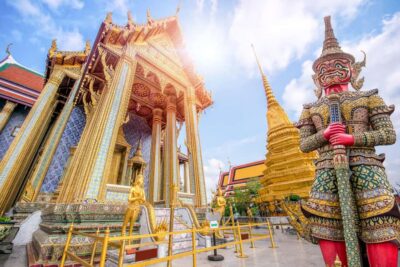
Bangkok: City Highlights Temple and Market Walking Tour
Read our review →
Bangkok by Night: Temples, Markets and Food Tuk-Tuk Tour
Read our review →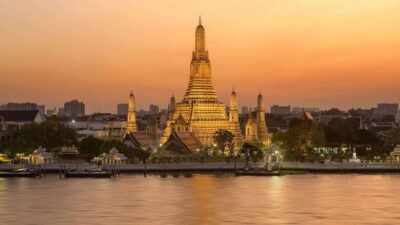
Bangkok: Grand Palace, Wat Pho, and Wat Arun Guided Tour
Read our review →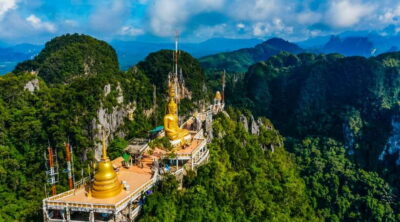
Krabi: Tiger Cave Temple, Emerald Pool and Hot Springs Tour
Read our review →
Bangkok: Temples, Canals & Local Life Bike Tour
Read our review →
Chiang Rai White Temple and Blue Temple Day Tour
Read our review →Browse the lists this tour appears in