
Reviewed · TOURS IN KRABI
Ya Thai Cookery School Class in Krabi
The best part of Ya Thai Cookery School is that you do not just watch someone make Thai food. You choose dishes, grind curry paste, chop herbs, cook your own portions, and sit down to eat what you made. Chef Ya and her team offer hands-on help, including useful tricks for balancing sweet, sour, salty, spicy, and aromatic flavors.
I like the small maximum of eight people and the freedom to choose from several dishes. I also like that the recipes come with you, so the class can keep paying off after your holiday. The main drawback is pace: with several dishes to prepare in roughly three hours, some cooks find the kitchen rushed and the instructors occasionally take over.
Key points
- Small groups: The class accepts a maximum of eight people, with some sessions smaller.
- Choose your menu: Options can include massaman curry, pad Thai, tom yum, stir-fried chicken, papaya salad, and pad krapow.
- Real curry-paste practice: You grind herbs and spices in a stone mortar instead of relying only on prepared paste.
- Plenty to eat: You prepare several dishes, plus fruit and, in some sessions, mango sticky rice.
- Vegetarian-friendly: Dishes can be adapted to vegetarian preferences.
- Easy transport from Ao Nang: Round-trip Ao Nang hotel transfers are included, while some other pickup areas cost extra.
What the three-hour class is really like
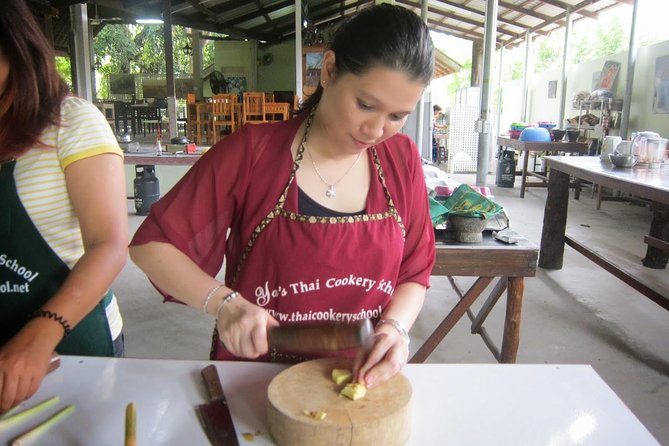
Ya Thai Cookery School is in Ao Nang, at 269 Tambon Ao Nang, and the experience lasts about three hours. You can choose a morning, afternoon, or early evening session when booking. The class begins with hotel pickup in Ao Nang, followed by a short introduction to the ingredients and the cooking plan.
This is not a quiet demonstration where you sit at a counter and take notes. You work with the ingredients yourself. The team shows you how to prepare each dish, then helps you through the steps. Instructors including Ya and Ying are warm, cheerful, and quick to lend a hand when your chopping, stirring, or spice balance needs help.
The small group size matters. A class of eight is still busy, especially when everyone chooses different dishes, but it gives you a fair chance to ask questions and get close to the cooking stations. Some sessions have only two or a few people, which can feel almost like a private lesson.
The pace is brisk. You may prepare three or four dishes, and every person can make different choices. That variety is fun, but it means the teachers must keep the group moving. If you want a long, slow lesson on every technique, this may feel hurried. If you want to cook a lot, eat well, and take home usable recipes, the pace works better.
Other trips people book in Krabi:
- Krabi: Hong Islands Day Trip by Speedboat with Lunch
★ 4.5 · 3,952 reviews - Krabi: Tiger Cave Temple, Emerald Pool and Hot Springs Tour
★ 4.8 · 3,616 reviews - Krabi: 7 Islands Sunset Tour with Buffet Dinner & Snorkeling
★ 4.3 · 2,916 reviews
Choosing fresh ingredients and building Thai flavor
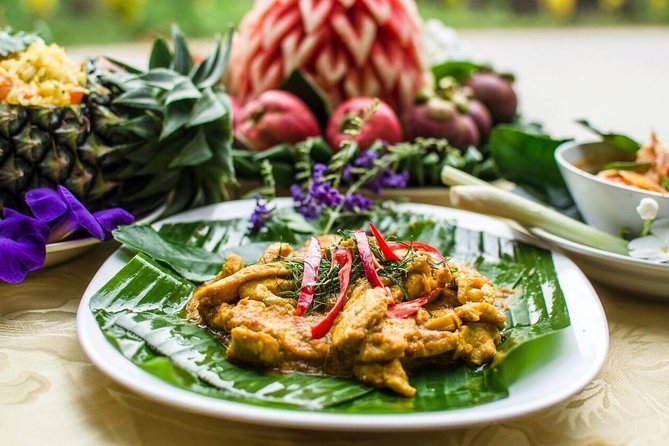
The class starts with the raw materials that make Thai cooking taste like Thai cooking. You learn about herbs, spices, vegetables, seafood, meat, and the balance of flavors used in the dishes. This opening helps you understand why Thai food is more than just heat from chilies.
A useful lesson is learning to taste and adjust. Thai dishes often bring together spicy, sour, salty, sweet, and fragrant notes in one bowl or wok. The instructors guide you toward the right balance rather than treating a recipe as a fixed formula.
You also get to adapt dishes to your own taste. If you prefer less spice, the food can be adjusted. Vegetarian versions are available for almost every dish, which is especially helpful if your group has different diets. Tell the team about your preference at the start so the cooking plan is clear.
The ingredients and equipment are included. That keeps the class simple for you: arrive ready to cook, rather than worrying about shopping for galangal, lemongrass, kaffir lime leaves, curry ingredients, or the right wok.
Grinding curry paste in a stone mortar
The curry-paste lesson is one of the most useful parts of the class. You grind herbs and spices in a stone mortar, learning how the ingredients become a paste that carries the flavor of the finished curry.
This is a basic Thai cooking skill, but it also gives you a better feel for the food. You see the texture change and smell the ingredients as they release their oils. The class also explains why the paste matters, rather than treating it as a minor step before the main cooking begins.
Your menu may include massaman curry, one of the milder and more fragrant Thai curries. Other possible choices include tom yum or another spicy prawn soup, stir-fried chicken, pad Thai, papaya salad, or pad krapow. The exact selection varies, so do not book with the expectation of making every dish listed.
You may also watch another person prepare a dish you did not choose. That is a useful trade-off. You get control over your own menu but still see more Thai recipes than you cook yourself.
Cooking your own pad Thai, curry, or soup
Once the preparation begins, the class becomes active and fairly fast. You chop, measure, stir-fry, pound, simmer, and taste. The instructors show the technique, then help you repeat it at your station.
The strongest feature here is personal choice. Each person can prepare different dishes, so a couple does not have to eat the same meal. One person might choose pad Thai and curry, while another picks soup and stir-fried chicken. This also works well for families and mixed groups.
The food is made from scratch, and you eat what you prepare. Several sessions produce enough food that people struggle to finish it all, particularly when each person makes multiple dishes. You can take food away, although that is less useful if your accommodation has no convenient way to store or reheat it.
Fruit is included, and some classes serve mango sticky rice prepared by the school. Water is provided. Beer, soft drinks, and other drinks may be available for an extra charge, so bring small cash if you want something beyond the included water.
The cooking itself is not difficult, but it can feel like a lot at once. The teachers sometimes step in and take over a task to keep the class on schedule. That helps prevent a dish from going wrong, but it also means you may not perform every step from start to finish.
Same base, a different sort of day:
- Krabi: Kayak Adventure through Ao Thalane Mangrove Forest
★ 4.6 · 2,024 reviews - Krabi: Elephant Bathing Session at Krabi Elephant Shelter
★ 4.9 · 2,021 reviews - Krabi 4 Island Sunset Snorkeling Cruise + Bioluminescent Swim
★ 5.0 · 1,861 reviews - Full-Day Phi Phi Islands Tour with Lunch from Krabi
★ 5.0 · 1,392 reviews
Sitting down to eat what you made
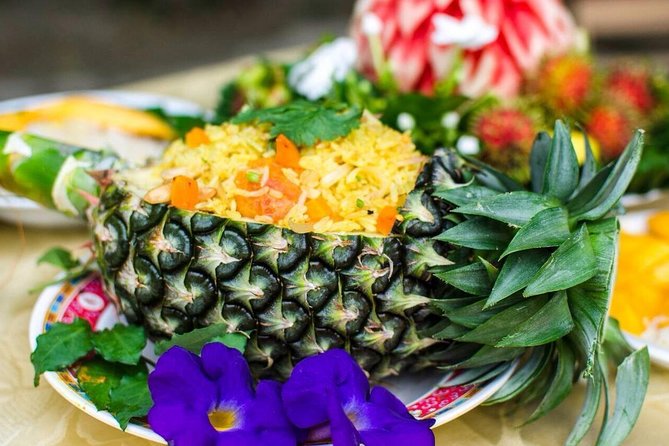
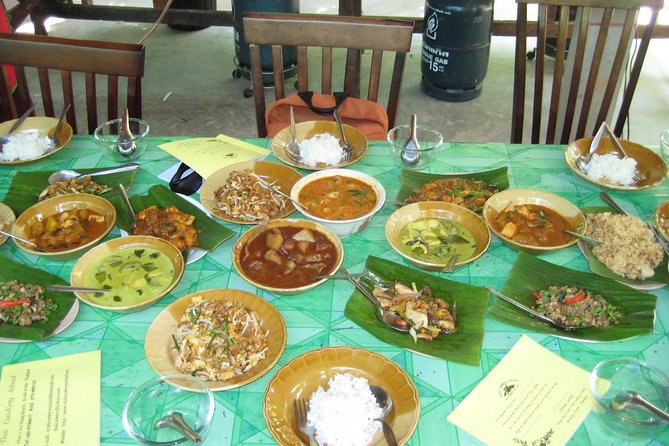
After the cooking, you sit with the other cooks and eat the results. This is a relaxed finish to a busy class. You get to compare dishes, talk about what you made, and see how different flavor choices affect the meal.
The amount of food is a major part of the value. This is not a small tasting menu. You prepare several dishes and then eat them as a proper meal. I would arrive hungry, especially for a morning or early evening session. Do not eat a large breakfast before the morning class unless you are happy to carry away some food.
The shared meal also adds a social side. The group size is small enough to meet the other people in the class without feeling like a large tour. Some sessions are made up of families, couples, or solo participants, and the cooking gives everyone an easy subject to talk about.
At the end, you receive recipes and instructions in English. This is important because the class moves quickly. You may not remember every quantity or order of steps, but the recipe book gives you a way to practice at home.
Hotel pickup, drop-off, and the extra transport costs
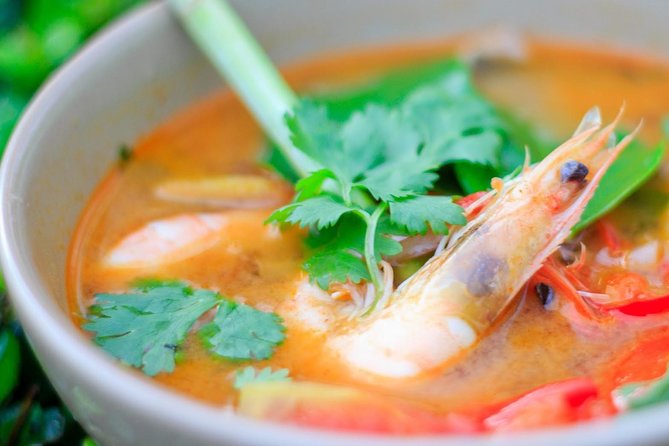
Round-trip hotel transfer is included for Ao Nang hotels. This is a useful benefit because it removes the need to arrange a separate taxi to the school and gives you a clear end point after the meal.
Pickup from Krabi Town costs 500 THB per group. Pickup from Klong Muang costs 500 THB, while Tubkaek Beach pickup costs 600 THB per group. Check the pickup charge before booking, since these costs are separate from the class price.
One transport detail deserves attention. A family of four found that the paid transfer used the back of a pickup truck. That may be a normal local arrangement, but it is worth confirming if you need a conventional enclosed vehicle or have concerns about comfort.
The stated meeting point is Ya’s Krabi Thai Cookery School in Ao Nang, and the activity ends back at the meeting point. The experience uses a mobile ticket, and booking confirmation is provided at the time of booking.
Is $45.99 a fair price?
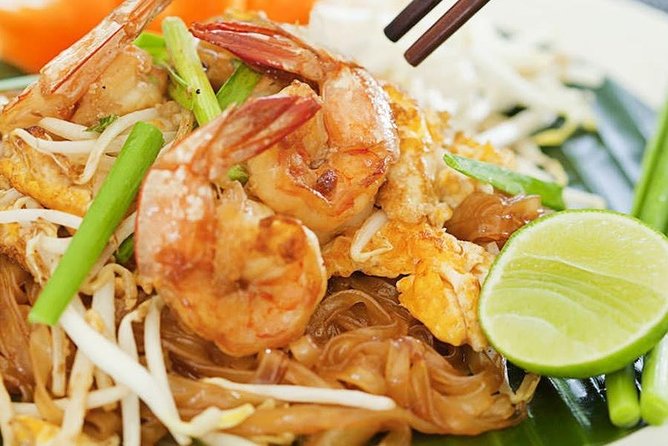
At $45.99 per person, the price is reasonable if you value both the meal and the instruction. You receive the class, ingredients, cooking equipment, recipe materials, food tasting, drinking water, and Ao Nang hotel transport. Since you prepare several dishes and eat them afterward, the cost covers more than a short cooking demonstration.
The value is strongest for people who want to cook Thai food at home. You learn a set of dishes, get a recipe book, and practice the techniques with an instructor nearby. The course may save you trial and error later, especially with curry paste and flavor balance.
It is less appealing if you only want a quick introduction or have little interest in cooking after your holiday. Three hours is a substantial block of time, and the meal can be large. You are paying for a hands-on activity, not simply a restaurant dinner.
The extra pickup fees can affect the total cost for people staying outside Ao Nang. If you are in Krabi Town, Klong Muang, or Tubkaek, compare the added transfer charge with the price of arranging your own transport.
What the high rating gets right
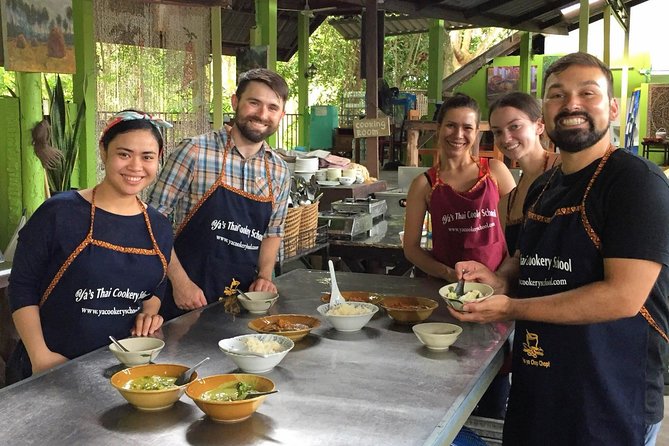
The experience has a 4.9 rating from 292 reviews, with 98 percent recommending it. The strongest praise is consistent: the staff are friendly, the food tastes good, the class is hands-on, and there is plenty to eat.
The teaching team receives special credit. Ya, Ying, and the other instructors are described as patient, helpful, organized, and able to work with people who have little or no cooking experience. Their friendly style helps make the fast pace manageable.
Fresh ingredients are another strong point. You handle the herbs, spices, vegetables, and other components instead of starting with a preassembled meal. That makes the food feel connected to the local cooking tradition and helps you recognize ingredients you may later see in Thai markets.
People also appreciate the ability to personalize dishes. You can choose what to make and adjust spice levels or use vegetarian alternatives. This makes the class a better fit for a group with different tastes than a fixed-menu lesson.
The drawbacks you should weigh first
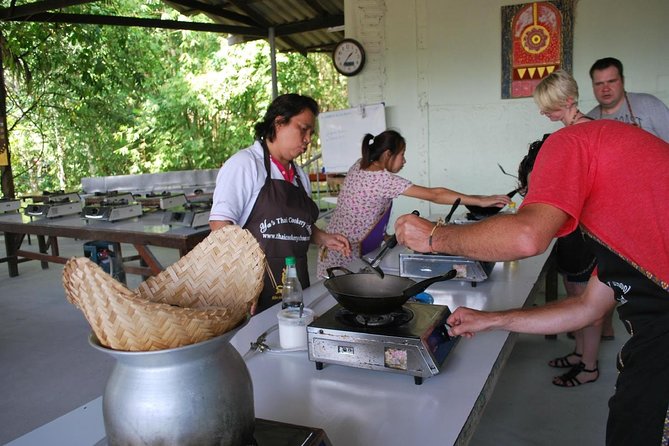
The main issue is speed. You may make several dishes in one session, so the instructors need to move from preparation to cooking without long pauses. If you want detailed explanations of every ingredient, you may feel the lesson does not spend enough time on each one.
You should also expect the teachers to help actively, sometimes by taking over a step. That keeps the food on track, but a serious home cook may prefer to make every part independently.
Food safety deserves a brief, fair note. One person reported severe illness the following day and was concerned about chicken sitting in the heat before cooking. The source of the illness was not confirmed, and the school said it uses fresh ingredients and proper handling procedures. I would not treat one report as proof of a problem, but normal care still makes sense: follow the instructors’ handling directions, eat food while it is fresh, and tell the team about allergies or dietary needs before cooking.
The amount of food can also be a drawback. Three or four dishes per person is generous, but it may be too much for some morning sessions. Plan to arrive hungry, and ask about taking leftovers with you if you know your accommodation can handle them.
Who should book Ya Thai Cookery School?
I would recommend it to first-time Thai cooks, couples, families, and small groups who want an activity with a meal built in. It is also a good choice for vegetarians because the menu can be adapted without making the whole experience difficult.
It suits people who want practical ideas to recreate pad Thai, curry, soup, salads, and stir-fries at home. The recipe book makes the class more useful after your return, especially if you practice the dishes soon while the techniques are still fresh.
You may want a different type of class if you prefer a slow, highly technical lesson. The pace is lively, the menu is broad, and the teachers may step in to keep things moving. That is a fair trade for making and eating so much food in three hours, but it is not the right format for every cook.
Should you book this class?
Book Ya Thai Cookery School if you want to do more than take photographs of Thai food. You will choose your dishes, work with fresh ingredients, grind curry paste, cook several recipes, and eat a full meal with a small group.
I especially like it for visitors staying in Ao Nang because the included pickup keeps the logistics easy and the price includes a generous amount of food. Just allow for a brisk pace, confirm any paid transfer details, state vegetarian needs in advance, and do not arrive full. For most people looking for a useful and social food activity in Krabi, this is a strong-value choice.
FAQ
How long does the Ya Thai Cookery School class last?
The class lasts approximately three hours, including ingredient preparation, cooking, and eating the dishes you make.
Where does the cooking class take place?
The class takes place at Ya’s Krabi Thai Cookery School, 269 Tambon Ao Nang, Mueang Krabi, Thailand. The activity ends back at the meeting point.
Is hotel pickup included?
Round-trip hotel transfer is included for Ao Nang hotels. Pickup from Krabi Town costs 500 THB per group, Klong Muang costs 500 THB per group, and Tubkaek Beach costs 600 THB per group.
Can I choose which Thai dishes to make?
Yes. The menu can include dishes such as massaman curry, pad Thai, spicy prawn soup, stir-fried chicken, papaya salad, and pad krapow. The exact dishes vary, and each person can choose from the available options.
Can the class accommodate vegetarian preferences?
Yes. The dishes can be adapted to vegetarian preferences. Tell the school about your needs when arranging the class.
How many people are in each class?
The activity has a maximum of eight participants. Some sessions may be smaller, including sessions with only two people.
Just added in Krabi
- 7 Islands sunset tour plus bioluminescent plankton + BBQ★ 4.3 · 21 reviews
- Krabi: 7 Islands Speedboat Magic to Twilight Treasures★ 4.4 · 8 reviews
- One Day Tour Khao Sok Cheow Lan Lake from Krabi★ 4.0 · 151 reviews
- Krabi: Sunset Yoga Balance Join-in Class★ 4.7 · 57 reviews
- Traditional Thai Cooking Class with Smart Cook★ 5.0 · 102 reviews
- Krabi: Khlong Nam Sai Lagoon with Kayaking & Optional ATV★ 4.2 · 136 reviews
- Krabi: Nature View Point Off-Road ATV Adventure★ 4.2 · 212 reviews
- Krabi: ATV Adventure Through Nature★ 4.4 · 72 reviews
Tours in Krabi, compared.

Krabi: Hong Islands Day Trip by Speedboat with Lunch
Read our review →
Krabi: Tiger Cave Temple, Emerald Pool and Hot Springs Tour
Read our review →
Krabi: 7 Islands Sunset Tour with Buffet Dinner & Snorkeling
Read our review →
Krabi: Kayak Adventure through Ao Thalane Mangrove Forest
Read our review →
Krabi: Elephant Bathing Session at Krabi Elephant Shelter
Read our review →
Krabi 4 Island Sunset Snorkeling Cruise + Bioluminescent Swim
Read our review →
Full-Day Phi Phi Islands Tour with Lunch from Krabi
Read our review →
Krabi: 7 Island Tour by Luxury Longtail Boat with Snorkeling
Read our review →Browse the lists this tour appears in