Reviewed · TOURS IN BANGKOK
Flower Market & Floral Art: Multilingual Private Tour [EN/others]
Bangkok’s best moments often happen away from its grandest sights, and this tour takes you into that quieter side of the city through flowers, river crossings, temples, and a Portuguese-Thai neighborhood. I especially like the hands-on lotus folding and the hour spent making Thai garlands with local artisans, rather than simply watching a guide explain them.
I also like the small-community focus, from the flower sellers at Pak Khlong Talat to Baan Kudi Chin Museum and the old Santa Cruz quarter. The main thing to consider is that the tour includes walking, temple visits, stairs, and a ferry ride, so it is not a good match if walking is difficult. One past booking also found the floral-art portion much smaller than expected, so it is wise to confirm the workshop details when you book.
Key points at a glance
- Pak Khlong Talat before the city fully wakes up: See Bangkok’s original and largest flower market, where local florists buy fresh blooms.
- Two different flower crafts: Fold cone-shaped and ball-shaped lotus flowers, then make a Thai jasmine garland with local artisans.
- A ferry ride with a purpose: Cross the river to Kalayanamitr Temple and take part in a traditional merit-making activity by feeding fish.
- Temples with local character: Visit Kalayanamitr Temple and an old Guanyin shrine, with Thai and Chinese religious influences.
- A Portuguese-Thai neighborhood: Walk to Santa Cruz Church and Baan Kudi Chin Museum for a look at local history, food, religion, and family traditions.
- Private pacing: Your group travels with its own guide, and the schedule can be adjusted more easily than on a large group outing.
Why flowers are the right way to see another side of Bangkok
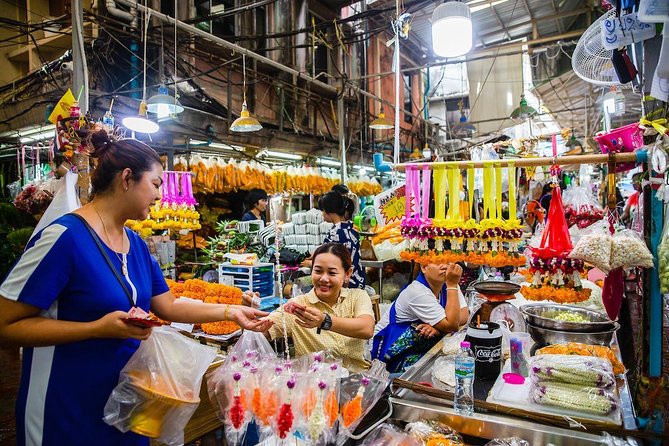
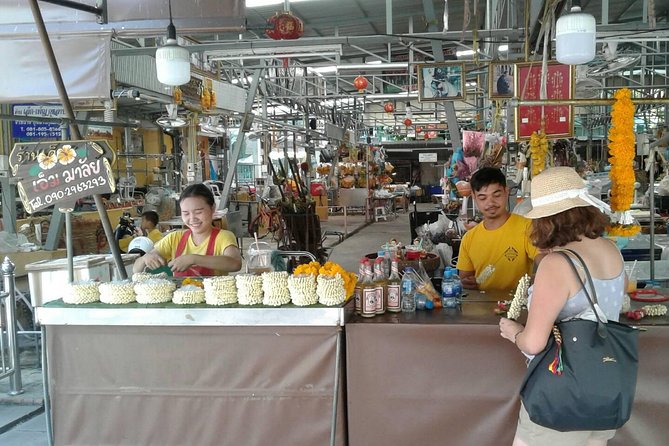
Pak Khlong Talat is not just a market for sightseeing. It is a working flower center, and the activity of buying and preparing flowers gives the visit a practical purpose. Local florists come here for fresh stock, so you get a look at part of Bangkok’s daily trade rather than a market arranged only for tourists.
The first market stop lasts about 30 minutes. That is enough time to see the rows of cut flowers and watch sellers handle their produce, though it is not long enough for an unhurried market wander. The exact atmosphere can change with the time of day, but the tour is designed to include the market as the opening chapter, not as a full morning of independent shopping.
You may notice jasmine, lotus flowers, and other blooms used for temple offerings and household shrines. This helps explain why flowers matter so much in Thai religious life. The tour then turns that observation into a craft lesson, which makes the market visit more meaningful.
Other trips people book in Bangkok:
- Bangkok: Damnoen Saduak Market and Maeklong Railway Market
★ 4.5 · 26,723 reviews - The Old Siam: Damnoen Saduak and Maeklong Railway Market
★ 4.5 · 10,992 reviews - From Bangkok: Ayutthaya Temples Guided Tour with Lunch
★ 4.7 · 10,535 reviews
Folding lotus flowers at Pak Khlong Talat
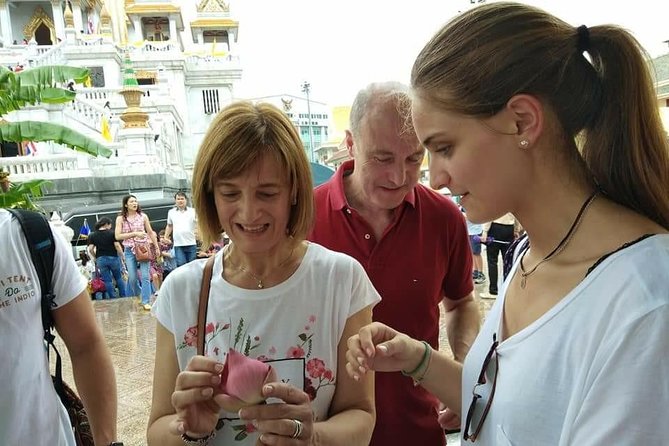
The first workshop is short, lasting about 20 minutes, and is led by a local lotus seller. You learn how to fold Bua Luang, a cone-shaped lotus, and Bua Chut, a ball-shaped lotus. These are simple descriptions, but the folding requires care. Lotus petals bruise easily, and the finished shape depends on how neatly you handle the flower.
You then take the folded lotuses to pay respect to a Buddha image. That small step matters. You are not making a souvenir merely to carry around for the rest of the day. You are learning how a flower becomes part of a religious gesture.
This is one of the tour’s most distinctive features. Many Bangkok sightseeing programs take you into temples and explain what you see. Here, you take part in a modest offering yourself. I like that the activity links the market, the craft, and the temple visit in a clear way.
The workshop is brief, so do not book this expecting a long flower-arranging class. If the craft side is your main reason for booking, ask how much time is planned for each activity. One booking from mid-April reported that the floral-art portion was much less substantial than expected, with a first-time guide leading the tour. That appears to have been an individual problem rather than the stated plan, but it is still a useful point to clarify in advance.
Crossing the river to Kalayanamitr Temple
The route continues by ferry to Wat Kalayanamitr Varamahavihara. The ferry is not just a way to get from one stop to another. It gives you a short view of Bangkok from the river and brings a change of pace after the market.
At the pier in front of the temple, you have about 10 minutes to feed fish. In Thai tradition, feeding fish is linked with making merit and wishing for a fertile, prosperous life. The stop is simple, but your guide can explain the custom and help you understand why it is part of the visit.
You then enter Kalayanamitr Temple for about 20 minutes. The temple brings together Thai and Chinese Buddhist influences, and its large golden Sam Por Kong Buddha image is the main focus. The visit is short, so you should expect an introduction and time for respect and photographs, not a long architectural study.
Temple etiquette still matters. Wear clothing that covers the shoulders and knees, and follow your guide’s instructions about footwear and behavior inside religious buildings. The tour includes several sacred places, so this is not a day for rushing in and out while treating each stop as a backdrop.
Making Thai jasmine garlands with local artisans
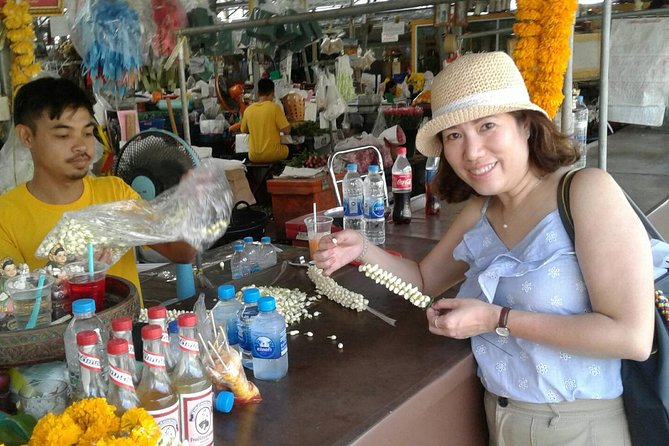
The longest stop is the one-hour floral handicraft workshop at Kalayanamitr Temple. This is where the tour earns much of its price. You work with Thai artisans from the Kudi Khow community and learn how to make jasmine garlands.
Garland-making is more involved than folding a single lotus. You handle many small flowers and learn how they are arranged into a form used for offerings, ceremonies, and respect. The slow, repetitive work gives you time to ask questions and notice the care that goes into something often seen only as a finished decoration.
The community connection also gives this workshop more weight. The artisans are hired through a social-enterprise approach intended to support skilled floral workers from the Kudi Khow area. You are not simply buying a packaged class from a hotel or craft studio. Your fee helps create paid work for people who already hold this local skill.
I would make this the deciding feature if you enjoy practical cultural activities. It suits families, couples, and anyone who prefers doing something with their hands. A family booking found that children aged nine and eleven enjoyed the experience, and the private format made it easier to adjust the pace.
Still, keep expectations sensible. The supplied information confirms a one-hour workshop, but it does not specify the exact garland style, the number of flowers used, or whether you take the finished garland with you. Ask your guide at the start so you know how the lesson will run.
Same base, a different sort of day:
- Bangkok: Train Market & Floating Market with Boat Ride
★ 4.7 · 9,547 reviews - Bangkok Canal Tour: 2-Hour Longtail Boat Ride
★ 4.5 · 5,909 reviews - Bangkok: Muay Thai Boxing Tickets at Rajadamnern Stadium
★ 4.9 · 4,740 reviews - Bangkok: White Orchid Chao Phraya Dinner Cruise free Beer
★ 4.4 · 4,573 reviews
Guanyin Shrine and the Chinese influence along the river
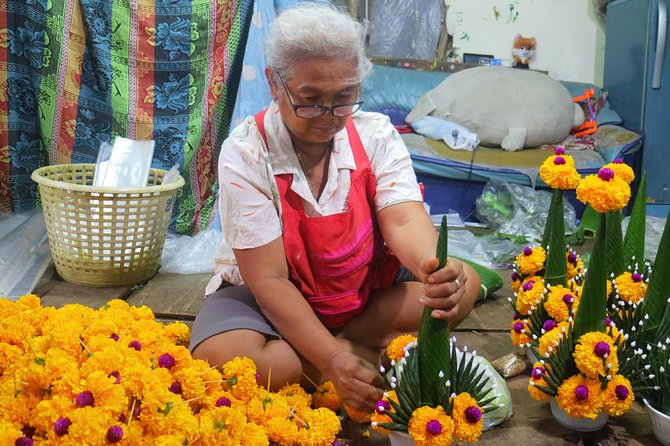
The next stop is San Chao Kian An Keng, a Guanyin shrine that dates back about 230 years to the reign of King Taksin. The visit lasts roughly 10 minutes.
The shrine’s Guanyin statue is described as different from the form commonly seen at other shrines. Your guide is the key here, since the stop is short and the significance may not be obvious if you are exploring alone.
This part of the route adds an important layer to the day. Bangkok is not divided into neat cultural boxes. Thai Buddhist practice, Chinese religious traditions, and Portuguese Catholic history appear within a relatively small area. The tour lets you see those connections without requiring a long trip across the city.
Walking through Kudi Chin to Santa Cruz Church
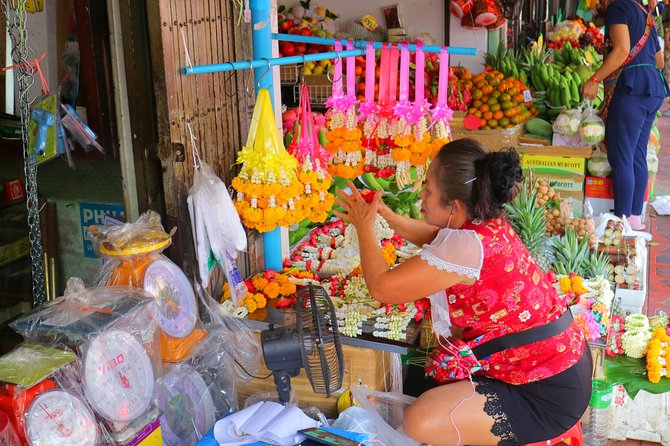
From Kalayanamitr Temple, you walk toward Santa Cruz Church in the Kudi Chin neighborhood. The church is tied to the Portuguese community in Thailand and was built after King Taksin granted land to Portuguese residents.
Santa Cruz Church is also known as Kudi Chin. The name can be confusing because Kudi Chin refers both to the wider community and the church area. Your guide can help place the church within the neighborhood’s story, rather than treating it as an isolated building.
The stop itself lasts about 10 minutes, so do not expect a full church tour or an extended service visit. Its value is in the setting and the connection to the community you are now walking through. After markets and temples, the church helps show how many cultures have shaped this part of Bangkok.
The walk is one reason the activity is not recommended for people with walking difficulty. The route includes market paths, temple grounds, a pier, a ferry transfer, and neighborhood streets. Even if each individual stretch is manageable, the four-hour outing involves frequent movement.
Baan Kudi Chin Museum and the final taste of the neighborhood
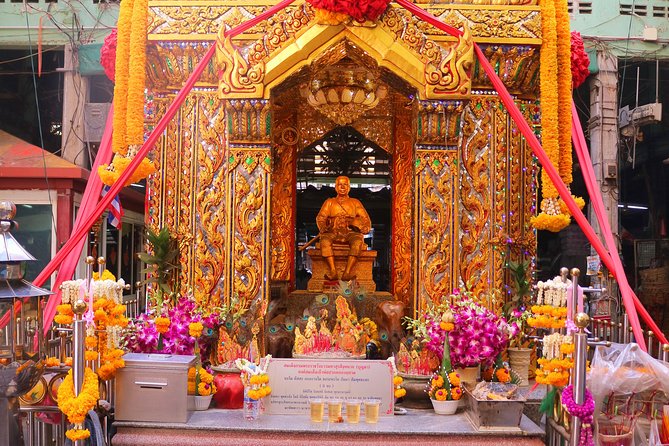
The final major stop is Baan Kudi Chin Museum, which introduces the history, religion, and food traditions of the Siam-Portuguese community. You also have a chance to try a Kudi Chin snack.
This is a useful ending because food makes the neighborhood’s history easier to grasp. Rather than leaving with only dates and names, you get a small taste of a living local tradition. The museum is a learning space, not a huge institution, so expect a focused visit lasting about 20 minutes.
Admission is included. The museum is closed on Mondays, an important detail when choosing your date. If it is closed, you should not assume the full advertised museum portion will be replaced with another attraction. Confirm the plan before booking a Monday tour.
The museum and church also help keep the tour from becoming a standard flower-market outing. You begin with commerce, move through Buddhist and Chinese religious sites, and finish with Portuguese heritage and food. That range makes the route feel connected rather than repetitive.
What the private format changes
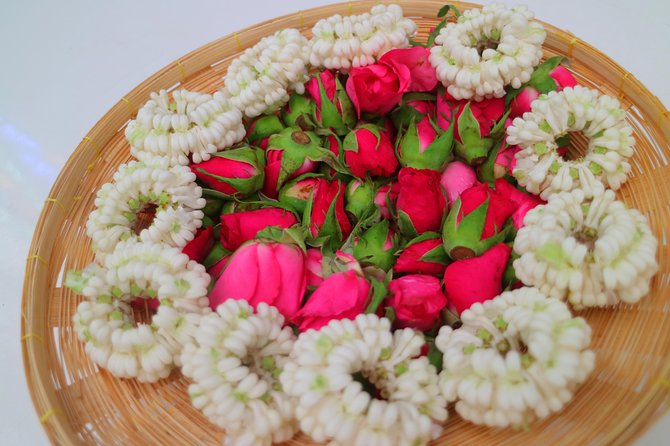
This is a private tour, so only your group participates. That matters most during the workshops. You can ask questions without competing with a busload of people, and a guide can give more attention to children or anyone who needs extra help with the flower work.
The private setup also makes the timing more flexible. One guide, Nina, was praised for adapting the day with stops for ice cream and cold drinks. Another guide, Nine, was described as lovely and well organized while leading the garland activity and neighborhood walk. Guide quality can vary, but these names show the kind of personal service the format is intended to provide.
The tour offers guides or interpreters in English, Spanish, Italian, German, French, and Chinese. Choose the language option carefully when booking. The guide’s ability to explain religious customs and craft techniques is a major part of the experience.
Private does not mean completely unstructured. The listed meeting point is Rajini School at 444 Thanon Maha Rat, near the river, and the activity ends back at the meeting point. Pickup is offered, and a private air-conditioned vehicle is included for hotel transfer, but you should confirm the exact pickup arrangement rather than assume door-to-door service in every case.
Is $95.17 a fair price?
At $95.17 per person, this is not a bargain-priced Bangkok walk. It can still be good value if you want more than a market visit.
The fee covers a private guide or interpreter, the lotus lesson, the one-hour jasmine-garland workshop, Baan Kudi Chin Museum admission, travel accident insurance, and private air-conditioned hotel transfer. It also includes the ferry and temple-related portions described in the route. Lunch is not included, so plan to buy your own meal if your timing requires one.
You are paying for personal attention and for access to activities that would be hard to arrange independently. A self-guided visit to Pak Khlong Talat and the temples would cost less, but you would need to organize the ferry, find the artisans, understand the religious customs, and locate the museum yourself.
The price makes the most sense for a small private group that values convenience and cultural explanation. For a solo participant, it is a bigger spend. For a family or group splitting the value of a private guide and vehicle, it becomes easier to justify.
Timing, comfort, and practical concerns
You can choose a morning or afternoon departure. The market may feel more active at certain times, but the supplied details do not guarantee a particular level of market activity for every departure. Ask which option gives you the best chance to see the market at its working peak.
The full experience lasts about four hours. It includes walking, a ferry ride, temple visits, workshops, and a museum. Wear comfortable shoes and clothing suitable for religious sites. Bangkok heat can make even short walks feel long, so bring water and take advantage of the chance to stop for a cold drink.
Service animals are allowed, and most people can participate. The tour is not recommended for people with walking difficulty. The listing does not promise wheelchair access, and the ferry, temple grounds, and neighborhood walking route may present problems.
Free cancellation is available up to 24 hours before the start time for a full refund. Cancellations or changes made less than 24 hours in advance are not accepted for a refund. The museum closure on Monday and the language choice are the two details I would check before finalizing plans.
Who should book this flower and temple tour?
I would recommend it to you if you like local craft, small museums, religious customs, and neighborhoods that are easy to miss on a first Bangkok visit. It is especially suitable for families and couples who want a private pace and a clear activity built into the sightseeing.
It is also a good choice if you have already seen Bangkok’s major temples and want a different route. The flower market, ferry, garland workshop, Guanyin shrine, Portuguese church, and museum create a varied half-day without sending you far from the river.
I would hesitate if you want a long market visit, a formal flower-arranging course, or a relaxed day with very little walking. The market stop is only about 30 minutes, the lotus lesson is about 20 minutes, and the museum and church visits are brief. This is a sampler with a strong workshop at its center, not a full-day study of flowers or architecture.
Book it if you value direct contact with local artisans and want your guide to explain the links between flowers, faith, and community life. Before paying, confirm your language, pickup details, workshop expectations, and the museum’s opening day. Those checks will help ensure the experience matches what you want.
FAQ
How long does the tour last?
The tour lasts approximately four hours.
Is the tour private?
Yes. Only your group participates in the activity.
Which languages are available?
Licensed guides or interpreters are available in English, Spanish, Italian, German, French, and Chinese, depending on the option purchased.
What flower activities are included?
You learn to fold Bua Luang and Bua Chut lotus flowers with a local lotus seller. You also take part in a one-hour Thai jasmine-garland workshop with local artisans.
Is transportation included?
A private air-conditioned vehicle for hotel transfer is included. The route also includes a ferry ride to Kalayanamitr Temple. The stated meeting point is Rajini School, and the tour ends back at the meeting point.
Is Baan Kudi Chin Museum open every day?
No. The museum is closed on Mondays. Admission is included when the museum visit takes place.
Can I cancel for a full refund?
Yes, if you cancel at least 24 hours before the experience start time. Cancellations or changes made less than 24 hours before the start time are not accepted for a refund.
Just added in Bangkok
- re:leaf spa and massage★ 4.0 · 10 reviews
- Wonderful Pearl Dinner Cruise★ 3.5 · 27 reviews
- 3-Hour Bangkok Walking Tour: Wat Pho and Wat Arun★ 5.0 · 102 reviews
- Yoga in the Park Thailand★ 5.0 · 12 reviews
- Visit Wat Pho and Wat Arun with Local Expert★ 4.0 · 14 reviews
- White Orchid Sunset Dinner Cruise Calypso Ladyboy Cabaret Show★ 4.0 · 10 reviews
- Morning Buddhist Almsgiving, Grand Palace and Flower Market Tour in Bangkok★ 3.5 · 9 reviews
- Miracle Bangkok Airport Lounges – Relax Before You Fly★ 3.0 · 32 reviews
Tours in Bangkok, compared.
Bangkok: Damnoen Saduak Market and Maeklong Railway Market
Read our review →
The Old Siam: Damnoen Saduak and Maeklong Railway Market
Read our review →
From Bangkok: Ayutthaya Temples Guided Tour with Lunch
Read our review →
Bangkok: Train Market & Floating Market with Boat Ride
Read our review →
Bangkok Canal Tour: 2-Hour Longtail Boat Ride
Read our review →
Bangkok: Muay Thai Boxing Tickets at Rajadamnern Stadium
Read our review →
Bangkok: White Orchid Chao Phraya Dinner Cruise free Beer
Read our review →