
Reviewed · AYUTTHAYA DAY TRIPS
Bangkok and Ayutthaya 3 Days
The clever part of this three-day trip is its range. You move from Bangkok’s royal compounds and riverside temples to a train running through a market, then on to Ayutthaya’s ancient brick ruins. The route packs in Thailand’s big sights without making you arrange separate hotels, drivers, tickets, and day trips.
I like the private format, since your group gets its own English-speaking guide and air-conditioned vehicle. I also like the practical care built into the days, including two breakfasts, lunch, hotel pickup, and entrance fees. A guide such as Giftsy, working with a driver such as Mr. Sunshine, can add a warm, personal touch.
The main caution is the pace. You get about an hour at each listed stop, and the second and third days involve substantial driving outside Bangkok. If you prefer lingering in one temple or market, this will feel brisk. Spanish and German guiding also costs extra, and one booking experienced a problem receiving a promised Spanish guide.
Key points to know before booking
- Royal Bangkok in one morning: The Grand Palace, Wat Phra Kaew, and Wat Arun give you a strong introduction to Thailand’s architecture and religious life.
- Two unusual markets: Maeklong Railway Market brings a working railway through the middle of the stalls, while Damnoen Saduak offers an optional one-hour long-tail boat ride.
- Ayutthaya gets a full day: Bang Pa-in and four major temple sites provide more than a quick photo stop in the old capital.
- Private transport matters: Your group travels in an air-conditioned vehicle, with a driver and guide handling the route.
- The price covers major basics: At $389 per person, you receive two hotel nights, two breakfasts, lunch, admissions, and transport.
- The schedule favors coverage: Most stops last about one hour, so you will see a lot but will not have much time for slow exploration.
Why this three-day route works
Bangkok can be tiring to organize. Distances are long, traffic can be slow, and the city’s best sights are spread across different areas. This trip solves much of that problem by putting the major temple visits first, the western market excursion second, and the Ayutthaya visit third.
I like that the order has a clear travel logic. Day one stays in Bangkok. Day two heads toward Samut Songkhram and the floating market area. Day three goes north to the former capital of Ayutthaya. You do not keep changing hotels, and your two-night stay is in central Bangkok.
The private setup is the biggest practical advantage. Only your group participates, so the guide can explain things at your pace and help with ordinary needs such as food, bathrooms, and breaks. The vehicle is air-conditioned, an important comfort in Thailand’s heat. Pickup is offered, although the published start time is early, at 7:30 am.
The $389 per-person price needs to be judged as a package rather than as three sightseeing days alone. It includes two nights in a 3 to 4-star central Bangkok hotel, two breakfasts, one lunch, all listed sightseeing admission fees, an air-conditioned vehicle, and an English-speaking guide. Dinner and drinks are extra, and Spanish or German guiding carries a surcharge.
For a private three-day arrangement, that can be useful value if you want convenience. It is less attractive if you already have a Bangkok hotel, prefer public transport, or want to build your own day trips. You are paying for time saved and for someone else to manage the moving parts.
More ruin-hunting days from Bangkok:
- From Bangkok: Ayutthaya Temples Guided Tour with Lunch
★ 4.7 · 10,535 reviews - From Bangkok: Ayutthaya Historical Park Guided Day Trip
★ 4.6 · 3,020 reviews - Ayutthaya Temples and River Cruise from Bangkok
★ 4.0 · 1,692 reviews
Day one: Bangkok’s royal core and the Chao Phraya
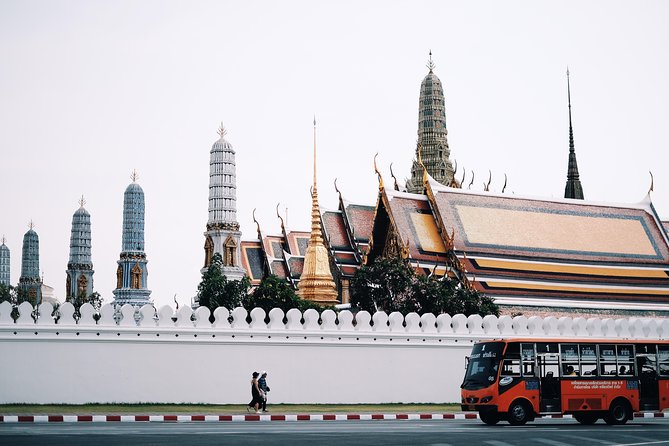
The first morning begins at the Grand Palace, with a 7:30 am start. The palace was built in 1782 and served as the home of Thailand’s kings for 150 years. Give yourself time to take in the sheer amount of decoration: bright tilework, gilded surfaces, guardian figures, and formal courtyards.
You have about one hour here, with admission included. That is enough for a strong first look, but not enough for every corner. Listen closely to the guide, since the palace complex can feel like a blur of buildings without context. Comfortable shoes and modest clothing are sensible choices for the day’s religious sites.
Next comes Wat Phra Kaew, the Temple of the Emerald Buddha, located in Bangkok’s historic center within the Grand Palace area. This is one of Thailand’s most important Buddhist temples. The Emerald Buddha itself is small compared with the surrounding buildings, so the meaning and setting matter as much as the statue’s size.
The one-hour visit works well if you want an introduction rather than a slow study. Your guide can help separate the royal functions of the palace from the religious role of Wat Phra Kaew. That distinction makes the complex easier to understand.
After the palace area, the route crosses to Wat Arun on the west bank of the Chao Phraya River. Known locally as Wat Chaeng, it is one of Bangkok’s most recognizable riverside temples. Its tall central prang and detailed ceramic decoration give it a different feel from the formal compounds visited earlier.
Wat Arun is a good counterpoint to the Grand Palace. The first sites feel enclosed and ceremonial, while Wat Arun connects the city to its river. You have about an hour and admission is included. The exact order and crossing arrangements are handled by the tour, which is helpful in a city where a short distance on the map can take time to cover.
The final stop is Pak Khlong Talat, Bangkok’s main flower market. This is not a grand monument. It is a working market with fresh flowers and related goods, including roses and other popular blooms. I like its inclusion because it adds ordinary city life to a morning otherwise focused on royal and religious buildings.
The market visit also gives the day a change of rhythm. You are not just moving from one ceremonial site to another. Still, an hour is a quick visit, and the experience will depend on how active the market is when you arrive. Admission is free.
Day two: A railway market and a floating market
Day two leaves Bangkok for Maeklong Railway Market, also called Hoop Rom Market. The market is known for its unusual layout, with stalls set directly along an active railway line. The Thai name, Talad Rom Hub, refers to the way market awnings and goods are pulled back when the train passes.
This is the kind of stop that is memorable because it is practical rather than polished. You see a market adapting to a railway instead of a staged attraction built only for sightseeing. Your visit lasts about one hour and there is no admission charge.
The supplied details do not give a train timetable, so you should not assume the train will pass during your exact visit. The market itself is still the reason to go, but the timing of the train is an important consideration. Your guide can help explain what is happening and keep the stop organized.
The next stop is Damnoen Saduak Floating Market, known for colorful handicrafts and fresh produce sold along the waterways. You have about an hour here, and there is the possibility of taking a one-hour long-tail boat ride through the market.
The boat ride is an extra point to clarify before you go, since the description says it is possible but does not state that it is included in the price. Ask your tour provider how the ride is arranged and what it costs before the day begins. If you want the canal experience, this is the place where that choice matters.
Damnoen Saduak is more visual and tourist-focused than Pak Khlong Talat, so I would treat it as a colorful slice of market culture rather than a quiet look at daily shopping. The combination with Maeklong works well: one market is defined by a train, the other by boats and canals.
The second day is also the most dependent on road conditions. You leave Bangkok and visit two destinations outside the city before returning to your hotel. The air-conditioned vehicle makes a real difference, and having a private driver means you are not trying to coordinate buses or taxis between distant stops.
Day three: Bang Pa-in and the ruins of Ayutthaya
The final day begins with a drive to Bang Pa-in, the summer palace of the Thai royal family. The palace was built during the reign of King Rama IV and mixes oriental and European design influences. Its one-hour visit gives you a bridge between modern Thai royal history and the older capital that follows.
Bang Pa-in is a useful addition because Ayutthaya is not only a collection of temple ruins. The palace shows how Thai royal taste changed over time, while the later sites reveal the older capital’s religious and political world. Admission to Bang Pa-in is listed as free.
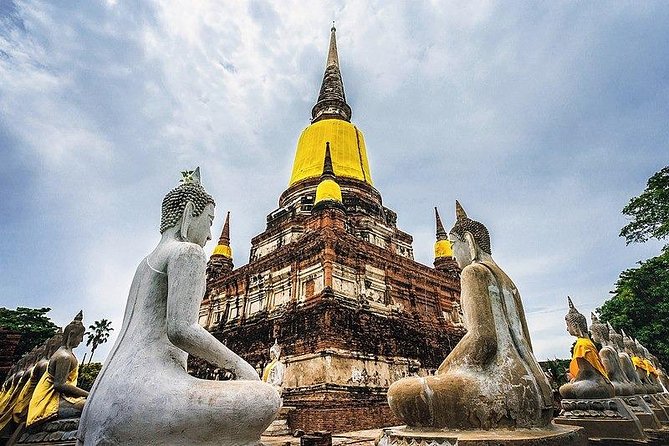
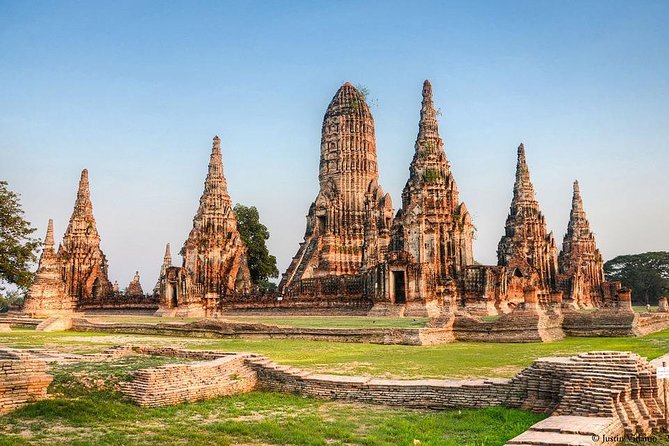
The next stop, Wat Chaiwatthanaram, is one of Ayutthaya’s most striking temple compounds. Its design was influenced by Angkor temples in Cambodia, with a large central Khmer-style prang surrounded by smaller structures.
You have about an hour here, and admission is included. The layout is especially helpful for understanding how grand the old capital once aimed to look. Take time to notice the relationship between the central prang and the surrounding towers, rather than treating the visit as a quick photograph.
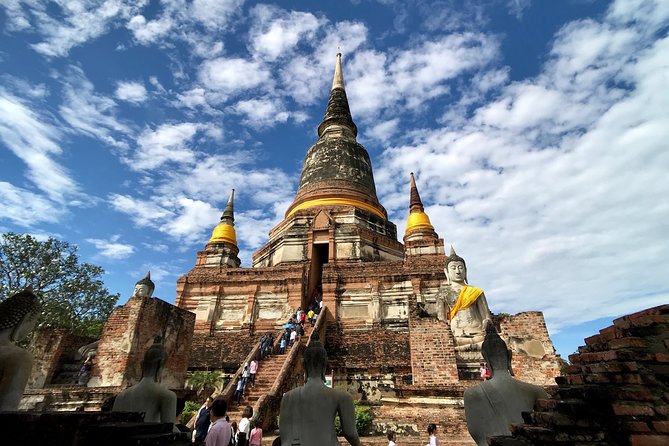
Wat Phra Si Sanphet follows. Its three distinctive chedis are among Ayutthaya’s best-known sights. This was the holiest temple within the old royal palace until the city was destroyed, so it is central to understanding Ayutthaya’s former importance.
The hour-long stop is enough to see the main arrangement, but the site is open and exposed. The heat can make a slow visit harder, so carry water and use the breaks arranged by your guide. Entrance is included.
Next door is Wihan Phra Mongkhon Bophit, home to one of Thailand’s largest bronze seated Buddha images. Its location beside Wat Phra Si Sanphet makes the two visits easy to connect. The Buddha offers a change from the brick chedis and prangs, with the focus placed on a single large sacred image.
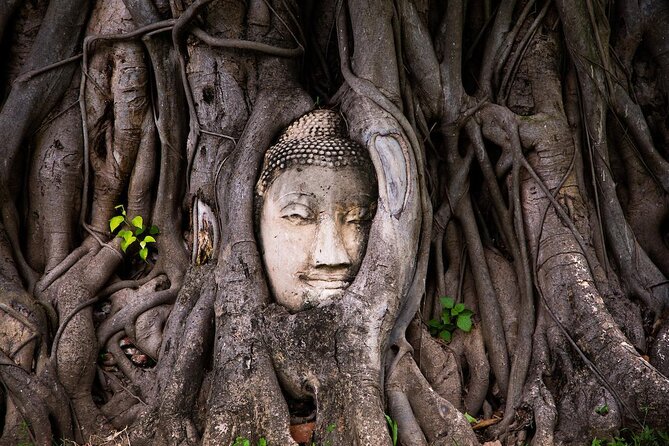
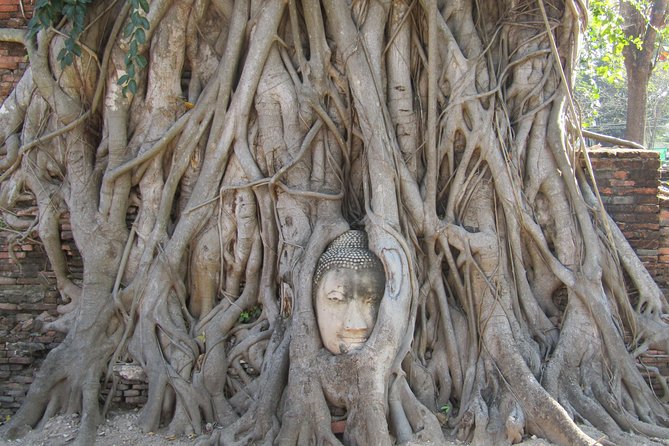
The final stop is Wat Mahathat, where a Buddha head is entwined in the roots of a tree. It is one of Thailand’s most recognizable images, but the site deserves more than a quick photograph. Look around at the surrounding ruins and consider how the tree and stone have become linked over time.
Wat Mahathat is another one-hour visit with admission included. By this point, you will have seen several temple styles in one day. The guide’s explanations are valuable here, since the ruins can otherwise blur together.
A few more things to do in Bangkok worth a look
- Angkor Wat 3-Day Tour from Bangkok
★ 4.5 · 58 reviews - Muay Thai Vacation Package (3 Days, 3 Nights: Training & Room Stay)
★ 5.0 · 18 reviews - Open Water Course – Become certified diver in 3 days
★ 5.0 · 1,137 reviews - Padi open water diver course, become a diver in 3 days
★ 5.0 · 113 reviews
What the private guide and driver add
A private guide changes the feel of this trip more than the hotel category does. You are not waiting for a large group to gather, and you can ask for clarification when the royal sites, Buddhist practices, or ruined temples become confusing.
An English-speaking guide is included. The experience may be especially personable with a guide such as Giftsy, whose warm explanations and sense of fun were praised, alongside a driver named Mr. Sunshine. Those names should not be treated as guaranteed assignments, but they show the kind of guide-driver pairing you might receive.
The care described for food, bathrooms, and air conditioning is worth noting. These are small details until you spend a full day in the heat, then they become the difference between enjoying the ruins and simply enduring them.
Language is the one clear weak point. English is included, while Spanish and German guides cost extra. One Spanish-speaking booking did not receive the promised language service, so confirm the requested language directly before departure if anyone in your group does not speak English.
Who should book this experience?
I would choose this tour if you have only three days, want the major sights covered, and prefer a private arrangement over independent planning. It suits first-time visitors who want Bangkok’s essential temples plus two of the country’s most famous excursions.
It also works well for friends or families who value a dedicated vehicle and hotel coordination. Most travelers can participate, and service animals are allowed. The published information does not promise a specific room type or hotel name, so ask for the property details if accommodation quality is a major concern.
I would hesitate if your main goal is slow cultural travel. The schedule gives most stops one hour, and there is no dinner included. You will also spend part of days two and three on the road.
Free cancellation is available up to 24 hours before the start time. Within 24 hours, changes and refunds are not accepted. The tour also depends on good weather and a minimum number of participants, although a private booking means only your own group takes part once it operates.
Should you book the Bangkok and Ayutthaya trip?
Book it if you want a well-covered first look at Bangkok and central Thailand with transport, admissions, hotel nights, and a guide handled together. The strongest features are the private format, the useful range of sights, and the comfort of an air-conditioned vehicle.
Think twice if you already have a central hotel or want to spend half a day at one temple. At $389 per person, the value comes from convenience and coverage, not from luxury or lots of free time. For a short visit, that trade can make sense. For a slower trip, choose fewer destinations and explore them independently.
FAQ
How long is the tour?
The experience lasts approximately three days and includes two nights in a central Bangkok hotel.
What time does the tour start?
The published start time is 7:30 am.
Is hotel accommodation included?
Yes. The package includes accommodation at a 3 to 4-star hotel in Bangkok city center for two nights.
Are meals included?
Two breakfasts and one lunch are included. Dinner and beverages during meals are not included.
Is transportation provided?
Yes. You travel in an air-conditioned vehicle, and pickup is offered.
Is the tour private?
Yes. Only your group participates in the private tour or activity.
Which language is the guide?
An English-speaking guide is included. Spanish and German guiding is available for an additional charge.
Are entrance fees included?
Yes. All sightseeing entrance fees listed for the tour are included.
Just added in Bangkok
- re:leaf spa and massage★ 4.0 · 10 reviews
- Wonderful Pearl Dinner Cruise★ 3.5 · 27 reviews
- 3-Hour Bangkok Walking Tour: Wat Pho and Wat Arun★ 5.0 · 102 reviews
- Yoga in the Park Thailand★ 5.0 · 12 reviews
- Visit Wat Pho and Wat Arun with Local Expert★ 4.0 · 14 reviews
- White Orchid Sunset Dinner Cruise Calypso Ladyboy Cabaret Show★ 4.0 · 10 reviews
- Visit temples in and around Bangkok with a former monk of 10 years★ 5.0 · 30 reviews
- Morning Buddhist Almsgiving, Grand Palace and Flower Market Tour in Bangkok★ 3.5 · 9 reviews
Ayutthaya Day Trips, compared.
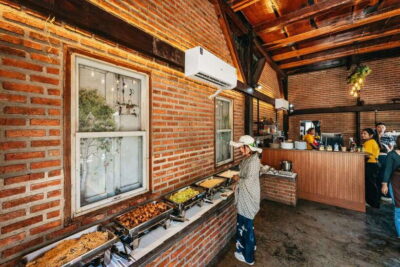
From Bangkok: Ayutthaya Temples Guided Tour with Lunch
Read our review →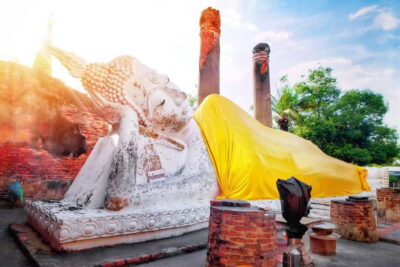
From Bangkok: Ayutthaya & Ayothaya Floating Market Day Trip
Read our review →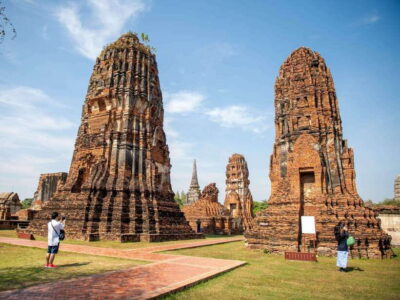
From Bangkok: Ayutthaya Historical Park Guided Day Trip
Read our review →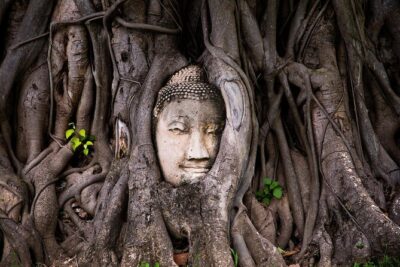
Ayutthaya Temples and River Cruise from Bangkok
Read our review →
UNESCO’s Ayutthaya Historical Park: Full-Day Tour from Bangkok
Read our review →
The Old Siam: Ayutthaya Temples Small Group Tour with Lunch
Read our review →
Lopburi Monkey Temple & Ayutthaya Old City Tour From Bangkok
Read our review →
Small Group Tour to Ayutthaya Temples from Bangkok with Lunch
Read our review →Browse the lists this tour appears in