
Reviewed · TOURS IN BANGKOK
Bangkok: Riverside E-Scooter Adventure with StreetFood Snack
Bangkok opens up in a different way from an e-scooter. You slip through narrow lanes, cross the Chao Phraya twice, stop for fruit at a local market, and reach corners of Thonburi, Chinatown, and Kudeejeen that are easy to miss on foot. The three-hour route covers far more ground than a walking tour without turning into a bus-window sightseeing trip.
I especially like the mix of food and local neighborhoods, from Thai fruit and market snacks to Chinatown dishes and Kudeejeen muffins. I also like the small groups, with no more than eight people, and the care guides such as Pong, Jobe, Phillip, and Tony take with riders who are new to scooters.
The main consideration is that you must be comfortable riding in Bangkok traffic and narrow lanes. The guides lead the way and provide a briefing, but this is still an active tour, not a relaxed ride where you simply sit back.
Key points to know before booking
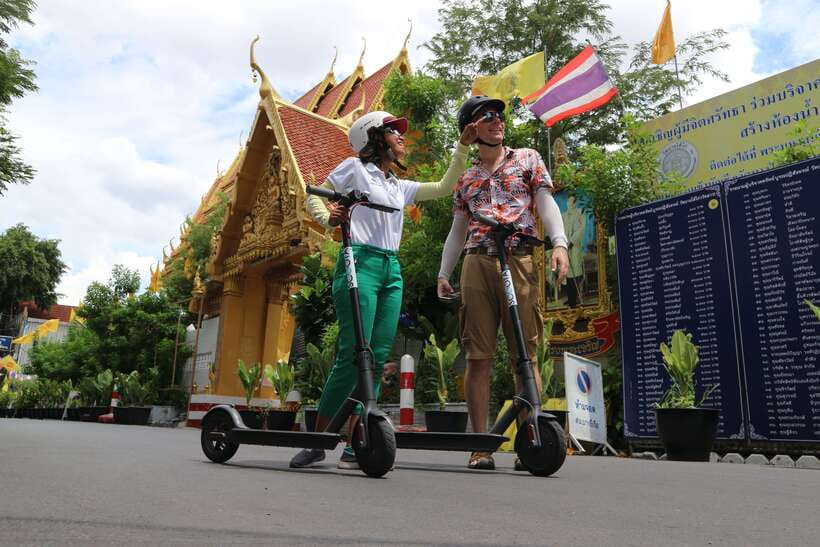
- Ride beyond the usual tourist circuit: The route links Thonburi back lanes, Chinatown, Talat Noi, local markets, temples, and the Kudeejeen Portuguese quarter.
- Food is part of the tour: Expect Thai fruit, market food, Chinatown snacks, traditional dishes, and local muffins, with food included in the price.
- Small groups help: The maximum group size is eight, giving guides room to help with riding, answer questions, and adjust the pace.
- Two river crossings add variety: You cross the Chao Phraya by the Memorial Bridge and later by local ferry.
- The temple stop has a memorable twist: At Wat Prayoon, you can feed the friendly turtles near the temple.
- Check the physical rules: Riders must be at least 14 years old, 140 centimeters tall, and no more than 120 kilograms.
Why an e-scooter works well in Bangkok
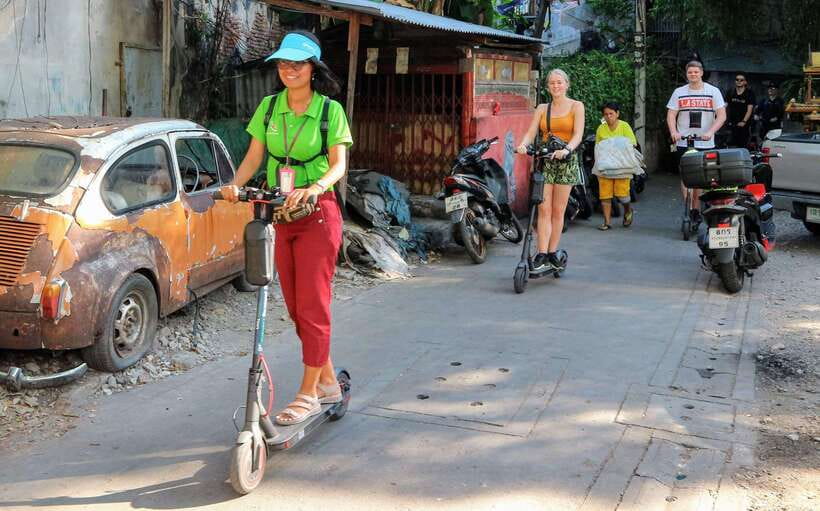
Bangkok is too spread out for a short walking tour to show you much beyond one neighborhood. An e-scooter gives you a practical middle ground. You cover more distance than you would on foot, yet you still move slowly enough to notice homes, shrines, food stalls, temple walls, and everyday street life.
The scooter also helps with Bangkok’s heat. Several people found the moving air welcome during hot afternoons, and the guide provided cold drinks and water when needed. You should still expect heat, humidity, and some exertion, but the ride is less tiring than walking between all these districts.
You receive a short demonstration before setting off. That matters if you have never used an electric scooter. Guides including Kriss and Phillip have helped first-time riders settle in, while the group format allows the guide to keep an eye on everyone.
Still, do not treat the scooter as a toy. You will ride through narrow passages and city streets, sometimes near other traffic. The guide leads the route and focuses on safety, but you need basic balance, quick reactions, and enough confidence to control the scooter.
A few more things to do in Bangkok worth a look
- Bangkok: E-Scooter Night Tour with Local Street Food
★ 4.8 · 488 reviews - Bangkok: Bang Kachao E-Scooter Jungle Tour
★ 4.8 · 154 reviews - Bangkok at Night by Electric Scooter
★ 5.0 · 53 reviews
Starting in Thonburi near Itsaraphap MRT
The tour begins at Jamming Thailand Bangkok, on the Thonburi side of the river. The easiest way to reach the office is the MRT to Itsaraphap Station. Use Exit 2, walk toward Soi 23, and continue past Achcha Coffee. Look for the office with bikes outside.
Give yourself plenty of time. From central Bangkok hotels, the trip can take up to an hour during rush hour. If you use Grab, search for Jamming Thailand Tours rather than relying on the street address. A taxi driver can be shown the Thai directions provided by the operator.
This starting point is useful because the tour begins away from the most crowded visitor areas. You are already close to temples, local lanes, and the first riverside sights instead of spending the opening part of the tour in a vehicle getting across town.
After the scooter briefing, the guide gives a short introduction to Bangkok and its food culture. This opening talk helps you understand the stops ahead, especially the way Thai, Chinese, and Portuguese influences appear in the food and neighborhoods.
Wat Kalayanamitr and the old Thonburi lanes
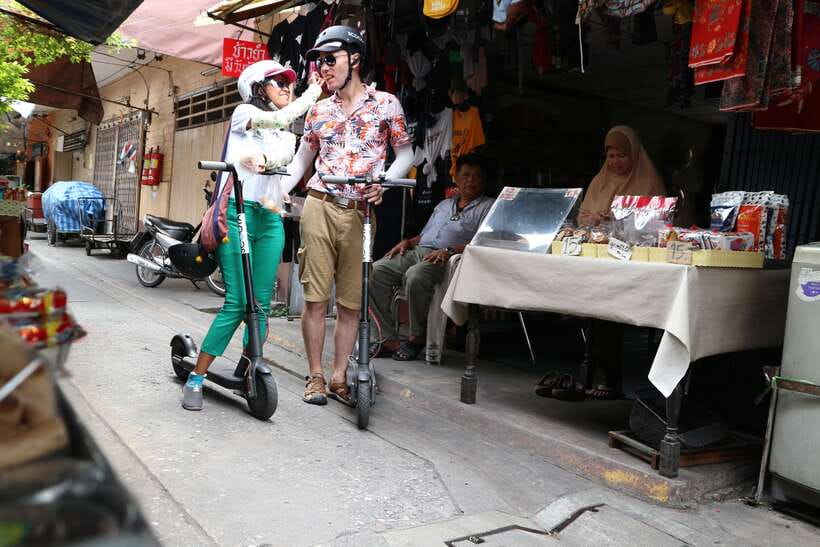
Wat Kalayanamitr Varamahavihara is one of the first major stops. You have around 30 minutes for a guided visit and sightseeing. The temple gives the tour a calm cultural start before the route moves into markets and tighter back streets.
Your guide explains Buddhist traditions and local customs along the way. Guides such as Tommy and Jobe have been praised for answering questions clearly, while Pong has been especially popular for his friendly, lively approach and strong English.
The ride through Thonburi is one of the most useful parts of the experience. Instead of viewing Bangkok only through grand temples and shopping streets, you pass through narrow lanes where the city feels more ordinary and personal. The route is designed to show old Bangkok and present-day life side by side.
Some of the lanes are very tight. That is part of the appeal, but it can also make the riding feel demanding if you are nervous on a scooter. Keep your attention on the guide and leave space between riders.
Kudeejeen and Santa Cruz Church
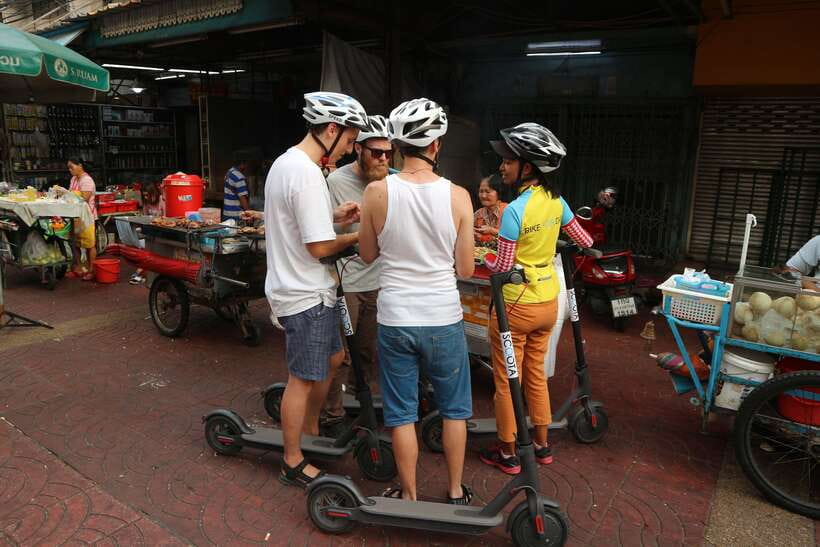
The route continues to Soi Kudeejeen, a neighborhood associated with the Portuguese community. You stop for photos, a guided visit, and local snacks for about 20 minutes.
Here, the guide explains how Portuguese colonizers influenced Thai food. You also try muffins made by a local factory. This is a small food stop, but it gives the tour a point of difference. Many Bangkok food outings concentrate on Thai and Chinese flavors, while Kudeejeen shows another strand of the city’s food story.
Santa Cruz Church is nearby, with about 10 minutes for photos and sightseeing. The church adds another layer to the neighborhood, which already feels different from the major temple compounds and crowded market lanes elsewhere on the route.
I like these stops because they connect food with place. You are not simply handed a snack and told its name. You see the neighborhood where that food tradition belongs and hear how outside cultures became part of Bangkok life.
Same base, a different sort of day:
- Bangkok: Damnoen Saduak Market and Maeklong Railway Market
★ 4.5 · 26,723 reviews - The Old Siam: Damnoen Saduak and Maeklong Railway Market
★ 4.5 · 10,992 reviews - From Bangkok: Ayutthaya Temples Guided Tour with Lunch
★ 4.7 · 10,535 reviews - Bangkok: Train Market & Floating Market with Boat Ride
★ 4.7 · 9,547 reviews
Tha Din Daeng Market and local food
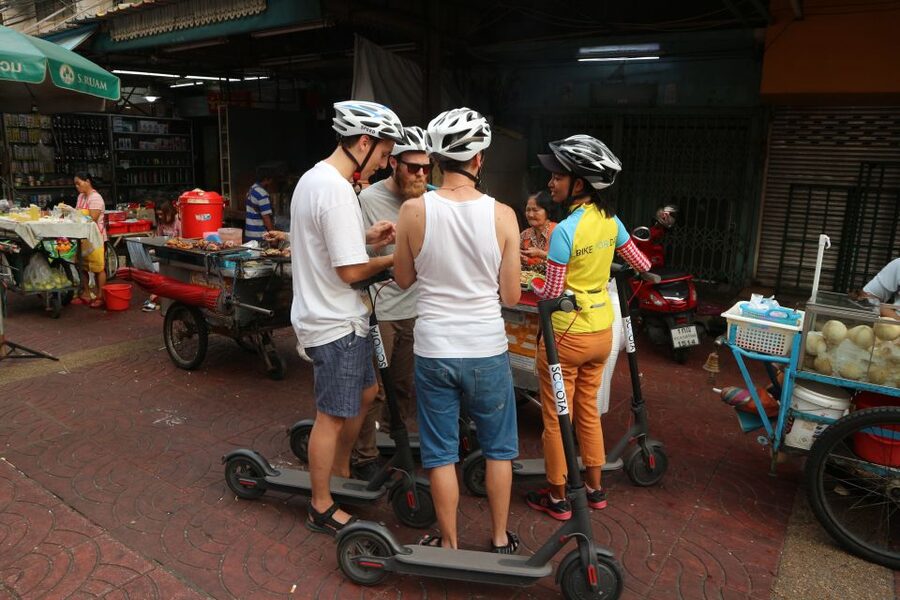
At Tha Din Daeng Market, you spend about 30 minutes looking around and sampling traditional Thai food. This is the sort of stop that makes a guided outing worthwhile. You can see how local people shop, rather than only visiting food stalls arranged for visitors.
The food selection can include dishes such as papaya salad, fried chicken, pork on a skewer, and Thai dumplings. Fruit is also part of the experience, with the first market stop offering a chance to try Thai fruits and watch everyday buying and selling.
The food is included, which makes the $38 price easier to judge. You are not paying only for a scooter rental. The fee also covers a guide, helmet, third-party insurance, ferry tickets, fruit, and several tastings. You may still want money for extra drinks or anything you decide to buy, but the main samples are covered.
One fair criticism is that not every food stop is necessarily a street cart. The route can include a restaurant-style stop, and some people looking for a pure street-food crawl may prefer more time beside open-air vendors. If you want a broad look at Bangkok food culture, though, the combination works well.
Chinatown by the Memorial Bridge
The first river crossing takes you over the Chao Phraya via the Memorial Bridge. From there, you reach Chinatown, one of the tour’s busiest and most food-focused sections.
You spend around 30 minutes in Chinatown with guided sightseeing and local snacks. The guide talks about the Chinese community and its influence on Thai food and culture. This context gives more meaning to dishes you may otherwise treat as quick bites.
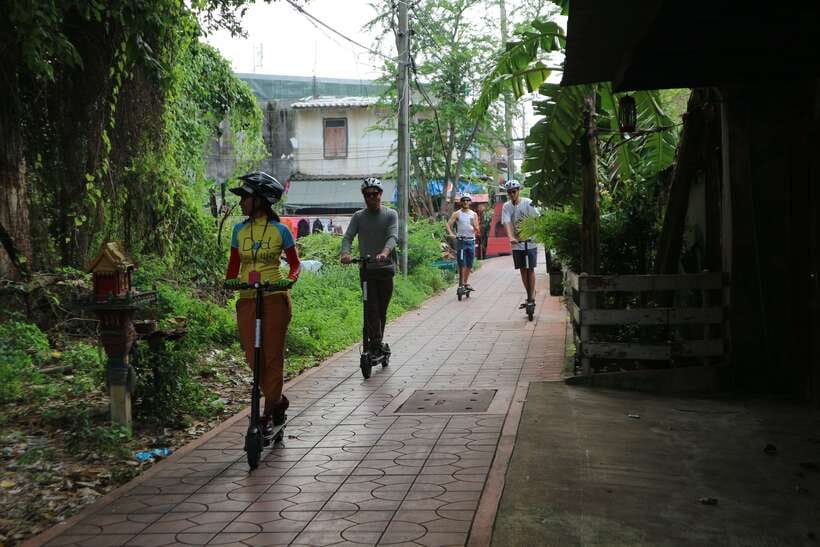
After eating, you ride through Chinatown’s back streets. This is where the e-scooter earns its keep. You can move from the main activity into smaller lanes and see a less polished side of the district, with old buildings, working streets, and local businesses.
Chinatown can feel crowded, noisy, and a little chaotic. That is not a flaw so much as a condition of the place. If you dislike riding around people, this section may test your patience. If you want to see how Bangkok’s older commercial areas function, it is one of the most revealing parts of the route.
Talat Noi and the second river crossing
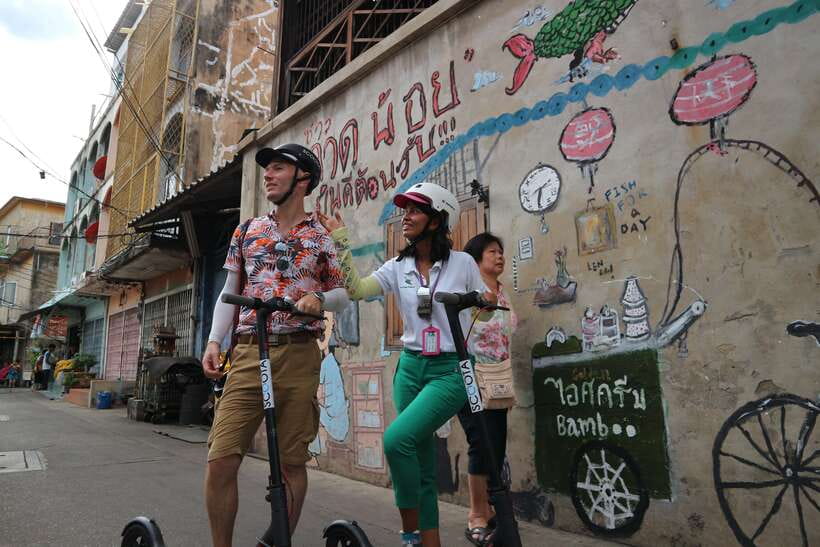
The route passes through Talat Noi, with around 10 minutes for a photo stop or a short look around. You do not get a long formal visit here, but the pass-through helps connect Chinatown with the riverside districts on the other side.
The tour then passes Phra Phutthayotfa Bridge before using a local ferry to cross the river again. Ferry tickets are included. The second crossing breaks up the ride and lets you see Bangkok from the water for a few minutes.
This is also a practical reminder that the tour is built around movement. You are not stopping at every location for a long lecture. The guide gives you focused visits, then uses the scooter and ferry to connect several parts of the city within three hours.
Wat Prayoon and the turtle stop
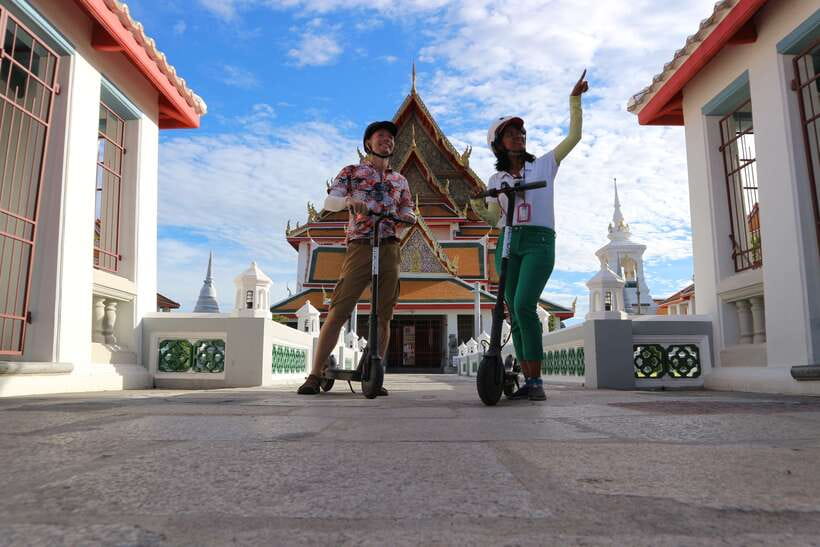
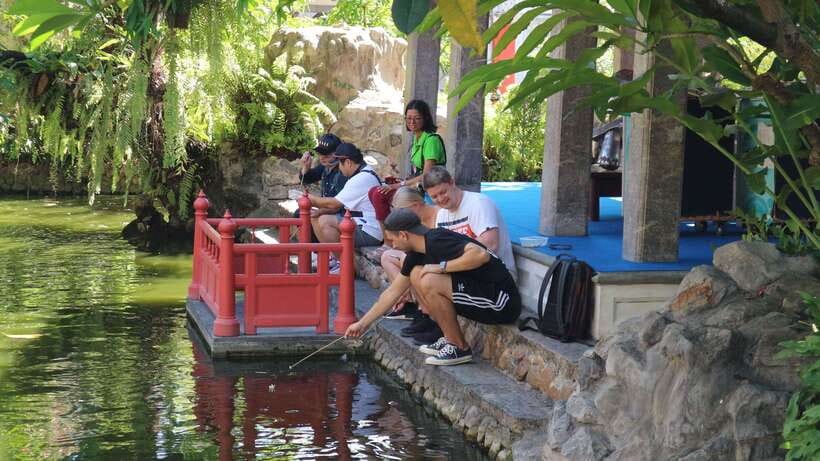
Wat Prayurawongsawat Worawihan is another major cultural stop, with about 20 minutes for a guided visit and sightseeing. The temple is often remembered for the friendly turtles nearby, which you can feed.
The turtle stop adds a simple, relaxed moment after the traffic, markets, and food. It is also a favorite part for many people who want something beyond buildings and explanations. The temple visit gives you time to slow down, take photographs, and hear more about local religious life.
You should not expect a long temple lecture at every site. The tour moves at a steady pace, so the stops are short enough to keep the route varied. That works well for a first look at Bangkok, but less well if you want to study one temple in detail.
What the guides add
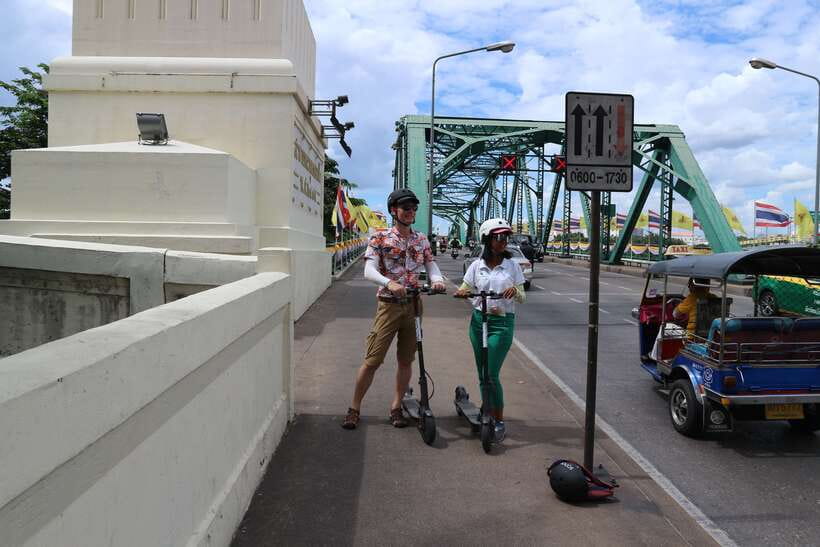
The guide can make or break an active city tour, and this experience benefits from a strong guide team. Names that appear repeatedly in the operating team include Pong, Jobe, Phillip, Tony, Tommy, Jam, Kriss, and Sky.
Their roles go beyond leading the route. They explain Buddhism, Bangkok’s food traditions, Chinese influence, Portuguese connections, and the neighborhoods you pass through. They also help with photographs, answer questions, watch the group’s riding, and offer drinks during hot weather.
The small group limit of eight is important. A guide can spend more time helping a nervous rider than would be possible with a large coach group. The experience can feel especially personal when only a few people book, and the route may be adjusted to match the group’s interests.
The exact guide and group size will vary on your date. You should book this for the access and format, not because you are guaranteed a particular person.
Price, timing, and practical fit
At $38 per person, this is good value if you want transport, food, and cultural sightseeing in one compact outing. A three-hour walking tour might cost less, but it would not cover the same spread of neighborhoods. A private vehicle could cover the distance, but it would not take you through the same narrow lanes or give you the same open-air feel.
The tour is offered in English and Thai. Cancellation is free up to 24 hours before the start, and you can reserve now and pay later, which helps if your Bangkok schedule is still changing.
There is no hotel pickup or drop-off. The MRT is the sensible choice, but allow extra time, especially from central Bangkok during rush hour. Arriving late may affect the group, so plan the journey carefully.
The tour is not suitable for children under 14, pregnant women, people under 140 centimeters, people over 120 kilograms, or people with mobility impairments. Those rules are important because you need to mount, control, and stop the scooter, then manage temple visits and ferry boarding.
Wear light clothing and shoes that stay secure. Bring sun protection and be ready for heat. Water is provided, but you should not count on an air-conditioned break during the route.
Who should book this Bangkok tour?
I would choose this tour if you have already seen the Grand Palace area and want a broader look at Bangkok. It is also a strong first-day option for someone who wants food, temples, neighborhoods, and orientation in one outing.
It suits curious eaters, repeat visitors, and anyone who prefers local lanes to polished attractions. The route gives you plenty of cultural context without keeping you in one museum or temple for hours.
I would hesitate if you are uncomfortable on two wheels, dislike traffic, or want a slow food tour where every dish gets a long explanation. I would also choose a walking food tour instead if your main goal is to eat at as many street carts as possible.
Should you book the e-scooter adventure?
Book it if you want to cover old Bangkok efficiently and are happy to take an active role. The strongest parts are the back lanes, the small markets, the two river crossings, the Kudeejeen food connection, and the chance to feed turtles at Wat Prayoon.
For $38, you receive a lot: a scooter, helmet, insurance, guide, ferry rides, fruit, and food across three hours. The only real question is comfort. If you can ride confidently and meet the age, height, and weight requirements, this is one of the better ways to see Bangkok beyond its main tourist streets.
FAQ
How long is the Bangkok e-scooter tour?
The tour lasts three hours, including riding, food stops, temple visits, market visits, and the two river crossings.
Where does the tour start?
It starts at Jamming Thailand Bangkok, near Itsaraphap MRT Station on the Thonburi side of Bangkok. From Exit 2, walk to Soi 23 and continue past Achcha Coffee to the office with bikes.
What food is included?
The tour includes fruit and street food or local market snacks. Depending on the stop, you may try items such as papaya salad, fried chicken, pork on a skewer, Thai dumplings, traditional Thai foods, and Kudeejeen muffins.
Is scooter instruction provided?
Yes. You receive a short demonstration on how to operate the Xiaomi electric scooter before the tour begins. A helmet is also included.
What are the age, height, and weight requirements?
The minimum age is 14. Riders must be at least 140 centimeters tall, and the maximum body weight is 120 kilograms.
Is hotel pickup included?
No. Hotel pickup and drop-off are not included. You need to make your own way to the starting point, with the MRT to Itsaraphap recommended as the easiest option.
Just added in Bangkok
- re:leaf spa and massage★ 4.0 · 10 reviews
- Wonderful Pearl Dinner Cruise★ 3.5 · 27 reviews
- 3-Hour Bangkok Walking Tour: Wat Pho and Wat Arun★ 5.0 · 102 reviews
- Yoga in the Park Thailand★ 5.0 · 12 reviews
- Visit Wat Pho and Wat Arun with Local Expert★ 4.0 · 14 reviews
- White Orchid Sunset Dinner Cruise Calypso Ladyboy Cabaret Show★ 4.0 · 10 reviews
- Miracle Bangkok Airport Lounges – Relax Before You Fly★ 3.0 · 32 reviews
- Visit temples in and around Bangkok with a former monk of 10 years★ 5.0 · 30 reviews
Tours in Bangkok, compared.
Bangkok: Damnoen Saduak Market and Maeklong Railway Market
Read our review →
The Old Siam: Damnoen Saduak and Maeklong Railway Market
Read our review →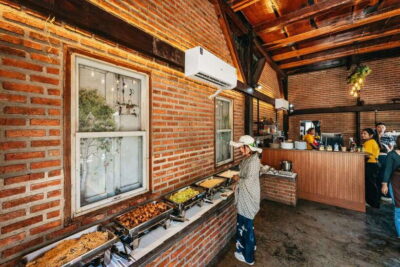
From Bangkok: Ayutthaya Temples Guided Tour with Lunch
Read our review →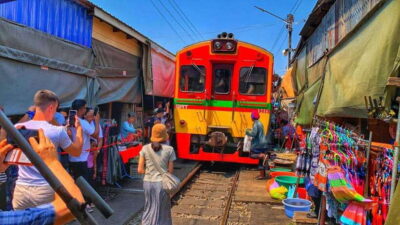
Bangkok: Train Market & Floating Market with Boat Ride
Read our review →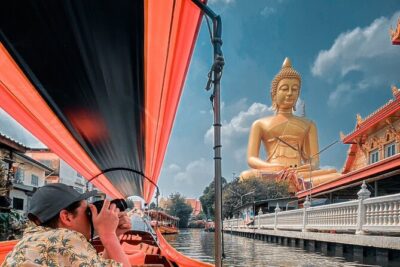
Bangkok Canal Tour: 2-Hour Longtail Boat Ride
Read our review →
Bangkok: Muay Thai Boxing Tickets at Rajadamnern Stadium
Read our review →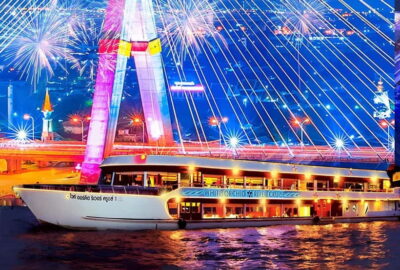
Bangkok: White Orchid Chao Phraya Dinner Cruise free Beer
Read our review →
Bangkok by Private Guide: Full Day Tour In and Around
Read our review →Browse the lists this tour appears in