
Reviewed · CYCLING TOURS
Chiang Mai: Historic Old City Bike Tour – Morning or Night
Chiang Mai’s Old City is easy to walk, but a bicycle lets you cover more ground and slip into lanes you might otherwise miss. This four-hour ride links major temples and monuments with quieter streets, local markets, and small cultural stops, all at a relaxed pace.
I like the flat route, which keeps the roughly 12-kilometer ride manageable for most reasonably active visitors. I also like the way guides such as Kitty, Farm, James, Gun, and Mr. T add context about Buddhism, northern Thai culture, and city history rather than simply pointing at buildings.
The main consideration is the stop-and-start nature of the tour. You will spend plenty of time getting off the bike at temples and monuments, and market time may feel brief if you want to shop or study local produce. Group size can also vary, so a private booking may suit you better if you want a tailored route.
Key points at a glance
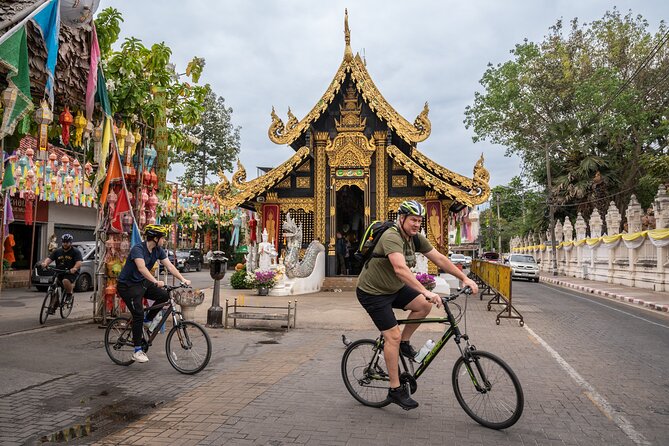
- Quiet back lanes: Much of the route uses calmer streets and narrow lanes instead of keeping you on busy roads.
- Morning or night atmosphere: Morning departures visit a produce market, while evening rides focus on street food and night-market energy.
- Flat, easy cycling: The route covers about 7.5 miles, or 12 kilometers, at a comfortable pace.
- Temple and city-center stops: Expect Tha Phae Gate, Wat Chedi Luang, Wat Inthakhin, the Three Kings Monument, and other religious sites.
- Local snacks included: Water, light snacks, and a market tasting are part of the experience.
- Small-group feel, with variation: Groups can be very small, though the stated maximum is 20 people.
Why a bicycle works so well in Chiang Mai’s Old City
Chiang Mai’s historic center is compact, but its most enjoyable details are scattered. A walking tour can take you to the famous temples, yet you may spend much of your time covering the same few main roads. On a bicycle, you can cross the old moat area more efficiently, pause at key sights, then continue through lanes where daily life carries on away from the main tourist paths.
I like this format for a first full day in Chiang Mai. It gives you a basic map of the Old City, shows you where the gates and central monuments sit, and helps you recognize the difference between a major temple and a smaller neighborhood shrine. Guides also point out food markets and places to eat afterward, which can make the rest of your stay easier.
The cycling itself is not presented as a workout. You ride at a relaxed pace, stop often, and spend time walking around temple grounds. The route is described as mostly flat, and several riders found the bikes easy to handle. Still, you should be comfortable riding in an urban setting and following a guide through traffic, junctions, and narrow lanes.
A few more things to do in Chiang Mai worth a look
- Chiang Mai: Historic Old City Bike Tour – Morning or Night
★ 4.7 · 263 reviews - Chiang mai Hike & Downhill Bike Adventure –Suthep National Park
★ 4.5 · 204 reviews - From Chiang Mai: Mae Taeng Valley and Waterfalls Cycle Tour
★ 4.9 · 159 reviews
Starting near Chang Puak Gate
The tour begins at the Discova Day Tour Shop on Wiang Kaew Road, near Chang Puak Gate, the Old City’s north gate. You meet the guide there, receive a quality mountain bike and helmet, and get ready for the route. Water and light snacks are included, along with accident insurance and a temple donation allowance.
The meeting point is useful if you are staying near the northern side of the Old City. It is also close to public transportation, though you should allow enough time to arrive before the start. The experience ends back at the same shop, so you do not need to arrange a separate pickup from across town.
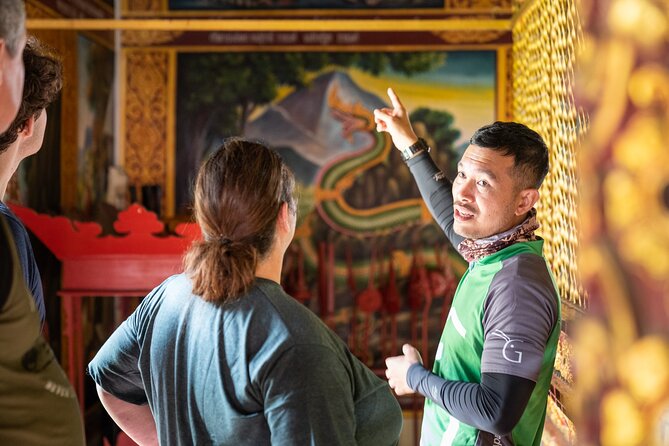
Guide quality matters on a city bike ride, and this operation has several guides who have earned particularly warm feedback. Kitty is praised for clear explanations of Chiang Mai’s past and Buddhist customs. Farm is known for a patient manner and helpful suggestions for lunch and massage. James, sometimes called 007, has been noted for careful road guidance and clear English, while Gun is often singled out for combining history with good photographs.
Guide assignments can change, so you should not book on the promise of one particular person unless the operator confirms it. Still, the repeated pattern is useful: this is meant to be a guided cultural ride, not simply a bicycle rental with a map.
Tha Phae Gate and the Old City’s trading past
The first major stop is Tha Phae Gate, one of Chiang Mai’s best-known landmarks. The route heads directly into the Old City, giving you an early sense of how the historic center is organized.
Tha Phae was once an important trading entrance. It is also a practical orientation point because it helps you understand the relationship between the old defensive walls, the moat, and the central streets. Your guide uses the stop to explain the city’s role as a northern Thai center and to connect the gate with trade and movement.
The stop is scheduled for about 30 minutes. That gives you time for photos and an explanation without turning the visit into a long lecture. If your main goal is uninterrupted cycling, this may feel slow. If you are new to Chiang Mai, the pause is useful because the historical setting makes more sense when someone explains what you are looking at.
Wat Chedi Luang and the temple stops
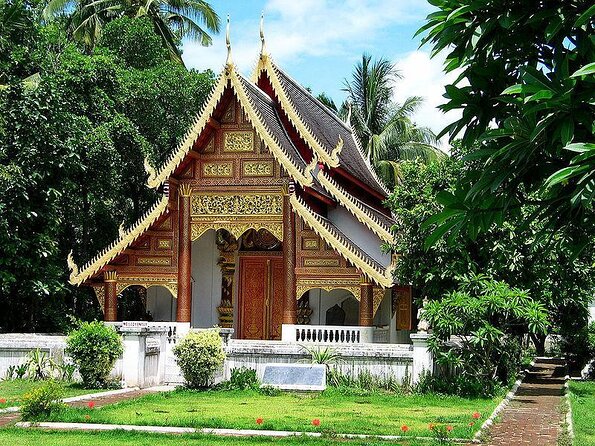
Wat Chedi Luang is one of the tour’s strongest stops. Its large, damaged chedi gives the temple a memorable outline, and the site also relates to Chiang Mai’s old City Pillar. The scale and worn stonework make it different from smaller, more decorative temples around town.
You receive time to walk through the grounds and learn about the religious setting. The guides also explain Buddhist practices and local customs, which adds meaning to the architecture. One guide helped riders take part in small activities offered at a temple, a detail that can make the visit feel less like a quick photo stop.
The exact temple sequence may vary by departure or guide. The advertised route includes several significant religious sites, but one past account noted that not every named temple was visited and that access to one site can depend on gender rules. That is worth knowing if you are booking mainly for a specific temple interior. The temple donation allowance is included, but personal purchases and gratuities are not.
Dress and conduct should be respectful at all temples. The tour information does not specify a dress code, but you should be prepared for normal temple etiquette and possible limits on where you can enter. Your guide can explain what is appropriate at each stop.
Same base, a different sort of day:
- Half-Day Thai Cooking Class at Organic Farm in Chiang Mai
★ 5.0 · 19,087 reviews - Chiang Mai: Elephant Sanctuary, Waterfall & Bamboo Rafting
★ 4.9 · 9,160 reviews - Chiang Mai: Doi Inthanon National Park Eco-Friendly Tour
★ 4.6 · 6,667 reviews - Chiang Mai: Elephant Sanctuary & Waterfall Group Tour
★ 4.9 · 5,780 reviews
Wat Inthakhin and the Three Kings Monument
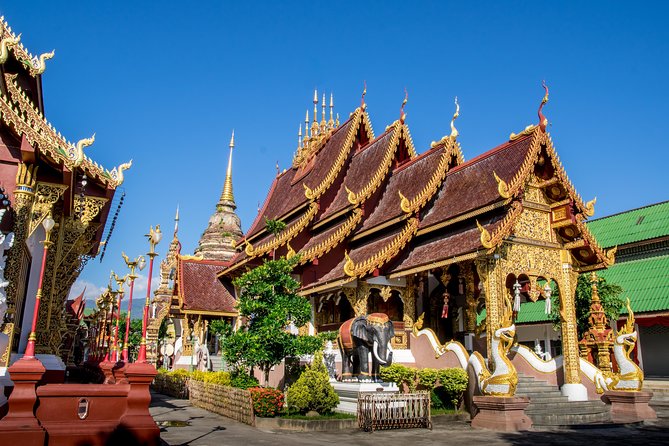
Wat Inthakhin Sadue Muang, also known as the City Navel Temple, marks the symbolic center of the old kingdom. The name refers to the city’s spiritual center, and the stop gives your guide another chance to explain how religion, civic life, and the old city plan fit together.
From there, the ride continues to the Three Kings Monument. The square is one of Chiang Mai’s key public spaces and a good place to connect the city’s founding story with the modern center around it. These stops are less about cycling distance and more about seeing the landmarks in sequence.
You should expect approximately 30 minutes at each listed historical stop, though the actual pace can depend on the group. The route is deliberately broken into short riding sections. That works well in the heat, but it can feel like a series of starts and stops if you hoped for a long continuous ride.
The market stop changes with the time of day
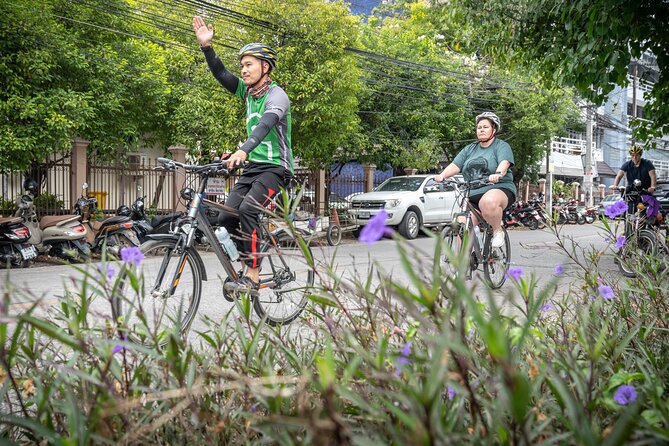
The market is where the tour becomes most hands-on. Morning departures visit a fresh market with produce, while night departures include a market with street food. Guides help you try simple local snacks, fruit, and other small tastes.
Past riders have singled out fresh coconut, fruit, smoothies, and market snacks as memorable parts of the experience. A guide may help you choose something you would not know how to order alone. This is not a full cooking class or a dedicated food tour, but it adds a welcome taste of everyday Chiang Mai.
The market stop is scheduled for about an hour, although the amount of time spent browsing and tasting can vary. One useful criticism is that the market portion may feel too short if you want to learn about different vegetables, spices, and fruits or buy food to take away. If you are already booking a separate food tour, the market tasting may also feel repetitive.
Choose the departure based on what you want to see. The morning option offers cooler cycling and the practical feel of a local produce market. The night option gives you a different atmosphere, with food stalls and evening activity. The supplied information does not give exact departure times, so check the booking details for the date you want.
What the cycling feels like in practice
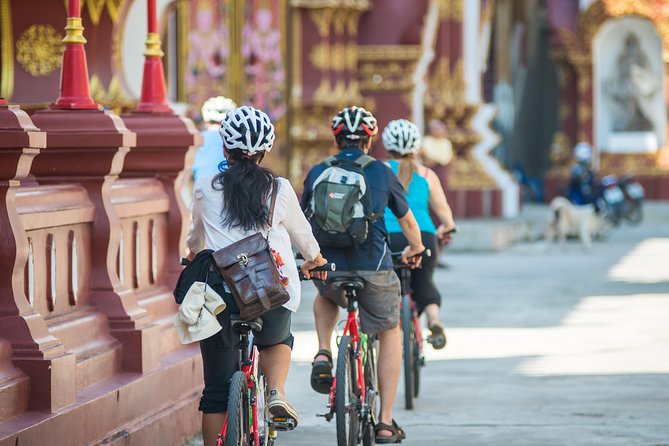
The route covers around 12 kilometers, with some descriptions giving a range of 12 to 14 kilometers. It is designed as a relaxed half-day ride rather than a serious cycling challenge. Riders have described the ground as flat and the bikes as easy to use, and the operator provides helmets.
You will ride through back lanes, quieter streets, and some areas where local homes and businesses sit close to the route. One account describes a short canal section and a little off-road riding. These details are not guaranteed on every departure, but they show the kind of route the guides may use when conditions allow.
Safety is a major part of the guide’s job. Guides such as James and Boy have been praised for keeping the group together and directing riders through city traffic. You should still remain alert, keep your distance, and follow signals promptly. A city ride is not the same as riding on a closed path.
The experience works well for families with older children and teenagers. A family with three teenage boys found the format a good fit, and children must be accompanied by an adult. A child seat can be requested for a child weighing up to 14 kilograms. Since that limit is specific, ask about the seat before booking if you need one.
Group size, guide attention, and the $39 price
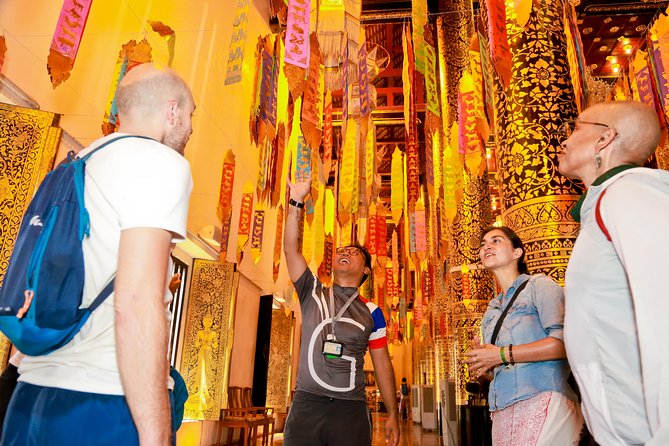
The price is $39 per person. For that amount, you receive the bike, helmet, English-speaking guide, water, snacks, temple donation allowance, insurance, and a four-hour route with several historic stops. You are also paying for the local route knowledge and the work of guiding a group safely through the city.
I consider that fair value if you are a first-time visitor and want a broad introduction in one morning or evening. A comparable self-guided outing would not include the explanations, market help, temple donations, or safety support. The price is less compelling if you only want to rent a bike and pedal without frequent stops.
The advertised maximum is 20 people, but actual groups can be much smaller. Some departures have had only three riders, while others have included eight or ten people. Smaller groups make it easier to ask questions, take photos, and keep a steady pace. Larger groups can mean waiting at turns, especially if the front and back of the group become separated.
If you want to control the balance between temples, markets, and cycling, ask about a private option or request a small group. This matters particularly if you have already scheduled a food tour or want to spend extra time at one temple.
Practical details before you book
Confirmation is provided at booking, and the operator requests the lead passenger’s contact information. Passport name, number, expiry date, and country are required for all participants, so have those details available.
The tour is near public transportation and returns to the Discova shop. Personal expenses are not included, and gratuities are optional. Free cancellation is available if you cancel at least 24 hours before the local start time. Changes or cancellations inside that window are not accepted for a refund.
Most people can take part, but you should be comfortable riding a bicycle for several hours with breaks. Children need an adult with them. The route is considered easy by many riders, yet city traffic and tropical weather can still make it tiring for someone who rarely cycles.
Should you book the Old City bike tour?
Book it if you want a friendly introduction to Chiang Mai that combines temples, local streets, city history, and small food tastings. It is especially useful on your first day, when the route can help you get your bearings and point you toward markets, restaurants, and places you may want to revisit.
I would choose the morning departure for cooler conditions and a produce-market visit. Choose the night ride if street food and an evening atmosphere matter more. Families with teenagers, couples, solo riders, and small groups should all find the format approachable.
Think twice if you want a long, uninterrupted ride, a serious historical lecture, or a full market-shopping session. The tour moves in short sections, and its focus leans toward temples and landmarks. For most first-time visitors, though, the combination of easy cycling, strong guides, and local tasting makes $39 a sensible way to meet Chiang Mai’s Old City.
FAQ
How long is the Chiang Mai Old City bike tour?
The tour lasts approximately four hours.
How far do you cycle?
The route covers roughly 7.5 miles, or 12 kilometers. Some tour information gives a range of 12 to 14 kilometers.
Is the route difficult?
The route is described as relaxed and mostly flat. You should still be comfortable riding through city streets and following a guide.
Where does the tour start?
The tour starts at the Discova Day Tour Shop Chiang Mai, at 10/3 Wiang Kaew Road near Chang Puak Gate.
Where does the tour end?
The tour ends back at the Discova Day Tour Shop, the same place where it starts.
Is food included?
Drinking water and light snacks are included. The guide also helps you try simple foods at a local market.
What is different about the morning and night departures?
Morning departures visit a fresh market with produce. Night departures visit a market with street food.
Are bicycles and helmets provided?
Yes. A quality mountain bike and safety helmet are included.
Can children join the tour?
Yes. Children must be accompanied by an adult. A child seat is available on request for a child weighing up to 14 kilograms.
How many people can join the tour?
The maximum group size is 20 people. Actual group sizes can vary, and some departures may be much smaller.
Is temple admission included?
The tour includes a temple donation allowance. Personal expenses are not included.
Can I cancel for a refund?
You can cancel for a full refund up to 24 hours before the experience starts. Cancellations or changes made less than 24 hours before the start are not accepted for a refund.
Just added in Chiang Mai
- No.1 Chiang Mai: Historical City Bike Tour★ 5.0 · 10 reviews
- Inthanon Day Trip from Chiang Mai with Lunch – Group or Private★ 5.0 · 182 reviews
- Jewellery Making Class with Silversmithing in Chiang Mai★ 4.5 · 11 reviews
- 10KM Inflatable Kayaking Adventure★ 5.0 · 23 reviews
- Half-day E-bike Nam Phrae (hilly, fully paved roads, GUIDED)★ 5.0 · 122 reviews
- Inthanon Heaven Trail(Living Green Elephant Sanctuary)★ 5.0 · 52 reviews
- Half Day Car Hire with an English Speaking Driver in Chiang Mai★ 5.0 · 16 reviews
- Half-day E-bike Countryside and rice paddies (flat land, GUIDED)★ 4.5 · 94 reviews
Cycling Tours, compared.
Bangkok: Temples, Canals & Local Life Bike Tour
Read our review →
Bangkok: Night Bike Tour with Temples & Flower Market Visit
Read our review →
Bangkok: Must-Try Hidden Bike & Food Experience
Read our review →
Bangkok Jungle Bike Tour – Hotel-pickup & Lunch
Read our review →
Bangkok Experiences Bike Tours-Backstreets and Hidden Gems
Read our review →
Sukhothai: Historical Park & Countryside Cycling Tour
Read our review →Browse the lists this tour appears in