
Reviewed · CYCLING TOURS
Full Day Cycling tour to Sukhothai Historical Park
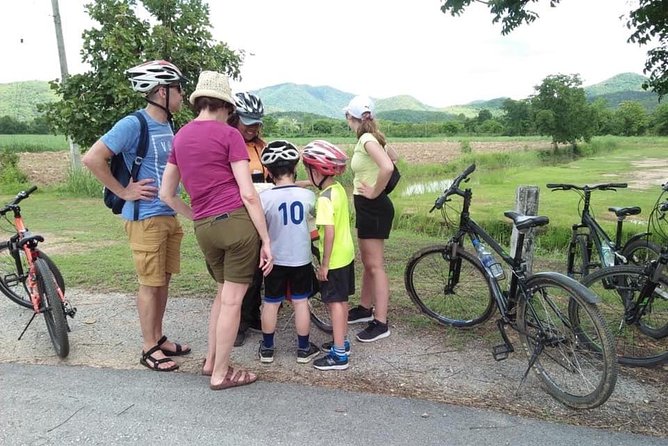
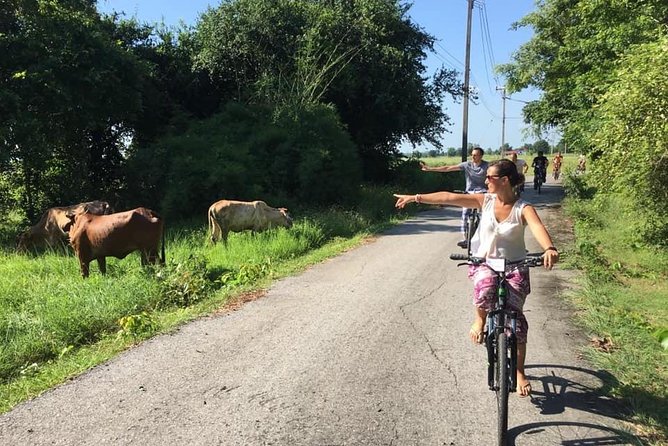
The best part of this Sukhothai tour happens before you reach the ancient temples. You pedal from Ban Kluai through rice fields, village lanes, irrigation canals, and rural Thailand, then enter the vast Sukhothai Historical Park by bicycle. It gives you a better sense of how the old capital fits into the countryside around it.
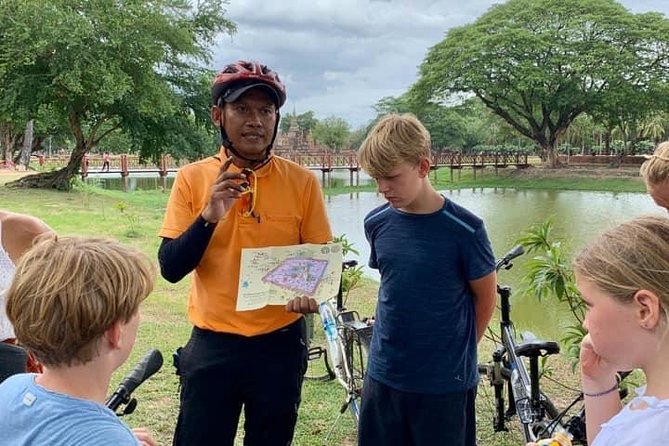
I like the mix of quiet cycling and strong local guiding. Guides such as Miaow, also called Meow or Sumitra, and Jib explain temples, Buddhism, Thai society, and local life in clear English. I also like that lunch, snacks, water, admission, a helmet, and hotel transfers are included.
The main caution is the distance and heat. You’ll ride about 20 miles, or 32 kilometers, over six to eight hours, much of it outdoors. The pace is described as manageable, but you still need to be comfortable on a bicycle and ready for a long, warm day.
Key points to know before booking
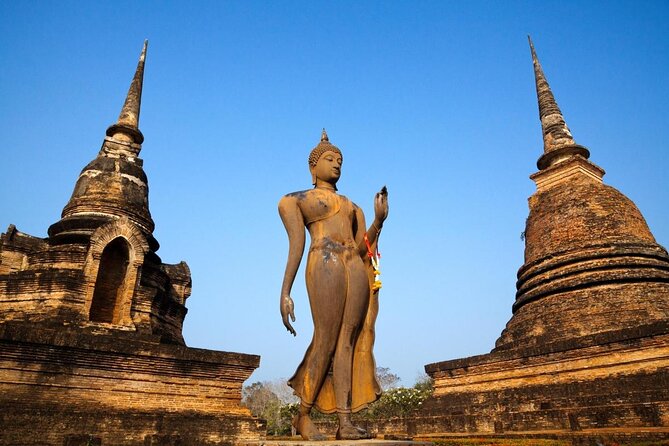
- Ride from village roads to royal temples: The route begins among rice paddies and rural homes before reaching Sukhothai’s major monuments.
- See more than the central park: The day includes Wat Chang Lom, Wat Si Chum, Wat Mahathat, Wat Si Sawai, Wat Sa Si, Wat Chetuphon, and other sites.
- Expect about 20 miles of cycling: A 24-speed mountain bike works on paved roads, dirt tracks, and off-road sections.
- Miaow and Jib add local context: The guides explain history, religion, geography, food, and everyday life, not just temple dates.
- Food and practical support are covered: Water, drinks, snacks, lunch, a helmet, park entry, and hotel pickup and drop-off are included.
- Small groups help: The maximum is 12 people, and groups may be much smaller.
Why cycling is the right way to see Sukhothai
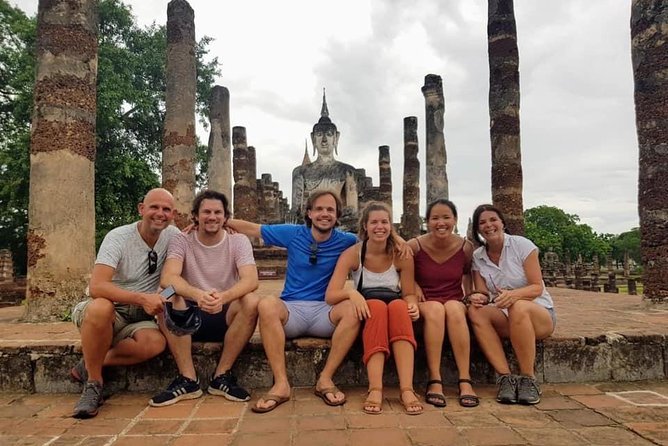
Sukhothai Historical Park is not a single compact ruin. Its temples spread across a broad area, with ponds, trees, open fields, and roads between the main monuments. You can see the central sites by car or tuk-tuk, but a bicycle lets you move at the right speed. You get time to notice a shrine, a water buffalo, a quiet village lane, or the outline of the Kao Laung mountain range.
This tour starts outside the old city, in Ban Kluai. That choice matters. Instead of beginning with a parking area and a line of monuments, you first see the countryside that still surrounds Sukhothai. The ride passes rice paddies, irrigation canals, and small villages before the historical park becomes the focus.
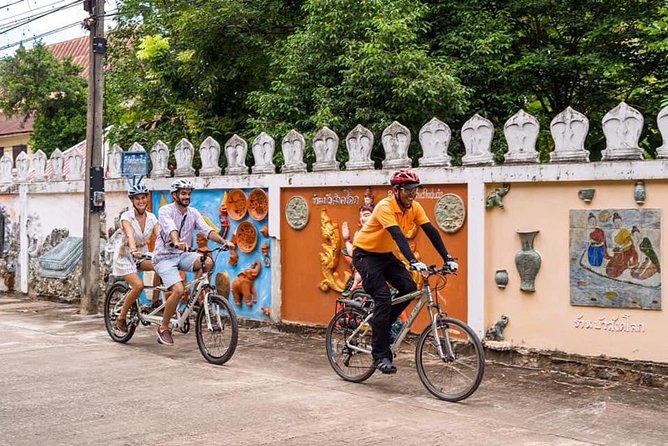
I especially like that the route is not built around temples alone. A visit to a local teak wood furniture factory adds a useful look at present-day work and craft. It keeps the day from feeling like a procession of ruins, and it helps connect the old capital with the town that exists today.
The route covers roughly 32 kilometers. That is a serious half-day ride, even though the itinerary allows around seven hours. The bike has 24 gears, which should help on changing surfaces and small inclines, and a helmet is supplied. Still, do not book this as a sightseeing tour with a few token turns of the pedals. Cycling is the main activity.
A few more things to do in Thailand worth a look
- Bangkok: Temples, Canals & Local Life Bike Tour
★ 4.9 · 3,511 reviews - Experience Real Bangkok by Bike
★ 5.0 · 2,439 reviews - Bangkok: Bike and Canal Boat Tour with Lunch
★ 4.9 · 1,350 reviews
From the 8:15 pickup to Ban Kluai
Pickup is offered from hotels in Sukhothai’s new city and old city. The stated pickup time is 8:15 a.m., with the tour starting around 8:30. Transport may be by covered pickup truck, car, or tuk-tuk, and the drive to the starting point varies with traffic and your hotel location.
The included transfer is useful because you do not need to arrange transport to Ban Kluai. It also means the cycling begins away from the busiest sightseeing points. Hotel pickup and drop-off apply within 15 kilometers of the start point, or about 10 miles. If your hotel is farther away, contact the operator before booking rather than assuming a transfer is included.
Once you meet the guide and receive your mountain bike and helmet, expect a brief start before heading onto rural roads. The exact order of stops can vary, but the experience moves from countryside to cultural sites rather than dropping you directly at the main temple zone.
The small-group format is another advantage. The maximum group size is 12, and some departures may be much smaller. A compact group makes it easier to follow a guide down dirt roads, stop for photos, and ask questions about local customs.
Rice paddies, canals, and the Kao Laung view
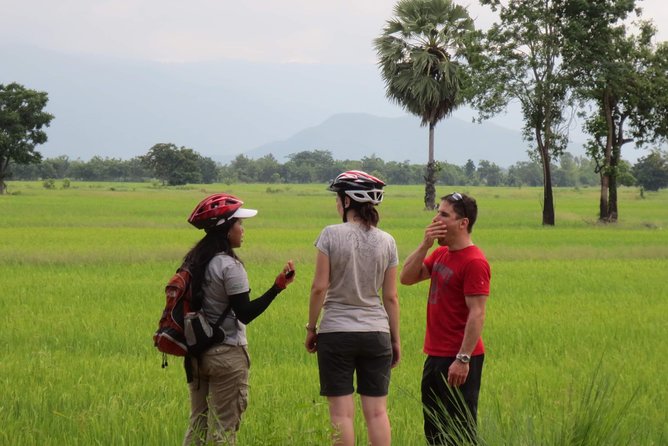
The first major section runs through rice fields and village areas. This is the part that gives the tour its character. You are not just riding between attractions. You are seeing homes, farm land, canals, and the everyday setting around Sukhothai.
The route includes views toward the Kao Laung mountain range in Ramkhamhaeng National Park. The mountains provide a natural backdrop to the flat agricultural land, and they help explain why Sukhothai was established in a fertile region with access to water.
Dirt roads are part of the route, so the mountain bike is not just a decorative extra. You should expect a mixture of road and off-road riding. The bike’s gears are helpful, but you still need basic confidence handling a bicycle on uneven surfaces.
The countryside section is also when the heat can begin to matter. The tour supplies bottled water, drinks, and snacks, and the guide keeps the day fueled with a local lunch later on. Even so, wear light clothing, bring sun protection, and take the water provided. A helmet is included and should be used.
The teak furniture factory and local life
The teak wood furniture factory is one of the more unusual stops. It offers a look at a local trade that has little to do with royal ruins, yet it helps make the day feel connected to modern Sukhothai.
You can expect the guide to explain what you are seeing and how the stop fits into the area. The visit is not presented as a major attraction, so keep your expectations realistic. Its value is in the change of focus: after rice fields and before ancient monuments, you see a working local enterprise.
This is also a good point to ask questions. Guides including Miaow and Jib are praised for explaining more than dates and architectural labels. Their talks cover Thai society, Buddhism, geography, and daily life. That broader setting can make the temples easier to understand when you reach them.
Same base, a different sort of day:
- Bangkok: Damnoen Saduak Market and Maeklong Railway Market
★ 4.5 · 26,723 reviews - Half-Day Thai Cooking Class at Organic Farm in Chiang Mai
★ 5.0 · 19,087 reviews - The Old Siam: Damnoen Saduak and Maeklong Railway Market
★ 4.5 · 10,992 reviews - From Bangkok: Ayutthaya Temples Guided Tour with Lunch
★ 4.7 · 10,535 reviews
Entering Sukhothai Historical Park by bike
The park is the day’s main event. Sukhothai was the center of a major Thai kingdom, and the ruins include monasteries, Buddha images, ponds, brick towers, and laterite structures spread across a broad area.
Cycling is practical here because the sites are separated by open space. You can cover more ground than on foot without rushing from one stop to the next. The guide can also choose a sensible order and keep you oriented, which is useful in a large archaeological area.
The tour includes entrance fees, so you do not need to budget separately for park admission. It also includes a guide, which adds much more value here than simply renting a bicycle. Without context, Wat Mahathat can become another impressive ruin. With an explanation of Sukhothai’s religious and political setting, the layout becomes easier to read.
Wat Chang Lom and the park’s quieter corners
Wat Chang Lom is known for the line of elephant figures around its central structure. It is one of the stops that shows how animals, Buddhism, and temple design were linked in Sukhothai.
A guide can point out details that are easy to miss when you are focused only on the largest Buddha images. The bicycle route also makes it possible to spend a little time at less crowded corners instead of treating the park as a quick checklist.
The open setting is part of the appeal, but it also means little shade at some points. You may find that the sun feels stronger than expected, especially around exposed temple grounds. The supplied water and regular snack stop help, but the weather remains a real factor.
Wat Si Chum and the famous seated Buddha
Wat Si Chum is often the emotional high point of the day. Its main image is a huge seated Buddha framed within a narrow opening in the Mondop structure. The image appears almost to fill the building, creating a powerful view even for visitors who are not especially interested in architecture.
This stop rewards patience. Give yourself time to look at the scale of the image and the way the Buddha is presented through the opening. Guides also help explain the religious meaning and the construction, rather than leaving you with only a photo opportunity.
The route may finish at Wat Si Chum, although the exact order can change. That makes sense as a final major sight because the image is memorable and easy to recognize. Several guides are also happy to help with photographs, which is useful when you are traveling alone or want a picture that includes the full setting.
Wat Mahathat, Wat Si Sawai, and Wat Sa Si
Wat Mahathat is the central temple complex and one of the park’s essential stops. Its tall prang, seated Buddha images, and rows of columns show the scale and importance of the old capital. It is the place where a guide’s historical explanation can turn a collection of ruins into an understandable center of power and worship.
Wat Si Sawai has a different appearance, with Khmer-style towers that reflect cultural connections beyond the later classic Sukhothai style. It is a useful reminder that Thai art and politics developed through contact with neighboring regions.
Wat Sa Si sits by water and is especially attractive in combination with the park’s open setting. The reflections, island location, and calm surroundings offer a change from the heavier brick structures. You may want extra time for photos here, though the full route means the guide must keep the group moving.
The itinerary also includes the King Monument and Wat Chetuphon, along with other temples. Seeing this wider collection is one reason the bicycle option offers good value. You are not limited to the most famous two or three buildings.
Lunch, snacks, and the practical value of the package
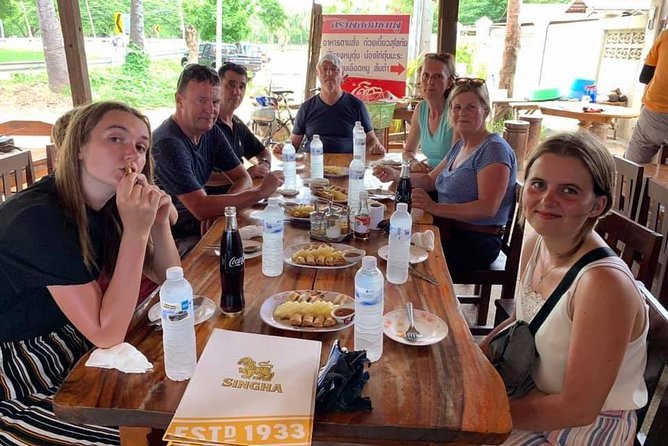
Food is included throughout the day. You receive snacks, drinks, bottled water, and a local lunch, with a vegetarian option available if you request it when booking. Tell the operator about dietary needs in advance rather than waiting until the morning of the tour.
The meal is more than a convenience. A long ride in Thailand’s heat is much easier when food and water are built into the plan. Local snacks also add a small taste of everyday food that you might not encounter at a standard restaurant stop.
At $53.78 per person, the price is reasonable for what is bundled in. You are paying for a full-day guide, a 24-speed mountain bike, helmet, hotel transfers within the stated area, lunch, snacks, drinks, park admission, and a route that combines countryside with the major ruins. A cheaper bicycle rental would not provide the same transport, explanations, or food.
The value is strongest if you want structure and cultural context. If you already have your own bicycle, prefer to move at your own pace, or want only a short visit to the central temples, you may find the tour longer than necessary.
How hard is the ride?
The tour is suitable for most people who can comfortably cycle for several hours, according to the supplied participation information. That should not be confused with an effortless ride. The distance is around 20 miles, and the route includes dirt roads and off-road sections.
The mountain bike has 24 gears and is intended for both road and rougher surfaces. Helmets are provided. Guides can set a manageable pace, and one account describes the ride as comfortable even for someone who was feeling unwell, but you should judge your own fitness honestly.
The heat is likely to be the biggest challenge rather than steep climbing. Start with water, use the snack breaks, and expect to spend much of the day outside. If you dislike cycling in warm weather, a shorter temple tour may suit you better.
Who will get the most from this Sukhothai tour?
I would recommend this experience to you if you want more than photographs of ruins. It suits people who enjoy seeing how a historic site relates to farms, villages, food, and present-day work.
It is particularly good for:
- Active visitors who want a full day outdoors
- First-time visitors to Sukhothai who want help understanding the temples
- People who value local guiding and small groups
- Couples, families with confident cyclists, and solo visitors
- Anyone who wants to combine the old city with the countryside around it
It is less suitable if you want a relaxed, air-conditioned sightseeing day, have difficulty cycling for several hours, or prefer to explore each temple without a set route. The maximum group size is 12, but the experience still follows a planned schedule.
The guides are a major part of the appeal. Miaow, Jib, Meow, Sumitra, and Chip are mentioned in the tour information and guest feedback, with particular praise for clear English, humor, historical explanations, and practical help. The guiding style appears to go beyond temple facts, including Buddhism, Thai society, geography, and local life.
Booking details and cancellation
Confirmation is normally received at booking, though final confirmation may take up to 48 hours and depends on availability. The tour requires good weather and a minimum number of participants. If poor weather or low numbers force a cancellation, you are offered another date or experience, or a full refund.
You can cancel for a full refund up to 24 hours before the start time. Changes or cancellations inside that 24-hour window are not accepted for a refund. Pickup times and transfer lengths are approximate, so leave some flexibility in your morning plans.
Should you book the Sukhothai cycling tour?
Book it if you want Sukhothai to feel like a place, not just an archaeological park. The ride through rice fields and villages, the teak furniture stop, local food, and patient temple explanations give the day a wider view of northern-central Thailand.
The strongest reasons to choose it are the countryside route, the guides, and the amount included in the price. The main tradeoff is simple: you must commit to roughly 32 kilometers of cycling in warm conditions.
If you can handle that, this is one of the better ways to connect Sukhothai’s old capital with the living countryside around it. If you cannot, choose a shorter visit and save your energy for the temples.
FAQ
How long does the Sukhothai cycling tour last?
The tour lasts approximately six to eight hours. The listed itinerary gives about seven hours, including cycling, sightseeing, food stops, and transfers.
How far will I cycle?
You will cycle about 20 miles, or 32 kilometers, through the countryside and Sukhothai Historical Park.
What time does pickup begin?
Pickup is listed for 8:15 a.m. from hotels in Sukhothai’s new city and old city. The cycling tour begins at approximately 8:30 a.m.
Is hotel pickup included?
Yes. Pickup and drop-off are included for hotels in Sukhothai’s old city and new city within 15 kilometers, or about 10 miles, of the starting point. Transfers beyond that distance are not included.
What kind of bicycle is provided?
The tour provides a 24-speed mountain bike and helmet. The bike is intended for paved roads and off-road sections.
Are food and drinks included?
Yes. Lunch, snacks, drinks, and bottled water are included. A vegetarian option is available if you request it when booking.
Which sights are included?
The route includes Wat Chang Lom, Wat Si Chum, Sukhothai Kiln, Wat Mahathat, Wat Si Sawai, Wat Sa Si, the King Monument, Wat Chetuphon, and other temples and sites.
Is the historical park entrance fee included?
Yes. The entrance fee for Sukhothai Historical Park is included in the tour price.
What happens if the tour is canceled because of weather?
If poor weather causes the tour to be canceled, you are offered a different date or a full refund. The same applies if the minimum number of participants is not reached.
Just added in Thailand
- No.1 Chiang Mai: Historical City Bike Tour★ 5.0 · 10 reviews
- Inthanon Day Trip from Chiang Mai with Lunch – Group or Private★ 5.0 · 182 reviews
- Jewellery Making Class with Silversmithing in Chiang Mai★ 4.5 · 11 reviews
- 10KM Inflatable Kayaking Adventure★ 5.0 · 23 reviews
- Chiang Mai: Historic Old City Bike Tour – Morning or Night★ 5.0 · 202 reviews
- Half-day E-bike Nam Phrae (hilly, fully paved roads, GUIDED)★ 5.0 · 122 reviews
- Inthanon Heaven Trail(Living Green Elephant Sanctuary)★ 5.0 · 52 reviews
- Half Day Car Hire with an English Speaking Driver in Chiang Mai★ 5.0 · 16 reviews
Cycling Tours, compared.
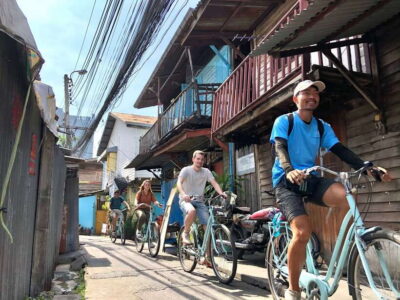
Bangkok: Temples, Canals & Local Life Bike Tour
Read our review →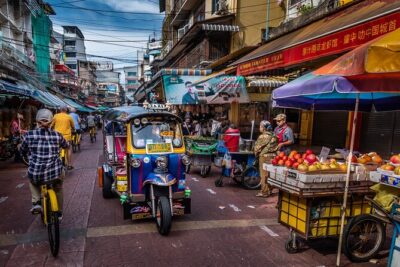
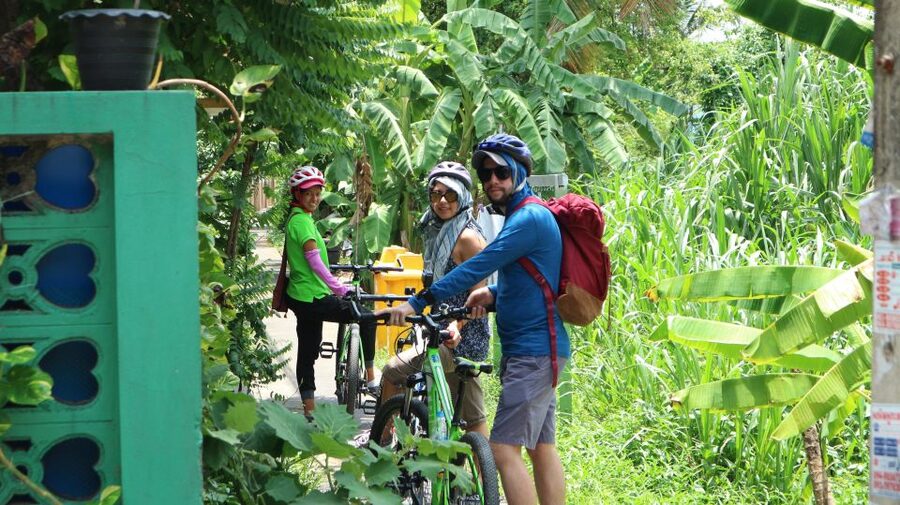
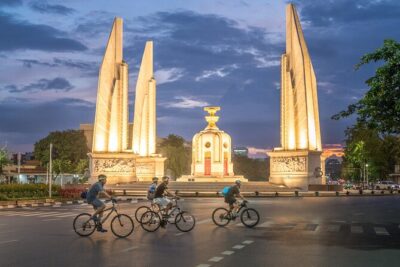
Bangkok: Night Bike Tour with Temples & Flower Market Visit
Read our review →
Bangkok: Must-Try Hidden Bike & Food Experience
Read our review →
Bangkok Jungle Bike Tour – Hotel-pickup & Lunch
Read our review →
Bangkok Experiences Bike Tours-Backstreets and Hidden Gems
Read our review →
Sukhothai: Historical Park & Countryside Cycling Tour
Read our review →Browse the lists this tour appears in