
Reviewed · TEMPLE & PALACE TOURS
Thai Dance Class at Wat Arun
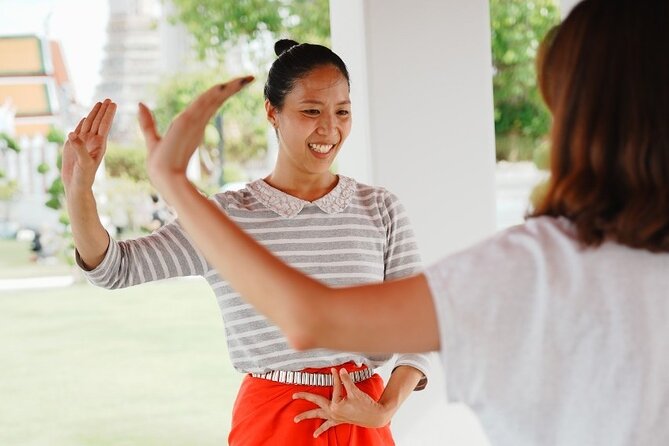
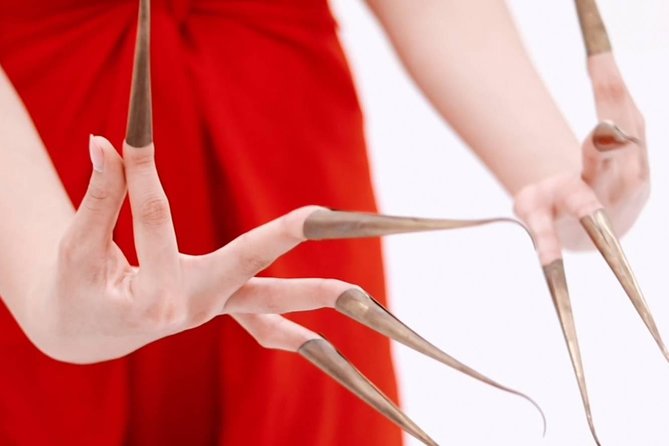
Thai dance here is less about mastering a stage routine and more about discovering how much meaning can fit into a curved hand, lifted elbow, or slow turn. You’ll dress in traditional clothing, add ornamental nails, and work through three dance styles with an instructor such as Jenny, Jan, Ploy, or Thapisa, depending on the session.
I like the small-class format, which gives the teacher time to correct your hands and posture. I also like the cultural touches: a short introduction to dance traditions, Thai phrases and customs in some sessions, a herbal drink, and snacks shared after class. The main drawback is price. At $71.39, this costs more than a simple dance lesson, and elaborate hair and makeup are not guaranteed.
Key points to know before booking
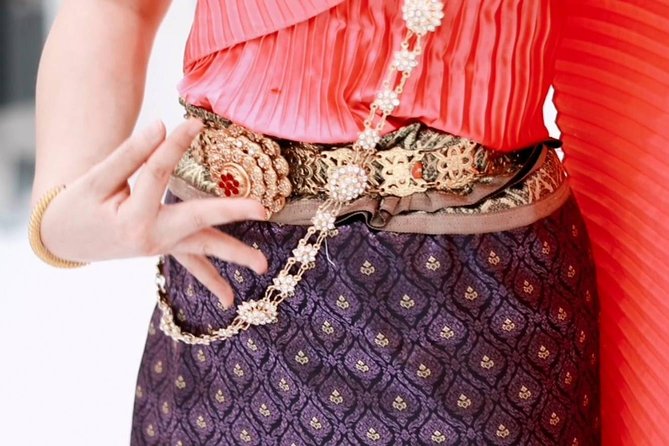
- Traditional dress is part of the lesson: You’ll wear an Ayutthayan-style costume with jewelry and long dance nails.
- Three dance styles are included: The class uses three songs, each with a different style and set of movements.
- The lesson lasts about two hours: That time includes changing, costume preparation, instruction, photos, and refreshments.
- Personal attention is a major benefit: The class format is designed for no more than seven people, though the general activity information lists a maximum of 15.
- Phone photos and videos are allowed: You can record part of your final performance, but professional cameras are not permitted.
- Pickup information needs care: Transfers from ICONSIAM pier are included, while the listed meeting point is at 243 Thanon Wang Doem near Wat Arun.
Why Thai dance makes a good Bangkok activity
Bangkok offers plenty of polished cultural shows, but a short lesson gives you a different way to understand Thai performance. Instead of sitting in the dark and watching professionals, you learn the basic positions yourself. That makes the gestures easier to read later, whether you see a formal dance show or notice traditional movements in a temple performance.
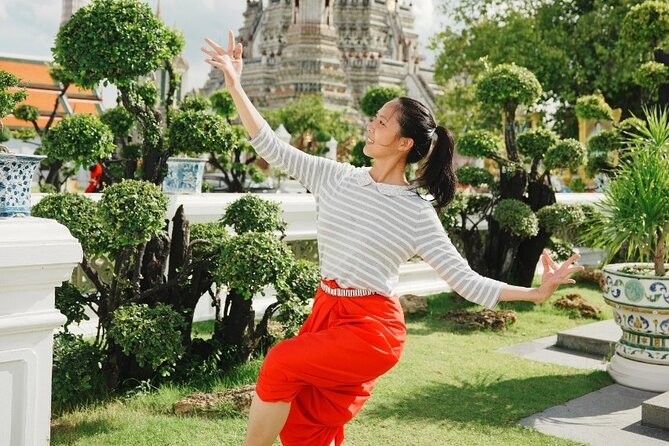
Thai dance is known for controlled arms, careful hand shapes, upright posture, and a graceful pace. It can look easy from a seat in the audience. Once you try holding your fingers in position while keeping your arms lifted, you’ll feel the work involved.
This class is aimed at beginners. You do not need dance training, and the teacher works through the body positions and hand movements before asking you to put them into a routine. That matters because the goal is not a perfect performance. The goal is to understand the style and enjoy trying it.
The cultural setting adds value. You are introduced to traditional dance forms and the differences between provincial styles. One session included discussion of dances from different parts of Thailand, while another included useful Thai phrases and customs. The exact presentation can vary with the instructor, but the class goes beyond simple dress-up photographs.
More Temple Tours in Bangkok
- From Bangkok: Ayutthaya Temples Guided Tour with Lunch
★ 4.7 · 10,535 reviews - Bangkok: City Highlights Temple and Market Walking Tour
★ 4.5 · 3,990 reviews - Bangkok by Night: Temples, Markets and Food Tuk-Tuk Tour
★ 5.0 · 3,752 reviews
Arriving near Wat Arun
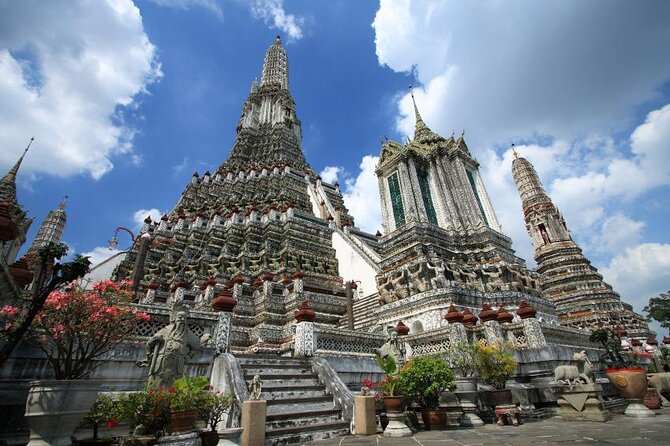
The official meeting point is 243 Thanon Wang Doem, in the Wat Arun area of Bangkok Yai. The activity ends at the same place. The location is near public transportation, and the experience also lists transfers from ICONSIAM pier.
That combination deserves your attention when planning. ICONSIAM is across the Chao Phraya River from the Wat Arun side, so do not assume the shopping center itself is the classroom. If you are coming from ICONSIAM, confirm the pickup instructions and meeting time before setting off. Clear directions have been especially useful for this experience, and the provider may contact you before the lesson with arrival details.
Choose your lesson time with the rest of your Bangkok day in mind. The class takes about two hours, but you should allow extra time for getting to the meeting point, changing clothes, and taking photos. A morning or early afternoon booking can pair well with nearby riverside sights. If you plan to visit Wat Arun on the same day, check opening times and allow time for the river crossing and temple visit separately.
The activity includes a mobile ticket, which keeps the booking simple. Have the ticket and meeting details ready on your phone, especially if you are arranging pickup from the pier.
Changing into an Ayuttayan costume
The class begins with preparation rather than immediate dancing. You change into traditional clothing, described in the experience as an Ayuttayan-style costume. The outfit may include a loincloth, jewelry, a headdress, and decorative long nails used to extend the line of the fingers.
This is one of the most enjoyable parts if you like cultural photography. You may be able to choose a costume color, and the instructor or host helps arrange the outfit. Some sessions also include hair styling and extra adornment. Do not count on a full salon-style hair and makeup package, however. The core inclusion is the traditional costume and accessories, not elaborate beauty treatment.
The costume also changes the lesson itself. The long nails make ordinary hand movements feel precise and slightly awkward. The jewelry and headdress encourage you to move carefully. That is useful: you begin to understand why Thai dance values restraint and clean lines instead of large, athletic motions.
Wear clothing that is easy to change out of. The listing does not give a detailed dress code, so practical, comfortable clothing is the safest choice. You will spend part of the two-hour visit getting ready, and this is not a rushed costume photo stop.
Learning the hands, arms, and posture
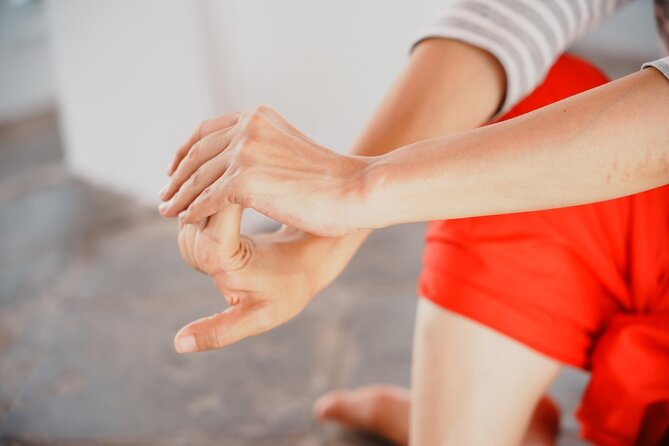
Once dressed, you receive an introduction to Thai dance and its cultural background. The teacher then explains basic body positions and arm-hand work. This is the technical heart of the class.
Expect patient instruction rather than a fast follow-along routine. You first prepare your body, then practice the hand shapes and arm positions. The instructor repeats difficult steps at a slower pace when needed. That personal correction is where the small group matters most.
The movements are delicate, but they are not effortless. You may find that your fingers, wrists, elbows, and shoulders all need to coordinate in unfamiliar ways. If you are inflexible or have no dance background, do not let that worry you. The session is built for beginners, and the teacher adjusts the pace.
I particularly like that the class explains the meaning and background of the movements instead of treating them as random gestures. The introduction gives you a reason to care about the details. You are not just copying a pose for a picture. You are learning how Thai performance communicates through posture, rhythm, and hand shape.
Depending on your instructor, you may also hear about Thai folklore dance, provincial styles, or basic Thai expressions. The experience is friendly rather than formal, so you have time to ask questions as you go.
More temples worth an hour in Bangkok:
- Bangkok: Grand Palace, Wat Pho, and Wat Arun Guided Tour
★ 4.8 · 3,632 reviews - Bangkok: Temples, Canals & Local Life Bike Tour
★ 4.9 · 3,511 reviews - Bangkok: Grand Palace and Wat Phra Kaew Guided Walking Tour
★ 4.4 · 2,417 reviews - Bangkok: Grand Palace, Wat Pho, Wat Arun Sacred & Local Tour
★ 4.3 · 2,256 reviews
Three songs, three styles
After the basic instruction, you learn a routine built around three songs and three different dance styles. This gives the class welcome variety. You can compare the pace, posture, and character of each section instead of repeating one short sequence for two hours.
The routine is designed as a fun introduction, not a professional rehearsal. You will likely learn a small number of repeatable movements and then connect them into a performance. The teacher guides you through the transitions and repeats steps as necessary.
This part can feel more demanding than the opening practice because you are now thinking about timing as well as hand position. The costume and nails add another layer of concentration. Still, that is exactly why the activity works as a cultural lesson. You experience, in a small way, the discipline behind the graceful appearance of Thai dance.
Class size makes a real difference here. A group of seven or fewer allows the teacher to watch individual hands and posture. Solo participants may receive especially direct instruction, while couples and families can encourage one another. The general booking information also lists a maximum of 15 for the activity, so confirm the expected class size if personal attention is your main reason for booking.
Photos, phone video, and the final performance
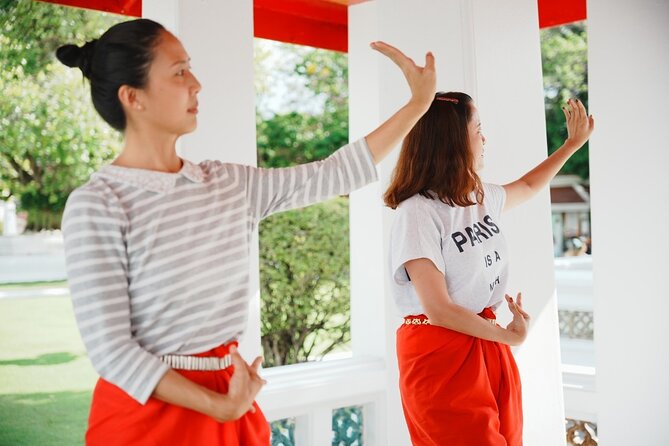
During the final portion, you can record the performance on your phone or take photographs. This gives you a natural finish to the lesson and a useful record of what you learned.
The teacher or host may also help take photos and videos during the session. Several costume options, jewelry, and the headdress make this more than a plain classroom picture. If you are booking for a special occasion, a solo visit, or a family activity, the photo element adds practical value.
There is one clear restriction: professional cameras are not allowed for this part of the experience. A phone is the right tool. Keep it charged and make sure you have enough storage before class, since you may want both still images and short video clips.
The performance is not meant to judge your ability. It is a chance to put the movements together while dressed in costume. I would treat it as a keepsake, not a polished show. Your first Thai dance routine will probably look better from the inside than it does on video, and that is part of the fun.
Snacks, herbal drinks, and conversation
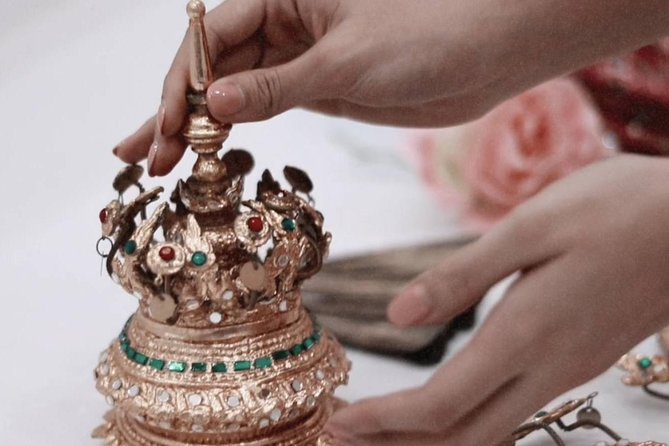
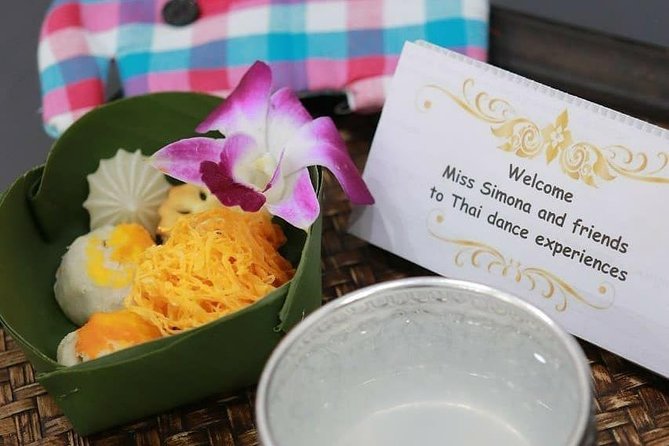
The class ends with Thai snacks and a herbal drink. This final pause gives the experience a relaxed social finish. You can ask questions about the dance, talk with the instructor, and learn more about Thai customs without the pressure of following another step.
The food is a light refreshment, not a full meal. Plan to eat before or after class if you need lunch. Its value is cultural rather than culinary: sharing a snack creates room for conversation and lets the session finish at an easy pace.
This is also where the activity feels most personal. The host aims to keep the visit friendly, and some sessions include help with translation. If you enjoy asking questions, this is a good time to ask about the costume, the dance styles, or the meaning of particular gestures.
Is $71.39 good value?
At $71.39 per person, this is not a bargain activity. You are paying for a small class, an instructor, costume preparation, accessories, a two-hour lesson, refreshments, and the chance to take photos. The price makes more sense if you value personal instruction and a cultural activity that produces a lasting memory.
It is less convincing if you only want a quick costume photo. The experience takes about two hours, and the dance lesson is central. You should be willing to practice unfamiliar movements, not just put on traditional clothing.
The small-class promise is important to the value. With seven or fewer people, the teacher can repeat a step for you and adjust the pace. If the activity is filled closer to the general maximum of 15, the value becomes less attractive for anyone expecting one-to-one help. Ask about the class size when you book or confirm the day before.
The price also does not appear to include professional hair and makeup as a standard feature. Some sessions may include hair arrangement or extra styling, but do not book this expecting a full beauty makeover. Think of it as a dance lesson with costume and cultural extras.
Who will enjoy this class most?
I would recommend this to first-time visitors who want a hands-on introduction to Thai culture. It suits solo visitors especially well because the intimate format gives you direct attention and makes it easy to ask questions.
Couples, friends, and families can also have a good time here. The costume changes make it more social, while the final performance gives everyone a shared activity. Children and older adults may participate, since most people can take part, but the experience does require standing, arm movements, and coordination. Specific mobility details are not provided, so ask the provider if you have concerns.
This is a good choice for people who have visited Bangkok before and want something beyond temples and shopping. It is also useful for anyone who enjoys cultural workshops, photography, or trying a new skill without committing to a long course.
I would skip it if your schedule is very tight, if you dislike dressing up, or if you expect a luxury studio with extensive styling. The venue is described as small and intimate, which suits personal instruction but may feel plain compared with a high-end salon or show venue.
Booking details that matter
The activity is frequently booked well ahead, with an average booking window of about 40 days. That does not mean you must reserve that far in advance, but it is wise to choose your preferred time early, especially if you want a particular day or a small group.
Confirmation arrives at booking, and the ticket is mobile. Free cancellation is available if you cancel at least 24 hours before the local start time. Changes or cancellations inside that window are not accepted for a refund. The class also requires a minimum number of participants, so if the provider cancels for that reason, you are offered another date or a full refund.
There is no need to bring professional photography equipment. A phone is enough for the permitted pictures and video. Keep the meeting address and any ICONSIAM pier transfer instructions together in your phone, since the pickup details are the one practical point that can vary.
Should you book the Thai Dance Class at Wat Arun?
Book it if you want more than a quick sightseeing stop. The best parts are the patient instruction, the traditional costume and nails, the three different dance styles, and the chance to ask cultural questions over a snack and herbal drink.
Think carefully about the price and the styling expectations. This is a small cultural workshop, not a luxury makeover and not a professional dance course. If you arrive ready to learn, laugh at your own stiff wrists, and leave with a better sense of Thai performance, the two hours can be well spent.
FAQ
How long does the Thai dance class last?
The experience takes about two hours. That includes changing clothes, preparing the costume and equipment, the introduction, dance instruction, photos or video, snacks, and a herbal drink.
Where does the experience begin?
The listed meeting point is 243 Thanon Wang Doem, Khwaeng Wat Arun, Khet Bangkok Yai, Bangkok 10600, Thailand.
Where does the experience end?
The activity ends back at the meeting point.
Is transportation included from ICONSIAM?
Transfers from ICONSIAM pier are included in the experience information. Confirm the exact pickup instructions and time before your class.
What will I wear during the lesson?
You will wear traditional Thai clothing, described as an Ayuttayan-style costume. The outfit may include a loincloth, jewelry, a headdress, and traditional long dance nails.
How many dance styles will I learn?
You will learn a routine using three songs and three different dance styles.
Can I take photos or videos?
Yes. You can use your phone to record the performance and take pictures. Professional cameras are not allowed for this part of the class.
Are food and drinks included?
Yes. The experience includes a Thai snack and a herbal drink after the lesson.
What is the maximum group size?
The class format is described as having a maximum of seven people. The general activity information also lists a maximum of 15, so confirm the expected group size if this is important to you.
Can I cancel for a full refund?
You can cancel at least 24 hours before the local start time for a full refund. Cancellations or changes made less than 24 hours before the start are not refunded.
Just added in Bangkok
- re:leaf spa and massage★ 4.0 · 10 reviews
- Wonderful Pearl Dinner Cruise★ 3.5 · 27 reviews
- 3-Hour Bangkok Walking Tour: Wat Pho and Wat Arun★ 5.0 · 102 reviews
- Yoga in the Park Thailand★ 5.0 · 12 reviews
- Visit Wat Pho and Wat Arun with Local Expert★ 4.0 · 14 reviews
- White Orchid Sunset Dinner Cruise Calypso Ladyboy Cabaret Show★ 4.0 · 10 reviews
- Morning Buddhist Almsgiving, Grand Palace and Flower Market Tour in Bangkok★ 3.5 · 9 reviews
- Miracle Bangkok Airport Lounges – Relax Before You Fly★ 3.0 · 32 reviews
Temple & Palace Tours, compared.

From Bangkok: Ayutthaya Temples Guided Tour with Lunch
Read our review →
Chiang Mai: Chiang Rai Temples, Karen Tribe and Hot Springs
Read our review →
Bangkok: City Highlights Temple and Market Walking Tour
Read our review →
Bangkok by Night: Temples, Markets and Food Tuk-Tuk Tour
Read our review →
Bangkok: Grand Palace, Wat Pho, and Wat Arun Guided Tour
Read our review →
Krabi: Tiger Cave Temple, Emerald Pool and Hot Springs Tour
Read our review →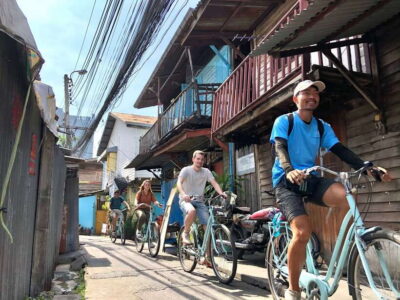
Bangkok: Temples, Canals & Local Life Bike Tour
Read our review →
Chiang Rai White Temple and Blue Temple Day Tour
Read our review →Browse the lists this tour appears in