Reviewed · TOURS IN BANGKOK
Half Day Professional Thai Fruit and Vegetable Carving Class
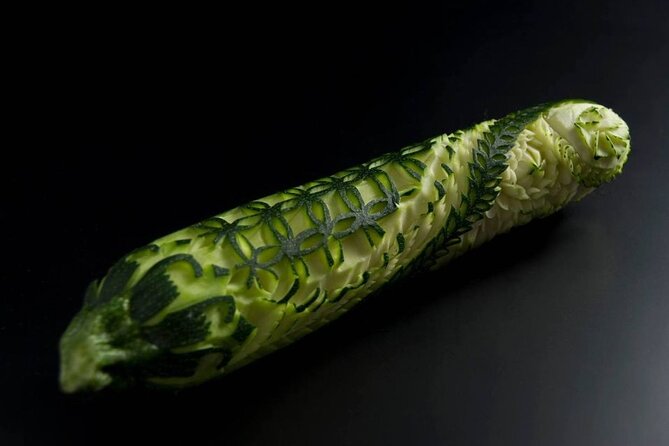
Thai fruit and vegetable carving turns an ordinary tomato into a flower and a cucumber into a delicate leaf. At Siam Carving Academy, master carver Wan Hertz teaches these traditional food decorations in a small class of no more than 10 people, using simple produce and patient, hands-on instruction.
I like the practical skill you take home, especially since the class includes a carving knife. I also like the relaxed setting, with snacks, light refreshments, and city views from a private penthouse studio. The main consideration is the price: at $91 per person, this costs more than a casual cooking demonstration, and three hours of careful carving may not suit anyone looking for a fast sightseeing stop.
Key points at a glance
- Master carver Wan Hertz: Learn from an award-winning Thai instructor known for patient, friendly teaching and strong English.
- Produce becomes decoration: Practice flowers, leaves, baskets, and other garnishes with tomatoes, cucumbers, carrots, and fruit.
- Small class size: The maximum is 10 participants, allowing for a more personal lesson than a large group workshop.
- Private penthouse studio: The class takes place in a quiet Bangkok setting with views over the city.
- Useful take-home item: A free carving knife is included, along with an introduction pack.
- Easy half-day format: Choose a morning session from 9:00 to 12:00 or an afternoon session from 13:00 to 16:00.
Why Thai carving makes a good Bangkok activity
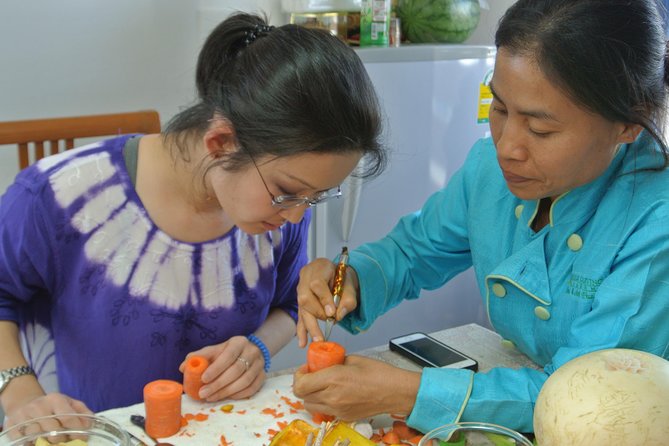
Bangkok offers endless temples, markets, and food stops. This class gives you a different way to connect with Thai culture: you learn how food is prepared for the eye as well as the plate.
Thai fruit and vegetable carving is a recognized decorative tradition. The work can look difficult when you see a finished flower or leaf, but the class begins with everyday ingredients. That matters. You are not simply watching an expert create an elaborate sculpture. You are learning the cuts and shapes that let you make something attractive yourself.
The experience is also a good break from Bangkok’s heat and traffic. A three-hour indoor lesson gives you a quiet afternoon without asking you to give up the local connection that makes a good activity worthwhile.
I would not book this as a substitute for a full Thai cooking class. The focus is garnish preparation and decorative carving, not cooking a meal. If your main goal is to make curry or pad Thai, another class will suit you better. If you want a creative skill you can use at home, this is the more fitting choice.
Other trips people book in Bangkok:
- Bangkok: Damnoen Saduak Market and Maeklong Railway Market
★ 4.5 · 26,723 reviews - The Old Siam: Damnoen Saduak and Maeklong Railway Market
★ 4.5 · 10,992 reviews - From Bangkok: Ayutthaya Temples Guided Tour with Lunch
★ 4.7 · 10,535 reviews
Meeting Wan Hertz at Siam Carving Academy

The instructor listed for the class is Wan Hertz, known here as Wan. The teaching style described for the class is friendly, patient, and encouraging, with clear English and years of specialist experience.
That combination is important for carving. You need to see how the knife is held, how much pressure is used, and where each cut begins and ends. A rushed teacher could leave beginners struggling with damaged vegetables. Wan’s approach appears better suited to careful learners, including people with no previous carving experience.
Past class details also name Laong as an instructor for one family session. That suggests the academy may use more than one teacher, so your specific instructor could vary. The core format remains the same: a professional lesson in Thai fruit and vegetable carving.
Classes are open to ages 12 and older. Children must be accompanied by an adult. Most people can take part, and service animals are allowed.
Inside the private Bangkok penthouse studio
The class takes place at a private penthouse studio with views over Bangkok. The setting sounds deliberately low-key rather than theatrical. That is a plus for a skill-based lesson, because you can concentrate on the work instead of moving from one staged demonstration to another.
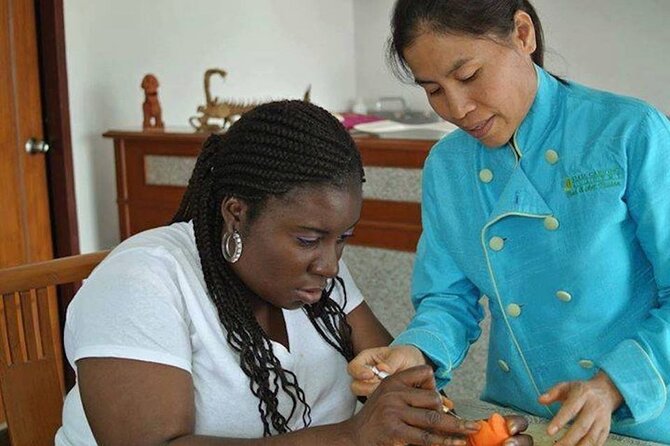
You will spend the session at the carving table, working with fruit and vegetables as the instructor explains the basic techniques. Snacks and light refreshments are provided, so you do not need to plan the class around a meal. The format should feel more like a small workshop than a sightseeing excursion.
The maximum group size is 10 people. That is not a private lesson, but it is small enough to keep the class manageable. You should have a reasonable chance to receive individual help when a cut goes wrong or a vegetable refuses to hold its shape.
The studio is near public transportation, but the available information does not specify the nearest station, walking time, or a pickup service. Plan to make your own way to 130/1 Soi Rung Rueang, Khwaeng Samsen Nok, Huai Khwang, Bangkok 10310. The activity finishes at the same meeting point.
The three-hour carving lesson
The class runs for about three hours. You can choose a morning session from 9:00 to 12:00 or an afternoon session from 13:00 to 16:00. Both schedules leave part of the day free for other plans.
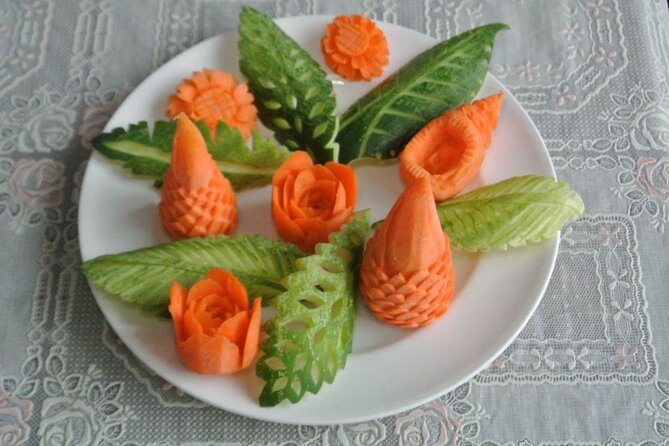
The exact order of the lesson is not listed step by step, but the class description gives a clear idea of what you will practice. You learn to shape common vegetables into decorative forms, including flowers from tomatoes, leaves from cucumbers, and other plate garnishes. The supplied class details and student experiences also refer to carrots, baskets, and additional fruit and vegetable flowers.
A likely strength of the lesson is its progression from simple cuts to more detailed shapes. Start with a basic flower or leaf, then work toward forms that need more control. The important point for you is not producing a perfect sculpture on the first attempt. It is learning how repeated cuts change the shape, texture, and appearance of the food.
The instructor provides direct help during the process. This matters more than a long speech about carving traditions. You can watch the technique, try it yourself, and ask for assistance when the vegetable splits or the pattern becomes uneven.
The class includes an introduction pack and a free carving knife. The knife is a particularly useful inclusion. You can continue practicing after you leave Bangkok instead of treating the lesson as a one-time activity with no practical follow-up.
Same base, a different sort of day:
- Bangkok: Train Market & Floating Market with Boat Ride
★ 4.7 · 9,547 reviews - Bangkok Canal Tour: 2-Hour Longtail Boat Ride
★ 4.5 · 5,909 reviews - Bangkok: Muay Thai Boxing Tickets at Rajadamnern Stadium
★ 4.9 · 4,740 reviews - Bangkok: White Orchid Chao Phraya Dinner Cruise free Beer
★ 4.4 · 4,573 reviews
From tomatoes and cucumbers to table decoration
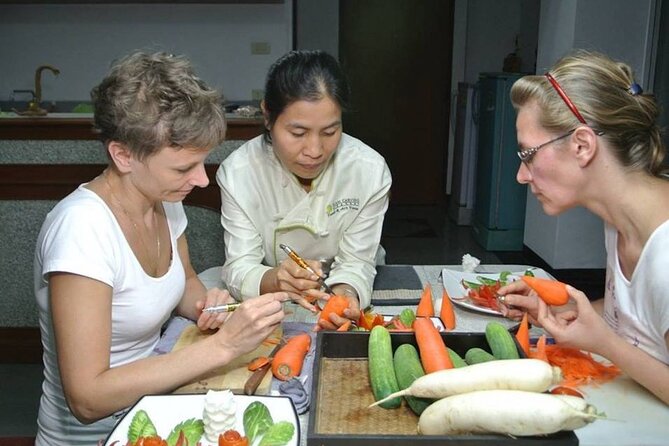
The produce used in the class is familiar, which makes the lesson approachable. Tomatoes, cucumbers, and carrots are not hard to find at home. You can practice the same basic forms after your trip without searching for specialist ingredients.
Tomatoes can become flowers. Cucumbers can become leaves. Carrots can be shaped into smaller decorative pieces. You may also make baskets and mixed fruit or vegetable flowers, depending on the class progression and the instructor’s plan for the day.
These projects have a useful purpose. A carved garnish can brighten a plate of food, decorate a buffet, or add a special touch to a dinner party. You are learning presentation rather than simply producing an object to photograph.
The technique also rewards patience. The finished shapes look delicate, but the process depends on small, controlled cuts. If you enjoy crafts, food styling, or hands-on lessons, you will likely find the work satisfying. If you dislike detailed tasks or have limited patience for repetition, three hours may feel long.
A calm alternative to Bangkok sightseeing
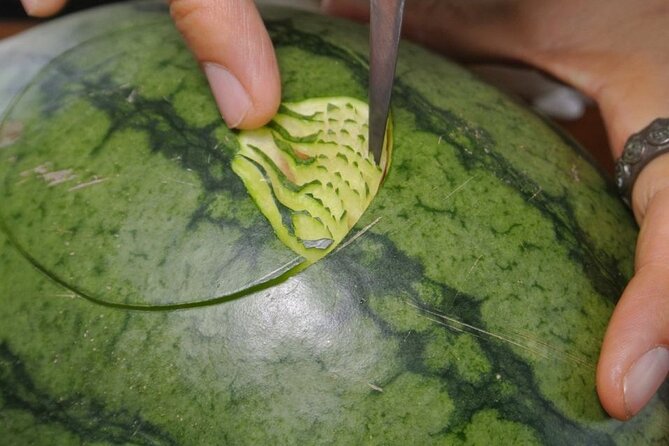
This is a good choice for an afternoon when you want something quieter. The class is not a race between attractions. You sit, listen, practice, and take short breaks for refreshments.
That calm pace can be welcome after a busy morning in Bangkok. It also makes the experience suitable for a family group, provided children are at least 12 and accompanied by an adult. A mother and son or daughter, couples, and small groups of friends can all work at their own tables while sharing the same instruction.
The activity has a social side, but it is not built around loud entertainment. The small class encourages conversation and occasional laughter while everyone works. You should expect a workshop atmosphere, not a formal culinary school or a large tourist production.
The city view adds a sense of place without becoming the main event. You are still in Bangkok, but your attention stays on the food in front of you.
Is $91 a fair price?
The listed price is $91 per person. That is a fairly serious cost for a three-hour activity, so the value depends on what you want from your Bangkok visit.
The price is easier to justify if you value instruction, a small group, and a skill you can continue using at home. Your fee covers the carving class, snacks and light refreshments, an introduction pack, and a free carving knife. You also receive guidance from a specialist rather than simply watching a short demonstration.
The price is harder to justify if you mainly want a cheap cultural activity or a quick photo opportunity. The class does not include a full meal, hotel transport, or personal expenses. You are paying for the teaching and the chance to practice.
Group discounts may be available, which could improve the value for families or friends booking together. Because the class is capped at 10 people, you are not paying for a huge group experience with limited access to the teacher.
I would compare this with the cost of other hands-on Bangkok classes, but I would also ask how likely you are to use the skill afterward. If you enjoy hosting meals, food presentation, crafts, or Thai culture, the knife and techniques add lasting value. If you will never carve again, the price may feel high.
What the class does especially well
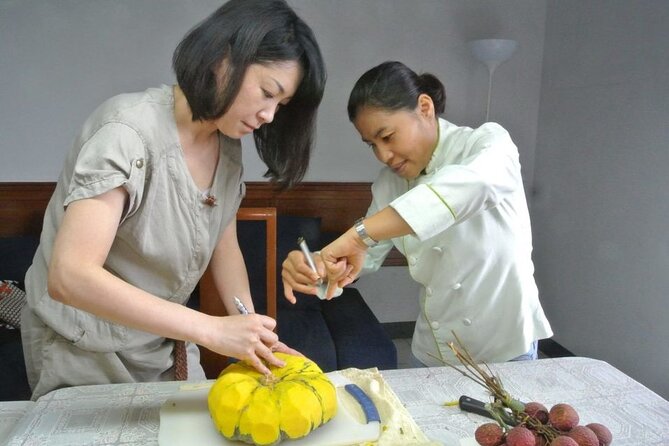
The strongest part of this experience is the instructor’s teaching style. Wan is described as professional, kind, funny, patient, and generous with her time. Those qualities matter in a class where beginners need encouragement.
The lesson also appears to work for different ability levels. Beginners can learn basic flowers and leaves, while people with previous experience can refine their control and technique. The activity is not limited to watching an expert create work that you cannot repeat.
Another strength is the balance between tradition and ordinary materials. You learn a well-known Thai decorative art, but you practice with vegetables that are easy to find. That gives the class a practical edge.
The inclusion of refreshments keeps the mood informal. Free snacks and beverages are a small detail, but they help during a three-hour session. You can focus on carving without having to leave in search of food.
The main weakness is the limited information about the exact route to the studio and the precise project list for each session. You know the broad subjects, but not the exact number of pieces you will complete. If you need a fixed curriculum, contact the provider before booking.
Who should book this experience?
I would recommend the class to you if you want a hands-on activity that feels distinctly connected to Thailand. It suits couples, families with older children, small groups, and solo visitors who prefer making something over ticking off another landmark.
It is also a smart pick for anyone interested in food styling, hospitality, cooking, crafts, or event presentation. The work has an obvious use at home, and the included knife makes further practice possible.
You should think twice if you have mobility or hand concerns that make detailed knife work difficult. The supplied information says most people can participate, but it does not describe special adaptations or the physical setup of the tables. Ask the academy before booking if you need specific assistance.
The class is also less suitable for young children, since the minimum age is 12. Anyone under 18 must attend with an adult.
Timing, transport, and cancellation details
You can book the class seven days a week, with morning and afternoon options. The morning session runs from 9:00 to 12:00, and the afternoon session runs from 13:00 to 16:00.
The meeting and finishing point is Siam Carving Academy at 130/1 Soi Rung Rueang, Khwaeng Samsen Nok, Khet Huai Khwang, Bangkok 10310. The studio is near public transportation, but no exact transit directions are supplied. Allow enough time to find the address and arrive ready for a punctual start.
Mobile tickets are available, and booking confirmation is issued at the time of booking. You can cancel for a full refund if you do so at least 24 hours before the start time. Changes or cancellations made inside that 24-hour window are not accepted, and the local Bangkok time controls the cut-off.
Should you book the Bangkok carving class?
Book it if you want a quiet, personal activity with a real skill at the center. The small group, patient instruction from Wan Hertz, free knife, and practice with tomatoes, cucumbers, carrots, and other produce give the experience more substance than a short demonstration.
Skip it if your priority is a full Thai meal, a low-cost activity, or a packed sightseeing schedule. At $91, this is a specialist workshop, not a bargain stop between temples.
For the right person, the appeal is simple: you leave Bangkok with a new way to prepare food, a useful tool, and a better sense of one of Thailand’s traditional presentation arts.
FAQ
How long does the Thai fruit and vegetable carving class last?
The class lasts approximately three hours.
Where does the class take place?
It takes place at Siam Carving Academy, at 130/1 Soi Rung Rueang, Khwaeng Samsen Nok, Khet Huai Khwang, Bangkok 10310, Thailand.
What time are classes available?
Classes are offered seven days a week from 9:00 to 12:00 and from 13:00 to 16:00.
Who teaches the class?
The class is taught by master carver Wan Hertz. Laong is also named as an instructor for a family session, so the specific teacher may vary.
What will I learn to carve?
You will learn to make decorative flowers, leaves, baskets, and other garnishes from fruit and vegetables. Examples include tomatoes, cucumbers, and carrots.
Is a carving knife included?
Yes. A free carving knife is included with the class.
Are snacks and drinks provided?
Yes. Snacks and light refreshments are included.
What is the maximum group size?
The class has a maximum of 10 participants.
What is the minimum age?
Classes are for ages 12 and older. Children must be accompanied by an adult.
Can I cancel for a refund?
Yes. You can receive a full refund if you cancel at least 24 hours before the experience start time. Cancellations or changes made less than 24 hours before the start time are not accepted for a refund.
Just added in Bangkok
- re:leaf spa and massage★ 4.0 · 10 reviews
- Yoga in the Park Thailand★ 5.0 · 12 reviews
- Wonderful Pearl Dinner Cruise★ 3.5 · 27 reviews
- 3-Hour Bangkok Walking Tour: Wat Pho and Wat Arun★ 5.0 · 102 reviews
- Visit Wat Pho and Wat Arun with Local Expert★ 4.0 · 14 reviews
- White Orchid Sunset Dinner Cruise Calypso Ladyboy Cabaret Show★ 4.0 · 10 reviews
- Morning Buddhist Almsgiving, Grand Palace and Flower Market Tour in Bangkok★ 3.5 · 9 reviews
- Miracle Bangkok Airport Lounges – Relax Before You Fly★ 3.0 · 32 reviews
Tours in Bangkok, compared.

Bangkok: Damnoen Saduak Market and Maeklong Railway Market
Read our review →
The Old Siam: Damnoen Saduak and Maeklong Railway Market
Read our review →
From Bangkok: Ayutthaya Temples Guided Tour with Lunch
Read our review →
Bangkok: Train Market & Floating Market with Boat Ride
Read our review →
Bangkok Canal Tour: 2-Hour Longtail Boat Ride
Read our review →
Bangkok: Muay Thai Boxing Tickets at Rajadamnern Stadium
Read our review →
Bangkok: White Orchid Chao Phraya Dinner Cruise free Beer
Read our review →